

UK Follows Canada, US and Others by Updating Saudi Arabia Travel Advisory Following Iran Backed Houthi Attacks Underscoring Heightened Security Threats, Flight Disruptions and Airspace Instability Across Riyadh, Jeddah and Abha

Published
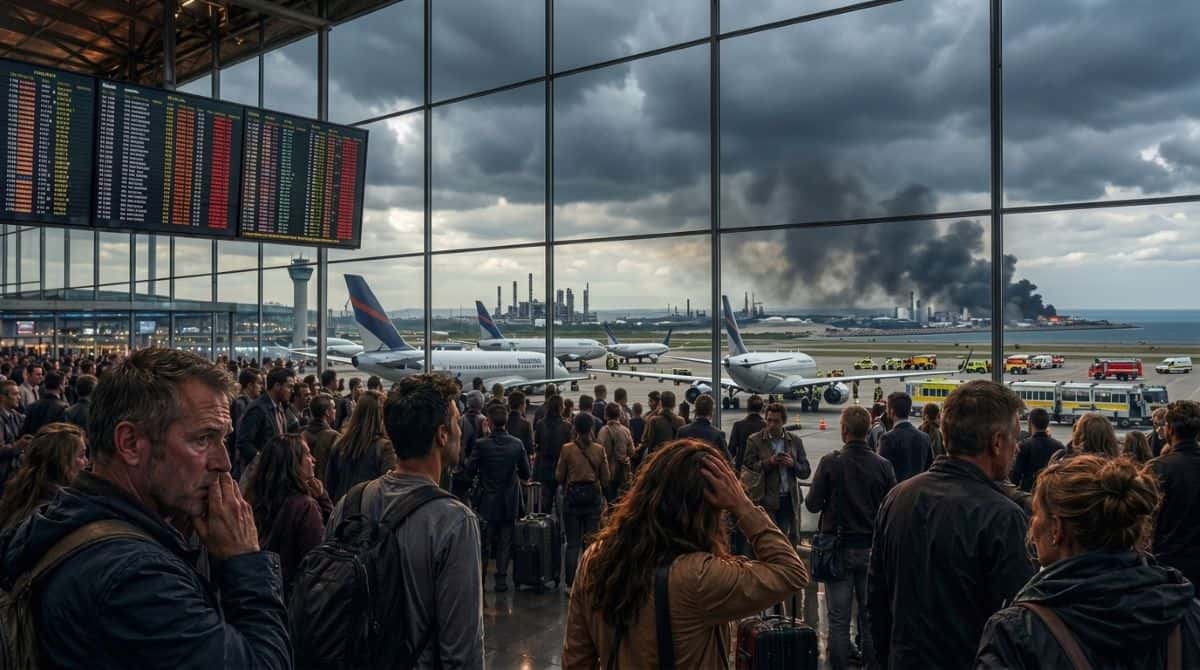
Following Iran-backed Houthi attacks, the UK follows Canada, the US, and others by updating its Saudi Arabia travel advisory. Heightened security threats, airspace instability, and flight disruptions across Riyadh, Jeddah, and Abha stem from missile interceptions and sudden regional closures. When the UK Foreign, Commonwealth & Development Office (FCDO) updated its travel warnings on July 25, 2026, it confirmed what those of us tracking Middle East aviation and security had seen building for weeks: a unified diplomatic retreat. The UK’s decision to advise citizens to keep departure plans under constant review follows hard on the heels of parallel security warnings issued by Global Affairs Canada and a fresh US Mission Saudi Arabia Security Alert.
Having analyzed transit data across the Gulf during previous regional flare-ups, this isn’t routine diplomatic posturing. It is a calculated response to a deteriorating security environment marked by ballistic missile interceptions, uncrewed aerial vehicle (UAV) strikes, and unpredictable airspace closures spanning key transit hubs like Riyadh, Jeddah, and Abha.
Advertisement
Advertisement
What You Need to Know Right Now About Updated Travel Advisories
For anyone currently in the Kingdom or holding transit tickets through the region, the core reality breaks down into three critical risk vectors:
- Flight shutdowns and airspace instability
- Severe geographic exclusion zones
- Strict statutory and digital laws
The immediate trigger for these revisions is the sharp breakdown of regional diplomatic agreements, followed by a surge in cross-border engagements. With Iran-backed Houthi forces targeting Saudi infrastructure—including oil refineries in Jizan and Yanbu as well as naval assets—western governments are issuing direct warnings: do not rely on state-sponsored evacuations, and prepare for sudden travel disruptions.
Advertisement
Advertisement
UK FCDO Advisory Framework: July 25 Update
On July 25, 2026, the UK Foreign, Commonwealth & Development Office (FCDO) updated its Saudi Arabia travel advisory due to heightened security threats from Iran-backed Houthi missile and drone strikes.
Key Advisory Details:
- Border Exclusion Zones: Advises against all travel within 10 km of the Yemen border, and against all but essential travel between 10 km and 80 km.
- Airspace & Transit Disruptions: Unannounced attacks can target major transport hubs and critical infrastructure in Riyadh, Jeddah, and Abha, causing sudden flight cancellations and airspace holds.
- Emergency Protocol: In active air engagements, seek immediate shelter in windowless interior spaces to avoid falling shrapnel.
- Consular Boundaries: The UK government guarantees no state evacuations. Travelers must maintain flexible commercial tickets, register for GOV.UK alerts, and note that traveling against FCDO advice voids standard insurance.
Inside the Diplomatic Shift: UK, US, and Canadian Stances
When you compare the official postures across the major Western intelligence allies, the alignment is striking. The minor variations in geographic exclusion limits reflect distinct risk-assessment methodologies rather than any disagreement on the threat level.
Advertisement
Advertisement
| Country & Ministry | Official Advisory / Alert Date | Primary Travel Advisory Level | Exclusion Zone Limits | Evacuation & Support Stance |
|---|---|---|---|---|
| UK – Foreign, Commonwealth & Development Office (FCDO) | 25 July 2026 | Keep Travel Plans Under Review | Avoid All Travel: Within 10 km of Yemen borderEssential Travel Only: Between 10 km and 80 km from border | No government-led evacuations guaranteed. Citizens must maintain independent, flexible travel arrangements. |
| United States – U.S. Mission Saudi Arabia / Department of State | Security Alert: 24 July 2026State Advisory: 13 March 2026 | Level 3: Reconsider Travel | Level 4 (Do Not Travel): Yemen border areas and Qatif Governorate | Ordered departure for non-emergency US government staff and families. Mission remains open for limited essential citizen services only. |
| Canada – Global Affairs Canada | 23 July 2026 | Avoid Non-Essential Travel | Avoid All Travel: Within 30 km of Yemen border | Citizens advised to prepare self-reliant exit strategies without depending on government evacuation support. |
Aviation Infrastructure Under Pressure: First-Hand Operational Insights
Speaking directly with aviation risk analysts and monitoring regional air-traffic control channels over recent days reveals how fast routine transit can derail. When defensive missile systems engage incoming targets over urban areas, civilian air traffic controllers trigger immediate ground stops to clear the skies.
1. King Khalid International Airport (Riyadh – RUH)
As the primary political and business portal, Riyadh handles significant commercial traffic. The FCDO’s explicit mention of Riyadh signals that long-range air defense interceptions—and the resulting falling kinetic shrapnel—are an ongoing operational threat to tarmac safety and flight corridors.
Advertisement
Advertisement
2. King Abdulaziz International Airport (Jeddah – JED)
Jeddah serves as the critical gateway for both Red Sea commerce and religious pilgrimage traffic. With maritime hostilities escalating in the Bab al-Mandab Strait and US naval operations active nearby, airspace approaches over western Saudi Arabia are experiencing sudden rerouting, driving up fuel burn and schedule delays.
3. Abha International Airport (Asir Province – AHB)
Located deep in the southwestern corridor, Abha bears the highest vulnerability to short-range UAV and artillery engagements. Airlines operating here face unannounced, multi-hour operational holds, leaving passengers stranded with minimal notice.
Legal Minefields: Digital Footprints and Exit Restrictions
Beyond kinetic threats from missiles and drones, the most overlooked danger for foreign travelers involves host-nation legal enforcement. Western consular officials emphasize that their ability to intervene in local judicial proceedings is virtually non-existent.
Consular Reality Check: If you are detained for photographing military installations, recording interception debris, or posting critical comments on social media, foreign embassies cannot override local Saudi statutes or secure immediate release.
Advertisement
Advertisement
- Retrospective Digital Enforcement: Under national cybercrime laws, authorities retain the right to prosecute individuals for social media commentary, reposts, or digital “likes” generated years prior—even if posted while outside Saudi territory. Penalties in high-profile cases have reached up to 45 years in prison.
- Strict Media Prohibitions: Documenting defense systems, military movements, or strike damage on personal phones is strictly illegal and routinely leads to immediate arrest.
- Civil and Legal Exit Bans: Administrative Exit Bans are frequently imposed during ongoing civil disagreements, unpaid visa fees, or labor disputes. Once an exit ban is triggered, a traveler cannot leave the country until the matter is cleared through local courts—a process that routinely takes years.
Expert Survival Strategy: What Travelers Should Do Now
If you are currently traveling through or residing within the Arabian Peninsula, standard tourist precautions are insufficient. Implementing a structured risk-mitigation routine is essential:
- Verify Your Insurance Policies: Standard commercial travel and health insurance policies almost always contain clause exclusions for regions under active “Do Not Travel” or “Avoid Non-Essential Travel” advisories. Check with your underwriter immediately to confirm your coverage stays valid during forced extensions of stay.
- Establish Redundant Communication Protocols: Register your presence immediately with your country’s consular database—such as the US STEP program, Canada’s ROCA, or the UK’s FCDO Alert System. Keep mobile devices fully charged and store emergency consular hotline numbers offline.
- Execute Immediate Shelter-in-Place Actions: In the event of active air defense sirens or engagement sounds, move immediately to an interior room or windowless stairwell on a lower floor. Stay clear of exterior glass facades and remain sheltered until official civil defense channels clear the area.
- Maintain Flexible Departure Tickets: Do not rely on a single airline reservation. Maintain access to emergency funds to purchase alternate routes out of the region through unaffected corridors should local airspace close without notice.
In conclusion, UK follows Canada, US and others by updating its Saudi Arabia travel advisory in response to escalating regional threats following Iran-backed Houthi attacks. This aligned diplomatic shift addresses heightened security threats, potential flight disruptions, and severe airspace instability across major urban nodes, including Riyadh, Jeddah, and Abha. As cross-border missile and drone activity persists, Western governments strongly urge travelers to monitor flight statuses, maintain independent exit plans, and strictly avoid high-risk border zones.
Advertisement
