
Cuba Highlights Baracoa Destination Appeal as Guantánamo Travel Update Shows Viazul and Air Service Limits

Published
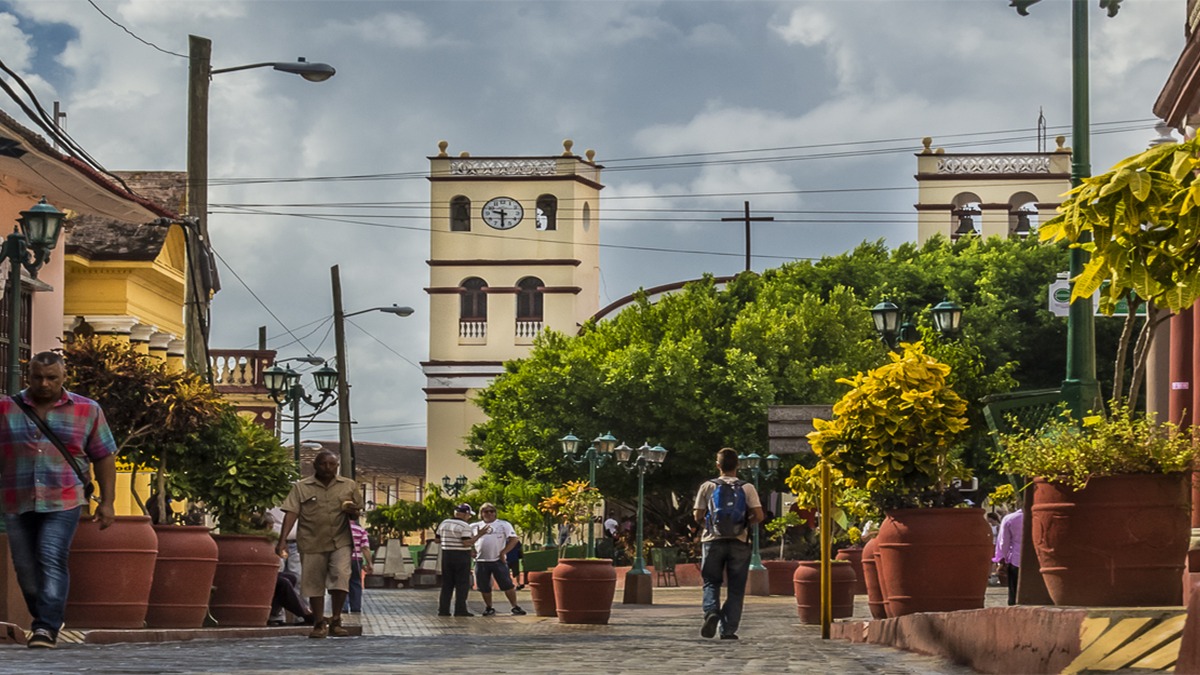
Cuba is actively promoting Baracoa as a nature and heritage destination, but its official tourism portal currently gives travellers conflicting signals about reaching and staying in the eastern Cuban city. The Spanish access page marks Viazul Baracoa and both regional domestic airports unavailable. A separate transport page labels the Baracoa Viazul terminal available, while several local excursions remain active and seven named hotels or hostels carry unavailable status. For travellers and travel sellers, confirming every transport and accommodation component before booking has therefore become essential.
Cuba Is Selling Baracoa’s Natural Strength While Access Information Tells a More Complicated Story
Baracoa remains one of the most distinctive destinations in Cuba’s tourism portfolio. The Ministry of Tourism-backed Cuba Travel portal promotes the city through rainforest landscapes, rivers, cacao and coconut traditions, El Yunque, the Yumurí region and access to Alejandro de Humboldt National Park.
Advertisement
Advertisement
According to Cuba Travel, Baracoa and Guantánamo form Cuba’s easternmost tourism destination, with nature, culture, excursions, beaches and protected landscapes forming the core visitor proposition. Baracoa also carries substantial historical weight. The official destination history identifies it as Cuba’s first villa, founded in 1511.
Yet the travel-planning layer beneath that promotional proposition now requires much closer examination.
Advertisement
Advertisement
Cuba Travel’s Spanish-language access information currently labels Viazul Baracoa unavailable. The same page marks air access unavailable and applies that designation to both Mariana Grajales Airport in Guantánamo and Gustavo Rizo Airport in Baracoa.
Another official Cuba Travel transport page produces a different signal. It marks the Viazul terminal as available in both Guantánamo City and Baracoa while separately confirming that national airports and airlines serving the destination are unavailable. It also lists taxis, car rental, urban buses, trains and Baracoa BusTour services as available.
Advertisement
Advertisement
For an independent traveller this creates uncertainty. For travel agents, destination management companies and tour operators assembling multi-stop eastern Cuba programmes, it creates an operational verification problem.
Official Baracoa Transport Pages Currently Produce Different Availability Signals
The discrepancy becomes clearer when the official pages are compared side by side.
| Official tourism information checked on 4 October 2026 | Current information displayed | Implication for travellers |
|---|---|---|
| Spanish Baracoa–Guantánamo access page | Viazul Baracoa marked unavailable | Travellers should not assume the standard tourist coach connection can be booked simply because a station exists. |
| Same Spanish access page | Air access marked unavailable | Domestic air should not be built into an itinerary without fresh confirmation. |
| Gustavo Rizo Airport, Baracoa | Marked unavailable | A historic or published airport route does not establish current passenger availability. |
| Mariana Grajales Airport, Guantánamo | Marked unavailable | Guantánamo cannot currently be treated as a confirmed domestic-air alternative on the basis of the destination portal alone. |
| English transport page | Baracoa Viazul terminal marked available | This directly conflicts with the Spanish access page’s Viazul status. |
| English transport page | Car and motorcycle rental marked available | Self-drive may remain one alternative, subject to actual vehicle inventory. |
| English transport page | National airports and airlines marked unavailable | This supports the current air-access restriction shown elsewhere on Cuba Travel. |
| Baracoa tourist transport | BusTour services shown available | Local movement to selected attractions continues to be promoted even while long-distance access remains less clear. |
The distinction between a functioning terminal and an operating passenger route is important. A station can remain open as an administrative or physical facility even when a particular scheduled service cannot be sold.
Cuba Travel does not currently explain that distinction clearly enough across the pages reviewed. Travellers should therefore treat the portal’s Viazul information as requiring direct confirmation rather than interpreting either available or unavailable as a complete description of the network.
Baracoa Still Has Ground Connections but the Journey Requires More Planning
Road access remains central to Baracoa.
According to Cuba Travel, travellers can approach the destination through the Central Highway and Guantánamo before crossing the mountainous La Farola route. Another approach follows the Holguín–Moa corridor and the northern edge of the Cuchillas del Toa landscape.
Advertisement
Advertisement
The tourism portal also lists taxis and rental vehicles alongside national transport infrastructure.
A more specific alternative appears on Cuba Travel’s excursion and transfer information. The portal lists a special Santiago de Cuba–Guantánamo–Baracoa transfer distributed through Havanatur, Viajes Cubanacán and Cubatur offices. The published information gives a Baracoa departure at 06:00 and arrival in Santiago de Cuba at 12:00, with the return leaving Santiago at 15:00 and reaching Baracoa at 21:00. Wednesday and Sunday appear within the published operating pattern, while Friday is specifically marked unavailable.
That six-hour published sector reinforces a critical planning point. Baracoa is not a destination where an international visitor should assume that a missed connection can easily be replaced later the same day.
Transport confirmation should form part of the booking process rather than becoming an arrival-day decision.
Active Humboldt and El Yunque Tourism Creates a Striking Access Contrast
The destination itself is not presented as dormant.
Cuba Travel continues to advertise substantial tourism activity around Baracoa. Its official excursions include an El Yunque jeep programme built around a five-kilometre walk, an Alejandro de Humboldt National Park excursion incorporating a three-kilometre walk, and a Yumurí programme involving a six-kilometre walking component and river landscapes.
Advertisement
Advertisement
The official nature pages also advertise trails, river experiences, bathing areas and wildlife observation.
Alejandro de Humboldt National Park gives this tourism proposition international conservation significance. UNESCO records the property at 71,140 hectares across Guantánamo and Holguín provinces. It entered the World Heritage List in 2001 and protects exceptionally diverse mountain, river and forest ecosystems with particularly high levels of endemism.
This means Baracoa’s destination problem is not a shortage of tourism assets.
It is the gap between those assets and the clarity of the transport and accommodation chain needed to convert interest into a completed trip.
Seven Baracoa Accommodation Listings Carry Unavailable Status
Accommodation produces another important signal.
Cuba Travel currently presents Porto Santo Hotel, with 83 rooms, without an unavailable label. Villa Maguana, with 16 rooms, is also presented without that designation. However, seven other named Baracoa hotels and hostels carry unavailable status on the same official tourism portal.
Advertisement
Advertisement
| Baracoa property | Listed rooms | Current portal status |
|---|---|---|
| El Castillo Hotel | 62 | Unavailable |
| Baracoa Hotel | 44 | Unavailable |
| Plaza Hotel | 10 | Unavailable |
| Río Miel Hotel | 12 | Unavailable |
| La Habanera Hotel | 10 | Unavailable |
| 1511 Hotel | 15 | Unavailable |
| La Rusa Hotel | 12 | Unavailable |
| Combined listed inventory | 165 | Unavailable on Cuba Travel portal |
The unavailable label should not automatically be interpreted as evidence of permanent hotel closure. It could reflect sales status, operational conditions, temporary withdrawal, inventory controls or another portal classification.
However, for a traveller searching the official destination website, the practical consequence is similar: those 165 listed rooms cannot safely be treated as immediately saleable inventory without direct verification.
This matters because Baracoa’s remoteness makes accommodation disruption harder to absorb than in a large gateway city with extensive substitute capacity.
Why the Baracoa Access Gap Matters More Than a Website Discrepancy
The deeper issue is destination conversion.
Baracoa currently presents a compelling upper-funnel tourism proposition. Travellers can discover rainforest trails, World Heritage biodiversity, river experiences, beaches, historic streets, cacao culture and one of Cuba’s oldest urban stories through the official tourism portal.
The friction emerges further down the purchasing journey.
Advertisement
Advertisement
When transport pages disagree, airport availability is restricted and multiple accommodation listings carry unavailable labels, the responsibility for establishing whether an itinerary actually works shifts towards the traveller, agent or operator.
For the travel trade, this raises the cost of selling the destination. A straightforward package becomes a manually verified itinerary. Ground transport requires reconfirmation. Accommodation requires property-level checking. Connection times require larger buffers. Alternative routing becomes part of the booking design.
There is also a digital-distribution consequence. Search engines, AI travel planners and automated itinerary systems increasingly extract information directly from authoritative destination pages. When official pages return different operational answers, automated travel advice can inherit those contradictions.
That makes consistent destination data part of tourism infrastructure itself.
For Baracoa, improving information reliability could therefore matter almost as much as promoting another trail, attraction or heritage experience.
Cuba’s Tourism Contraction Makes Every Conversion Barrier More Important
The Baracoa issue is emerging during an exceptionally difficult year for Cuba’s visitor economy.
Advertisement
Advertisement
According to Cuba’s National Office of Statistics and Information, ONEI, the country received 888,756 travellers between January and August 2026. That represented 49.5 per cent of the comparable 2025 total, meaning 906,967 fewer travellers.
International visitors numbered 450,353 during the same eight months. That was only 35.6 per cent of the corresponding 2025 level, a reduction of 813,979 visitors. ONEI identified particularly large absolute declines from Canada, the Russian Federation, Cubans living abroad and the United States.
| Cuba tourism indicator | January–August 2026 | Official comparison with 2025 |
|---|---|---|
| Total travellers | 888,756 | 49.5% of 2025 level |
| Absolute traveller reduction | 906,967 | Lower than 2025 |
| International visitors | 450,353 | 35.6% of 2025 level |
| Absolute international visitor reduction | 813,979 | Lower than 2025 |
Against that background, destinations such as Baracoa have strategic value because they broaden Cuba’s offer beyond traditional resort tourism.
But diversification only produces economic value when visitors can confidently assemble and complete the journey.
Guantánamo Remains an Important Part of the Baracoa Visitor Chain
Guantánamo City matters because Baracoa does not operate as an isolated tourism island.
The official destination architecture treats Baracoa and Guantánamo as a linked tourism region. La Farola connects the southern side of the province with Baracoa, while travel agencies, taxis, buses and other visitor services are distributed across both cities.
Advertisement
Advertisement
Cuba Travel currently marks Havanatur, Cubatur, Ecotur and Cubanacán offices in Baracoa as available. That gives travellers and trade partners potential local verification points even when transport information online is unclear. Gaviota Tours locations shown on the same page carry unavailable status.
For international travel sellers, this suggests a more resilient model: confirm Baracoa itineraries through operating destination agencies rather than relying exclusively on static webpage information.
Critical Operational Takeaways for Travel Agents and Tour Operators
- Reconfirm Viazul before ticketing: Cuba Travel currently presents contradictory availability information for Baracoa, so station existence should not be treated as confirmed route operation.
- Do not build itineraries around Gustavo Rizo flights without confirmation: the current official destination transport page marks Baracoa’s airport and airlines unavailable.
- Apply the same rule to Mariana Grajales Airport: Guantánamo’s domestic airport also carries unavailable status on current tourism pages.
- Verify accommodation property by property: seven Baracoa hotels and hostels representing 165 listed rooms currently carry unavailable labels on Cuba Travel.
- Preserve larger transfer buffers: published special road transfers between Baracoa and Santiago de Cuba take approximately six hours.
- Use operating local agencies for confirmation: Havanatur, Cubatur, Ecotur and Cubanacán are currently listed as available in Baracoa.
- Separate attraction availability from destination accessibility: Humboldt, El Yunque and Yumurí products may be promoted locally even when reaching Baracoa remains the more complicated part of the itinerary.
- Keep a road-based contingency: taxi, rental and selected local transport services remain listed by Cuba Travel, although actual inventory should still be reconfirmed.
Baracoa’s Long-Term Tourism Opportunity Depends on Closing the Last-Mile Information Gap
Baracoa retains almost everything required for a differentiated tourism proposition: deep history, living food traditions, exceptional biodiversity, dramatic landscapes, protected ecosystems and experiences that differ sharply from Cuba’s conventional beach-resort product.
The weakness visible on 4 October 2026 lies further down the visitor journey.
Official information does not yet give an international traveller one completely consistent answer about Viazul access, domestic aviation and accommodation availability. That uncertainty becomes especially significant in a remote destination where alternatives require time and long overland transfers.
For Cuba, resolving that information gap could support more than visitor convenience. It could improve confidence among tour operators, reduce failed itinerary conversions and help eastern destinations capture a larger share of the tourism demand that remains.
Advertisement
Advertisement
Baracoa does not need another reason for travellers to want to visit.
What it needs most is a transport, accommodation and digital-information chain that allows them to know with confidence that they can.
Advertisement
