
Italy Introduces Direct Air-Rail Baggage Transfers Through Rome Fiumicino

Updated
Published
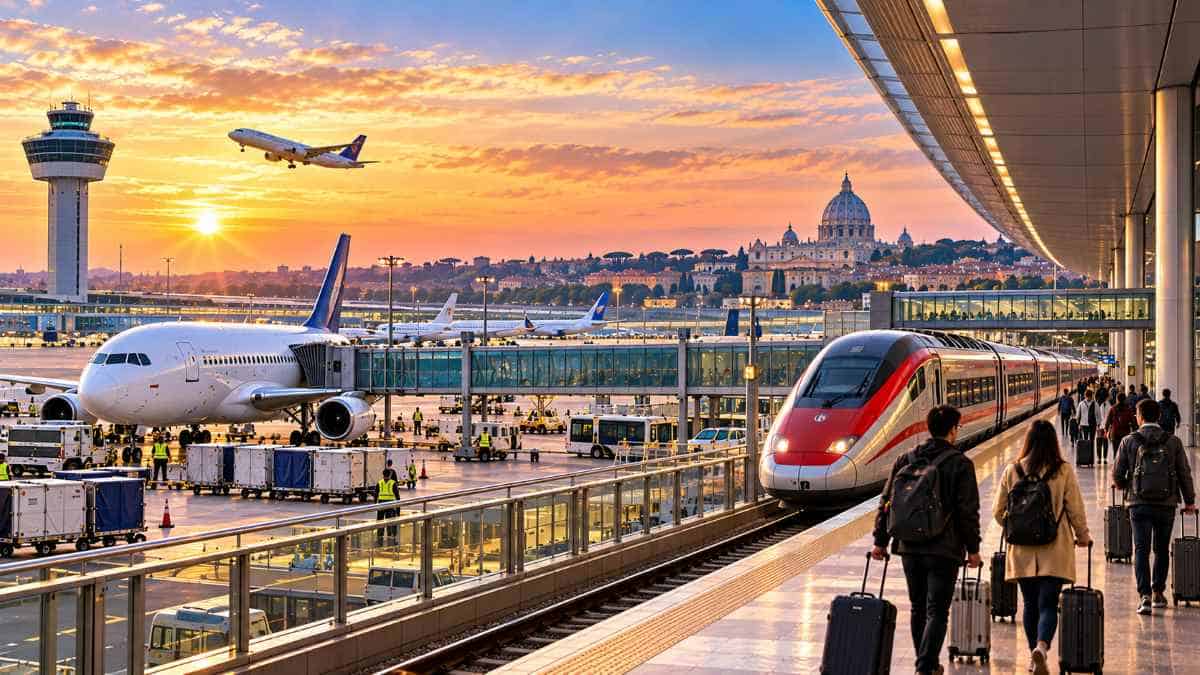
A link between international flights and fast railway transportation is being built in Italy by means of a new programme of integrated baggage transportation at Fiumicino International Airport. This is an idea of the Italian Civil Aviation Authority (ENAC) together with Trenitalia and Aeroporti di Roma. It is meant to facilitate travelling onwards to Florence, Bologna and Venice for international passengers who arrive in Rome by intercontinental flights. This project, named Train+Fly Direct, is aimed at establishing a link between international flights and Frecciarossa fast trains with the help of integrated baggage management. In case the programme is implemented as planned, it will enable eligible passengers to check in luggage through the entire route, from participating airports to the places where the trains will be boarded. This project solves a problem for international tourists who want to travel around Italy. The problem is the need to organise separate luggage transport during the trip from one city to another. The aim of the programme is also to make the planning of multi-city trips easier and build a strong bond between the aviation and railway networks of the country.
Rome Fiumicino Strengthens Its Position as an International Gateway
Rome Fiumicino Airport, officially known as Leonardo da Vinci International Airport, is Italy’s principal international aviation gateway. Located approximately 30 kilometres south-west of central Rome, the airport handles connections to destinations across Europe, North America, Asia, Africa and the Middle East.
Advertisement
Advertisement
Its position within the national transport network makes it an important starting point for international visitors planning journeys beyond the Italian capital.
The airport already benefits from railway connections through the Leonardo Express, which provides a direct service to Roma Termini, the city’s principal railway station. Regional FL1 trains also connect Fiumicino with several stations across the metropolitan area.
Advertisement
Advertisement
The proposed Train+Fly Direct arrangement would extend the airport’s intermodal travel proposition by focusing on passengers connecting from international flights to long-distance high-speed railway services.
For travellers arriving after extended international journeys, coordinated baggage handling could reduce the physical effort involved in changing between different transport systems.
Advertisement
Advertisement
Frecciarossa Connects Rome with Italy’s Major Tourism Cities
Trenitalia’s Frecciarossa network is central to the proposed arrangement. Its high-speed services connect Rome with several of Italy’s principal tourism and commercial centres, including Florence, Bologna and Venice.
Rome to Florence is one of the country’s important high-speed railway corridors. The journey between Roma Termini and Firenze Santa Maria Novella generally takes around 1 hour and 30 minutes, making Florence accessible for visitors arriving through Fiumicino.
Florence remains a major international cultural destination, attracting visitors through its Renaissance architecture, museums, historic churches and artistic heritage. The Cathedral of Santa Maria del Fiore, Uffizi Gallery and Ponte Vecchio are among its principal attractions.
Bologna provides another important connection. Located in the Emilia-Romagna region, the city is recognised for its medieval architecture, porticoes, historic university and distinctive culinary traditions. High-speed trains connect Rome and Bologna in approximately two hours.
Venice extends the network towards north-eastern Italy. Its canals, historic palaces, St Mark’s Square and cultural landmarks make it one of Europe’s most recognised international tourism destinations. Frecciarossa services connect Rome with Venezia Santa Lucia, with journey times generally around 3 hours and 45 minutes to four hours, depending on the service.
Through-Checked Baggage Could Simplify International Transfers
Baggage handling is one of the most important elements of the proposed Train+Fly Direct framework.
Advertisement
Advertisement
Under the described system, passengers arriving on participating international flights would have their luggage processed for onward railway journeys, with collection arranged through designated facilities associated with the railway service.
This could reduce the inconvenience of collecting suitcases at the airport, transporting them through connecting facilities and managing separate luggage arrangements before boarding a high-speed train.
For families, older travellers and visitors undertaking extended European holidays, such an arrangement could make multi-city travel considerably easier.
However, through-checked baggage services require agreements between airlines, airport handling companies and railway operators. Passengers would need to check participating carriers, eligible routes, baggage allowances, collection arrangements and applicable security procedures before travelling.
ENAC, Trenitalia and Aeroporti di Roma Support Intermodal Travel
The proposed collaboration brings together three organisations with different responsibilities within Italy’s transport infrastructure.
ENAC oversees civil aviation regulation and aviation safety in Italy. Aeroporti di Roma manages Rome Fiumicino and Ciampino airports, while Trenitalia operates passenger railway services, including the Frecciarossa high-speed network.
Advertisement
Advertisement
Their coordination is particularly relevant as European transport policy increasingly encourages connections between different modes of passenger transport.
For airports, effective railway integration can extend the reach of international flight networks beyond the immediate metropolitan area. For railway operators, partnerships with airlines can introduce additional passengers to long-distance services.
For Italy’s tourism businesses, improved connections could encourage visitors to explore several destinations rather than concentrating their holidays entirely around Rome.
Florence, Bologna and Venice Benefit from Wider Tourism Access
The proposed baggage transfer arrangement could support tourism distribution across Italy by making onward journeys more convenient for international arrivals.
Florence offers access to Tuscany’s wider tourism landscape, including Siena, Pisa and the Chianti countryside. Bologna provides connections to Parma, Modena and other destinations across Emilia-Romagna, while Venice serves as a gateway to the Veneto region and its historic towns.
These destinations offer different experiences, ranging from cultural heritage and gastronomy to architecture, shopping and regional countryside tourism.
Advertisement
Advertisement
A more integrated air-rail booking experience could also help international tour operators develop longer Italian itineraries with fewer logistical complications.
Italy Advances Its Integrated Transport Strategy
This new Train+Fly Direct system would put Rome Fiumicino into an overarching pattern in Europe for better coordination between passenger travel modes. The integration of international flights and high-speed rail trains could enhance the accessibility of destinations around the region while decreasing the necessity for separate domestic flights within appropriate networks. However, its success depends on the cooperation of the airlines, baggage transfer, railroad and connecting trains’ schedules. From the point of view of tourists who come into Italy, the advantage of the Train+Fly Direct system can be seen in the facilitation of their access to major cultural destinations of Italy through Rome Fiumicino.
Advertisement
