
Jaffna Tourism Enters a New Era as Sri Lanka Targets 431 Northern Attractions by 2030

Published
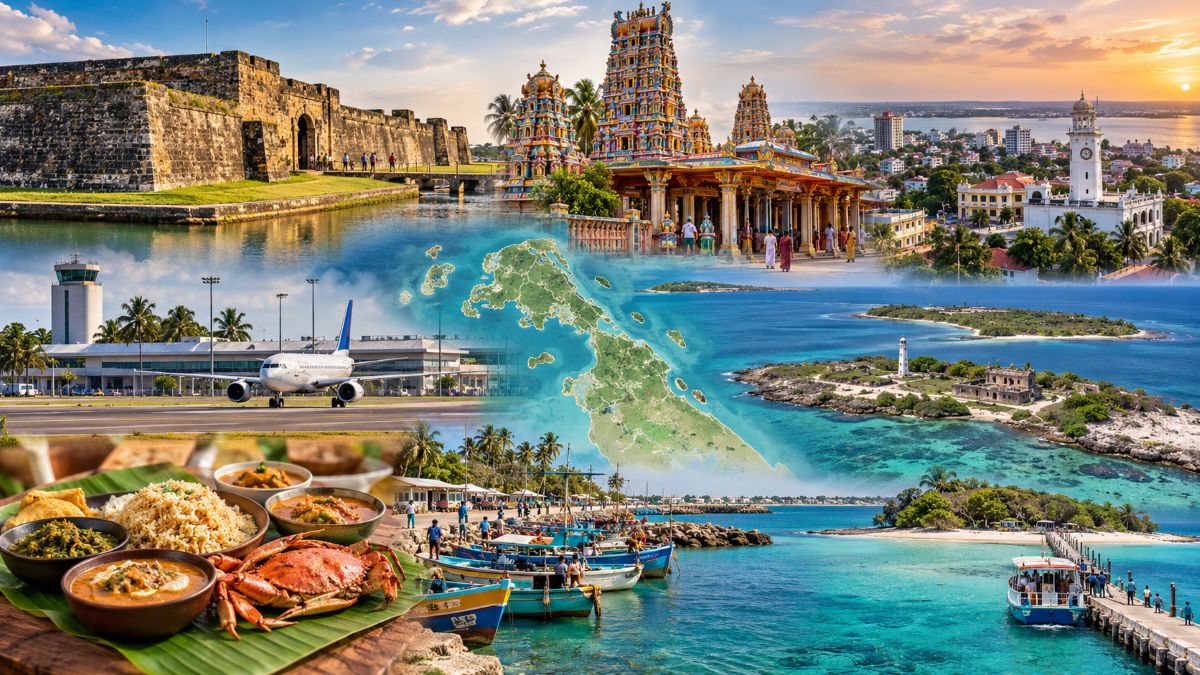
Image generated with Ai
Jaffna tourism is entering a significant new phase as Sri Lanka develops a wider northern tourism economy built around heritage, culture, islands and improved access. The Northern Province has identified 431 tourism sites in its 2026–2030 strategic plan, including 200 sites in Jaffna District alone. Meanwhile, Jaffna International Airport is undergoing planned terminal expansion, signalling ambitions for stronger regional connectivity. Sri Lanka recorded 2,362,521 international tourist arrivals in 2025, up 15.1 per cent from 2024, creating a larger visitor market for emerging destinations. The central question now concerns how Jaffna can convert its distinctive Tamil heritage, coastal landscapes and post-conflict transformation into sustained visitor value without reducing its identity to wartime history.
Jaffna Moves Beyond the Old Tourism Narrative
For years, Jaffna appeared in travel discussions through the prism of Sri Lanka’s civil conflict. That framing increasingly fails to capture the destination’s contemporary tourism proposition, which now spans religious heritage, Tamil culture, cuisine, colonial architecture, coastal landscapes and island experiences. A 2026 peer-reviewed study found that visitors and tourism stakeholders increasingly perceive Jaffna through cultural, religious, environmental and historical experiences, while infrastructure, accessibility and destination positioning remain significant constraints.
Advertisement
Advertisement
This shift matters because destination branding can influence what travellers expect before arrival. If Jaffna is presented primarily as a post-conflict destination, visitors may overlook its living cultural landscape. A more expansive approach can position its temples, food traditions, islands, architecture and coastal ecosystems as interconnected experiences rather than isolated attractions.
The distinction also has an economic dimension. Tourism becomes more resilient when visitors have reasons to stay longer, travel beyond the central city and spend across several local sectors. Accommodation, transport, food, guiding, crafts, religious visits and island excursions can therefore form a broader visitor economy.
Advertisement
Advertisement
431 Sites Change the Northern Tourism Map
The Northern Tourism Development Strategic Plan 2026–2030 gives the region an unusually detailed planning framework. Its research identified 431 tourism sites across all five districts, with Jaffna accounting for 200, followed by Mullaitivu with 77, Kilinochchi with 56, Vavuniya with 49 and Mannar with 49.
| Northern District | Tourism Sites Identified |
|---|---|
| Jaffna | 200 |
| Mullaitivu | 77 |
| Kilinochchi | 56 |
| Vavuniya | 49 |
| Mannar | 49 |
| Northern Province | 431 |
The significance lies beyond the headline number. The plan selected priority sites for further development and examined infrastructure requirements, strengths, weaknesses and ways to address tourism constraints. Northern Province Governor N. Vethanayahan subsequently called for the strategy to move from a planning document towards practical implementation.
Advertisement
Advertisement
For travellers, that could eventually mean a more coherent northern itinerary. Jaffna could function as the cultural anchor, while surrounding districts provide additional wildlife, coastal, heritage and community-based experiences.
Connectivity Becomes the Real Test
A destination cannot build a compelling tourism economy if travellers struggle to reach its attractions. Jaffna’s geography makes this particularly important because several of its most distinctive experiences sit outside the urban centre or across the surrounding islands.
Advertisement
Advertisement
The road and rail journey from Colombo has historically required a substantial travel commitment. Air connectivity can therefore change the destination’s accessibility equation, particularly for international visitors and short-stay travellers.
Jaffna International Airport is now being positioned for greater capacity. Airport and Aviation Services issued tenders for two packages covering expansion and modification of the passenger terminal, with estimated costs of approximately Rs303 million and Rs587 million, excluding specified contingencies and VAT.
| Connectivity Indicator | Current Development |
|---|---|
| Jaffna International Airport | Passenger terminal expansion planned |
| Airport location | Palaly, about 8.43 nautical miles from Jaffna town |
| International operations | Customs and immigration facilities available |
| International landing requirement | 48 hours’ prior notice stated in aeronautical information |
| Northern maritime gateway | Kankesanthurai Port |
| Wider access opportunity | India–Northern Sri Lanka connectivity |
The airport’s official aeronautical information identifies it as Kankesanthurai/Jaffna International Airport, while its operational framework includes customs, immigration, health, security and handling arrangements. International landings require advance notification, an important practical consideration for operators planning charter or specialist services.
India Could Become a Larger Visitor Market
Jaffna’s geographical position gives it an unusual advantage within Sri Lanka. Northern Sri Lanka sits close to southern India, creating a natural catchment for cultural, religious, family and short-break travel.
Advertisement
Advertisement
The strategic opportunity is particularly relevant because Jaffna’s cultural identity has strong Tamil connections. That does not automatically translate into tourism demand, but it creates a distinctive cross-border cultural proposition when supported by practical transport options.
Sri Lanka’s national tourism recovery provides the wider backdrop. International arrivals rose from 2,053,465 in 2024 to 2,362,521 in 2025, a 15.1 per cent increase. Through August 2026, Sri Lanka had recorded 1,535,122 arrivals, although monthly performance varied considerably during the year.
| Sri Lanka Tourism Indicator | Figure |
|---|---|
| International arrivals, 2024 | 2,053,465 |
| International arrivals, 2025 | 2,362,521 |
| Annual growth | 15.1% |
| January–August 2026 | 1,535,122 |
| 2026 January growth | 9.7% |
| 2026 February growth | 16.2% |
The figures show a sizeable national visitor market, but they do not establish how many tourists travel to Jaffna. That distinction is crucial. National growth should not be mistaken for equivalent growth in the north, where accommodation, transport and product development remain less mature.
Heritage Becomes More Than Sightseeing
Jaffna’s strongest tourism asset may be its concentration of living cultural experiences. Nallur Kandaswamy Kovil, Jaffna Fort, the Public Library, churches, colonial-era buildings, traditional food and Tamil cultural practices create a destination where heritage exists beyond museum walls.
That creates a more sophisticated travel proposition than monument-hopping. Travellers can experience religion, cuisine, architecture and everyday cultural life within the same geographical circuit.
The 2026 research into destination branding identified cultural and religious heritage among the strongest elements shaping the tourist gaze. It also highlighted culinary tourism as an opportunity and pointed to more than two dozen cultural, religious and heritage sites in and around the city identified by tourism stakeholders.
Advertisement
Advertisement
For destination managers, the implication is clear. Heritage needs interpretation, accessibility and visitor infrastructure rather than simply promotion. A beautifully marketed temple or historic building cannot deliver a strong visitor experience if transport, signage, guiding or surrounding services remain weak.
The Islands Could Rewrite the Experience
The most intriguing opportunity may sit beyond Jaffna’s urban core. Delft Island, Nainativu, Kayts and other islands provide a different visual and experiential vocabulary, combining maritime landscapes, religious journeys, beaches, traditional communities and distinctive natural environments.
Sri Lanka’s Marine Tourism Roadmap identifies Jaffna and the northern coastal belt as an emerging marine tourism area. It highlights possibilities ranging from beaches and snorkelling to diving, shipwreck experiences, boating and island excursions.
| Emerging Product | Potential Travel Value |
|---|---|
| Island excursions | Extends visitor stays beyond Jaffna town |
| Religious island journeys | Combines pilgrimage and cultural travel |
| Snorkelling and diving | Adds experiential coastal tourism |
| Shipwreck tourism | Creates specialist adventure products |
| Beaches and lagoons | Broadens leisure options |
| Boating and cruising | Connects islands into multi-stop itineraries |
The roadmap also identifies infrastructure needs including jetties, marinas, passenger facilities, boat services and improved access to offshore islands. That means marine tourism is currently more of a development opportunity than a fully mature product.
This distinction protects travellers from unrealistic expectations. Jaffna’s coastal potential is substantial, but visitors should check transport arrangements and operating conditions before planning independent island-hopping itineraries.
Tourism Investment Still Shows A Gap
The investment numbers provide perhaps the clearest evidence of Jaffna’s unfinished tourism transition. SLTDA recorded three tourism investment projects in Jaffna during 2024, representing 54 rooms and approximately US$1.996 million in investment value.
Advertisement
Advertisement
| 2024 Jaffna Investment Measure | Recorded Figure |
|---|---|
| Projects received | 3 |
| Rooms | 54 |
| Investment value | US$1.996m |
Those numbers become more revealing when placed against the country’s wider investment landscape. Sri Lanka recorded 76 tourism investment projects worth US$160.729 million in 2024 under the same dataset, demonstrating how modest Jaffna’s new project pipeline remained.
That gap matters because tourism branding and tourism infrastructure must develop together. A campaign can stimulate interest, but inadequate accommodation, transport and experiences can prevent visitors from converting interest into longer stays and higher expenditure.
Community Value Will Shape Long-Term Growth
The next stage should therefore focus on who captures tourism revenue, not simply how many visitors arrive. Guesthouses, restaurants, guides, drivers, artisans, food producers and boat operators can all participate in the tourism value chain.
Community-based accommodation offers one mechanism for achieving that distribution. Sri Lanka’s tourism authorities already operate a formal home-stay framework designed around visitor interaction with local communities.
For Jaffna, this model could be particularly relevant because the destination’s strongest assets are cultural and experiential. Visitors are not travelling only to see buildings. They are increasingly interested in food, rituals, landscapes, local stories and everyday life.
However, authenticity needs careful handling. Tourism should not turn living traditions into staged spectacles or reduce communities to visual attractions. A stronger model gives residents economic participation while allowing communities to determine how their culture is presented.
Advertisement
Advertisement
Branding Must Match The Reality
Jaffna now faces a branding challenge that many emerging destinations encounter. Its story contains several powerful identities, but promoting all of them without hierarchy can create a fragmented destination image.
The 2026 research argues that Jaffna’s tourism identity is shaped by several overlapping forms of tourist gaze. It also identifies infrastructure, governance, accessibility and market positioning as obstacles to converting those assets into a competitive destination brand.
A coherent positioning strategy could connect Tamil heritage, religious culture, island landscapes, food and northern coastal life. The post-conflict chapter would remain part of the historical record, but it would no longer need to dominate the visitor proposition.
That approach could also help Jaffna compete without imitating Sri Lanka’s better-established beach and hill destinations. Its strength lies precisely in offering something different.
What Travellers Should Expect Now
For travellers, the emerging destination has both rewards and practical limitations. Jaffna is better approached as a culturally immersive northern journey than as a conventional resort break.
| Traveller Priority | What Jaffna Offers | Practical Consideration |
|---|---|---|
| Heritage | Fort, temples, library and historic architecture | Allow time beyond a single day |
| Culture | Tamil traditions, festivals and cuisine | Dress and behave respectfully at religious sites |
| Islands | Delft, Nainativu, Kayts and surrounding areas | Check ferry and boat arrangements beforehand |
| Food | Distinctive northern Tamil cuisine | Local eateries can provide deeper cultural context |
| Beaches | Casuarina and other coastal areas | Facilities vary by location |
| Air access | Jaffna International Airport | Check current international and domestic schedules |
| Slow travel | City, villages and islands | Longer stays offer greater destination depth |
Travellers should also avoid treating Jaffna as a uniform tourism zone. Conditions can differ sharply between the city, mainland attractions and islands, particularly around transport frequency and visitor facilities.
Advertisement
Advertisement
The North Is Building A Larger Story
Jaffna’s transformation now extends beyond tourism promotion. The Northern Province has a formal 2026–2030 strategy, an identified inventory of 431 tourism sites and a stated intention to prioritise infrastructure and implementation. Airport expansion is also moving through procurement, while national marine tourism planning recognises northern coastal destinations as an emerging market.
The challenge is execution. Jaffna tourism will depend on whether infrastructure, investment, community participation and destination branding develop at the same pace.
For travellers, however, that unfinished quality can be part of the appeal. Jaffna offers the chance to encounter a part of Sri Lanka whose cultural character remains markedly different from the country’s established southern tourism corridors.
The more consequential story is therefore not whether Jaffna can become another Colombo, Galle or coastal resort. It is whether the north can develop a distinctive tourism economy rooted in heritage, living culture, maritime landscapes and local enterprise. If infrastructure catches up with the destination’s cultural depth, Jaffna could become one of Sri Lanka’s most distinctive long-haul cultural experiences rather than merely another stop on an island itinerary.
Advertisement
