
Trinidad And Tobago Proved Its Massive Cruise Port Comeback Is The Most Inspiring Travel Story In The Region Right Now

Published
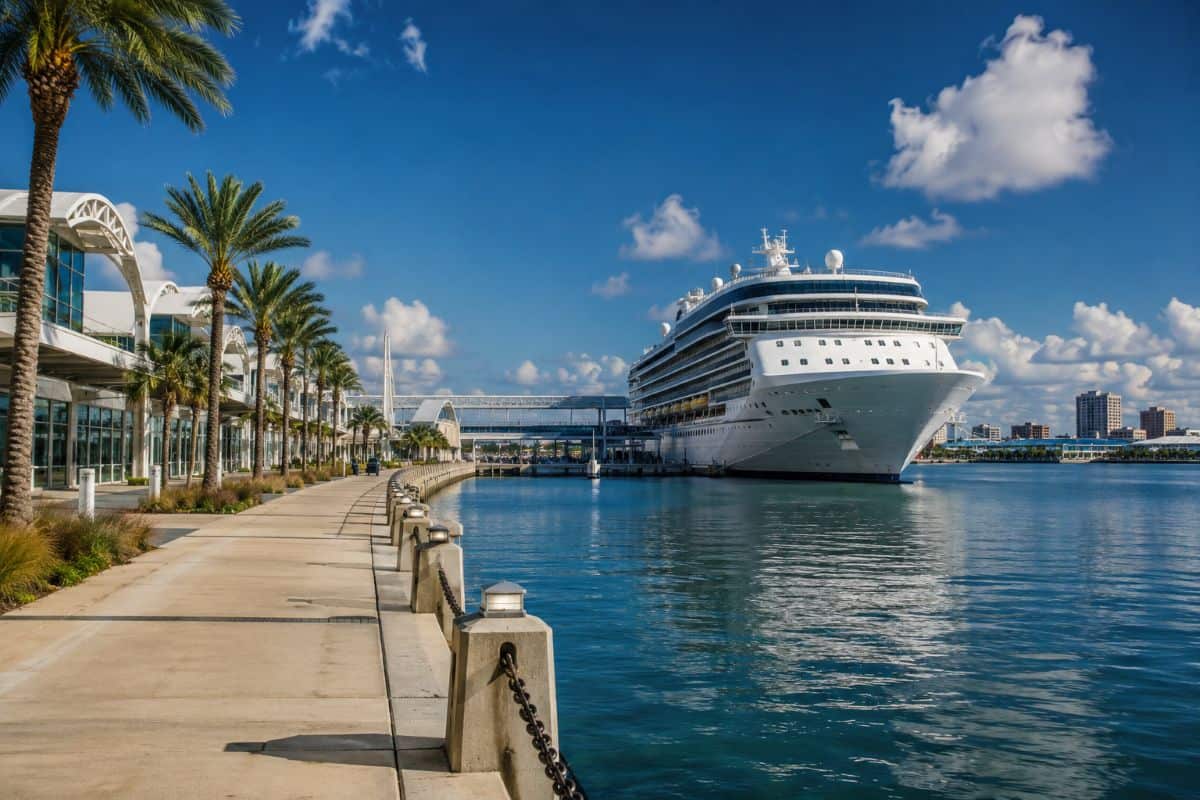
Image generated with Ai
People waiting at the waterfront can feel the excitement in the air as a newly arrived liner renders them jubilant at the prospect of international travel while, and most importantly, reducing the tedium of waiting. The 2025/2026 cruise season for the twin-island state of Trinidad and Tobago was much more than a cruise season. After the disruptions to global and regional trade and commerce systems, the arrival of cruise liners to The Port of Spain provided another opportunity for the twin-island state of Trinidad and Tobago to recover economically. The 36% increase in cruise participants was yet another cause for celebration. There were taxi drivers who woke up as early as 3 to 4 in the morning just to wash and shine their vehicles. Local artists have an opportunity to modify their work for sale.
Local vendors provided a wide variety of meals, from doubles to bake and shark and many delicious options. Trinidad and Tobago have developed a great deal of creativity and resourcefulness/ingenuity regarding the operational side of cruise tourism and a commitment to cruise operations for the long term in their Cruise Tourism Resilience Strategy.
Advertisement
Advertisement
The Great Caribbean Pivot: How Trinidad and Tobago Revitalised Its Maritime Gateway in 2025
The twin-island republic of Trinidad and Tobago experienced a dramatic resurgence in its cruise tourism and maritime logistics sector during the 2025/2026 season. Strategic policymaking by state agencies successfully reversed previous regional headwinds, engineering a 36% year-over-year increase in cruise passenger arrivals. From the bustling waterfront berths of the Port of Port of Spain to the pristine shores of Tobago, maritime authorities leveraged targeted infrastructure coordination to drive local economic growth and test complex homeporting logistics.
Advertisement
Advertisement
What Sparked the 36% Surge in Cruise Passenger Volumes Across Port of Spain and Trinidad?
Advertisement
Advertisement
A decisive combination of strategic itinerary marketing and improved port handling procedures allowed Trinidad to capture 23,961 cruise passengers alongside 10,723 crew members across 14 vessel calls. Major global cruise lines including Princess Cruises, Royal Caribbean, and MSC Cruises reaffirmed confidence in the destination, while luxury and expedition vessels made five high-profile maiden calls. The arrival of pioneering ships like SH Vega, Coral Princess, and Hebridean Sky demonstrated that the island’s appeal is diversifying rapidly beyond standard transit stops. North American travellers dominated the arrival demography, with visitors from the United States making up 66% of all arrivals, followed by Canada at 17%, the United Kingdom at 6%, and Germany at 4%.
Crucially, partial homeporting operations gained momentum as Royal Caribbean’s Brilliance of the Seas facilitated 200 passenger embarkations directly at the Port of Port of Spain. This operational milestone tested customs clearance protocols and intermodal transport linkages with Piarco International Airport, establishing a baseline for full-scale turnaround services in future seasons. Onshore disembarkation reached 66%, meaning 15,799 passengers explored local sites. With an average onshore spend of USD $59.00 per guest, direct onshore expenditure reached USD $932,141.00, marking a resounding commercial victory for local enterprise.
How Are Infrastructure Constraints at Port of Spain and Scarborough Shaping Maritime Logistics?
Deepwater access and berth management determine which vessels can navigate into Trinidad and Tobago’s primary harbour facilities safely. At the Port of Port of Spain, the Grier Channel stretches 8 kilometres with a dredged depth of 12.0 metres Chart Datum, leading into a 550-metre turning basin. Berths 3 and 4 serve as dedicated cruise ship quays equipped with heavy-duty Yokohama cylindrical fenders, accommodating vessels up to a maximum length overall of 294 metres and drafts of 12.0 metres. Marked by 20 navigation buoys across a 122-metre width, the channel provides essential access for modern ocean liners navigating the Gulf of Paria.
However, operational complexity arises because Berths 1 through 5 operate under a multipurpose format where passenger schedules must compete with cargo and break-bulk demands at Shed 4 and Shed 10. Meanwhile, the Scarborough Cruise Terminal in Tobago operates a single marginal quay capable of berthing only one vessel at a time. When multiple ships arrive concurrently, secondary vessels must anchor offshore in the outer bay, tendering passengers directly to Pigeon Point Heritage Park or Store Bay. Balancing commercial freight requirements against tight passenger turnaround schedules remains a continuous puzzle for island port managers.
Advertisement
Advertisement
What Impact Does Cruise Tourism Have on Local Businesses and Onshore Spending in Trinidad and Tobago?
The disembarkation of 15,799 cruise passengers yielded immediate economic dividends for Trinidad’s onshore service providers, generating USD $932,141 in direct local spending. Survey data collected by Tourism Trinidad Limited revealed that visitors spent an average of USD $59.00 per person on authentic culinary offerings, handcrafted artisan goods, and local transport. Local maxi-taxi unions, independent tour operators, and street food vendors serving local delicacies like doubles and bake & shark benefited directly from increased waterfront foot traffic. This direct cash injection injects vital capital straight into the micro-economy of downtown Port of Spain.
Organised tour dispatches surged by 17% year-over-year, with 6,521 passengers participating in structured land-based excursions across the main island. High-demand excursion routes brought travellers into ecological reserves such as the Caroni Bird Sanctuary and the Asa Wright Nature Centre, as well as cultural immersion trips up to Paramin via 4×4 vehicles and beach excursions to Maracas Beach. These disbursements ensure that tourist expenditures filter well beyond the immediate port gates directly into micro-enterprises and rural communities. Local artisans, performers, and family-owned restaurants all share in the economic windfall created by visiting liners.
Why Are International Maritime Regulations Forcing Realignments in Southern Caribbean Cruise Routes?
Enforcement of strict carbon intensity rules by the International Maritime Organization (IMO) has forced global cruise lines to restructure their regional sailing routes. Vessels operating under updated Efficiency Existing Ship Index (EEXI) standards must optimize speeds to curb fuel burn and shipboard emissions significantly. Because Trinidad and Tobago is situated at the southernmost boundary of the Caribbean island chain, ships departing from Florida ports must cover greater distances, which temporarily led operators to consolidate itineraries around Northern Caribbean hubs. Adapting to these international mandates requires swift, forward-thinking policy shifts from regional port authorities.
Advertisement
Advertisement
To overcome this geographical disadvantage, state entities like the Ministry of Trade, Investment and Tourism are repositioning Port of Spain as an efficient Southern Caribbean refueling and homeporting node. Leveraging the nation’s domestic natural gas and energy infrastructure allows the port to explore low-sulfur bunkering and shore-power options along Dock Road. By reducing the need for vessels to run shipboard engines while docked, Trinidad can offer carbon-conscious cruise lines a compelling operational incentive to maintain southern routes. Aligning green maritime infrastructure with regulatory demands ensures long-term viability for the island’s ports.
How Can Intermodal Transport, Port Tariffs, and Strategic Reforms Upgrade Maritime Readiness Across Trinidad and Tobago?
Expanding turnaround capabilities requires seamless synchronization between aviation facilities and seaport terminals on both islands. Piarco International Airport in Trinidad and ANR Robinson International Airport in Tobago serve as primary gateways that must support bonded luggage transfers, streamlined customs processing, and adequate pre-cruise hotel capacity. Upgrading these intermodal connections ensures that seamless transfers can handle thousands of homeporting passengers arriving on international flights smoothly. Strengthening transit routes between airports and harbors reduces bottlenecks, elevating the overall visitor experience from the moment of arrival.
Concurrently, port tariff competitiveness remains a vital factor for cruise line deployments across the Southern Caribbean. Tariff structures managed by the Port of Spain Infrastructure Company set port dues at USD $0.06 per Gross Ton for smaller vessels, alongside mandatory towage requirements utilizing 40-to-50-ton tugboats for ships over 20,000 GT. As part of public-private partnership initiatives under the Public Sector Investment Programme, ongoing capital projects focus on maintenance dredging, wreck removal across the Gulf of Paria, and modernizing navigational aids to ensure competitive berthage costs relative to regional peers.
The Heartbeat of a Reclaimed Horizon
Cruise ships plying the Gulf of Paria don’t just promise a good time when fully booked. When the last cruise ship sails, the last hope will be cast off. The increased wave of tourists coming to Trinidad and Tobago, which is expected to increase by more than a third, will not be measured by cruise schedules. This is primarily for the people of Trinidad and Tobago. Scattered throughout the islands, smiles and hungry pedestrians form lines to the street food stalls. The daily strain of work has taken a toll on taxi and all manner of public transport operators. Achieving an objective of a collective effort to place Trinidad and Tobago on the list of International Maritime Hub Ports, made the world take marvel at the significance of our small nation. From homeporting and strick international laws of maritime, we proved to the world we will not stop until we are heard. Trinidad and Tobago will continue to leave our ports open to show the world we are not just another cruise port, but a homeport.
Advertisement
