
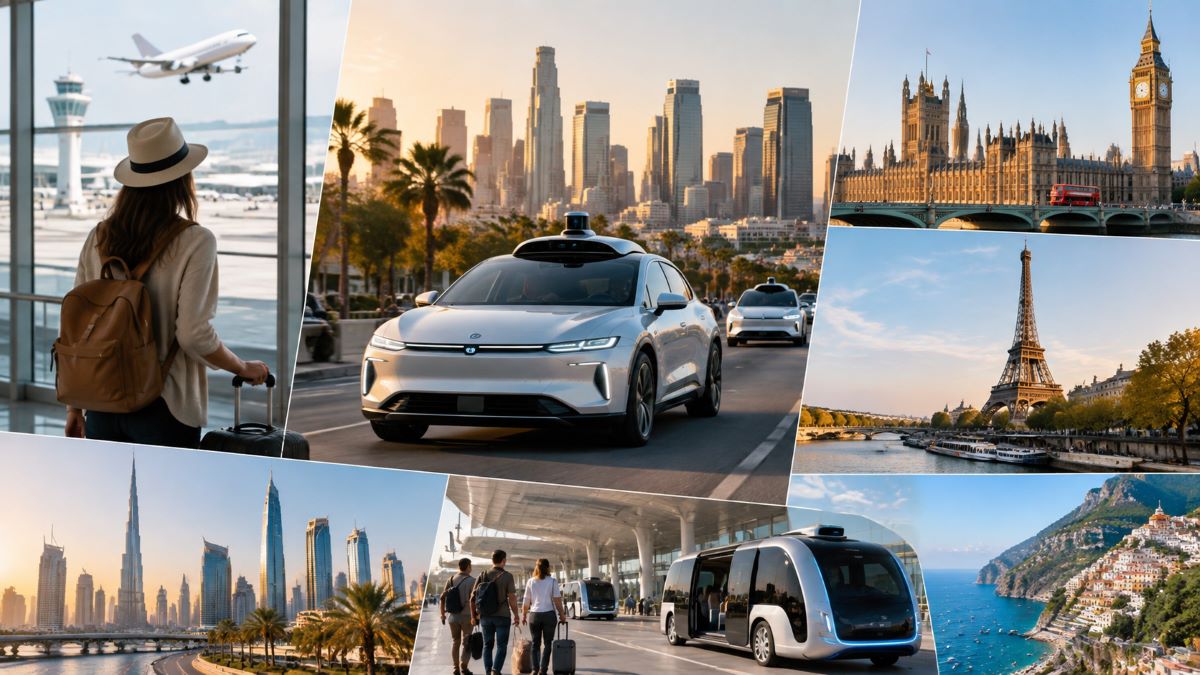
Image generated with Ai
Global tourism is entering a new mobility era as the US, UK and more countries witness a shift towards AI-powered transportation, robotaxis and smarter travel solutions. Increased travel and growing urban transport systems along with the rapid digital transformation of transport technology means that transport systems must become coordinated and more interconnected. Travel smart technology is also changing the way passengers get to and from airports, and experience city transportation. AI and self-driving technology will likely dominate the planning of the transport infrastructure of the future.
Global tourism is entering a major mobility transformation in 2026 as destinations experience stronger visitor movement while transportation systems become increasingly digital. The restructuring of Uber, which involves around 3,300 corporate job reductions, reflects a wider industry transition towards artificial intelligence, automation and future mobility solutions. The travel industry is no longer focused only on flights, hotels and attractions. Seamless movement between airports, accommodation, business districts and tourist sites has become a major part of the visitor experience. Government tourism and transport data from major markets shows that rising international travel demand is increasing pressure on destinations to develop faster, smarter and more connected transport networks.
| Region | 2026 Tourism Mobility Development | Impact on Travel |
|---|---|---|
| United States | Higher international visitor demand | Increased need for airport and city transport |
| United Kingdom | Smart mobility development | Technology-led visitor movement |
| Europe | Growing foreign tourism activity | Demand for connected transport |
| Middle East | Smart destination investment | AI-powered tourism mobility |
The United States is becoming one of the most important markets in the global tourism mobility transformation. According to the National Travel and Tourism Office (NTTO), international arrivals to the United States are forecast to reach around 70.5 million visitors in 2026. The increase in international travel is expected to strengthen demand for efficient transportation systems connecting airports, hotels, attractions and major event locations.
Large tourism destinations such as New York, Orlando, Los Angeles and Las Vegas depend heavily on reliable visitor transportation. Digital ride platforms have become an important part of urban travel, especially for international visitors looking for convenient and accessible mobility options.
Advertisement
Advertisement
The growth of tourism demand also creates opportunities for future technologies such as artificial intelligence-based transport management and autonomous vehicles. Uber’s increased focus on robotaxis comes at a time when destinations are searching for solutions that can handle growing visitor movement.
| US Tourism Factor | 2026 Impact |
|---|---|
| International arrivals | Around 70.5 million visitors forecast |
| Key tourism cities | New York, Orlando, Los Angeles, Las Vegas |
| Transport demand | Airport transfers and urban mobility |
| Future trend | AI-powered travel systems |
The United Kingdom is emerging as an important market for next-generation tourism mobility. London remains one of the world’s leading tourism and business destinations, attracting millions of international visitors who require reliable transportation between airports, hotels, attractions and commercial centres.
Government transport policies increasingly focus on connected and automated mobility solutions. These technologies could influence how visitors move around major cities in the future by improving efficiency, accessibility and convenience.
The UK tourism sector depends heavily on smooth transportation because visitor experiences often begin at airports and railway stations. The development of autonomous vehicle technology could eventually introduce new options for airport transfers, city exploration and hotel transportation.
| UK Mobility Area | Tourism Importance |
|---|---|
| London airports | Major international arrival points |
| Public transport | Visitor movement across cities |
| Digital mobility | Easier travel planning |
| Autonomous technology | Future tourism opportunity |
Europe’s tourism industry continues to experience strong growth in 2026, increasing the need for efficient mobility networks. Eurostat data shows tourism accommodation activity across the European Union expanded, with foreign overnight stays continuing to grow as international travellers returned strongly.
Countries including Spain, France, Italy and Germany remain among the world’s most visited destinations. These markets face increasing pressure to provide smooth transportation systems during peak travel periods. Tourists expect simple digital booking, reliable transfers and quick connections between airports, cities and attractions.
The future competitiveness of European destinations will depend not only on cultural attractions and accommodation but also on how easily visitors can move around.
| European Country | Tourism Mobility Challenge |
|---|---|
| Spain | Managing high seasonal visitor flows |
| France | Supporting major city tourism |
| Italy | Improving heritage destination access |
| Germany | Connecting business and leisure travel |
The Middle East is rapidly developing technology-focused tourism infrastructure as countries expand their global visitor economies. Nations including the United Arab Emirates and Saudi Arabia are investing in smart cities, advanced transport networks and digital visitor services.
Modern tourism destinations require more than attractions and hotels. They need efficient systems that help visitors move easily from airports to resorts, entertainment districts and cultural sites.
Digital mobility solutions are becoming an important part of destination planning. Artificial intelligence, automated transport and connected travel platforms could support future tourism growth by improving convenience and reducing travel barriers.
| Country | Tourism Technology Development |
|---|---|
| UAE | Smart city mobility systems |
| Saudi Arabia | Large-scale tourism expansion |
| Qatar | Event-driven visitor infrastructure |
Tourism remains one of the world’s largest employment sectors, supporting millions of jobs across hotels, transportation, attractions and travel services. Government labour and tourism statistics from major markets show continued importance of tourism employment in 2026.
However, the travel workforce is changing as companies invest more in artificial intelligence, automation and digital systems. Uber’s restructuring highlights how technology companies are reducing traditional corporate structures while increasing focus on future mobility solutions.
The shift does not mean tourism employment is disappearing. Instead, it shows a change in the type of skills needed. Future tourism growth will require more workers with digital, technology and data-related expertise.
| Tourism Employment Area | Future Direction |
|---|---|
| Hospitality | Continued visitor-driven growth |
| Transportation | Increased automation |
| Digital travel | Higher technology demand |
| Mobility services | More AI integration |
Artificial intelligence and autonomous vehicles are expected to become major influences on future tourism transportation. Robotaxis could eventually change how travellers move between airports, hotels and attractions by providing automated, efficient and potentially lower-cost transportation.
Governments worldwide are supporting research, testing and regulation of autonomous mobility technologies. As smart cities develop, transportation systems are becoming more connected and data-driven.
For tourism destinations, autonomous mobility could improve accessibility and create new visitor experiences. Elderly travellers, international tourists and visitors unfamiliar with local transport systems could benefit from easier movement.
| Technology | Possible Tourism Impact |
|---|---|
| Robotaxis | Future automated transfers |
| Artificial intelligence | Personalised mobility services |
| Digital platforms | Faster travel planning |
| Smart infrastructure | Better destination connectivity |
Uber’s 2026 workforce restructuring represents a wider transformation in the global travel and tourism ecosystem. The reduction of around 3,300 corporate jobs comes as the company increases focus on artificial intelligence, autonomous vehicles and simplified operations.
The tourism industry is moving towards a future where transportation technology will become as important as accommodation and attractions. Rising visitor numbers across the United States, Europe, the Middle East and other regions are creating demand for smarter mobility systems.
The future of tourism will depend on connected transport networks that allow travellers to move easily, safely and efficiently. Uber’s strategy highlights how technology companies are preparing for a new era where AI-powered mobility could redefine the global travel experience.
| Future Tourism Trend | Expected Development |
|---|---|
| Digital mobility | Continued global expansion |
| AI transport | Growing adoption |
| Autonomous vehicles | Long-term tourism transformation |
| Smart destinations | Increased global competition |
The global tourism industry is moving towards a new era of connected transportation as the US and more countries experience a major tourism mobility shift. AI, smart travel and robotaxis will reshape the way people access airports and cities, as well as how they get to various tourist destinations. More and more destinations are incorporating advanced mobility systems, and transport will become a major part of a destination’s overall travel experience. Automated intelligence and trackable transportation networks as a service will help realize the goals of efficient, quick, and ultimately, seamless and tech-centered tourism around the world.
Advertisement
Advertisement
Advertisement













Friday, September 4, 2026

Friday, September 4, 2026
Friday, September 4, 2026

Friday, September 4, 2026

Thursday, September 3, 2026

Wednesday, September 2, 2026

Friday, September 4, 2026

Friday, September 4, 2026


