
Azamara, Carnival and More See Cruise Shoppers Surge as Rewards Transform Onboard Spending

Published
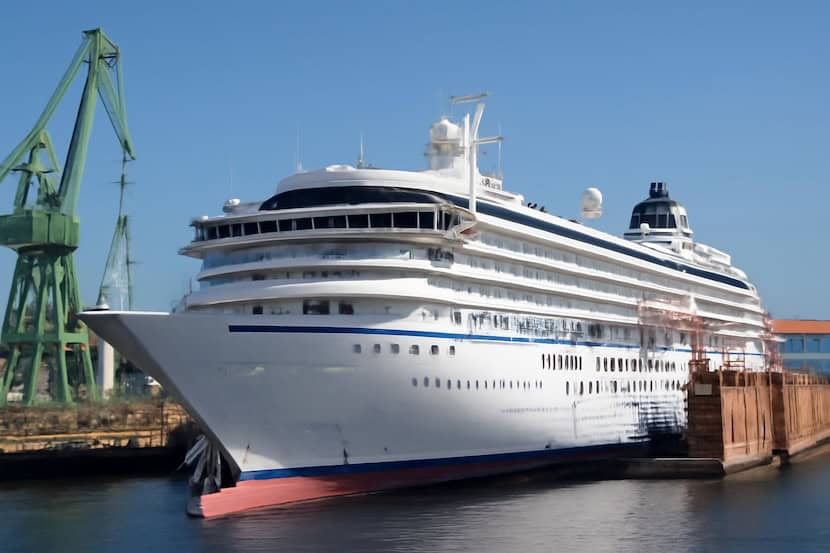
Azamara, Carnival and more cruise lines are seeing cruise shoppers surge as rewards transform onboard spending into valuable travel opportunities. Across the cruise industry, cruise shoppers now have more reasons to spend wisely, while rewards can transform ordinary onboard spending into future travel perks. Moreover, Azamara, Carnival and more are expanding reward opportunities as cruise visitors seek greater value from every voyage. From onboard shopping to flights, hotels and experiences, rewards are changing how cruise shoppers view spending. Travel And Tour World urges global travellers to read the entire story to discover how these cruise rewards could reshape spending, loyalty and future journeys.
Cruise Shopping Rewards Expand as Global Passenger Numbers Reach New Records
The launch of Azamara Shopping Rewards comes at a time when the cruise industry is attracting more travellers than ever before. Global ocean-cruise passenger numbers reached 31.7 million in 2023, climbed to 34.6 million in 2024, and reached approximately 37.3 million in 2025, according to Cruise Lines International Association data. The 2025 figure represented a 7.7% increase over 2024 and approximately 2.7 million additional passengers.
Advertisement
Advertisement
This expanding customer base gives cruise companies a larger opportunity to connect onboard spending with loyalty. Azamara’s new programme takes that idea beyond traditional onboard credits by allowing eligible retail purchases to generate rewards that can potentially be used for future travel and lifestyle experiences.
Global Cruise Passenger Growth: Five-Year Context
The pandemic created an exceptional disruption to cruise tourism. Passenger volumes were dramatically reduced in 2020 and 2021 as fleets operated under restrictions and gradually returned to service.
Advertisement
Advertisement
The recovery became much stronger in 2022. By 2023, the industry had reached 31.7 million ocean-going passengers, already above the 2019 benchmark of approximately 29.7 million. In 2024, the figure increased to 34.6 million, a 9% rise over 2023.
The latest CLIA data puts 2025 at 37.3 million passengers, another 7.7% year-on-year increase.
Advertisement
Advertisement
| Year | Global ocean cruise passengers | Annual movement | Travel-market significance |
|---|---|---|---|
| 2021 | Pandemic-recovery year | Severely below normal | Fleet restart remained limited |
| 2022 | Recovery accelerated | Strong rebound | More ships returned to service |
| 2023 | 31.7 million | Major recovery | Passenger volume exceeded 2019 |
| 2024 | 34.6 million | +9% | New historical record |
| 2025 | 37.3 million | +7.7% | Another global passenger record |
The data demonstrates why onboard loyalty and retail programmes have become commercially important. More passengers create more opportunities for spending on shopping, dining, entertainment, excursions and other services.
Five Cruise Brands Offering Comparable Reward or Spending Benefits
The following five examples are not identical copies of Azamara Shopping Rewards. Instead, they demonstrate different approaches to connecting passenger spending with future cruise value, onboard benefits or experiences.
1. Carnival Cruise Line: Carnival Rewards Turns Spending Into Points
Carnival is one of the closest large-scale comparisons because its Carnival Rewards programme directly links eligible passenger spending with points. The programme transitioned from VIFP to Carnival Rewards on September 1, 2026. Guests earn 3 Carnival Rewards Points for every US$1 spent on eligible Carnival purchases. The eligible categories include cruise fares, gratuities, transfers, vacation protection and qualifying pre-cruise and onboard purchases. Members also receive 3 Status Qualifying Stars for every US$1 spent on eligible Carnival purchases. Carnival Rewards Mastercard holders can accelerate earnings to as much as 6 points per US$1 and 4 Status Qualifying Stars per US$1, depending on the transaction.
The programme’s redemption structure makes it particularly relevant to travellers comparing rewards systems. Points can be used toward cruise fares, including deposits and eligible balances, while onboard redemption is available through the Carnival HUB app for qualifying experiences. These include shore excursions, specialty dining, spa services, drink packages and Wi-Fi. Carnival also says future releases will introduce additional pre-cruise redemption functionality. There is no minimum redemption requirement, and points can remain active when qualifying activity occurs. For non-Mastercard members, qualifying activity can extend point validity for three years.
| Carnival Rewards feature | Published detail |
|---|---|
| Launch of new programme | September 1, 2026 |
| Standard earning | 3 points per US$1 |
| Standard status earning | 3 stars per US$1 |
| Mastercard earning | Up to 6 points per US$1 |
| Mastercard status earning | 4 stars per US$1 |
| Minimum redemption | None |
| Cruise fare redemption | Yes |
| Onboard redemption | Yes |
| Excursions | Eligible |
| Specialty dining | Eligible |
| Spa | Eligible |
| Drinks | Eligible |
| Wi-Fi | Eligible |
For travellers, Carnival’s model shows how cruise companies can transform ordinary holiday expenditure into a longer loyalty relationship.
2. Royal Caribbean and Celebrity: Royal ONE Rewards Connect Spending With Future Cruises
Royal Caribbean and Celebrity Cruises use Royal ONE Rewards to give eligible members another route from points to travel value. Members can check balances through their Royal Caribbean, Celebrity or Silversea accounts and redeem qualifying points online, through the relevant app or by telephone. Points can be used toward cruise discounts, pre-cruise purchases and onboard credit. Redemptions generally need to be completed at least three days before sailing.
Advertisement
Advertisement
For travellers, the important feature is flexibility. Rather than restricting rewards to merchandise, the programme can connect points with cruise-related expenditure. Onboard credit can then support eligible expenses during a voyage. This makes the structure similar in philosophy to Azamara’s new approach, although the programmes operate differently.
Royal Caribbean Group also remains one of the industry’s largest operators. Its 2025 results reported 9,446,010 passengers carried across the group during 2025, compared with 8,564,272 in 2024, according to its results release. That represents an increase of approximately 881,738 passengers, or about 10.3%.
| Royal Caribbean Group indicator | 2024 | 2025 | Change |
|---|---|---|---|
| Passengers carried | 8,564,272 | 9,446,010 | +881,738 |
| Approximate growth | — | — | +10.3% |
| Brands relevant to Royal ONE | Royal Caribbean, Celebrity, Silversea | Royal Caribbean, Celebrity, Silversea | — |
| Cruise discount redemption | Available | Available | — |
| Pre-cruise redemption | Available | Available | — |
| Onboard credit | Available | Available | — |
The growth is important for the rewards market because a larger passenger base means more opportunities for companies to encourage repeat bookings and onboard spending.
3. Princess Cruises: Onboard Credit and Future Cruise Value
Princess Cruises follows a somewhat different model. Instead of creating an identical shopping-points marketplace, it uses Onboard Credit, Future Cruise Credit and Future Cruise Deposits to connect spending and promotional benefits with future travel.
Princess says Onboard Credit can be used for shore excursions, beverages, The Shops of Princess and Lotus Spa services. Future Cruise Credits can also be applied to cruise fares and, in qualifying circumstances, other booking components such as Princess Vacation Protection, flights booked through Princess, transfers and hotel packages.
The Future Cruise Deposit programme is particularly relevant to travellers who want to turn one voyage into another. Princess states that a Future Cruise Deposit costs US$100 per person and can provide up to US$150 in onboard credit. The deposit can secure a future booking for up to one year, subject to the programme conditions.
Advertisement
Advertisement
Princess also publishes a detailed tiered structure for certain onboard-credit amounts.
| Cruise duration | Inside/Oceanview OBC | Balcony/Suite OBC |
|---|---|---|
| 3–6 days | US$15 per person | US$25 |
| 7–10 days | US$25 | US$50 |
| 11–16 days | US$75 | US$100 |
| 17–44 days | US$125 | US$150 |
This system is not a direct competitor to Azamara Shopping Rewards because the earning mechanism differs. However, both models demonstrate the growing importance of giving passengers financial value that extends beyond a single voyage.
4. Celebrity Cruises: Reward Points Can Cover Onboard Shopping
Celebrity Cruises provides another relevant comparison through its Blue Chip Club Rewards programme. This programme is primarily casino-led rather than retail-led, but its rewards can extend into onboard spending.
Members earn Reward Points and Tier Credits based on qualifying casino activity. Celebrity states that Reward Points can be redeemed for FreePlay or complimentary experiences, including dining and shore excursions. At higher qualifying thresholds, points can also be applied toward compatible onboard expenses, including food and beverage, onboard shopping, shore excursions, selected spa charges, photography and internet.
A minimum of 10,000 Reward Points is required for the relevant onboard expense account credit. Celebrity also states that these points expire at the end of the sailing if they are not redeemed.
| Celebrity Blue Chip feature | Published detail |
|---|---|
| Programme type | Casino loyalty |
| Reward points | Yes |
| Tier credits | Yes |
| Onboard shopping eligible | Yes, under qualifying expense credit |
| Shore excursions | Eligible |
| Dining | Eligible |
| Spa | Selected charges |
| Internet | Eligible |
| Minimum points for onboard expense credit | 10,000 |
| Points carry forward | No; unused points expire after sailing |
For travellers, this illustrates an important difference. Azamara Shopping Rewards begins with eligible retail purchases, while Celebrity’s comparable benefit starts with casino activity and can eventually reach shopping.
Advertisement
Advertisement
5. Norwegian Cruise Line: CruiseNext Converts Onboard Decisions Into Future Travel Value
Norwegian Cruise Line uses CruiseNext, an onboard programme designed to encourage guests to commit to another cruise while they are still travelling.
The programme offers onboard credit when passengers purchase CruiseNext Credits. Norwegian currently advertises an offer where guests can purchase four US$250 CruiseNext Credits and receive US$500 in onboard credit. Three US$250 credits can generate US$375 in onboard credit under the stated offer.
The credits can subsequently be used toward eligible Norwegian sailings of at least three days, subject to programme rules.
| Norwegian CruiseNext offer | Purchase value | Advertised onboard credit |
|---|---|---|
| Four CruiseNext Credits | US$1,000 | US$500 |
| Three CruiseNext Credits | US$750 | US$375 |
| Minimum future sailing | 3 days | Eligible published sailings |
CruiseNext is therefore not a shopping rewards programme. Its relevance comes from the same strategic principle: convert activity during one cruise into value connected with a future holiday.
Five-Year Passenger Comparison: What the Industry Data Shows
A precise five-year passenger comparison across these five brands cannot responsibly be presented as a single table because the companies report passengers differently. Some publish group-level passengers carried, some report capacity and occupancy, and privately held operators such as MSC do not provide the same public annual series as listed US cruise groups.
The broader industry series is therefore the most consistent benchmark.
Advertisement
Advertisement
| Year | Global ocean-going cruise passengers | Change from previous reported year | Context |
|---|---|---|---|
| 2021 | Recovery period | Not directly comparable | Fleet restart remained constrained |
| 2022 | Recovery accelerated | Not directly comparable | Major return of cruise capacity |
| 2023 | 31.7 million | Strong increase | Passenger numbers exceeded 2019 |
| 2024 | 34.6 million | +9% | New record |
| 2025 | 37.3 million | +7.7% | New record again |
CLIA reports that 2024’s 34.6 million passengers represented a 9% increase over 2023’s 31.7 million. Its 2025 report subsequently recorded 37.3 million passengers, up 7.7% year over year.
The recovery is also visible in the 2019 comparison. The 2024 passenger total was approximately 6.8% higher than the 2019 level, showing that the sector had moved beyond merely recovering lost pandemic demand.
Why Cruise Shopping Rewards Matter More as Passenger Numbers Rise
The growing passenger base changes the economics of onboard retail. Every additional traveller represents another potential customer for boutiques, jewellery, watches, beauty products, luggage, souvenirs, dining, entertainment and excursions.
Starboard’s scale illustrates the size of the onboard retail ecosystem. The company said in 2025 that its cruise retail operation supported more than 90 ships across 14 cruise-line partners, while its Luxury Division worked with brands including Azamara, Crystal, Scenic Luxury Cruises & Tours, Silversea and The Ritz-Carlton Yacht Collection.
Starboard’s corporate restructuring also placed cruise, luxury and resort activities into separate business units, reflecting a broader strategy to develop vacation retail beyond traditional shipboard stores.
| Starboard scale indicator | Reported figure |
|---|---|
| Cruise ships supported in 2025 | 90+ |
| Cruise-line partners | 14 |
| Luxury Division partners | 5 named brands |
| Azamara relationship | Luxury Division |
| Cruise retail focus | Onboard vacation retail |
| Broader expansion | Cruise, Luxury and Resort divisions |
What Travellers Should Compare Before Spending
Travellers should not treat rewards as an automatic discount. A purchase should first be useful, competitively priced and suitable for the journey.
Advertisement
Advertisement
Passengers should check which transactions qualify. Carnival, for example, excludes government taxes and fees, certain air purchases and some other categories from points and status calculations.
Travellers should also compare redemption restrictions. Some programmes focus on cruise fares. Others provide onboard credit. Azamara’s model is distinctive because its marketplace extends into categories such as travel and lifestyle rewards.
| Programme | Main earning route | Retail connection | Future travel connection |
|---|---|---|---|
| Azamara Shopping Rewards | Eligible onboard retail | Direct | Flights, hotels and experiences |
| Carnival Rewards | Eligible Carnival spending | Onboard purchases included | Cruise fare and experiences |
| Royal ONE Rewards | Eligible reward points | Indirect/onboard credit | Cruise discounts and purchases |
| Princess | Credits and deposits | Shops of Princess via OBC | Future cruises, flights and hotels in qualifying cases |
| Celebrity Blue Chip | Casino activity | Onboard shopping eligible | Onboard experiences |
| Norwegian CruiseNext | Purchase future-cruise credits | Onboard credit | Future cruises |
The Bigger Travel Trend
The growth of cruise tourism is creating a larger market for loyalty systems that connect different parts of a holiday.
Azamara Shopping Rewards represents one version of that trend. Carnival is expanding spending-based points. Royal Caribbean and Celebrity use points and onboard credit. Princess combines future-cruise deposits with onboard value. Norwegian encourages passengers to secure future voyages while onboard.
These approaches are different, but they share one principle: the cruise experience does not have to end when the ship reaches port.
For global travellers, the most valuable programme will depend on how they spend, how frequently they cruise and what they prefer to redeem.
Advertisement
Advertisement
The strongest rewards strategy is therefore not necessarily the one offering the largest headline number. It is the programme that gives travellers useful value without encouraging unnecessary spending.
With global cruise passenger numbers reaching approximately 37.3 million in 2025, competition for repeat guests is likely to remain intense.
For passengers, that competition can translate into more choices, more personalised rewards and stronger links between today’s cruise spending and tomorrow’s holiday.
Conclusion
Azamara, Carnival and more cruise brands are reshaping how travellers think about onboard spending. Rewards now add another layer of value to cruise shopping, connecting everyday purchases with future journeys, experiences and travel benefits. As cruise tourism continues to expand, these programmes could become increasingly important for passengers seeking greater value from every voyage. However, travellers should always check eligibility, redemption rules and programme conditions before spending specifically for rewards. For global cruise shoppers, the message is clear: smart spending can potentially bring more value beyond the ship. Travel And Tour World will continue tracking how cruise rewards evolve and influence the future of international travel.
Advertisement
