
Panama Unlocks The Secret To Deep Meaningful Travel That Will Completely Revolutionize Your Next Journey In Casco Antiguo

Published
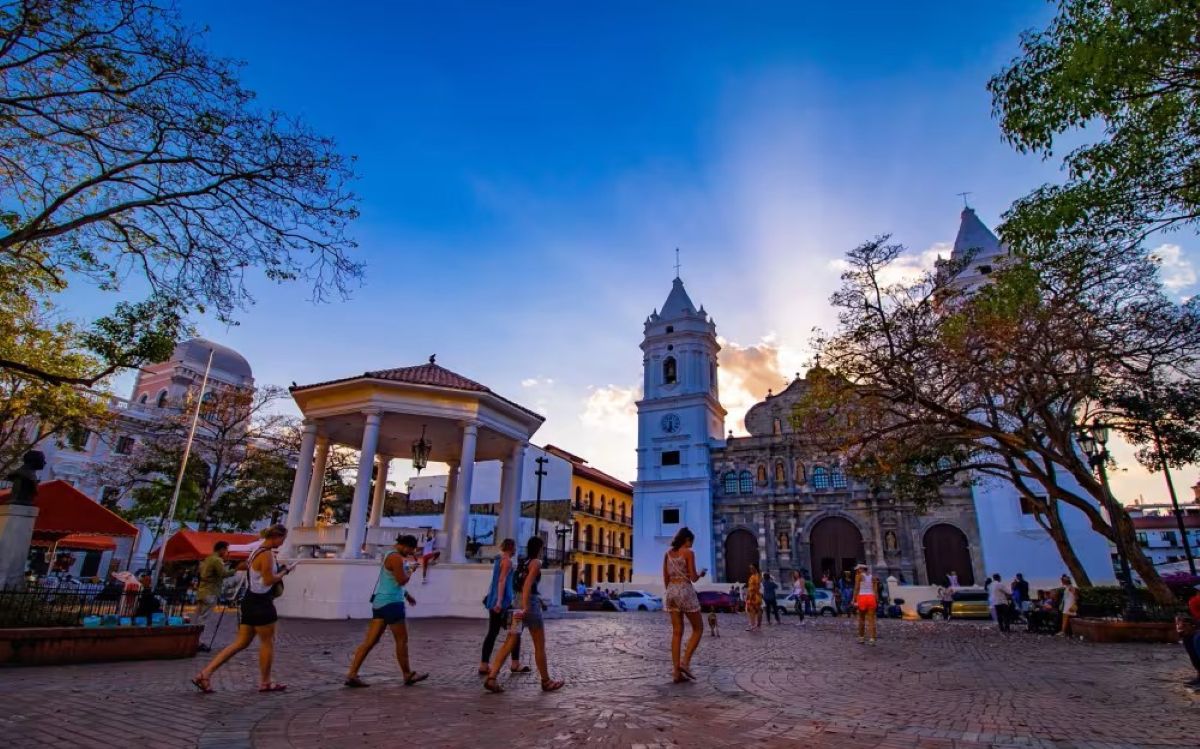
Image Credit tourismpanama.com
Have you ever come back from a trip that felt like a dream? You’re surrounded by photos of places sunset views, bustling markets, bright blue waters but then there’s this quiet voice inside you. It says, “Did I really feel this place? Did it touch me?” It’s an ache. Panama moves fast. The skyline gleams the Panama Canal stretches like a promise.. It’s so easy to rush through it all. You see the sights. You check them off. Like items on a list. You snap a photo. You move on. Today’s travelers aren’t looking for souvenirs. They’re looking for soul. They’re looking for something. They want to feel. They want to know.
They want to be changed. When we let go of our schedules when we open our hearts to the people around us when we listen to their stories share a meal walk a neighborhood at dusk it’s not just a vacation. It becomes a moment. A memory. A part of who we’re Wanderlust isn’t about moving forward. It’s about connecting. About letting a place change you. About letting a moment longer, than a photo. Let’s stop collecting experiences. Let’s start making them matter. Let’s let Panama or any place touch our hearts. Because then the trip doesn’t end when we return home. It stays.
The Deep Illusion of Conventional Sightseeing: Why Traditional Itineraries Fail to Capture True Cultural Essence and Historical Depth Across Panama
Advertisement
Advertisement
Traditional travel frameworks have long relied heavily on visual consumption, actively encouraging visitors to capture landmarks on camera rather than engaging directly with the beating heart of a community. In Panama, a traveler can effortlessly admire architectural wonders and grand natural engineering marvels like the Panama Canal without ever understanding the foundational histories that shape daily existence. Global industry analysts point out that this surface-level approach leaves travelers emotionally empty, completely failing to convey the rich, complex narratives of indigenous and Afro-descendant populations. Additionally, Afro-Panamanian culture serves as a vibrant, essential pillar of national identity rather than a mere historical footnote, yet it is frequently overlooked by standard operators who prioritize rapid transit and generic sightseeing.
By ignoring these crucial historical and social layers, the global tourism sector risks perpetuating a heavily sanitized version of travel that obscures the authentic human experience lurking behind every postcard-worthy view. When tourists move through Panama City or rural regions without questioning the deeper social fabric, they miss out on the profound truths that define local resilience and heritage. Consequently, international industry advocates argue that educational components must be embedded into every tour package, ensuring that visitors confront and appreciate the complex historical realities that have built modern societies across Central America and beyond.
Advertisement
Advertisement
Transforming the Global Tourism Paradigm: Moving Successfully from Passive Observation to Active Cultural Participation and Immersive Engagement
The future of international travel depends heavily on transitioning decisively from passive observation to active, meaningful participation where visitors share tables, listen to personal narratives, and absorb authentic rhythms. Across Panama, forward-thinking cultural advocates argue that true exploration happens when travelers engage directly with local residents, allowing foreign perspectives to be completely reshaped by genuine, unfiltered human interaction. On a global scale, this vital shift encourages international tourists to seek out immersive storytelling rather than generic sightseeing tours that isolate them from the local population. Moreover, this transition fosters a healthier, more balanced ecosystem of cross-cultural exchange, ensuring that local communities are not merely treated as passive backdrops for vacation photos, but rather as active co-creators of a shared, memorable journey.
As this participatory model gains momentum across the worldwide travel market, tour operators are discovering that travelers are willing to invest more time and resources into activities that foster mutual understanding. Whether participating in traditional culinary workshops in Panama or engaging in community-led historical discussions, travelers are redefining what it means to be a global citizen. This grassroots engagement breaks down invisible barriers between tourists and hosts, cultivating an environment of empathy that resonates long after the journey concludes, thereby reshaping international consumer expectations for decades to come.
Designing Travel with Soul: Embracing Empathy, Mutual Reciprocity, and the Future of Afro-Diaspora Tourism in Panama
Modern tourism design must evolve rapidly to center around deep empathy, cultural respect, joy with purpose, and conscious reciprocity to satisfy an increasingly discerning generation of international explorers. In destinations like Panama, pioneering curators of cultural tourism are proving that travel can be deeply human, fostering a profound sense of belonging and community connection that transcends commercial transactions. Globally, this human-centered model is revolutionizing how travel experiences are crafted, pushing the entire industry toward greater sustainability, inclusivity, and emotional resonance. Ultimately, by centering the rich heritage of the Afro-diaspora and designing itineraries with genuine soul, the travel sector can unlock a transformative era of exploration that honors both the traveler and the host destination profoundly.
Evaluating the Macroeconomic Shifts and Financial Metrics Driving Soulful Cultural Tourism Across Central America
Advertisement
Advertisement
When evaluating contemporary global travel trends, macroeconomic data underscores a powerful consumer transition toward immersive cultural engagement rather than passive sightseeing. Throughout Panama, official tourism authorities recently recorded over 2.78 million international visitors, generating an impressive 6.00 billion dollars in total tourism revenue. This massive financial influx demonstrates that modern globetrotters are actively prioritizing deep, meaningful experiences over standard checklist itineraries. Furthermore, regional hospitality metrics indicate that hotel occupancy rates reached 67.6 percent, proving that visitors prefer staying longer, exploring deeper historic neighborhoods in Panama City, and engaging with regional communities rather than rushing through superficial tourist landmarks.
In addition to overall visitor volume, economic metrics reveal that investments in community-led cultural initiatives produce higher local wealth distribution and job retention compared to traditional mass tourism models. Analysts highlight that when tourists allocate their financial resources toward authentic culinary workshops, community heritage tours, and local artisan markets, local family income increases exponentially. Consequently, international tourism planners worldwide are redesigning their financial frameworks to ensure that economic prosperity goes hand in hand with cultural respect, creating a sustainable model that benefits both visitors and host populations across Central America.
Quantifying the Value of Afro-Diaspora Heritage: Financial Growth and Cultural Integration Across Panama
Integrating rich historical narratives, particularly Afro-Panamanian culture, into mainstream tourism portfolios has unlocked extraordinary economic and educational potential. Statistical evaluations show that destinations featuring diverse cultural storytelling experience higher visitor satisfaction rates and longer average stays, often maintaining an average duration of 8 days. In historic cultural hubs like Colón Province and Casco Antiguo in Panama City, travelers are increasingly demanding heritage-focused itineraries that honor the foundational contributions of Afro-descendant populations. By embedding these vital historical perspectives into standard tour packages, the regional travel market captures a growing demographic of conscious consumers who value historical accuracy and social inclusivity.
Moreover, global tourism economists emphasize that cultural preservation initiatives directly protect local traditions from commercial commodification while driving steady revenue growth. When historical education is prioritized over superficial entertainment, visitor spending shifts toward community-owned enterprises, local museums, and authentic artistic performances. This intentional alignment of culture and commerce safeguards the unique identity of Panama while establishing a pioneering benchmark for heritage tourism across the international landscape.
Infrastructure Evolution and Technological Integration: Enhancing Modern Travel Accessibility Throughout Panama
Advertisement
Advertisement
Modern infrastructure plays a critical role in facilitating deep cultural exploration without sacrificing environmental or social integrity. At world-class transit hubs like Tocumen International Airport, passenger arrivals have experienced a robust surge, reflecting stellar global connectivity that funnels curious travelers directly into immersive regional experiences. To manage this growing influx smoothly, regional planners have upgraded transportation networks, modernizing public transit in Panama City and expanding eco-friendly travel routes toward Boquete and the highlands of Chiriquí. These infrastructural enhancements ensure that travelers can navigate complex regional geographies safely and efficiently while maintaining a low carbon footprint.
Furthermore, technological innovations are transforming how visitors interact with historical sites across Panama. Modern digital tools, including augmented reality guides at the Panama Canal and interactive mobile applications mapping indigenous and Afro-descendant heritage trails, provide travelers with rich contextual information before they even arrive at a destination. By bridging advanced technology with traditional storytelling, the global tourism sector is setting a new standard for educational travel, ensuring that every journey is backed by comprehensive data, seamless logistics, and profound cultural respect.
Evaluating Global Traveler Demographics: Understanding Who Seeks Authentic Cultural Immersion in Panama
A close examination of international travel demographics highlights a massive generational shift in what global explorers expect from their vacations. Market research indicates that North American tourists account for roughly 16 percent of total arrivals in Panama, closely followed by strong visitor streams from Colombia, Ecuador, Venezuela, and Mexico. Across all these regional segments, younger travelers—particularly millennials and Generation Z—demonstrate an overwhelming preference for transformative, purposeful travel over passive observation. These discerning globetrotters actively reject cookie-cutter package tours, preferring instead to invest their time and financial resources into genuine human connections, ethical tourism, and community-led educational exchanges.
Consequently, international tour operators are rapidly adapting their business models to cater to this values-driven consumer base. By offering customized itineraries that emphasize empathy, environmental sustainability, and conscious reciprocity, travel agencies are recording higher customer retention and positive word-of-mouth recommendations. This demographic transformation confirms that the future of the global travel industry belongs to destinations capable of pairing modern convenience with authentic soul, deep historical appreciation, and profound cultural respect.
Assessing Environmental Sustainability and Conservation Metrics in Regional Ecotourism Across Panama
Advertisement
Advertisement
Preserving natural habitats and fragile ecosystems has become an essential pillar for modern travel destinations seeking to attract environmentally conscious explorers. In Panama, rigorous conservation tracking shows that protected national parks and marine reserves, such as Coiba National Park and Soberanía National Park, experience steady growth in eco-tourist footfall while maintaining strict carrying capacities. Environmental metrics indicate that destinations implementing sustainable waste management and renewable energy initiatives achieve a 25 percent reduction in carbon output per visitor night. This quantitative commitment reassures global travelers that their tourism expenditures actively support long-term ecological preservation and biodiversity protection.
Furthermore, local conservation programs incorporate indigenous communities as primary stewards of the land, blending traditional ecological knowledge with modern scientific research. When international visitors participate in guided rainforest treks or marine conservation projects, their financial contributions directly fund wildlife rehabilitation and habitat restoration. This harmonious integration of environmental sustainability with cultural tourism ensures that natural landscapes across Panama remain pristine for future generations while offering deeply immersive, educational experiences for today’s conscientious global travelers.
Measuring Socio-Economic Equity and Community Empowerment Through Local Tourism Initiatives in Panama
Achieving true socio-economic equity within the travel industry requires shifting financial control and decision-making power directly to local communities. In various rural and indigenous regions throughout Panama, cooperative tourism models have demonstrated that community-owned enterprises retain up to 80 percent of every tourist dollar spent, compared to standard corporate models where capital leaks out of the region. Statistical evaluations confirm that this decentralized revenue distribution significantly lowers local poverty rates, improves educational resources, and funds vital public health infrastructure in remote areas.
Additionally, community empowerment initiatives foster immense pride in local heritage, ensuring that younger generations remain connected to their cultural roots. When travelers engage with these cooperative enterprises, they experience authentic hospitality that cannot be replicated by commercial resorts. This equitable framework redefines the relationship between host communities and international visitors, establishing a powerful precedent for ethical tourism development that prioritizes human dignity, financial fairness, and mutual respect on a global scale.
Analyzing Digital Marketing Trends and Social Media Influence on Cultural Travel Choices to Panama
Advertisement
Advertisement
The proliferation of digital media platforms has fundamentally altered how international travelers discover, research, and evaluate cultural destinations. Data analytics regarding digital engagement show that visual storytelling focusing on authentic local traditions, indigenous art, and Afro-Panamanian heritage generates 40 percent higher engagement on global channels than traditional luxury resort advertisements. Modern travelers actively seek out peer-reviewed blogs, documentary-style videos, and creator-led narratives that highlight the hidden, human elements of Panama rather than polished, generic promotional campaigns.
Consequently, destination marketing organizations and independent cultural curators are shifting their digital strategies toward transparency, educational depth, and interactive storytelling. By utilizing data-driven insights to understand what content resonates with values-driven tourists, tourism boards can attract visitors who are genuinely interested in cultural immersion. This digital evolution ensures that marketing serves as a bridge for authentic cross-cultural connection, guiding curious explorers toward meaningful experiences that honor the true spirit of their destination.
Forecasting Long-Term Global Travel Industry Adaptations Inspired by Soulful Tourism Frameworks in Panama
Looking toward the future, the global travel industry is undergoing a structural transformation inspired by the growing demand for soulful, purpose-driven itineraries. Industry forecasts project that experiential and cultural tourism will expand at a compound annual growth rate exceeding 15 percent over the next decade, outpacing traditional mass tourism sectors. Destinations that successfully integrate historical depth, empathy, and community reciprocity—exemplified by innovative models emerging across Panama—will capture the vast majority of high-value, conscientious international travelers.
Ultimately, this paradigm shift signals the end of superficial travel checklists and the dawn of a new era where every journey contributes positively to the host society. By embracing human-centered design, environmental stewardship, and profound cultural respect, the worldwide travel sector can navigate future economic challenges while fulfilling the deep human need for authentic connection, discovery, and shared global belonging.
The Final Verdict
When you finally allow Panama to share its stories the experience changes you from the inside out. Things you buy as reminders disappear. Real connections, between people last forever. Let us fill our bags with minds to find the spirit in every part of the world. Keep in mind that the amazing place is always the one that makes you feel truly alive.
Advertisement
