
Budapest Shines Again as Hungary’s Award-Winning Advent Bazilika Powers a Magical Christmas 2026

Published
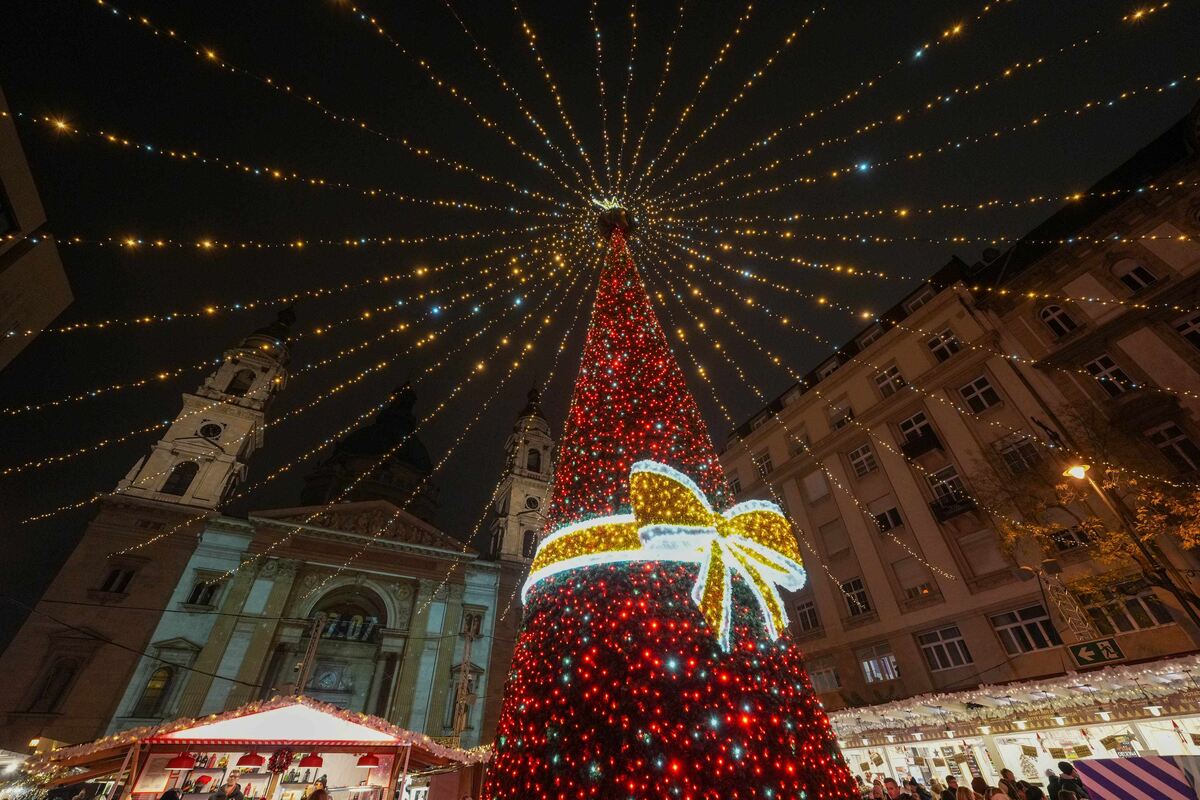
Budapest, Hungary, will bring one of its biggest winter tourism attractions back to the heart of the capital from 13 November 2026 to 1 January 2027, when the award-winning Advent Bazilika transforms St Stephen’s Square into a major Christmas destination filled with Hungarian crafts, winter gastronomy, festive illumination and spectacular light projections. The return matters for Hungary’s tourism sector because the market gives domestic and international travellers a powerful reason to visit Budapest during the colder shoulder and holiday season, while its location beside St Stephen’s Basilica connects Christmas entertainment directly with sightseeing, shopping, dining and the city’s wider cultural economy.
The 2026 edition also arrives with an exceptional award legacy. Advent Bazilika promotes itself as a four-time winner of Europe’s leading Christmas-market accolade, a distinction that has helped place Budapest among the continent’s most recognisable festive destinations. The market has previously secured major European public-vote recognition, strengthening its international visibility alongside long-established Christmas destinations such as Vienna, Prague and Strasbourg.
However, its historic winning record must be distinguished from newer annual European Christmas-market rankings. Other destinations have risen to the top in subsequent voting cycles, while Budapest’s repeated victories remain part of the Hungarian capital’s established festive tourism credentials rather than proof that it has won every current European poll.
Budapest’s Christmas Centre Returns for 50 Days of Winter Tourism
Advent Bazilika will open at Szent István Square on 13 November 2026 and continue until 1 January 2027, creating a roughly seven-week tourism window covering the Advent period, Christmas holidays and New Year celebrations. The official event information says the 2026 market will feature nearly 100 Hungarian craft exhibitors, Hungarian gastronomy, a major Christmas tree, extensive lighting and recurring entertainment.
Advertisement
Advertisement
The setting is central to the market’s international appeal. St Stephen’s Square lies immediately in front of St Stephen’s Basilica, one of Budapest’s most recognisable landmarks. That allows visitors to combine the festive market with central-city sightseeing instead of travelling to a purpose-built event site outside Budapest’s tourism core.
Official opening hours also make the market suitable for both daytime sightseeing and evening visits.
Advertisement
Advertisement
| 2026–27 Advent Bazilika Schedule | Opening Hours |
|---|---|
| Monday–Thursday | 11:00–22:00 |
| Friday–Saturday | 11:00–23:00 |
| Sunday | 11:00–22:00 |
| 24 December 2026 | 11:00–15:00 |
| 25–26 December 2026 | 11:00–20:00 |
| 31 December 2026 | 11:00–03:00 |
| 1 January 2027 | 11:00–18:00 |
The extended New Year’s Eve operation is particularly important for tourism businesses. Visitors travelling after Christmas can still experience the market, while hotels, restaurants and entertainment venues can connect the attraction with Budapest’s wider New Year celebrations.
Giant Christmas Tree and Basilica Light Shows Transform the Square
Advent Bazilika is not simply a collection of retail stalls. Its visual presentation has become an important part of Budapest’s festive tourism identity. A large Christmas tree will again dominate the centre of St Stephen’s Square, while an overhead net of lights will add another layer of illumination. The square will also feature a Bethlehem nativity scene and a monumental Advent wreath.
The Basilica itself becomes part of the entertainment after sunset. Official programme information confirms that light painting will begin every afternoon from 17:30, projecting elaborate moving imagery across the Basilica façade. Musical performances will precede the projections on selected days from 17:00.
The attraction has previously become known for three-dimensional visual effects mapped against the architecture of St Stephen’s Basilica. The combination creates something conventional shopping centres cannot reproduce: a Christmas experience physically integrated with one of the city’s monumental buildings. This is particularly valuable in the social-media era. Highly visual attractions can extend destination exposure far beyond visitors physically standing in the square as photographs and videos circulate internationally throughout the festive period.
Hungarian Crafts Put Local Producers at the Heart of the Market
Shopping remains fundamental to the Christmas-market experience, but Advent Bazilika places strong emphasis on Hungarian makers. The official 2026 programme says nearly 100 Hungarian craft exhibitors will participate. Returning and new vendors include ceramicists, leather craftspeople and jewellery makers offering locally produced goods.
The wider event website indicates that, across food, crafts and other participants, the event can feature nearly 150 exhibitors during its 45-day programme. This artisan element gives the market greater tourism value than a conventional seasonal retail centre. International visitors can purchase products directly associated with Hungarian craftsmanship, while local makers gain access to a concentrated flow of domestic and overseas customers.
Advertisement
Advertisement
Chimney Cake, Mulled Wine and Hungarian Winter Food Drive Culinary Tourism
Food is another major part of Budapest’s festive appeal. Among the most recognisable Hungarian treats is kürtőskalács, widely known internationally as chimney cake. The sweet dough is traditionally wrapped around a cylinder, baked and finished with sugar and other coatings, creating the distinctive spiral-shaped snack frequently associated with Hungarian Christmas markets.
Visitors also commonly encounter lángos, the deep-fried Hungarian flatbread served with savoury toppings, alongside roasted meats, sausages and substantial hot dishes suited to Budapest’s cold winter evenings. Another seasonal favourite is forralt bor, Hungary’s version of mulled wine. The 2026 Advent Bazilika programme specifically places gastronomy alongside crafts as a central part of the visitor experience and says Hungarian specialities and authentic winter flavours will return.
Advent Bazilika Carries a Powerful European Award Legacy
Budapest’s Christmas-market reputation has been built over several years rather than a single festive season. Advent Bazilika says it has been voted Europe’s Best Christmas Market four times, describing the achievement as a historic record. The market’s own history page highlights those four victories as a defining element of its international profile.
Those victories helped transform St Stephen’s Square from an attractive local Christmas venue into an internationally marketable winter-tourism product. The distinction is significant because European Christmas travel is fiercely competitive. Vienna, Prague, Strasbourg, Tallinn, Dresden and numerous German, Austrian and Central European cities all operate established festive markets. In more recent European public-vote competitions, other destinations including Craiova in Romania, Zurich in Switzerland and Riga in Latvia have gained strong recognition, while Debrecen in Hungary has also emerged as another notable Hungarian festive destination.
Budapest’s importance therefore rests not on claiming permanent supremacy over every European Christmas market but on an established record of repeated recognition and a tourism product capable of attracting visitors year after year.
Vienna and Prague Strengthen the Central European Christmas Trail
Budapest also benefits from geography. Austria’s Vienna and the Czech capital Prague are among Europe’s best-known Christmas destinations. All three cities offer strong rail connectivity, major historic centres and established international accommodation markets. This makes Budapest suitable for multi-city Central European festive itineraries.
Advertisement
Advertisement
Travellers can potentially combine Christmas experiences across Budapest, Vienna and Prague, turning individual markets into components of a larger regional tourism circuit. The model is particularly useful for long-haul visitors who may be reluctant to travel to Europe for a single weekend but are willing to combine several destinations within one itinerary. Budapest can therefore benefit both as a standalone winter destination and as part of a broader Central European Christmas journey.
More Than One Christmas Market Awaits Travellers in Budapest
Visitors arriving in Budapest are not limited to Advent Bazilika. Hungary’s official tourism platform lists several major Christmas attractions across the capital, creating a broader festive circuit. Advent Bazilika at St Stephen’s Square serves as the central gastronomy and Christmas attraction. Vörösmarty Classic Xmas at Vörösmarty Square provides another traditional artisan-market experience. Winter Park at Városháza Park offers a more family-oriented environment, including seasonal entertainment. Óbuda Advent at Fő Square provides a smaller and more intimate festive setting away from the busiest central tourism areas.
Smaller district markets and festive events also operate around Budapest. This network is important because it encourages travellers to explore more than one neighbourhood and can distribute festive tourism expenditure more widely across the city.
Hungary’s Location Gives Budapest Added Importance for Ukrainian Travellers
Budapest has another important regional tourism role because Hungary directly borders Ukraine. The continuing closure of Ukrainian airspace to civil aviation means neighbouring European countries remain important gateways for Ukrainian international travellers.
The European Union Aviation Safety Agency’s current Conflict Zone Information Bulletin states that the affected Ukrainian airspace remains an active conflict zone. Its July 2026 revision extended the bulletin’s validity until 31 January 2027, unless reviewed earlier. Ukrainian notices continue to identify the affected flight information regions as closed to civil aviation. Rail therefore remains an important international transport option.
Current Hungarian railway information confirms services connecting Budapest with Chop, Mukachevo, Lviv and Kyiv. The Transcarpathia service links Budapest-Keleti with Chop, Mukachevo, Lviv and Kyiv, while other international services provide further connections through western Ukraine. For Ukrainian travellers, Budapest can consequently serve two roles: a city-break destination in its own right and an onward transport gateway into the wider European network.
Advertisement
Advertisement
Budapest Turns Christmas Into a Wider Winter Tourism Product
The commercial strength of Advent Bazilika comes from what happens beyond St Stephen’s Square. A traveller attracted to Budapest by the Christmas market may also require accommodation, rail or air transport, restaurant reservations, local transport and sightseeing activities. The city’s famous thermal baths provide another major winter attraction, while its Danube setting, historic architecture, cultural institutions and dining scene broaden the visitor experience beyond Christmas shopping.
This is why seasonal markets have become increasingly important tourism assets across Europe. They provide a specific reason to travel during months that might otherwise experience softer leisure demand. Instead of treating cold weather as a weakness, destinations package it as part of the experience through illuminated streets, warm food, seasonal drinks, crafts and cultural traditions. Budapest is particularly well positioned for this model because its Christmas markets sit within an already mature city-break destination.
What Travellers Should Know Before Visiting Advent Bazilika
Travellers planning a Budapest festive break should note several practical points:
- Advent Bazilika opens on 13 November 2026.
- The final market day is 1 January 2027.
- The venue is Szent István Square beside St Stephen’s Basilica.
- Standard opening begins at 11:00 daily.
- Friday and Saturday trading continues until 23:00.
- Christmas Eve has shortened hours.
- The market stays open until 03:00 on New Year’s Eve.
- Basilica light painting starts from 17:30 each afternoon.
- Nearly 100 Hungarian craft exhibitors are expected.
- Visitors can combine Advent Bazilika with other Budapest Christmas markets, including Vörösmarty Square.
- Travellers arriving internationally should confirm transport schedules and border requirements before departure.
These details make afternoon-to-evening visits particularly attractive. Travellers can explore Budapest during daylight, arrive at St Stephen’s Square before sunset and remain for the illuminated evening programme.
Budapest Enters Christmas 2026 With a Proven Festive Tourism Formula
Budapest’s Advent Bazilika enters the 2026–27 festive season with something many newer Christmas attractions are still trying to build: international recognition, an established location and a strong connection to the destination surrounding it. Its repeated European awards have given the market global visibility. Yet its continuing appeal comes from more tangible ingredients — Hungarian craftsmanship, hot winter food, Christmas illumination, a central location and the dramatic backdrop of St Stephen’s Basilica.
From 13 November 2026 until 1 January 2027, those elements will return to the centre of Budapest. For Hungary’s travel and tourism sector, the event extends well beyond Christmas-market stalls. It creates demand for winter city breaks, supports local artisans and food vendors, encourages hotel stays and gives travellers another reason to explore the capital during November and December.
Advertisement
Advertisement
Budapest also sits within a much wider European festive landscape. Vienna and Prague remain powerful Central European competitors, while destinations from Romania and Latvia to Switzerland continue developing their Christmas-market profiles. The city is not relying solely on an old award. It is bringing the product back for another full festive season, combining its award-winning legacy with nearly 100 craft exhibitors, Hungarian winter flavours, nightly illumination and a programme running through New Year’s Day.
Advertisement
