
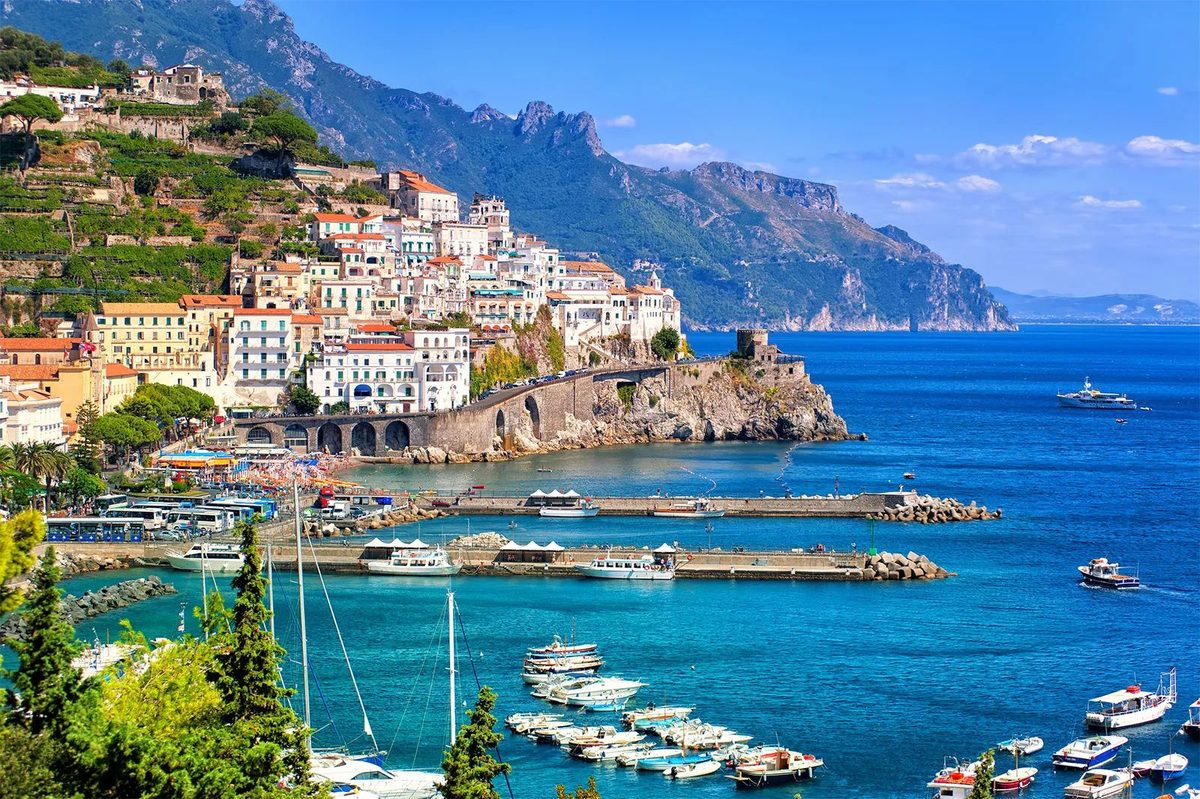
Italy is the first country to combat AI overtourism by utilizing IoT technology to ensure the sustainability of its heritage sites. The municipalities of Venice and Rome take pride in introducing cutting-edge sensors that track each visitor’s movements. Municipal authorities resort to state-of-the-art artificial intelligence to relieve the most crowded places of incessant crowds. Thanks to innovative technology, ancient streets in Italy are no longer overwhelmed by tourists.
Sensors enable smart destination management through continuous data acquisition and sophisticated algorithms. In addition, municipal officials determine the number of visitors by applying optical technology at turnstiles and analyzing cellular phone data exchanges. As a result, the city of Venice introduced a new system that dynamically adjusts day-tripper costs based on the number of currently registered visitors. Thus, tourist flows are redirected from peak hours to less busy days, contributing to the conservation of cultural sights and enhancing revenue for maintenance funds.
Heritage destinations across the globe are increasingly turning to a sophisticated blend of artificial intelligence, Internet of Things sensor networks, and real-time dynamic pricing to combat the mounting pressures of destructive overtourism. By replacing outdated static visitor caps with adaptive technologies, authorities in Italy, Japan, Iceland, and Spain are successfully safeguarding fragile ecosystems and historic urban centers while maintaining a balanced flow of cultural tourism.
Modern historic sites face unprecedented preservation challenges as millions of travelers simultaneously descend upon delicate ancient architecture and fragile natural landscapes. To combat this physical degradation without imposing blanket visitor bans, destination management organizations are deploying robust Internet of Things sensor arrays to track human movement invisibly and continuously. These networks utilize Wi-Fi and Bluetooth probe request sniffers, optical computer vision counters, and low-latency acoustic sensors to capture hyper-local foot traffic density metrics in real time. Because these devices feed spatial data directly into a centralized cloud engine, municipal authorities can immediately identify micro-bottlenecks long before pedestrian congestion becomes hazardous or disruptive. Furthermore, this invisible tracking infrastructure replaces subjective human estimates with hard, quantitative metrics, enabling heritage site managers to make proactive operational decisions rather than reactive ones. Consequently, historical landmarks maintain their structural integrity while simultaneously accommodating sustainable volumes of eager international visitors throughout the peak travel seasons.
Advertisement
Advertisement
Implementing real-time pricing models introduces an immediate economic feedback loop that gently yet effectively redirects tourist flows away from hyper-saturated hours and iconic focal points. When entrance fees, slot reservations, and localized transit tariffs fluctuate dynamically based on live foot-traffic density, visitors naturally begin to reconsider their itineraries to avoid paying peak premiums. For instance, algorithmic ticket pricing can scale upward exponentially during mid-morning saturation windows while dropping significantly during early morning, late evening, or off-peak days. This financial nudging encourages independent travelers and tour groups to distribute their arrival times more evenly across the day, flattening the traditional, highly destructive tourist curve. Moreover, the supplemental revenue generated through peak-hour pricing provides crucial municipal funding that directly supports ongoing preservation efforts, site maintenance, and local infrastructure upgrades. Ultimately, this economic mechanism transforms potentially chaotic crowds into a self-regulating ecosystem where financial incentives align harmoniously with environmental and cultural conservation goals.
“It is genuinely fascinating to watch how traditional heritage destinations are evolving to harness cutting-edge technology. For decades, city planners relied on blunt, static caps that either turned visitors away entirely or failed to prevent overwhelming bottlenecks. Now, by integrating real-time IoT sensors with dynamic pricing models, management teams can subtly nudge travelers toward quieter hours and alternate zones. This clever balance protects delicate ancient architecture while keeping cultural landmarks accessible and economically vibrant. Ultimately, smart tourism infrastructure proves that preservation and modern innovation can coexist beautifully without ruining the authentic travel experience.”
— Anup Kumar Keshan, Founder and Editor-in-Chief, Travel And Tour World
Virtual geofences establish invisible, highly responsive digital perimeters around fragile architectural wonders, narrow alleyways, and sensitive natural habitats to monitor device density with pinpoint accuracy. When a designated heritage zone crosses predefined saturation thresholds, these automated geofenced systems instantly trigger a cascade of multi-tiered mitigation protocols across connected municipal digital networks. These protocols can range from automated push-notification nudges sent directly to visitors’ mobile applications suggesting alternative nearby cultural sub-sites to the real-time adjustment of public transit frequencies and localized parking tariffs. By dynamically redrawing boundary rules based on live environmental inputs, destination managers create flexible buffer zones that protect vulnerable areas without requiring physical barriers that might ruin the aesthetic experience. Additionally, this seamless integration of spatial monitoring ensures that emergency services retain clear, unobstructed corridors through historic centers even during the busiest annual festivals and holiday rushes.
Advertisement
Advertisement
While technological interventions offer powerful solutions for crowd management, they simultaneously raise significant ethical concerns regarding socioeconomic equity and fair access to cultural heritage assets. If entrance fees scale upward aggressively during peak demand hours, heritage destinations risk transforming into exclusive luxury commodities that economically marginalize budget-conscious domestic travelers and local communities. To counteract this exclusionary trend, forward-thinking policy makers are pairing dynamic pricing structures with subsidized community access tiers, dedicated local resident passes, and free admission windows for educational groups. Furthermore, authorities must ensure that diverting displaced crowds from primary urban bottlenecks does not simply transfer environmental and infrastructural degradation to vulnerable peripheral neighborhoods or unprotected rural areas. Achieving true sustainability therefore requires a comprehensive, holistic approach that combines advanced technological forecasting with inclusive civic planning, transparent data privacy compliance, and genuine community consultation at every operational stage.
For official regulatory updates and institutional policies regarding tourism management, travelers and researchers can consult the Italian Ministry of Tourism official portal.
The masses are overwhelming the ancient landmarks as static limits of visitors fail to accommodate modern-day traffic surges. The Internet of Things sensors and artificial intelligence count the number of tourists in real-time to prevent overcrowding of cultural heritage sites. Moreover, the entrance tickets are priced dynamically to keep large flows of tourists away.
Image Source: Britannica
Advertisement
Advertisement
Advertisement













Monday, September 7, 2026

Monday, September 7, 2026

Monday, September 7, 2026

Monday, September 7, 2026

Sunday, September 6, 2026

Saturday, September 5, 2026

Monday, September 7, 2026

Sunday, September 6, 2026



