

Image generated with Ai
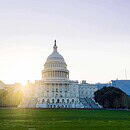
The US travel industry is urging lawmakers to prevent a potential government funding disruption, warning that political uncertainty could affect passengers, aviation workers, hotels and tourism businesses across the country. The latest US travel update highlights concerns raised by the U.S. Travel Association, Airlines for America (A4A) and the American Hotel & Lodging Association (AHLA) over the impact of a possible government shutdown on America’s travel infrastructure.
The three major industry organisations have called on Congress to resolve differences between funding proposals and approve a temporary measure before the September 30 deadline to avoid another period of uncertainty for travellers and businesses.
For millions of travellers planning domestic holidays, international journeys, business trips and family visits, the stability of airports, aviation services and visitor attractions remains essential. A disruption to federal operations could create challenges across the entire travel ecosystem.
The latest US travel update comes as industry leaders warn that a shutdown could affect the systems that keep American travel moving.
Advertisement
Advertisement
A large part of the aviation network depends on federal employees and agencies responsible for security, air traffic management and operational oversight. Travel organisations have warned that funding uncertainty could place additional pressure on essential workers, including Transportation Security Administration (TSA) officers and air traffic controllers.
Although many aviation services would continue operating, staffing pressure could contribute to longer airport queues, delays and increased uncertainty for passengers.
Travel leaders argue that travellers should not face disruptions because of unresolved government funding issues.
The concern extends beyond airports. Federal attractions, national parks and government-managed visitor sites could also experience reduced services or operational changes if funding interruptions occur.
Advertisement
Advertisement
Air travel is one of the sectors most vulnerable to government funding uncertainty because it depends heavily on coordinated federal services.
Airports rely on agencies responsible for passenger security, aviation safety and border processing. Any reduction in staffing or operational pressure could affect the overall passenger experience.
Potential challenges for travellers include longer security screening times, flight delays, operational uncertainty and increased pressure on aviation employees.
The travel industry has previously warned that shutdown-related disruptions can create a ripple effect throughout the aviation network.
A delay at one major airport can affect aircraft rotations, connecting passengers and schedules across multiple cities.
For travellers, this means even a small disruption can influence hotel bookings, connecting flights, rental car arrangements and holiday plans.
Airlines play a central role in the US economy, connecting millions of passengers every year while supporting tourism, business travel and local economies.
Airlines for America has warned that aviation workers should not face uncertainty over pay while managing some of the world’s busiest air travel systems.
Air traffic controllers and security personnel perform essential functions that allow flights to operate safely and efficiently.
Industry leaders argue that protecting these workers from funding uncertainty is critical to maintaining a reliable travel system.
Airlines also face operational challenges when government-related delays affect passenger movement.
For travellers, confidence in reliable air connectivity plays a major role when choosing destinations and planning trips.
The impact of travel disruptions extends far beyond airports.
Hotels, restaurants, attractions, convention centres and local tourism businesses depend on consistent visitor flows.
The American Hotel & Lodging Association has warned that uncertainty surrounding government operations can discourage travel demand and affect hotel employees, businesses and communities that rely on tourism spending.
When travellers postpone trips because of uncertainty, the effects can spread throughout the hospitality industry.
Hotels may experience fewer bookings, restaurants may see reduced visitor spending and attractions may face lower attendance.
Business travel and major events are also highly dependent on confidence in transportation systems.
A stable travel environment helps destinations attract conferences, international visitors and leisure travellers.
The travel industry remains one of America’s most important economic sectors.
Tourism supports millions of jobs across aviation, hospitality, entertainment, retail and transportation.
Visitors contribute to local economies through hotel stays, restaurant spending, shopping, attraction visits and cultural experiences.
The U.S. Travel Association has described travel as a major economic driver, representing a significant contribution to national growth and employment.
For destinations across the United States, reliable travel operations are essential for attracting domestic and international visitors.
Cities such as New York, Orlando, Las Vegas, Miami, Los Angeles and San Francisco depend heavily on smooth transportation systems to support tourism demand.
Travel organisations have pointed to previous shutdown experiences as evidence of potential risks.
Industry groups said earlier disruptions affected millions of passengers, delayed thousands of flights and created significant economic losses across the travel sector.
Because aviation operates as a connected network, disruptions can quickly spread beyond the location where they begin.
A delay affecting one airport can influence passengers travelling hundreds or thousands of miles away.
Tourism businesses can also experience losses when travellers delay bookings or cancel plans because of uncertainty.
This is particularly important for destinations that depend on seasonal tourism, conferences and major events.
Government-managed attractions are another concern for the tourism industry.
National parks, museums and other federal visitor sites play an important role in attracting travellers from around the world.
Reduced services or temporary closures could affect visitor experiences and surrounding communities that depend on tourism spending.
Many destinations near national parks rely on visitors staying in local hotels, eating at restaurants and supporting small businesses.
Outdoor tourism is especially important in states where national parks and protected landscapes are major travel attractions.
The U.S. Travel Association, Airlines for America and AHLA are calling for lawmakers to resolve funding differences quickly and prevent disruption before the September 30 deadline.
The groups are also supporting longer-term reforms to ensure critical aviation workers, including TSA officers and air traffic controllers, are protected from future funding disruptions.
Industry leaders argue that America’s travel system is too important to repeatedly face uncertainty.
Their focus is on protecting passengers, workers and businesses that depend on predictable travel operations.
Passengers planning upcoming trips should continue monitoring official updates from airlines, airports and government agencies.
Travellers can reduce disruption risks by arriving earlier at airports, checking flight status before departure and allowing additional time for security procedures.
Flexible planning can also help during periods of uncertainty.
Passengers should rely on official information rather than speculation when making travel decisions.
Airlines and airports generally continue operating during funding debates, but travellers should remain prepared for possible operational changes.
International travellers are particularly sensitive to reliability when choosing destinations.
The United States competes with major tourism markets worldwide, and visitor confidence depends on smooth airport experiences, predictable border procedures and efficient travel services.
Tourism leaders have been working to strengthen America’s global competitiveness by attracting more international visitors and improving the visitor experience.
Any uncertainty affecting travel operations could influence how overseas visitors perceive the United States as a destination.
Travel organisations want lawmakers to prevent funding uncertainty that could affect passengers, aviation workers and tourism businesses.
Flights may continue operating, but staffing pressure and operational disruptions could contribute to delays and longer airport waits.
The U.S. Travel Association, Airlines for America and the American Hotel & Lodging Association issued the warning.
Reduced travel confidence could affect hotel bookings, employees and tourism-dependent communities.
Passengers should monitor official updates, arrive early and remain flexible with travel arrangements.
The latest US travel update highlights how closely government operations are connected with the everyday travel experience. Airlines, hotels and tourism organisations warn that funding uncertainty could affect passengers, aviation workers and communities that depend on visitor spending.
Travel is one of America’s most powerful economic engines, supporting millions of jobs and connecting communities with domestic and international visitors. A dependable transportation system is essential for maintaining traveller confidence.
For passengers, preparation remains the best approach. Monitoring official updates, allowing extra time and planning with flexibility can help reduce disruption risks.
The future strength of US tourism depends not only on attractions and hospitality but also on maintaining a stable, efficient and trusted travel system that allows visitors to explore America with confidence.
Advertisement
Tags: California, florida, Las Vegas, New York, United States
Advertisement
Advertisement













Monday, September 7, 2026

Monday, September 7, 2026

Monday, September 7, 2026
Monday, September 7, 2026
Sunday, September 6, 2026

Saturday, September 5, 2026

Monday, September 7, 2026

Sunday, September 6, 2026



