
Germany Is Now Using EES Border Checks More Consistently As The Safeguard Ends And Travellers Must Allow More Time

Published
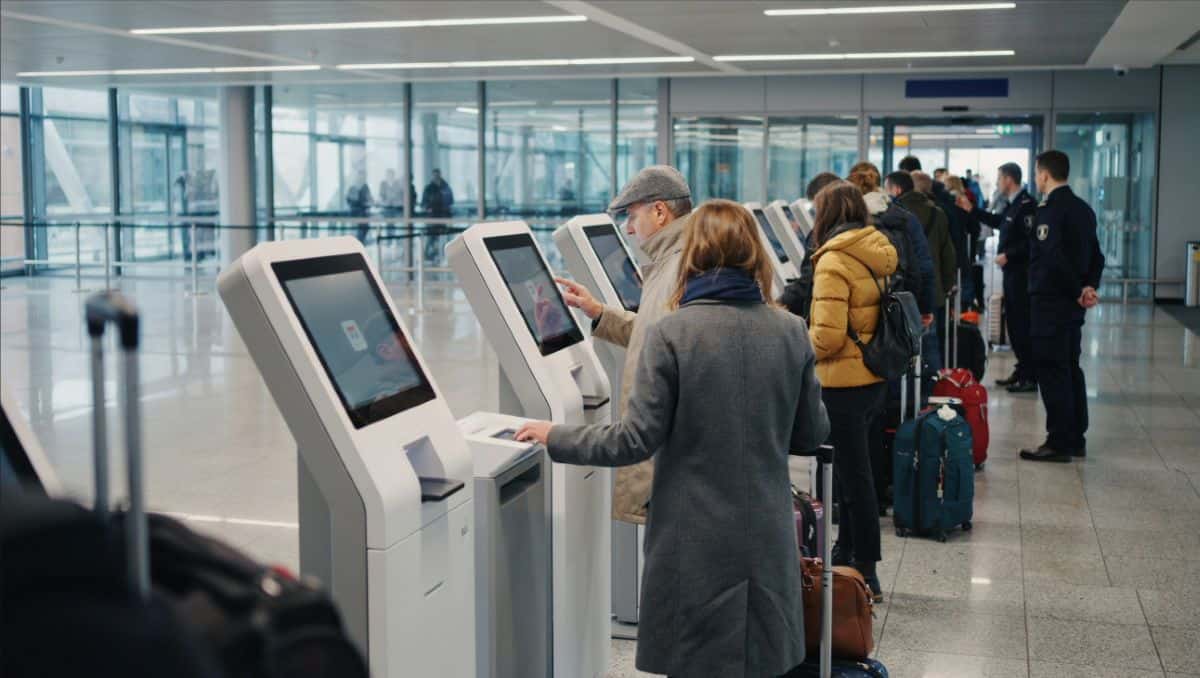
Germany is applying Border Checks more consistently after the European Union’s temporary biometric congestion safeguard expired following 6 September 2026. The change affects eligible non-EU nationals arriving directly from outside the Schengen area. First-time visitors may need to provide passport information, fingerprints and a facial image. This could increase processing times during busy periods. However, Germany has not introduced a new visa, closed its borders or reduced the permitted length of short visits. The change concerns how the existing Entry/Exit System operates at Germany’s external Schengen crossing points.
Why Border Checks Have Changed for Germany Travel
The Entry/Exit System, known as EES, began operating across participating European countries on 12 October 2025. Authorities introduced the system gradually over six months because border points needed new equipment, trained personnel and updated passenger procedures. During the phased rollout, some eligible travellers entered the digital system while others continued receiving passport stamps. Participating countries progressively increased registration until the transition ended on 9 April 2026. EES became fully operational at all covered external Schengen borders on 10 April, including German airports receiving passengers directly from outside the Schengen area.
European law provided a temporary congestion safeguard after full operation began. It allowed authorities to suspend biometric registration for up to six hours when exceptional traffic created excessive waiting. Ordinary immigration controls still continued. The initial safeguard remained available for 90 days, with an automatic 60-day extension permitted if biometric information appeared in fewer than 80% of files created during the rollout. The relevant provisions expired 330 days after EES began, placing their final date on 6 September 2026. From 7 September, Germany had less flexibility to pause biometric registration solely because queues became excessive.
Verified Evidence Shows a Border Policy Story With Travel Effects
The following news-focus ratio is an editorial assessment. It shows how the verified evidence is divided between border policy, passport procedures, transport operations and tourism. These percentages are not government statistics. They reflect the amount and significance of official information available for each part of the story.
Advertisement
Advertisement
| News Component | Share of Story | Officially Verified Finding | Relevance to Travellers |
|---|---|---|---|
| Border and immigration policy | 40% | The temporary EES suspension provisions ceased after 6 September 2026 | Biometric procedures must be applied more consistently |
| Passport and biometric procedures | 25% | EES records travel-document data, facial images, fingerprints and border movements | First registration requires more steps |
| Airport operations | 20% | Germany uses EES at covered external crossings and provides self-service terminals at selected airports | Processing time may differ by airport and passenger volume |
| Tourism and traveller planning | 10% | Longer processing is possible, but no nationwide disruption has been officially confirmed | Visitors should allow more time |
| Visa policy | 5% | EES does not change visa rules or short-stay conditions | Travellers retain their existing visa status |
The evidence establishes that this is mainly a border-management development with a practical travel effect. It does not establish a German tourism crisis, widespread airport disruption or a new restriction on visitors. The immediate issue is that first-time biometric processing may take longer when many eligible passengers arrive together. Returning visitors will often complete a shorter verification because their digital information already exists. Actual waiting times will depend on passenger volumes, staffing, terminal design, self-service capacity and equipment performance at each crossing point.
How Border Checks Work for First-Time and Returning Visitors
EES applies mainly to non-EU nationals visiting the Schengen area for a short stay. It covers eligible travellers who do not need a visa and those holding a short-stay Schengen visa. During first registration, a border officer or self-service terminal reads the travel document and collects the required personal information. A facial image and fingerprints are also recorded, although children under 12 are not fingerprinted. The information creates an individual digital record containing the traveller’s identity, entry or exit details and any refusal of entry.
Advertisement
Advertisement
Returning travellers normally follow a quicker process. Their passport and biometric information can be compared with the existing file before the latest movement is added. Information may occasionally need to be collected again when verification is unsuccessful or an existing record cannot be used. A digital EES file is normally retained for three years from the last recorded crossing or refusal. Different retention rules can apply when the system has no exit record after a permitted stay expires. Biometric passport holders may also use self-service facilities where German airports make them available.
Who Is Affected and Which Travellers Are Exempt
Many British, American, Canadian and Australian visitors come within EES when they enter Germany directly from outside Schengen. The system also covers numerous other non-EU nationals travelling for short visits. It records movement across the external border but does not create a fresh allowance for every participating country. The Schengen limit remains 90 days within any rolling 180-day period. Time spent in Germany counts alongside time spent in other participating Schengen countries. EES helps authorities calculate that combined stay and identify visitors who remain beyond their authorised period.
EU citizens are not registered. Nationals of Iceland, Liechtenstein, Norway and Switzerland are also excluded. Important exemptions cover many travellers holding qualifying long-stay visas, residence permits or residence cards. Certain non-EU family members of European citizens may qualify when they hold the necessary documentation. Travellers relying on an exemption should present the relevant original document at passport control. Ireland and Cyprus do not use EES under the same arrangements. However, their nationals are not treated as ordinary third-country visitors when travelling within the European framework.
Travel Impact, Official Figures and Important Clarifications
Official European figures show that EES was already processing travellers on a large scale before the safeguard ended. More than 45 million entries and exits had been registered by 30 March 2026. That figure exceeded 52 million when full operation began on 10 April. By the official update published on 27 July, the system had recorded more than 145 million entries and exits. These totals cover participating European countries rather than Germany alone. They demonstrate extensive use but do not reveal waiting times at individual German airports.
The main travel risk concerns queues during concentrated arrival periods. Airports may experience pressure when several non-Schengen services arrive together and many passengers need first registration. Longer immigration processing could affect airport transfers, independently booked connections, hotel arrival times and scheduled ground transport. However, no official evidence confirms nationwide disruption across Germany following the expiry. Descriptions such as “airport chaos” would therefore be misleading without location-specific evidence. The safest conclusion is that longer waits are possible, while their duration and frequency remain dependent on local operating conditions.
EES should not be confused with a visa. It does not introduce an application before departure, impose a registration charge or shorten the 90-day allowance. It also does not guarantee admission after a traveller completes biometric registration. Border authorities still assess whether each person meets the normal entry conditions. They may request evidence concerning accommodation, sufficient funds, the purpose of travel and onward or return arrangements. Travellers who refuse mandatory biometric collection may be denied entry because the required procedure cannot be completed.
Advertisement
Advertisement
What Travellers Should Do and What Happens Next
Visitors do not need to cancel or rearrange German holidays solely because the safeguard has expired. However, passengers arriving from outside Schengen should prepare for fuller biometric processing. Those with tight connections should consider the time required for immigration, baggage collection and any additional security screening. The advice is especially relevant to families and organised groups because every eligible traveller must complete the required procedure. People who need assistance should request support from the airport or border staff.
Travellers should take these practical steps:
- Allow more time for passport control after a direct non-Schengen arrival.
- Carry the passport used to book and complete the journey.
- Confirm that the passport meets Germany’s entry requirements.
- Expect fingerprints and a facial image during first registration.
- Carry an original residence permit, residence card or long-stay visa when claiming an exemption.
- Keep accommodation, return-travel and supporting documents available.
- Follow instructions for self-service terminals at participating airports.
- Allow a safer transfer margin when using separately booked tickets.
- Remember that EES registration is free.
- Track time spent across all Schengen countries.
- Check official government guidance before departure.
- Do not confuse EES with the separate future ETIAS authorisation.
Germany will continue operating Border Checks under the standard European framework. No automatic replacement for the expired congestion provision has been officially announced. Any new flexibility would require an appropriate legal decision rather than an informal airport arrangement. Attention will also turn towards ETIAS, but that system serves a different purpose. EES records eligible travellers when they cross an external border. ETIAS will require eligible visa-exempt travellers to obtain authorisation before departure once it officially begins. Until then, travellers should not submit applications through unofficial websites.
Germany’s Digital Border System Moves Beyond Its Transition
Germany has moved into a more consistent phase of EES processing after the temporary safeguard ended. Eligible non-EU visitors may face longer Border Checks, especially when first-time registrations coincide with busy arrivals. Yet the change introduces no new visa, tourist fee or reduction in the Schengen short-stay allowance. Official figures confirm that EES already handles millions of movements, but they do not prove widespread disruption in Germany. Airports must now manage biometric demand through staffing, equipment and available self-service facilities. Travellers should carry correct documents, protect connection time and follow official updates as Europe’s digital border system continues developing after its transitional period.
Advertisement
