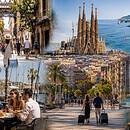
Image generated with Ai
Havana, Old Havana and Trinidad represent the heart of Cuba’s cultural tourist offerings, which include historic architecture, music, cuisine and cultural activities centred on community living, as an alternative form of tourism to the traditional resort holiday. The privately owned accommodations, restaurants and cultural activities offer more opportunities for tourists to experience the cultural heritage of the urban areas of Cuba. The significance of the moment comes in the context of the downturn experienced by the tourism sector in Cuba. Tourism in Cuba was hit hard during early 2026 as fuel shortages led to flight cancellations and other economic issues, leaving small tourism ventures more crucial than ever to the tourist economy. Only about 328,608 foreign visitors came in the initial months of 2026, according to Reuters reports. For those few tourists coming to Cuba, the cities of Old Havana and Trinidad offer very rich cultural tours.
La Habana Vieja, or Old Havana, provides one of Cuba’s most concentrated heritage experiences. Its historic streets contain plazas, churches, museums, colonial buildings and restored public spaces that can be explored on foot.
Advertisement
UNESCO describes Old Havana and its fortification system as an important example of integrated urban conservation, with restoration work incorporating cultural programming and social considerations.
For visitors, walking remains one of the most effective ways to experience the historic centre. Routes can connect Plaza de la Catedral, Plaza Vieja, Plaza de Armas and Plaza de San Francisco, allowing travellers to combine architecture with museums, cafés, restaurants and street-level cultural activity.
Advertisement
The neighbourhood also provides access to Havana’s wider music culture. Live performances, dance venues and traditional Cuban music can form part of an evening itinerary after a day exploring the historic centre.
Casas particulares provide an accommodation alternative to large hotels, with visitors staying in privately operated homes or guesthouses. These properties can range from individual rooms to independent accommodation businesses.
For travellers, the format offers a more residential perspective on Havana and Trinidad. Staying within neighbourhoods can place visitors closer to local restaurants, cafés, markets and everyday street life.
The role of private accommodation has become more complicated during Cuba’s current tourism downturn. Reuters reported in June 2026 that many privately owned hostels and restaurants were struggling because of falling international visitor numbers and shortages affecting the wider economy.
Advertisement
Advertisement
That makes the condition of the private tourism sector an important part of the current travel picture. Visitors should check accommodation availability and operating conditions directly before travelling.
Paladares, Cuba’s privately operated restaurants, provide another route into local food culture. They range from small family-run dining rooms to more sophisticated restaurants serving Cuban dishes alongside international influences.
Food-focused travel can add depth to a Havana itinerary. Traditional dishes, locally available seafood, pork, rice, beans, plantains and tropical produce feature across Cuban cooking, while individual restaurants develop their own menus and dining environments.
The experience is particularly suited to travellers interested in meeting local entrepreneurs and exploring Havana’s food scene beyond hotel restaurants.
However, supply conditions can vary. Travellers should expect menus and availability to reflect Cuba’s current economic and logistical situation rather than assuming that every listed dish or restaurant will operate consistently.
Trinidad provides a different cultural experience from Havana. Founded in the early 16th century, the city prospered through the sugar industry and remains closely connected with the nearby Valley de los Ingenios.
UNESCO inscribed Trinidad and the Valley de los Ingenios as a World Heritage property in 1988. The site includes historic houses, streets, former sugar mills, plantation buildings and landscapes connected with the development of the sugar industry.
The historic centre is compact enough to explore largely on foot. Cobbled streets, colourful façades, churches, museums and traditional houses create an environment where the built heritage remains part of everyday urban life.
Visitors can also travel beyond the centre towards the Valley de los Ingenios, adding rural landscapes and plantation heritage to a Trinidad itinerary.
Cultural tourism in Trinidad is receiving new institutional attention. In June 2026, UNESCO launched a Cultural Projects Accelerator for Sustainable Tourism in Trinidad and the Valley de los Ingenios, providing mentoring and microfinancing for cultural and creative projects linked to responsible tourism.
The programme is designed to strengthen local capacity while creating income and employment through cultural initiatives. It builds on earlier work bringing heritage, tourism, urban planning and community stakeholders together.
A separate UNESCO project has also documented crafts, music, traditional knowledge and creative enterprises in Trinidad, highlighting the people who maintain the city’s living heritage.
This gives visitors more opportunities to experience Trinidad through crafts, music, food and community activities, rather than limiting a visit to architectural sightseeing.
Cuban music remains central to the country’s cultural tourism appeal. Havana’s live-music venues provide opportunities to hear son, salsa, rumba and other musical traditions in settings ranging from established performance spaces to smaller neighbourhood venues.
For visitors, music can become part of an itinerary rather than a standalone attraction. A day exploring Old Havana can lead into an evening of live performances, dance or local dining.
The wider UNESCO cultural programme also identifies music and creative industries as important assets for sustainable tourism development across Cuba.
A cultural journey through Cuba can combine several experiences:
In terms of those who want more of an immersion experience, there are two different options with regard to Cuba, which are Havana and Trinidad. Havana gives tourists an opportunity to enjoy the city’s history, food, and music, whereas Trinidad is a smaller historic town with links to craft, traditions and Valle de los Ingenios. At this point, having regard for the situation as it stands now regarding tourism, it is clear that the tourists have to make sure that everything will be ready for them when they arrive.
Advertisement
Advertisement
Advertisement











Wednesday, September 2, 2026

Wednesday, September 2, 2026

Wednesday, September 2, 2026

Wednesday, September 2, 2026

Wednesday, September 2, 2026

Tuesday, September 1, 2026

Wednesday, September 2, 2026

Wednesday, September 2, 2026