
Gulf Airports Face Major Flight Disruptions as Doha, Abu Dhabi and More Airports Record 678 Delays and 83 Cancellations

Updated
Published
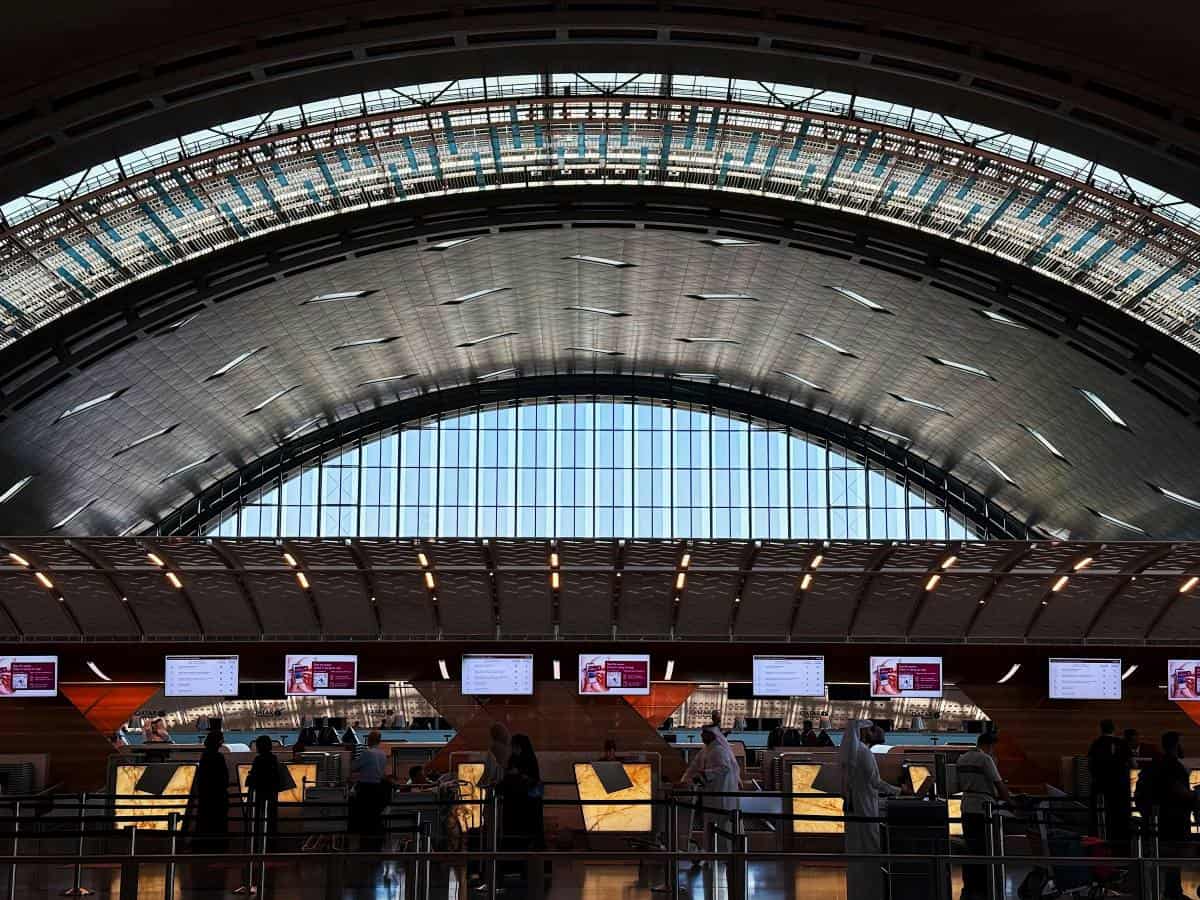
Major flight disruptions are occurring at Gulf airports; 678 delays and 83 cancellations have been reported at Doha, Abu Dhabi, and other airports, impacting airlines and travelers in major Middle Eastern aviation hubs. Major carriers are still managing fluctuating schedules, and the interruption has been attributed to a combination of operational difficulties, regional aviation challenges, and network adjustments. According to the most recent data, airports in the United Arab Emirates, Saudi Arabia, Qatar, Oman, and Kuwait are facing varying effects. Some of the busiest airports in the area, such as Dubai International, Hamad International in Doha, Abu Dhabi International, and important Saudi gateways, are under more strain as a result of the situation. Due to operational conditions and broader network changes, airlines have encouraged travelers to check flight information before to departure.
Gulf airports record 678 delays and 83 cancellations as airlines face operational pressure
Gulf aviation networks are experiencing widespread disruption, with major airports across the United Arab Emirates, Saudi Arabia, Qatar, Oman and Kuwait reporting significant flight delays and cancellations. Based on the latest operational figures provided, the affected Gulf airports recorded 678 total flight delays and 83 cancellations across key international and regional gateways.
Advertisement
Advertisement
The disruption has affected some of the region’s busiest aviation hubs, including Dubai International Airport, Hamad International Airport in Doha, Abu Dhabi International Airport, King Abdulaziz International Airport in Jeddah and King Khalid International Airport in Riyadh. The data highlights pressure across both passenger and connecting operations, with major Gulf airlines also recording delays and cancelled flights.
Which Gulf airports recorded the highest flight disruptions?
Dubai International Airport emerged as the most affected airport among the listed Gulf hubs, recording 174 delays and 12 cancellations. As one of the world’s busiest international transit centres, delays at Dubai can create wider network impacts for passengers connecting between Asia, Europe, Africa and the Middle East.
Advertisement
Advertisement
Hamad International Airport in Doha recorded 109 delays and 8 cancellations, reflecting operational pressure at Qatar’s main aviation gateway. Qatar Airways, one of the region’s largest international carriers, recorded 102 delays with a 16% delay rate and 7 cancellations with a 1% cancellation rate.
Abu Dhabi International Airport also experienced major disruption, with 105 delays and 1 cancellation. Etihad Airways reported 83 delays with a 25% delay rate, the highest delay percentage among the listed airlines, while cancellations remained limited at 1 flight with a 0% cancellation rate.
Advertisement
Advertisement
Saudi Arabia’s key airports also faced significant challenges. King Abdulaziz International Airport in Jeddah recorded 95 delays and 20 cancellations, while King Khalid International Airport in Riyadh recorded 61 delays and 14 cancellations.
Other affected airports included:
Advertisement
Advertisement
| Airport | Country | Delays | Cancellations |
|---|---|---|---|
| Dubai International Airport | UAE | 174 | 12 |
| Hamad International Airport | Qatar | 109 | 8 |
| Abu Dhabi International Airport | UAE | 105 | 1 |
| King Abdulaziz International Airport | Saudi Arabia | 95 | 20 |
| King Khalid International Airport | Saudi Arabia | 61 | 14 |
| Sharjah International Airport | UAE | 40 | 2 |
| Kuwait International Airport | Kuwait | 32 | 1 |
| Seeb International Airport | Oman | 29 | 2 |
| King Fahd International Airport | Saudi Arabia | 26 | 2 |
| Abha Regional Airport | Saudi Arabia | 7 | 8 |
| Gizan Regional Airport | Saudi Arabia | 0 | 9 |
| Najran Domestic Airport | Saudi Arabia | 0 | 4 |
How are Gulf airlines and passengers being affected?
The disruption has spread across leading Gulf airlines, with network carriers facing delays caused by airport congestion, schedule adjustments and operational challenges.
Saudi Arabia’s national carrier Saudia recorded 29 cancellations with a 5% cancellation rate and 51 delays with a 9% delay rate. Qatar Airways recorded the highest number of delays among the listed airlines with 102 delayed flights, while Emirates reported 75 delays and 5 cancellations.
The airline impact data shows:
| Airline | Country | Cancellations | Cancellation Rate | Delays | Delay Rate |
|---|---|---|---|---|---|
| Saudia | Saudi Arabia | 29 | 5% | 51 | 9% |
| Qatar Airways | Qatar | 7 | 1% | 102 | 16% |
| Emirates | UAE | 5 | 0% | 75 | 14% |
| Etihad Airways | UAE | 1 | 0% | 83 | 25% |
| Oman Air | Oman | 2 | 2% | 8 | 8% |
The figures show that Gulf carriers operating through major connecting hubs are experiencing uneven disruption patterns. Some airlines are facing higher delays, while others are seeing more cancellations due to route adjustments and aircraft scheduling issues. Airlines across the region have continued advising passengers to check flight status before travelling as operational conditions can change quickly.
Advertisement
Advertisement
Which Gulf countries and cities are facing the biggest impact?
The United Arab Emirates recorded the highest combined pressure among Gulf aviation markets, with Dubai and Abu Dhabi together accounting for 279 delays and 13 cancellations. Dubai’s role as a global transfer hub means delays can affect thousands of passengers travelling through connecting routes.
Saudi Arabia also recorded significant disruption across multiple cities. Jeddah, Riyadh, Dammam, Abha, Gizan and Najran airports collectively reported 189 delays and 57 cancellations. The highest cancellation concentration was seen at King Abdulaziz International Airport in Jeddah with 20 cancellations, followed by King Khalid International Airport in Riyadh with 14 cancellations.
Qatar’s aviation network was mainly affected through Doha, where Hamad International Airport recorded 109 delays and 8 cancellations. Kuwait and Oman experienced comparatively lower disruption levels, although Kuwait International Airport recorded 32 delays, while Seeb International Airport in Muscat reported 29 delays.
The current disruption pattern reflects the vulnerability of Gulf aviation networks because major airports operate as international connection points between continents. Any operational pressure at these hubs can quickly affect inbound and outbound passenger movements.
| Airport | Code | Cancellation % (Destination) | Cancellation % (Origin) |
|---|---|---|---|
| Dubai Int’l | DXB | 1% | 0% |
| Hamad Int’l (Doha) | DOH | 0% | 0% |
| King Abdulaziz Int’l (Jeddah) | JED | 2% | 2% |
| King Khalid Int’l (Riyadh) | RUH | 1% | 1% |
| Abha Regional | AHB | 9% | 9% |
| Gizan Regional | GIZ | 57% | 71 |
What can affected passengers do now?
Passengers travelling through Gulf airports are advised to take several steps to minimise inconvenience:
- Check flight status directly with airlines before leaving for the airport. Flight schedules can change even after passengers receive earlier confirmations.
- Arrive early at airports, especially for international flights from Dubai, Abu Dhabi, Doha, Riyadh and Jeddah.
- Keep airline apps and booking information accessible to receive immediate updates about delays, gate changes or cancellations.
- Contact airlines directly for rebooking options if flights are cancelled or significantly delayed.
- Avoid making separate connecting travel arrangements until flights are confirmed, especially for passengers using Gulf hubs for international connections.
- Keep essential items in hand luggage, including medication, chargers and travel documents, in case of extended waiting periods.
Passengers affected by cancellations should review airline policies regarding refunds, alternative flights and accommodation support. In cases of major schedule changes, airlines generally provide updated travel options depending on ticket conditions and applicable passenger rights.
Advertisement
Advertisement
Data Verification Notice
The data has been extensively curated by our editorial team using real-time aviation figures recorded on 7 September 2026 at 5:05 pm ET USA (8 September 2026, 1:05 am GST).
Primary Source: FlightAware.
Verification Protocol: All statistics have been independently reviewed and cross-checked by our human editorial desk. Timestamped records, data logs and feed snapshots are securely archived internally to support historical accuracy and editorial transparency.
Note: Real-time flight-tracking figures reflect active airspace and operational data. Minor variations may occur when compared with information displayed at individual airport terminals or airline departure gates.
You can now read our yesterday’s coverage of cancellations and delays across the Gulf region. Check here.
Advertisement
Verified by Rana Pratap
