
Qatar Galvanises the Global Allies Including South Africa, Costa Rica And Others To Reclaim Threatened Tourism In Crucial Shoreline Vehicle Ban

Published
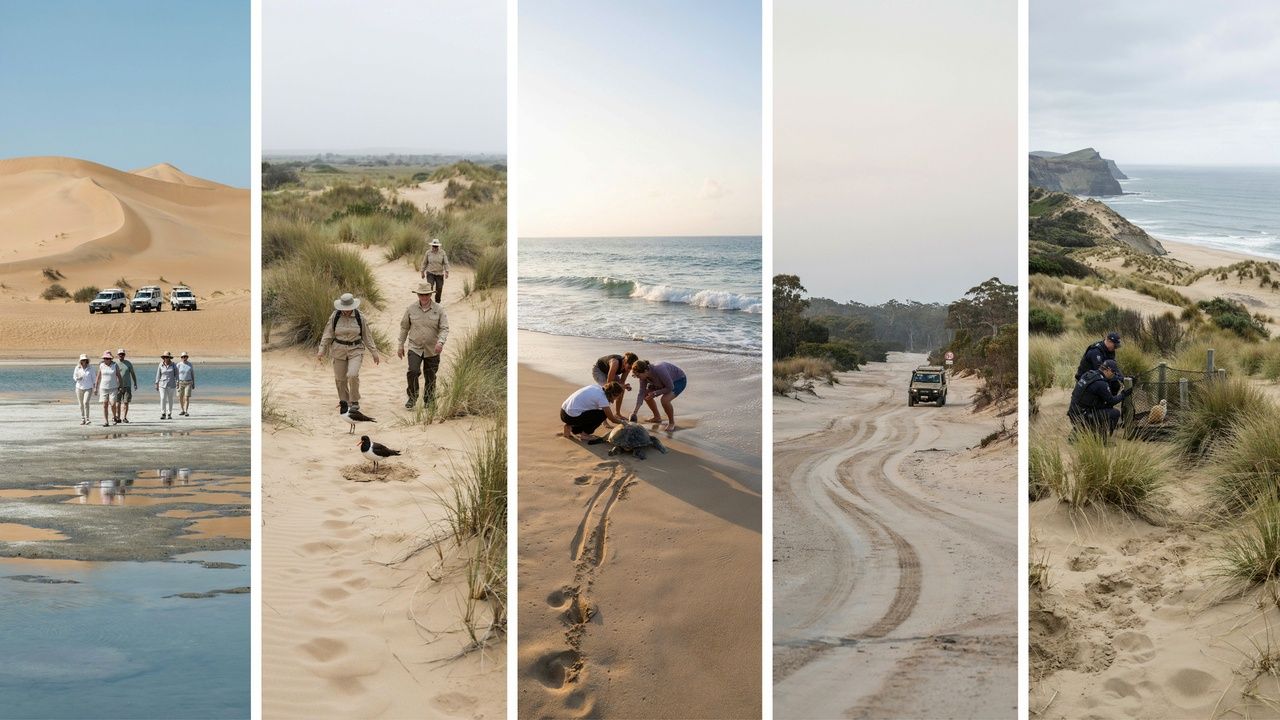
The shoreline vehicle ban reshapes international coastal tourism across Qatar, South Africa, Costa Rica, Australia, and New Zealand. Environmental regulators worldwide are enforcing strict perimeters to transform high-impact off-roading into regulated ecotourism. Motorised holiday transit along sensitive intertidal fringes faces unprecedented operational curbs.
                     ◄── MINIMUM 30 METRES BUFFER ──►
═══════════════════╤═══════════════════════════════════╤═══════════════════
 INLAND CORRIDORS  │       RESTRICTED VEHICLE ZONE     │    WATER'S EDGE
 & DESERT TRACKS   │   (Strictly Pedestrians & Fauna)  │   Tidal Intertidal
 (Designated 4x4)  │   No motorized transit or parking │   & Shoreline Marine
═══════════════════╧═══════════════════════════════════╧═══════════════════
                   ▲                                   ▲
           Vehicle Perimeter                       Shoreline
In Qatar, the Internal Security Force enforces a mandatory thirty-metre vehicle buffer. Lekhwiya deployed its Environmental Security Group across southern beaches. Officers patrol the sandy corridor between Sealine Beach and Khor Al Adaid.
Advertisement
Advertisement
The Inland Sea represents a globally recognised ecological treasure. The reserve features active barchan dunes meeting tidal lagoon waters. Under official directives, motor vehicles cannot enter the final thirty metres of beach.
The Ministry of Environment and Climate Change co-manages this operational initiative. The Natural Reserves Department defined the exact buffer boundaries. Joint security patrols monitor vehicle flow across primary desert access trails.
Advertisement
Advertisement
Officers maintain round-the-clock observation posts across high sand ridges. The primary objective centres on preserving vulnerable intertidal marine habitats. Regulators also seek to safeguard bathing families from fast-moving off-road vehicles.
Qatar’s intervention reflects a broader international pattern of coastal protection. Five maritime nations now enforce statutory exclusions to protect vulnerable shores. Coastal wilderness areas face rising pressure from recreational four-wheel-drive recreation.
Advertisement
Advertisement
Statutory Foundations of Qatari Environmental Law
Qatar grounds its coastal vehicle prohibitions in primary environmental legislation. The state executes enforcement under Law No. 19 of 2004. This statute governs the protection of national wildlife and natural habitats.
Official Gazette Issue No. 10 of 2004 published this foundational legislation. Article 2 empowers competent authorities to protect and rehabilitate natural ecosystems. Regulators possess explicit authority to restrict damaging human activities along coastlines.
Advertisement
Advertisement
The legal framework supports Emiri Decision No. 1 of 2007. That decree declared Khor Al Adaid a formal national nature reserve. The territory also resides on the UNESCO World Heritage Tentative List.
Financial penalties for non-compliance are severe under state conservation codes. Drivers entering the thirty-metre exclusion zone face administrative fines up to QAR 100,000. Lekhwiya officers possess statutory powers to impound non-compliant vehicles immediately.
Security personnel transfer repeat offenders directly to the Environmental Prosecution division. Judicial authorities can impose custodial sentences for wilful environmental destruction. Qatar treats unauthorised coastal driving as a serious statutory offence.
Clear warning signage now stands across primary southern desert approaches. Security checkpoints inspect visiting vehicles before granting corridor access. State rangers distribute educational leaflets explaining legal responsibilities to drivers.
Advertisement
Advertisement
Ecological Fragility Along Khor Al Adaid
The intertidal zone represents a sensitive ecological ecotone between land and sea. Southern Qatar’s tidal mudflats support intricate microbial mats and algae. These biological mats produce critical organic nutrients for nearshore marine life.
Heavy four-wheel-drive tyres crush these delicate living surfaces in seconds. Vehicle weight compacts wet sand into dense, oxygen-starved sediment layers. Anaerobic conditions prevent native burrowing organisms from surviving beneath the surface.
Ghost crabs build deep vertical burrows within the wet wash zone. These small crustaceans aerate the sediment and consume organic tidal wrack. Vehicle tyres collapse these burrows, suffocating crab populations underground.
The collapse of intertidal invertebrates disrupts wider coastal food webs. Migratory shorebirds feed extensively on these benthic creatures during winter migrations. Qatar sits along the critical West Asian-East African avian flyway.
Greater flamingos wade through shallow lagoon bays to filter food. Socotra cormorants gather in colonies along isolated sand spits. Vehicle noise and speed disrupt critical foraging behaviour across avian populations.
Offshore waters shelter vulnerable green and hawksbill marine turtles. The shallow marine bays also host resident Arabian Gulf dugongs. Preserving pristine intertidal zones remains vital for marine megafauna survival.
Advertisement
Advertisement
+--------------------------------------------------------------------------+
|                       INTERTIDAL FOOD CHAIN IMPACT                       |
+--------------------------------------------------------------------------+
|  Microbial Mats & Tidal Mudflats   [Damaged by vehicle tyre compaction]  |
|                 │                                                        |
|                 ▼                                                        |
|  Benthic Invertebrates & Crabs     [Crushed burrows; oxygen depletion]   |
|                 │                                                        |
|                 ▼                                                        |
|  Migratory Shorebirds & Seabirds   [Loss of essential coastal forage]    |
|                 │                                                        |
|                 ▼                                                        |
|  Coastal Predatory Fish            [Disruption of nearshore nursery]     |
+--------------------------------------------------------------------------+
South Africa Leads Continental Beach Protections
South Africa established the definitive continental model for beach vehicle regulation. The republic instituted a pioneering ban on coastal off-road driving decades ago. National authorities responded to catastrophic degradation across sensitive coastal sand dunes.
The Department of Forestry, Fisheries and the Environment administers these protections. Statutory oversight operates under the Integrated Coastal Management Act of 2008. The act codified the Control of Use of Vehicles in Coastal Areas.
These statutory provisions are known nationally as Government Notice R496. South Africa bans general recreational vehicles from driving along the coast. Motorists cannot cross the high-water mark without explicit scientific permits.
Exemptions remain strictly limited to bona fide commercial or research enterprises. Government agencies rarely approve permits for private recreational four-wheel-drive vehicles. South Africa prioritised long-term ecological health over unrestricted vehicle access.
Provincial conservation officers enforce these regulations with uncompromising authority. The Green Scorpions lead targeted compliance operations along high-risk beaches. Offending motorists face criminal charges and significant financial penalties.
Unauthorised beach driving carries potential fines reaching hundreds of thousands of rands. South African courts consistently uphold statutory restrictions against off-road lobby challenges. The national coastal policy prioritises pedestrian leisure and biological conservation.
Advertisement
Advertisement
Avian and Marine Recovery Across South Africa
The South African coastal driving prohibition yielded remarkable ecological recoveries. The recovery of the African black oystercatcher highlights this statutory success. Scientists documented significant population rebounds following the vehicle ban’s enforcement.
Before the prohibition, off-road vehicles routinely crushed camouflaged oystercatcher eggs. Motorised traffic also destroyed shallow nests scraped into open beach gravel. Once vehicle traffic ceased, chick survival rates increased exponentially along beaches.
The ban transformed key marine sanctuaries like iSimangaliso Wetland Park. This UNESCO World Heritage site features extensive coastal dune forest ecosystems. Pristine sandy beaches provide critical nesting habitat for endangered marine turtles.
Loggerhead and leatherback turtles nest undisturbed along northern KwaZulu-Natal shores. Vehicle tyres previously created deep sand ruts that trapped emerging hatchlings. Baby turtles trapped in ruts succumbed to daytime sun exposure or crabs.
With vehicles removed, hatchlings navigate directly from nests to ocean waves. Coastal foredunes have also regained their natural botanical cover. Pioneering dune plants stabilise dynamic sand structures against fierce winter storms.
Ecotourism operators now champion guided nocturnal turtle-tracking walking excursions. International travellers pay premium fees to witness nesting turtles on foot. Removing vehicles transformed conservation liabilities into valuable ecotourism assets.
Advertisement
Advertisement
Costa Rica Bans Shoreline Vehicle Transit
Costa Rica enforces a strict national ban on beach vehicular traffic. The Central American nation protects its coastal zones through stringent road laws. Environmental sustainability forms the core of Costa Rica’s sovereign international identity.
Statutory enforcement operates under Ley de Tránsito por Vías Públicas Terrestres. Specifically, Article 133 of Ley N° 9078 prohibits beach motor transit. The statute bars all motorised vehicles from entering public coastal shores.
The Ministry of Public Works and Transport works alongside conservation agencies. The National System of Conservation Areas manages coastal enforcement within reserves. National Police units actively patrol vulnerable beaches on foot and horseback.
Costa Rican traffic officers issue Category D fines against violating motorists. Beyond monetary penalties, authorities can seize vehicles on the spot. The state treats public beaches as sacrosanct communal and ecological spaces.
Exceptions apply only to emergency response crews and registered local fishermen. Fishermen must hold valid operating permits to launch artisanal wooden boats. General recreational four-wheel-drive access remains strictly illegal across all national beaches.
Costa Rica rejects the concept of motorised coastal recreation entirely. The policy ensures unhindered public pedestrian access across every coastal province. Tourism boards promote clean, quiet, and vehicle-free coastlines to international visitors.
Advertisement
Advertisement
Shielding Sea Turtle Arribadas in Costa Rica
Costa Rica’s vehicle prohibitions safeguard globally unique marine wildlife phenomena. The Pacific coast witnesses massive synchronised turtle nesting events called arribadas. Tens of thousands of Olive Ridley sea turtles emerge simultaneously onto beaches.
Ostional National Wildlife Refuge hosts one of Earth’s greatest arribada sites. Female turtles haul themselves ashore under the cover of night. They dig deep nests into the sand to deposit fragile clutches.
Motorised vehicles pose catastrophic hazards to these vulnerable nesting gatherings. Heavy tyres can crush hundreds of eggs buried beneath shallow sand. Unregulated vehicle headlights disorient nesting females, driving them back into the sea.
Further north, Las Baulas National Marine Park protects endangered leatherback turtles. These gigantic marine reptiles require completely undisturbed sandy beaches for reproduction. The presence of motor vehicles causes immediate nesting abandonment.
Tyre tracks leave hazardous linear ruts across the intertidal beach profile. Tiny turtle hatchlings fall into these tracks and become disoriented. Unable to climb sand ruts, hatchlings perish from exhaustion or predator attacks.
Enforcing zero-vehicle shorelines protects these ancient biological reproductive cycles. International wildlife photographers and ecotourists flock to Costa Rica annually. Visitors view nesting sea turtles alongside certified local community naturalist guides.
Advertisement
Advertisement
Australia Regulates Island and Mainland Beaches
Australia implements a highly sophisticated regulatory regime for coastal vehicle driving. Extensive four-wheel-drive beach driving remains culturally popular across the country. However, government authorities restrict transit through comprehensive statutory permitting systems.
Queensland represents the epicentre of regulated Australian coastal vehicle management. The state manages world-famous sand environments including K’gari, formerly Fraser Island. The Recreation Areas Management Act 2006 governs vehicle beach access.
The Queensland Nature Conservation Act 1992 provides overlapping environmental protections. The Queensland Parks and Wildlife Service enforces strict operational compliance rules. Motorists must purchase designated vehicle permits before driving across coastal sands.
Permit numbers face statutory caps during peak holiday travel periods. Drivers must display physical or digital vehicle access permits on windscreens. Rangers conduct frequent electronic scans along beach approach ramps and tracks.
Regulators enforce strict speed limits across all gazetted beach driving zones. Drivers cannot exceed eighty kilometres per hour on open beach highways. Vehicle speeds drop to thirty kilometres per hour near camping zones.
Queensland rangers impose immediate fines on motorists exceeding established speed caps. Careless driving across beaches brings statutory penalties under state transport law. Australia integrates beach driving into standard civil road traffic legislation.
Advertisement
Advertisement
| Sovereign State | Primary Statutory Mechanism | Competent Enforcement Authority | Core Protected Species and Ecosystems |
| Qatar | Law No. 19 of 2004 & Emiri Decision No. 1 of 2007 | Lekhwiya Environmental Group & MoECC | Dugongs, hawksbill turtles, Socotra cormorants, coastal sabkha. |
| South Africa | Integrated Coastal Management Act (Act 24 of 2008) | DFFE Branch Oceans and Coasts & Green Scorpions | African black oystercatchers, loggerhead turtles, coastal dunes. |
| Costa Rica | Ley de Tránsito por Vías Públicas (Ley N° 9078, Art. 133) | MOPT, SINAC, and National Police | Olive Ridley turtles, leatherback turtles, intertidal biotas. |
| Australia | Queensland Nature Conservation Act 1992 | Queensland Parks and Wildlife Service (QPWS) | Wongari dingoes, beach stone-curlews, green sea turtles. |
| New Zealand | Resource Management Act 1991 (NZCPS Policy 20) | Department of Conservation (DOC) & Regional Councils | New Zealand dotterels, fairy terns, coastal spinifex dunes. |
Protecting Dingoes and Nesting Turtles Down Under
Australian park rangers enforce total prohibitions across sensitive coastal foredunes. Motorists must keep vehicles entirely within designated intertidal transit corridors. Driving across high dunes or coastal spinifex grass brings substantial fines.
Vehicles must operate only between low tide and partial high tide. At full high tide, rising sea levels submerge coastal transit tracks. Driving through salt water damages vehicles and risks severe coastal stranding.
Queensland authorities enforce mandatory night-time vehicle curfews during turtle season. Between November and March, coastal driving is barred during darkness hours. This closure protects nesting loggerhead turtles along Mon Repos and Cooloola.
Vehicle curfews also protect K’gari’s iconic wild dingo (wongari) packs. Dingoes frequently forage along coastal tide lines during dusk and dawn. Night driving curfews dramatically reduce vehicle strike fatalities among native wildlife.
Vulnerable shorebirds also benefit from strict Australian coastal vehicle controls. The beach stone-curlew nests in shallow scrapes along open sand margins. Roaming vehicles previously crushed nesting birds and scattered dependent fledglings.
Rangers close entire beach sections when threatened birds establish active nests. Off-road clubs collaborate with conservation agencies to fund ecological restoration programmes. Australia proves that tightly regulated coastal driving requires constant statutory enforcement.
Advertisement
Advertisement
New Zealand Safeguards Dynamic Foreshore Biomes
New Zealand adopts a rigorous regulatory stance to protect dynamic foreshores. The island nation possesses thousands of kilometres of diverse coastal margins. Central and local government authorities regulate vehicle beach transit under statutory mandates.
The Resource Management Act 1991 provides the overarching statutory conservation framework. The New Zealand Coastal Policy Statement guides local planning authorities nationwide. Policy 20 explicitly addresses the management of vehicles on beaches.
The policy directs local councils to restrict vehicles across fragile ecosystems. Regional councils establish local bylaws banning vehicles from specific coastal environments. The Department of Conservation enforces protections within national parks and reserves.
Bylaws ban vehicles from intertidal estuaries, dynamic dunelands, and bird colonies. Motorised access remains restricted to designated boat ramps and launching corridors. Unauthorised driving across prohibited foreshores triggers immediate municipal infringement notices.
Enforcement officers patrol coastal reserves using four-wheel drives and aerial drones. Councils work alongside local iwi to protect culturally significant coastal sites. Māori kaitiakitanga principles guide sustainable environmental stewardship across regional waters.
New Zealand prioritises pedestrian safety and geological conservation across public coastlines. Dune systems face acute erosion threats from rising southern ocean swells. Motorised vehicles accelerate coastal degradation by shattering protective spinifex vegetation covers.
Advertisement
Advertisement
Defending Endemic Avian Broods in Aotearoa
New Zealand’s coastal vehicle bans safeguard critically endangered endemic bird species. The New Zealand dotterel, or tūturiwhatu, nests exclusively along sandy beaches. Only a few thousand individuals of this rare shorebird survive today.
Dotterels lay cryptically coloured eggs directly in open sand scrapes. Motorists driving along upper beach margins cannot see these camouflaged clutches. Single vehicle passes can crush entire breeding broods in an instant.
The critically endangered fairy tern, or tara iti, faces similar extinction pressures. Less than forty individual fairy terns remain in New Zealand today. These fragile seabirds nest along vulnerable shell banks in northern regions.
Local councils enforce complete vehicle exclusions around known fairy tern habitats. Conservation rangers erect temporary fencing to shield active nesting territories from motorists. Community volunteer wardens monitor coastal zones to educate visiting off-road drivers.
Vehicles also destroy fragile native pīngao and spinifex coastal sand dunes. These indigenous plants bind coastal sands, creating resilient natural storm barriers. Tyres create deep blowouts in dunes, which wash away during cyclones.
Restoring native vegetation requires expensive hand-planting projects by community groups. Prohibiting coastal driving allows fragile foredunes to recover their natural structure. New Zealand’s biodiversity gains demonstrate the clear benefits of vehicle bans.
Advertisement
Advertisement
Operational Reforms for Global Tour Operators
The global expansion of shoreline vehicle bans reshapes inbound tour logistics. Commercial adventure operators face significant operational changes across five countries. Tour companies can no longer market reckless beachfront driving to foreign visitors.
In Qatar, Doha-based destination management companies adapted their safari packages rapidly. Operators route four-wheel-drive convoys along inland dunes away from the water. Safari vehicles park thirty metres back from the Inland Sea shore.
Guides lead international guests on foot to explore tranquil coastal shallows. Tour companies install satellite tracking units across their entire commercial vehicle fleets. Operations managers receive automated alerts if vehicles enter prohibited intertidal zones.
Australian safari companies on K’gari operate under comparable commercial constraints. Tour operators must purchase expensive commercial permits and schedule trips around tides. Drivers provide extensive educational commentary covering coastal geology and marine conservation.
In South Africa, tour operators replaced vehicle convoys with guided walking safaris. Eco-lodges along the iSimangaliso coast market silent, foot-based wilderness nature encounters. Travellers view nesting turtles without engine fumes, roaring exhausts, or headlights.
Costa Rican travel companies promote zero-impact tours centred on wildlife observation. Tour buses drop visitors at designated trailheads outside fragile coastal reserves. Naturalist guides lead educational walks through national park beaches without motorised disruption.
Advertisement
Advertisement
Legal Liabilities and International Consumer Risks
International travellers renting four-wheel-drive vehicles face substantial legal and financial risks. Sovereign vehicle bans carry severe penalties for unwitting or careless tourists. Ignorance of national environmental legislation provides no legal defence in court.
In Qatar, driving within thirty metres of the water brings heavy sanctions. Offending motorists risk administrative fines of up to QAR 100,000 under conservation law. Police impound vehicles, leaving foreign travellers liable for significant compound storage fees.
Vehicle rental agreements in Qatar, Australia, and New Zealand contain strict exclusions. Standard insurance policies become completely void if vehicles enter unapproved beach zones. Drivers bear full financial responsibility for mechanical damages, water immersion, or salvage.
In Australia, rental companies track off-road vehicles via onboard satellite navigation transponders. Rental firms charge steep contractual fines when customers breach coastal track boundaries. Travellers stranded by rising tides face recovery bills exceeding thousands of dollars.
Costa Rican authorities impound vehicles caught driving on beaches without official permits. Foreign tourists risk missing departing flights while navigating local traffic court proceedings. Serious environmental infractions can result in formal deportation or entry bans.
Travel insurance policies routinely deny coverage for illegal off-road vehicle activities. Medical insurance claims arising from unauthorised beach driving incidents face immediate repudiation. Visitors must adhere strictly to local coastal traffic and conservation laws.
Advertisement
Advertisement
+──────────────────────────────────────────────────────────────────────────+
|           CROSS-BORDER COMPLIANCE AUDIT FOR EXPEDITION TRAVEL            |
+──────────────────────────────────────────────────────────────────────────+
| [ ] Maintain minimum statutory vehicle distance from tidal high-water.   |
| [ ] Strictly avoid fragile foredunes, nesting berms, and sabkha flats.   |
| [ ] Review sovereign tide tables before traversing tidal corridors.      |
| [ ] Obtain validated regional access permits prior to arrival.           |
| [ ] Comply with seasonal darkness curfews in marine turtle reserves.     |
| [ ] Ensure commercial hire contracts explicitly cover off-road use.      |
| [ ] Carry heavy-duty recovery equipment for remote self-extraction.      |
+──────────────────────────────────────────────────────────────────────────+
The Transition Toward High-Value Ecotourism
Restricting beachfront vehicles accelerates a broader shift toward high-value ecotourism worldwide. Modern international travellers prioritise tranquil, unpolluted natural landscapes over motorised recreation. Pristine coastlines attract premium travellers seeking authentic wilderness encounters.
Removing vehicles from shorelines dramatically improves coastal visual appeal and serenity. Noise pollution from modified exhaust systems disappears from scenic desert shores. Natural soundscapes of breaking waves and calling shorebirds return to coastlines.
The commercial tourism sector benefits economically from structured environmental regulation. Luxury eco-camps flourish along protected coastal zones in Qatar and South Africa. High-end wilderness lodges generate substantial foreign exchange while preserving surrounding biomes.
The off-road vehicle industry is also adapting to changing environmental realities. Manufacturers are engineering silent, zero-emission battery-electric four-wheel-drive vehicles for low-impact travel. Tour operators test electric safari cruisers to reduce carbon emissions in reserves.
Sovereign tourism authorities leverage clean coastal credentials in global marketing campaigns. Qatar Tourism showcases the pristine wilderness of Khor Al Adaid worldwide. Clean, undisturbed shorelines bolster sovereign brands in competitive international tourism markets.
Sustainable destination management proves that conservation strengthens long-term economic development. Regulated tourism delivers durable revenues without destroying fragile coastal natural capital. Shoreline protections ensure that unique natural assets remain viable for generations.
Advertisement
Advertisement
A Shared Global Blueprint for Coastlines
The international movement to ban shoreline vehicles reflects maturing ecological governance. From Qatar’s desert coast to New Zealand’s wild beaches, regulations converge. Five nations demonstrate that safeguarding coastal wilderness requires decisive statutory enforcement.
Qatar’s deployment of Lekhwiya security forces exemplifies uncompromising institutional commitment to conservation. Backed by Law No. 19 of 2004, the state protects fragile shores. Intertidal mudflats, marine turtles, and visiting families now enjoy robust protection.
South Africa, Costa Rica, Australia, and New Zealand provide valuable comparative precedents. Each nation successfully integrated environmental statutes into daily coastal traffic operations. Their collective experience proves that coastal ecosystems rebound rapidly once vehicles depart.
Responsible travellers and safari operators must respect established coastal vehicle perimeters. Preserving delicate interfaces between land and ocean requires vigilance and public cooperation. Adhering to the shoreline vehicle ban safeguards irreplaceable marine habitats for future generations.
Advertisement
