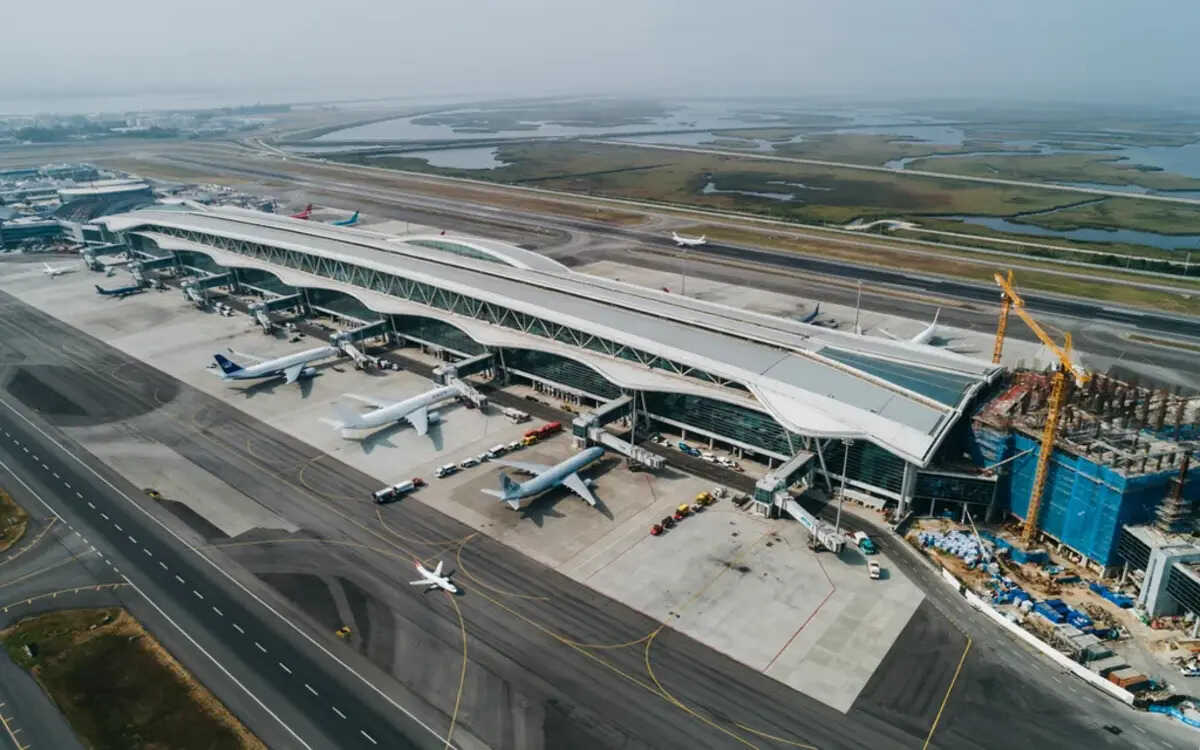
Image generated with Ai
South Korea is upgrading Incheon Airport Terminal 1 with 2035 renovation plan for global travel boom. South Korea’s Incheon International Airport is set to have one of its biggest upgrades yet, as Terminal 1 will see a complete renovation by 2035 to become a more sophisticated and safe hub for international passengers. As part of the ambitious modernization plan, the aging infrastructure will be replaced, security systems upgraded, passenger flow areas reimagined and the terminal’s annual capacity raised from 54 to 64 million travelers.
The project reflects South Korea’s long-term strategy to strengthen Incheon Airport’s position as a leading international aviation hub. As global travel demand continues to grow, the airport is preparing its facilities for the next generation of international passengers with smarter systems, improved efficiency and enhanced comfort.
Incheon International Airport Terminal 1, which has served millions of international travellers since opening in 2001, will receive a complete overhaul designed to modernise facilities that have reached an advanced stage of operation. The renovation programme will focus on replacing critical systems that have supported airport operations for around 25 years.
The redevelopment will include upgrades to mechanical equipment, electrical infrastructure, telecommunications networks and firefighting systems. These improvements are expected to bring Terminal 1 in line with modern safety standards while ensuring more reliable operations for passengers, airlines and airport partners.
Advertisement
Advertisement
The renovation comes at a crucial time as airports worldwide are investing heavily in infrastructure upgrades to handle increasing passenger numbers. Instead of replacing the terminal completely, South Korea is choosing a large-scale renewal approach that preserves existing facilities while introducing advanced technology and improved designs.
The project is expected to begin after the completion of the design phase in 2027, with construction scheduled to start in 2028. The full transformation is planned to be completed by 2035, marking a new chapter for one of Asia’s most important aviation gateways.
A major focus of the renovation will be strengthening airport safety and security systems. The baggage handling system at Terminal 1 will be upgraded from selective screening operations to a complete 100 percent screening system.
This change will improve checked baggage security by ensuring that all luggage receives advanced inspection. Stronger baggage screening will support international aviation safety requirements and provide passengers with greater confidence when travelling through South Korea.
Advertisement
Advertisement
The renovation will also replace outdated building systems that were installed when Terminal 1 first opened. Updated electrical, communication and fire protection systems will improve operational stability and allow the terminal to meet current aviation facility standards.
Modern airports increasingly depend on advanced infrastructure hidden behind passenger areas. Reliable power systems, communication networks and safety facilities play a critical role in preventing disruptions and maintaining smooth passenger journeys.
By upgrading these essential systems, Incheon Airport aims to create a more resilient terminal capable of supporting future travel growth.
One of the biggest changes planned for Terminal 1 will be the redesign of passenger movement areas. Currently, the terminal operates through six separate departure and arrival halls, creating a fragmented passenger experience.
The renovation will integrate these areas into a more unified system, allowing travellers to move through the terminal more efficiently. Improved layouts will help reduce confusion, simplify navigation and create a smoother journey from check-in to boarding.
Commercial areas, including duty-free shops and retail spaces, will also be rearranged. The redesign will focus on improving passenger flow while creating a more convenient shopping experience.
Airport retail has become an important part of international travel, with passengers often spending significant time inside terminals before flights. Better placement of commercial areas can improve convenience while supporting airport business growth.
The updated design is expected to create a more connected terminal environment where passengers can experience faster movement, improved accessibility and a more comfortable airport atmosphere.
The Terminal 1 transformation follows global airport modernisation trends, where major international hubs are upgrading existing facilities rather than building entirely new airports.
Lessons from Amsterdam Schiphol Airport’s redevelopment programme are being considered during the planning process. Like many major airports, Schiphol faces challenges related to limited land availability and the need to modernise existing infrastructure.
Incheon Airport’s approach reflects a wider industry trend. Airports around the world are focusing on smarter use of existing space, improved passenger technology and sustainable long-term development.
The renovation will allow Incheon to maintain its competitive position among major Asian aviation hubs, including airports in Singapore, Japan, Hong Kong and Thailand.
With international tourism recovering and passenger demand continuing to expand, modern airport facilities have become a key factor in attracting airlines, business travellers and leisure visitors.
Because Terminal 1 remains fully operational, the renovation will be carried out through a carefully planned construction strategy.
The airport authority plans to divide the terminal into at least three construction zones. This phased approach will allow renovation work to continue while reducing disruption for travellers.
Passengers may experience temporary changes during different stages of construction, including modified routes, relocated facilities or adjusted terminal operations. However, maintaining normal airport services will remain a priority throughout the project.
An alternative plan is also being reviewed to construct a temporary replacement terminal using available land near the airport. This option could allow a complete simultaneous renovation of Terminal 1 instead of a gradual transformation.
The final construction approach will determine how quickly and efficiently the airport can complete the upgrade while protecting passenger convenience.
Once completed, the renovated Terminal 1 will see its annual passenger capacity increase from the current 54 million travellers to approximately 64 million passengers.
The additional capacity will provide greater support for South Korea’s growing tourism sector. Incheon Airport serves as the main international gateway for visitors arriving in Seoul and other destinations across the country.
A larger and more efficient terminal can help accommodate rising international arrivals, strengthen airline connectivity and improve South Korea’s position as a major travel destination.
The airport has already expanded significantly through previous development projects. Following recent expansion work, Incheon International Airport has increased its overall capacity to handle around 106 million passengers annually across its facilities.
The Terminal 1 renovation will further strengthen this capacity by improving one of the airport’s oldest and most important passenger facilities.
The Terminal 1 renovation represents more than a building upgrade. It is part of South Korea’s wider ambition to create a future-ready airport capable of supporting decades of global travel growth.
For international visitors, the improvements are expected to deliver a better airport experience through faster processing, stronger security, improved navigation and upgraded passenger facilities.
The project does not introduce any changes to visa regulations, passport requirements or border entry policies. Instead, its impact will be focused on travel infrastructure, airport operations and tourism development.
As global travellers increasingly demand faster, safer and more comfortable journeys, Incheon Airport’s Terminal 1 transformation is designed to meet the expectations of the next generation of international aviation.
According to South Korea’s strategy, Incheon Airport Terminal 1 is set to enter the new stage of development by renovating it into a “global transportation hub” by 2035.
The new international transport hub will help South Korea to solidify its status as a premier tourist destination and a global aviation center by 2035.
Advertisement
Tags: Airport renovation, aviation infrastructure, Global Travel Hub, Incheon Airport Terminal 1, South Korea tourism
Advertisement
Advertisement












Wednesday, September 2, 2026

Tuesday, September 1, 2026

Wednesday, September 2, 2026

Wednesday, September 2, 2026
Tuesday, September 1, 2026
Tuesday, September 1, 2026

Wednesday, September 2, 2026
Wednesday, September 2, 2026



