
Etihad Airways Pioneers Digital Transactions As The First Carrier To Integrate The UAE Jaywan Payment Scheme

Published
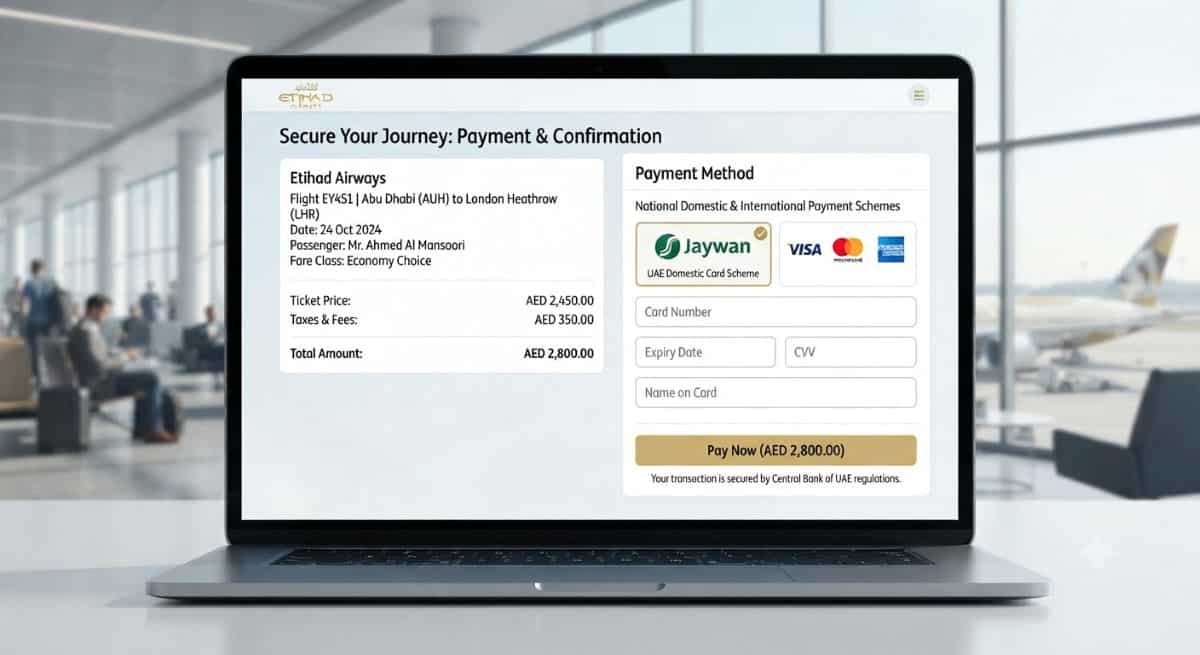
Image generated with Ai
The official announcement detailing Etihad Airways becoming the first airline to integrate Jaywan, which is the United Arab Emirates national domestic card scheme, was recently released. This development marks a critical turning point for regional digital commerce. Operated under Al Etihad Payments, a specialized subsidiary of the Central Bank of the UAE, this homegrown card system was engineered specifically to address local financial ecosystems.
A strategic rollout followed a foundational memorandum of understanding signed between Etihad Airways and Al Etihad Payments. This agreement set the stage for a deeper convergence between national monetary infrastructure and premier travel services. By embedding this domestic card scheme into online infrastructure, high-level institutions aim to fortify the country’s broader digital transformation goals. Financial autonomy is thereby reflected across multiple consumer-facing industries through these coordinated measures.
Impact on Travellers
For passengers residing within the borders of the United Arab Emirates, digital integration is provided to deliver heightened convenience and diversified payment flexibility. Travelers are now enabled to seamlessly utilize national cards during the online checkout process on the official website when securing tickets. This applies to tickets spanning the carrier’s extensive worldwide route network.
- Enhanced Privileges for Premium Tiers: Holders of specific premium tiers, such as Jaywan Royal cards, are positioned to unlock tailored advantages.
- Exclusive Fare Reductions: Distinct perks encompass exclusive financial reductions on Comfort and Deluxe fare classes.
- Prioritized Processing: Airport processing privileges include business check-in and boarding facilitation.
- Tangible Rewards: Everyday payment mechanics are directly correlated with tangible travel rewards, elevating the overall journey for frequent flyers.
Industry Insights
Industry analysts view this milestone as a clear indicator of how domestic payment rails are evolving. Evolution is noted beyond traditional retail boundaries to encompass high-value service sectors like aviation.
Advertisement
Advertisement
- Resilient Operational Models: National payment networks are bridged with international carrier operations by stakeholders to create a resilient model.
- Support for Loyalty Frameworks: Transactional behavior is utilized directly to support loyalty frameworks.
- Reduced External Reliance: Reliance on purely international payment gateways is minimized for local consumers, fostering a self-sustaining financial cycle within the region.
- Cross-Sector Adoption: Aviation leaders proactively align corporate strategies with government-backed technological advancements, paving the way for similar cross-sector adoptions across the wider Middle Eastern market.
Practical Information for Visitors
The newly established payment functionality is made accessible exclusively through digital channels on the primary website for bookings covering the global network. Visitors are advised to note several operational parameters:
- Web Portal Exclusivity: This specific feature is currently restricted to online reservations made directly via the designated web portal.
- Application Restrictions: Extension has not yet been granted to mobile applications, airport ticket counters, or external travel agencies.
- Medium Verification: Preferred payment mediums must be verified by customers prior to finalizing transactions through alternative booking avenues.
- Eligibility Boundaries: Eligibility for tiered advantages, such as fare reductions and priority airport access, remains tethered to specific card classifications managed through the ongoing partnership framework.
Comparison With Previous Policies Or Developments
Historically, online flight reservations were relied upon heavily through conventional global credit and debit card networks. This reliance limited the integration of localized financial instruments within the aviation sector.
- Transactional Separation: Earlier practices treated payment processing as a distinct transactional step devoid of any intrinsic connection to national loyalty schemes or domestic economic initiatives.
- Synergy Deficits: Previous policy frameworks lacked the direct synergy seen in recent developments, where a homegrown payment system is actively leveraged to provide tiered travel incentives.
- Unified Transitions: The regional market is transitioned from fragmented payment options toward a unified, state-supported digital commerce experience that actively rewards domestic cardholders.
Advertisement
