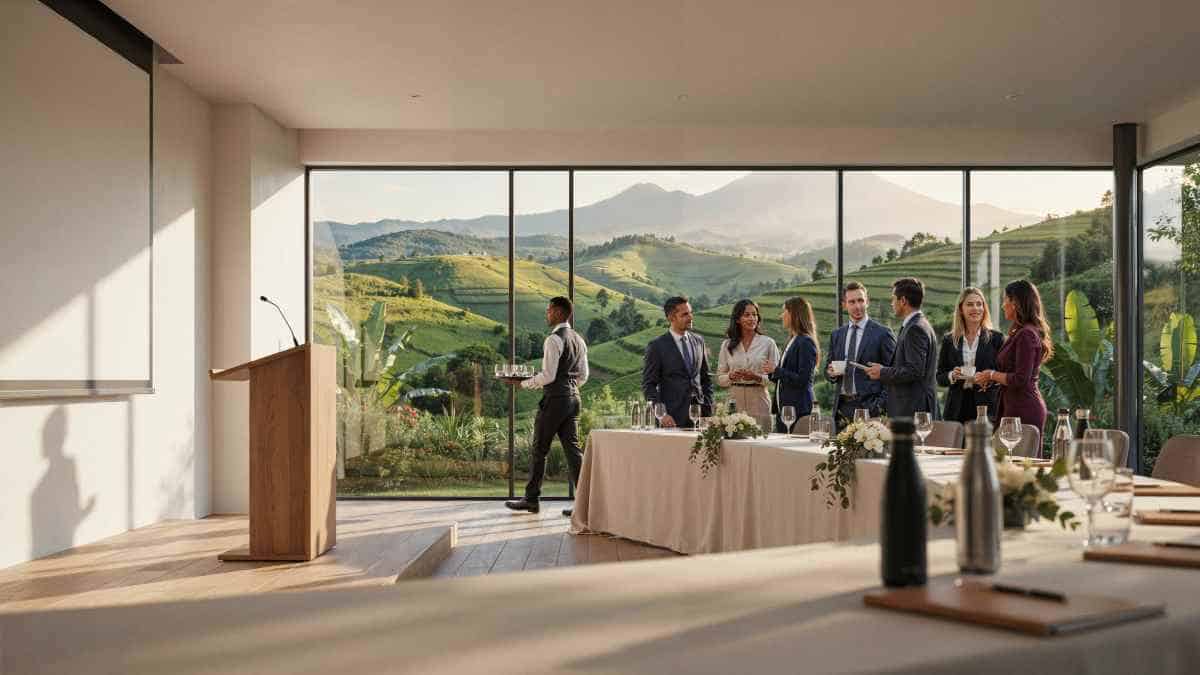
Image generated with Ai
Rwanda is strengthening its position as one of Africa’s fastest-growing tourism destinations by combining world-class business events with premium nature-based hospitality. While the country has long been recognised for mountain gorilla trekking and wildlife conservation, Rwanda is increasingly diversifying its tourism portfolio through the rapid expansion of Meetings, Incentives, Conferences and Exhibitions (MICE) in Kigali alongside continued investment in luxury eco-lodges around Nyungwe Forest National Park. This dual strategy reflects Rwanda’s ambition to attract higher-value international visitors by offering seamless urban business experiences alongside immersive rainforest escapes.
The combination of conference infrastructure and sustainable luxury tourism is reshaping how travellers experience Rwanda beyond its traditional safari attractions.
Advertisement
Kigali has become one of Africa’s leading destinations for international conferences and business events.
Known for its clean streets, modern infrastructure and efficient urban planning, the Rwandan capital regularly hosts regional and global summits, corporate meetings, exhibitions and international conventions. Facilities such as the Kigali Convention Centre have strengthened the city’s ability to welcome thousands of delegates while supporting year-round business tourism.
Advertisement
Advertisement
The continued growth of the MICE sector has helped diversify Rwanda’s visitor economy beyond leisure travel, attracting professionals who often extend their trips to explore the country’s natural attractions.
This combination of business and leisure tourism has become an increasingly important contributor to Rwanda’s hospitality industry.
MICE tourism delivers benefits that extend well beyond conference venues.
International delegates frequently visit museums, restaurants, cultural attractions and nearby destinations before or after attending events. Many also choose to experience Rwanda’s wildlife, national parks and luxury lodges during extended stays.
Advertisement
Advertisement
Hotels, airlines, transport providers, restaurants and local businesses all benefit from increased visitor spending generated by conferences and corporate travel.
By positioning Kigali as both a business and leisure gateway, Rwanda is encouraging visitors to discover multiple regions during a single journey.
Beyond the capital, Rwanda continues investing in premium accommodation within its protected natural landscapes.
Nyungwe Forest National Park, one of Africa’s oldest tropical rainforests, has become a major focus for luxury hospitality development. The park is internationally recognised for its biodiversity, including chimpanzees, colobus monkeys, rare bird species and one of Africa’s largest remaining montane forests.
New hospitality projects and ongoing upgrades are enhancing visitor experiences while maintaining the park’s conservation priorities.
Luxury eco-lodges provide travellers with opportunities to experience Rwanda’s rainforest through guided nature walks, canopy adventures, wildlife encounters and wellness-focused stays.
Developments including Songa Africa and upgrades associated with Sambora reflect increasing demand for high-end eco-tourism experiences.
These projects combine contemporary hospitality with environmentally responsible design, aiming to minimise ecological impact while offering premium accommodation within proximity to Nyungwe’s natural attractions.
Visitors increasingly seek smaller, experience-led properties where comfort is balanced with sustainability and authentic engagement with local environments.
The continued expansion of eco-lodges also supports employment opportunities and community partnerships surrounding Rwanda’s protected areas.
Rwanda has consistently positioned conservation at the centre of its tourism strategy.
Revenue generated through high-value tourism supports national park management, biodiversity protection and community development initiatives. The country’s emphasis on premium rather than mass tourism helps manage visitor numbers while protecting sensitive ecosystems.
This approach has strengthened Rwanda’s international reputation for responsible tourism and environmental stewardship.
Luxury eco-tourism complements these objectives by encouraging longer stays and higher visitor spending without increasing pressure on protected landscapes.
The simultaneous growth of MICE tourism and eco-lodges demonstrates Rwanda’s broader tourism diversification strategy.
Instead of relying primarily on wildlife experiences, the country is expanding into business travel, wellness tourism, cultural experiences and luxury hospitality.
This balanced approach improves resilience while creating opportunities for year-round tourism growth across different market segments.
As international travellers increasingly combine work, leisure and nature experiences, Rwanda is well positioned to benefit from evolving global travel trends.
Rwanda’s tourism evolution demonstrates how destination diversification can strengthen long-term competitiveness. By pairing Kigali’s growing reputation as a business events hub with carefully managed luxury eco-tourism in Nyungwe Forest, the country is appealing to travellers seeking both professional opportunities and meaningful nature experiences. This integrated model positions Rwanda as a destination where business, conservation and premium hospitality reinforce one another rather than competing for attention.
Why is Kigali becoming a leading MICE destination?
Kigali offers modern conference facilities, reliable infrastructure, high standards of cleanliness and strong connectivity, making it attractive for international meetings and exhibitions.
What makes Nyungwe Forest National Park special?
Nyungwe is one of Africa’s oldest tropical rainforests, known for its biodiversity, chimpanzee trekking, canopy walks and exceptional birdlife.
How do luxury eco-lodges support tourism?
They provide high-end accommodation while promoting sustainable tourism, supporting conservation efforts and creating economic opportunities for surrounding communities.
Dates
Rwanda is redefining its tourism identity by combining Kigali’s growing prominence as a world-class MICE destination with continued investment in luxury eco-tourism across Nyungwe Forest National Park. As business travellers increasingly extend their visits to experience Rwanda’s natural landscapes and premium hospitality, the country is creating a diversified tourism model that balances economic growth with environmental stewardship. Through modern conference infrastructure, sustainable luxury accommodation and a strong commitment to conservation, Rwanda continues strengthening its position as one of Africa’s most innovative and high-value travel destinations.
Advertisement
Tags: east africa, Huye, kigali, Kigali business tourism, Kigali MICE
Advertisement
Advertisement











Wednesday, September 2, 2026
Wednesday, September 2, 2026
Wednesday, September 2, 2026
Wednesday, September 2, 2026
Wednesday, September 2, 2026
Tuesday, September 1, 2026
Wednesday, September 2, 2026
Wednesday, September 2, 2026