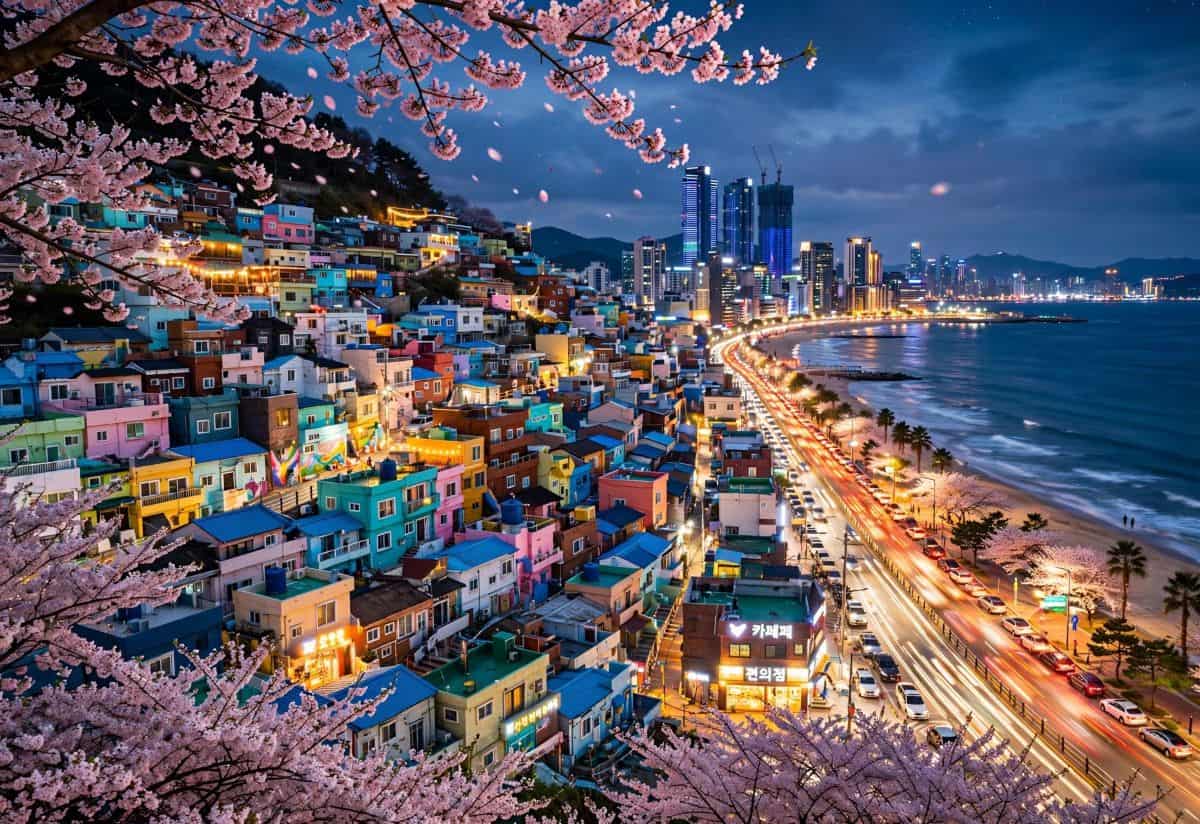
Image generated with Ai
Looking at the Busan Exhibition and Convention Center makes you feel like you are standing on top of all of human history wrapped up in one neat bundle in Busan. The 48th session of UNESCO’s World Heritage Committee will not be the same old boring meeting of Diplomats. It will be the passionate plea to save what is left of our planet. As emotional delegates travel from far off lands and as the arms of South Korea fill up with passionate defenders of human history, truth will fill the room. Ancient stones, fragile rainforests, and sacred monuments are on the verge of being lost forever. The South Korean coast and the most remote locations of our continents will be impacted by the decisions made in Busan. The decisions made in Busan about how we engage with other cultures and how we protect our ancient treasures before they disappear forever will impact the way we interact with other cultures.
Unveiling the 48th UNESCO World Heritage Committee Session in South Korea and Its Strategic Significance for Global Tourism
The 48th session of UNESCO’s World Heritage Committee recently assembled an elite network of international heritage professionals in South Korea. Consequently, this pivotal diplomatic assembly positioned South Korea directly at the epicenter of worldwide policy debates regarding physical heritage preservation! Delegations gathered to formulate visionary directives that directly influence global travel patterns, cultural conservation, and sustainable hospitality management across several continents.
In addition, international delegates scrutinized how designated historic places influence regional economic ecosystems. Furthermore, authorities emphasized that structured conservation protocols protect ecological marvels and monumental architecture from environmental degradation. Therefore, this high-profile conference established clear standards that balance heritage preservation with responsible international tourism for generations to come!
Advertisement
Advertisement
Navigating the Future of Universal Tourism Through Dynamic International Heritage Policy Standards
The global tourism ecosystem is undergoing a dramatic shift as international institutions recalibrate how precious cultural landmarks and natural ecosystems are managed. When delegates convened to evaluate heritage standards, they initiated a chain reaction that directly influences airline routes, hotel development, and regional infrastructure planning. Tourism boards around the world closely align their promotional strategies with formal heritage designations, knowing that international tourists actively seek out authenticated cultural destinations.
Furthermore, the introduction of stricter preservation guidelines forces municipal planners to reconsider how visitor flow is regulated. By capping daily visitor numbers at vulnerable cultural monuments and implementing advance ticketing systems, local authorities ensure that tourist activity does not jeopardize fragile physical structures. This shift toward regulated tourism protects invaluable historic monuments while providing travelers with significantly more immersive, educational, and uncrowded experiences.
Enhancing Sustainable Hospitality Systems and Empowering Local Destination Management Networks
Hospitality providers around the globe are rapidly adapting their operational models to align with new environmental and cultural standards. Hotels, transportation networks, and tour services operate in environments where eco-conscious travelers demand responsible, low-impact travel options. Consequently, international heritage designations encourage regional governments to fund green transit networks, renewable energy initiatives, and heritage-focused educational programs that benefit both residents and visitors.
In addition, destination management organizations are actively decentralizing tourism away from overcrowded urban centers toward lesser-known heritage locations. This strategic distribution of tourist arrivals alleviates physical strain on heavily visited landmarks while stimulating economic vitality in surrounding rural regions. As local communities gain direct economic benefits from heritage conservation, they become active guardians of their native environments and cultural traditions.
Safeguarding Irreplaceable Ecological Wonders and Ancient Architectural Marvels for Future Generations
Preserving the structural and ecological integrity of historical sites requires unprecedented international cooperation and continuous monitoring. Environmental shifts, urban expansion, and unregulated commercial development pose ongoing risks to irreplaceable cultural sanctuaries and natural reserves. Through comprehensive site evaluations, international regulatory bodies identify vulnerable areas and deliver targeted funding and technical support to mitigate emerging risks.
Moreover, these conservation protocols establish clear boundaries regarding acceptable commercial developments near protected zones. Buffer areas surrounding historical sites prevent invasive urbanization, preserving the aesthetic and historical atmosphere that makes these locations uniquely compelling to global travelers. By prioritizing long-term structural maintenance over short-term commercial expansion, authorities ensure that these priceless treasures endure for future generations.
Expanding Educational Frameworks and Cultural Awareness for Modern Global Adventurers
Modern travelers increasingly view international journeys as opportunities for profound personal growth and authentic cultural immersion. When heritage locations receive official recognition and robust site management, educational programs inside these parks and monuments are dramatically upgraded. Detailed interpretive signage, multi-lingual digital applications, and trained local guides allow visitors to engage deeply with the rich history behind each destination.
Furthermore, heightened cultural awareness fosters mutual respect between international visitors and indigenous host communities. Travelers gain a clearer understanding of local customs, archaeological significance, and historical contexts, leading to more mindful and appreciative interactions. This educational evolution elevates travel from simple leisure into a transformative global experience that bridges geographic and cultural divides.
Analyzing Regional Economic Shifts and Infrastructure Development Driven by World Heritage Status
Securing international heritage recognition serves as a powerful catalyst for regional economic transformation, driving substantial capital investment into local infrastructure. Governments regularly prioritize road upgrades, high-speed rail connections, and airport expansions to accommodate the anticipated influx of global travelers. Consequently, localized regions transition into thriving international hubs that attract diverse commercial investments and create skilled employment opportunities for local populations.
However, rapid growth necessitates careful management to prevent localized inflation, housing shortages, and commercial displacement. Urban planners and economic strategists must work in tandem to establish balanced economic frameworks that protect local residents while welcoming international commerce. When managed effectively, the economic revenue generated by heritage-driven tourism directly funds municipal services, local schools, and ongoing site maintenance.
Evaluating New Site Nominations and Examining Essential Conservation Reports for Inscribed World Heritage Sites
During the extensive proceedings in Busan, international delegates systematically evaluated nominations for candidate locations seeking inclusion on the official UNESCO World Heritage List. Concurrently, officials scrutinized detailed conservation assessments concerning historic landmarks already inscribed on the master global registry. Specialized panels reviewed technical documentations to ensure that natural reserves and cultural sanctuaries maintained strict standards of structural and ecological integrity.
Furthermore, committee members examined detailed reports addressing structural preservation, environmental threats, and visitor density pressures. By enforcing rigorous criteria for new listings, experts aimed to safeguard irreplaceable historical assets from degradation. Consequently, these comprehensive reviews provided actionable recommendations for local governance boards, site administrators, and international conservation agencies.
Key Gathering at the Busan Exhibition and Convention Center (BEXCO) Focuses International Heritage Experts
It was reported that delegates convened inside the modern facilities of the Busan Exhibition and Convention Center, widely known as BEXCO, located within the vibrant coastal metropolis of Busan. Officials noted that representatives from 21 States Parties assembled at BEXCO to participate in comprehensive diplomatic sessions. The choice of Busan highlighted South Korea’s growing prominence as a major host for international conventions and global gatherings.
The proceedings at BEXCO required meticulous organization to accommodate diverse diplomatic delegations. Analysts stated that hosting such an influential gathering at BEXCO reinforced the reputation of Busan as a premier global hub. The infrastructure in Busan provided an ideal setting for high-level international dialogue regarding the preservation of historic and natural landmarks.
Transforming the Global Travel Industry and Broadening Opportunities for International Travelers
Experts observed that decisions finalized during the session in Busan would significantly alter global travel itineraries and consumer demand. When designated sites achieve status on the UNESCO World Heritage List, local hospitality sectors typically experience immediate increases in international arrivals. Consequently, travel operators, local airlines, and municipal hospitality providers must adapt their infrastructure to accommodate expanded tourist numbers.
Moreover, international travelers benefit from enhanced site management, clearer educational interpretation, and improved infrastructure at designated locations across South Korea and the world. Tourism strategists noted that formal recognition encourages governments to fund sustainable transit networks, eco-friendly accommodations, and community-led preservation initiatives. As a result, travelers gain richer cultural experiences while local economies secure long-term revenue streams through responsible heritage management.
Broadening Global Heritage Registers Through Twenty-Five New Inscriptions Designated at the Busan Assembly
During the international gathering convened in Busan, global representatives thoroughly evaluated candidate applications and formally endorsed 25 new heritage properties for inclusion in the master international catalog. This strategic addition expanded the universal UNESCO World Heritage List to a grand total of 1,273 properties across 173 nations operating within the framework of the 1972 World Heritage Convention. The newly recognized landmarks spanning from Japan’s Ancient Capitals of Asuka and Fujiwara to Finland’s Aalto Works and the United States’ Okefenokee National Wildlife Refuge prompt immediate structural adjustments in destination marketing and tourism logistics.
Historically, locations receiving this prestigious designation experience a rapid 20% to 50% increase in international tourist arrivals within the subsequent two years. This notable surge compels regional urban planners and local authorities to quickly upgrade transportation corridors, expand local hospitality infrastructure, and implement sustainable visitor management plans. As these sites enter the global spotlight, regional tourism networks must adapt to serve an expanding influx of international travelers while preserving the physical integrity of newly listed cultural and natural assets.
Mitigating Water-Related Environmental Threats Endangering Seventy-Three Percent of Global Heritage Sites
An extensive environmental study presented during the conference revealed that 73% of World Heritage properties globally face direct hazards tied to water extremes, including severe drought, acute water stress, and intense riverine or coastal flooding. Specifically, nearly 600 heritage sites across multiple continents suffer from critical water scarcity, whereas 400 sites contend with frequent inundation risks. Furthermore, as global sea levels rise, one-third of all international heritage properties situated in coastal settlements including 60% of historic landmarks in the Mediterranean region report heightened threats of coastal erosion and saltwater degradation.
These physical metrics are actively transforming how international travel itineraries and site access schedules are constructed. To counteract these escalating environmental risks, tour operators and site managers are restructuring seasonal travel routes, shifting daily access hours, and building protective, low-impact containment infrastructure around vulnerable monuments. Through proactive engineering and controlled visitor access, destination authorities strive to safeguard delicate historical architecture against severe environmental degradation while maintaining visitor safety.
Unlocking Inaugural Inscriptions for Three African Nations and Launching the Thirteen Million Dollar Small Island Initiative
Marking a momentous diplomatic milestone, three African countries South Sudan, Comoros, and São Tomé and Príncipe attained their very first official site designations on the master global registry, anchored by the inclusion of the vast Boma-Badingilo Migratory Landscape in South Sudan. Simultaneously, international delegates inaugurated the dedicated World Heritage Strategy for Small Island Developing States (SIDS) spanning 2026 to 2034, underpinned by an initial $13 million capital commitment.
This targeted investment strategy focuses on strengthening local climate resilience, expanding park ranger capacities, and establishing community-focused eco-tourism models across underrepresented island states and tropical forest reserves. For global adventure seekers and eco-tourists, these developments open access to pristine, previously under-visited frontiers. At the same time, native host communities receive essential financial and technical resources to protect their local ecosystems and foster sustainable economic development.
Enforcing Emergency Protections for Endangered Historical Monuments Facing Active Conflict and Structural Strain
The governing committee executed emergency protocols to designate six highly vulnerable historical locations on the List of World Heritage in Danger, responding to critical pressures caused by geopolitical instability, active conflict, and severe structural decay. The newly listed locations encompass Sebastia in the State of Palestine, Mount Amel Castles in Lebanon, the ancient maritime port of Tyre in Lebanon, South Sudan’s Boma-Badingilo Migratory Landscape, the Ancient City of Tauric Chersonese in Ukraine, and the Historic Inner City of Paramaribo in Suriname.
Assigning sites to the danger registry restricts unrestricted mass tourism, establishing strictly regulated, low-impact visitation frameworks to limit physical wear on fragile ruins. Simultaneously, this emergency status unlocks specialized international conservation funding aimed at structural stabilization, anti-poaching measures, and continuous environmental monitoring. Consequently, these measures help preserve irreplaceable historical assets during periods of heightened vulnerability.
Demonstrating MICE Tourism Expansion Through an Eleven-Day Assembly Driven by Twenty-One Member Delegations
Hosting the 11-day summit at the Busan Exhibition and Convention Center drew international delegations led by the 21 elected member states of the World Heritage Committee, including Argentina, Bangladesh, Kenya, Kazakhstan, Lebanon, Mexico, Poland, the Republic of Korea, Switzerland, Türkiye, and Viet Nam. The assembly brought thousands of international policy leaders, environmental researchers, and travel industry executives to Busan, generating direct economic revenue for local hospitality, transit, and commercial sectors.
This major gathering illustrates how large-scale Meetings, Incentives, Conferences, and Exhibitions (MICE) events elevate a host city’s international status. By successfully managing complex diplomatic assemblies, metropolitan areas strengthen their profile as premier destinations for both business conventions and leisure travel. The modern infrastructure utilized in Busan serves as a practical blueprint for global cities aspiring to expand their MICE tourism capacities.
Regulating Urban Density Dynamics Affecting Seventy Percent of Cultural Heritage Ecosystems
Discussions emphasized that 70% of all cultural heritage properties are located within densely populated, expanding urban landscapes, exposing ancient architectural structures to intense crowd volume, environmental pollution, and urban encroachment. Heritage experts emphasized that unmanaged pedestrian foot traffic causes continuous physical abrasion and structural strain on historic city centers.
To protect these urban monuments, municipal governments are implementing comprehensive urban management frameworks, including strict zoning regulations, zero-emission electric shuttle networks, and mandatory timed-entry reservation systems. These regulations require international tour operators to distribute group arrivals evenly across off-peak hours. As a result, historic urban centers preserve their structural integrity and cultural character while offering visitors comfortable, uncrowded educational journeys.
Integrating Advanced Digital Twin Platforms and Virtual Reality Preserves Across International Landmarks
A primary technological initiative highlighted during the conference centered on deploying 3D spatial mapping, high-definition digital twin modeling, and artificial intelligence crowd sensors across protected sites. Hosting representatives demonstrated advanced virtual reality platforms that allow visitors to explore delicate architectural interiors without placing physical weight or stress on fragile timber frames and ancient stonework.
For international travelers, the implementation of smart heritage technologies ensures smoother, highly informative visits. Travelers benefit from real-time crowd navigation, multi-lingual digital guide systems, and seamless contactless entry. Furthermore, digital preservation archives guarantee that even if physical monuments face environmental degradation or natural disasters, their structural data and historical legacy remain permanently preserved for future generations.
Standardizing Global Carrying Capacity Criteria via the World Heritage Site Managers Forum 2026
Organized alongside the main diplomatic proceedings in Busan, the World Heritage Site Managers Forum 2026 brought together site directors from around the world to establish uniform standards for evaluating visitor carrying capacities. Managing authorities formulated standardized protocols for implementing timed reservation systems, capping daily pedestrian traffic, and establishing low-emission buffer zones around fragile historic monuments.
These standardized operational metrics provide global travelers with predictable and high-quality visitation experiences. Although timed-entry frameworks require travelers to organize their schedules further in advance, they significantly reduce wait times and prevent physical congestion inside historic venues. Ultimately, these measures ensure safer, more enjoyable visits for tourists while safeguarding ancient structures from physical degradation.
Broadening Geographical Balance and Redressing Historical Inscription Biases Across Global Destinations
Diplomatic deliberations emphasized the urgent imperative to rectify long-standing geographical imbalances on the global heritage registry, where 46.16% of all inscribed properties remain heavily concentrated across Europe and North America. Out of 1,273 total sites worldwide, vast cultural landscapes across underrepresented regions in Africa, the Asia-Pacific, and Latin America continue to lack proportional international recognition, legal protections, and global travel exposure.
By channeling technical resources and expert guidance toward developing nations, international heritage authorities seek to democratize global travel routes over the coming decade. As candidate properties across underrepresented continents secure formal status, commercial tour operators, hospitality providers, and international airlines will naturally diversify services away from overcrowded traditional European centers toward emerging cultural hubs across Asia and Africa, offering global travelers authentic, uncrowded cultural experiences.
Expanding the Global Tentative List Framework and Streamlining Nomination Milestones
Concurrently, international governing bodies evaluated updates to the master Tentative List, which serves as the mandatory prerequisite inventory for future inscription and includes rich inventories such as India’s 69 candidate properties which features key cultural landmarks such as Sarnath. Specialized evaluation panels noted that transitioning a candidate site from a national tentative inventory to official inscription routinely requires 15 to 18 years of rigorous site management planning, structural documentation, and environmental baseline testing.
For the international hospitality sector, tracking these tentative listings provides a reliable, long-term strategic roadmap for regional destination development. Hotel developers, regional transport networks, and local tour operators utilize tentative listings as dependable indicators of future tourist growth. Consequently, regional economies can construct eco-friendly lodging, train local guides, and establish sustainable transit hubs long before a location experiences a massive surge in international arrivals.
Preserving Intangible Cultural Heritage Practices Intertwined with Monumental Landscapes
Discussions highlighted that physical monuments and natural reserves cannot be isolated from the living traditions, indigenous rituals, and local craftsmanship of host communities surrounding them. International experts emphasized that preserving ancient stone architecture or vast biosphere reserves requires safeguarding the traditional ecological knowledge, folkways, and living arts of native custodians who have protected these habitats for generations.
This holistic policy framework directly elevates the educational value of heritage travel for global adventurers. Modern travel itineraries are increasingly designed around immersive cultural exchanges such as learning traditional building methods, sampling indigenous culinary arts, or observing ancient conservation rituals. As a result, tourist spending directly supports local artisans, indigenous families, and rural village economies while preserving living cultural heritage.
Deploying Transboundary Peace Parks and Cultural Diplomacy Frameworks Across Border Regions
A key strategic agenda advanced during the assembly focused on leveraging shared natural ecosystems and historic transit corridors as vital tools for international reconciliation and cross-border environmental cooperation. Diplomatic delegations reviewed cross-border management plans designed to harmonize protective environmental laws, anti-poaching patrols, and park ranger protocols across neighboring nations that share joint ecological reserves.
These transboundary initiatives facilitate seamless multi-country travel corridors for international eco-tourists and wildlife enthusiasts. By establishing unified visa arrangements, streamlined border crossings, and standardized park entry passes across neighboring countries, international authorities encourage multi-destination journeys that promote regional peace, support biodiversity conservation, and stimulate shared cross-border tourism revenue.
The Final Verdict
There are memories that exist because of policies, but will outlast the policies. When Busan’s lights fade, we are left with more than policies, we are left with the collective memories of the human race. From the South Korean coast, one learns of travel’s most undervalued part. Travel extends beyond vacationing at places that make for the best Insta posts. Travel means experiencing the ruins of the ancient world. Travel means an uneasy calm among the quiet of preserved forests. Travel means appreciating ancient travelers and their spirits that continue to traverse through space and time. The policies of Busan remind us that these things are not sovereign to any nation, but rather the possession of all humankind. In traveling all of South Korea and the world’s far-reaches, there is an obligation to travel with respect because the beauty of the world’s traveler spirits would be irrevocably lost otherwise.
Advertisement
Tags: Asia, Busan, south korea, tourism updates, Travel News
Advertisement
Advertisement













Thursday, September 3, 2026

Thursday, September 3, 2026

Thursday, September 3, 2026

Thursday, September 3, 2026

Thursday, September 3, 2026

Wednesday, September 2, 2026

Thursday, September 3, 2026

Thursday, September 3, 2026