
Mauritius Boom Redefines Coastal Living As Affluent Families Flocks To Build Their New Boere Monaco Travel Paradise

Published
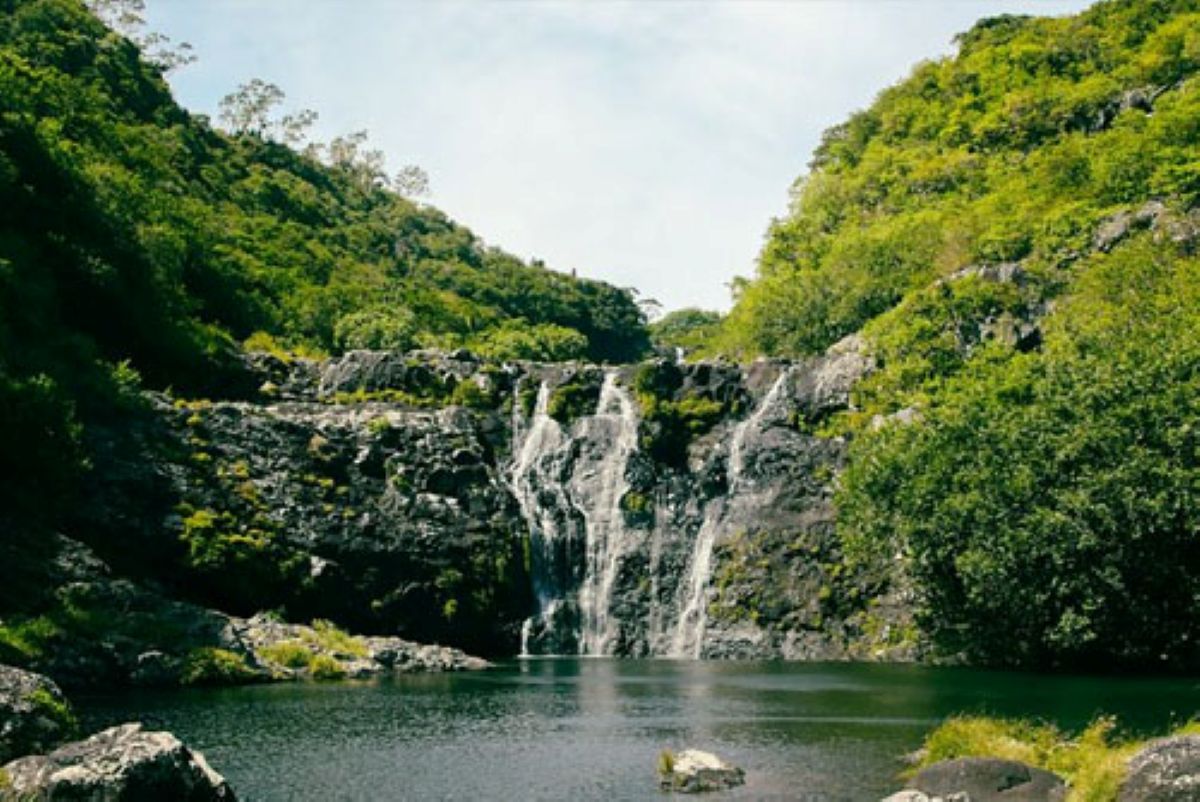
Families feel a magnetic pull that draws them away from their homes toward the bright sunlit shores of Black River. After years of economic ups and downs and endless uncertainty in South Africa wealthy families are swapping worry for calm along the quiet coast of Mauritius. The movement is not about escaping; the movement is, about rebuilding a life where children can play safely and where hard‑earned money stays protected. As a result when African millionaires turn Tamarin into their new refuge, known as the famous Boere Monaco wealthy families are not simply moving. Wealthy families are changing the way international travel, property markets and airlines connect across the Indian Ocean.
Understanding the unprecedented rise of the ‘Boere Monaco’ as a premier sanctuary for global wealth and lifestyle migration
Observations confirm that Black River, which includes the idyllic coastal enclave of Tamarin, has established a firm reputation as a leading destination for affluent global citizens. Observers emphasize that the prominent concentration of Afrikaans-speaking families relocating from South Africa to this picturesque section of Mauritius inspired the informal moniker ‘Boere Monaco’. Similar to its Mediterranean namesake, this tropical district offers an ultra-exclusive, waterfront lifestyle framed by luxury residential communities, deep-water marinas, and magnificent mountain scenery.
Moreover, this dense concentration of wealthy households has cultivated a completely self-sustaining lifestyle ecosystem. The rapid development of world-class private international schools, sprawling retail complexes, and championship golf courses constantly entices corporate executives, tech entrepreneurs, and retirees. Consequently, what once existed as a quiet, traditional fishing village in Western Mauritius has evolved into a highly sophisticated international business and leisure nexus. High-net-worth individuals establish permanent bases here without relinquishing operational oversight over their primary enterprises across Africa, Europe, and North America.
Advertisement
Advertisement
Analyzing the record-breaking wealth expansion driving transformational economic growth across the western district of Mauritius
Statistical financial reporting reveals that Black River achieved the highest growth rate among all millionaire destinations on the African continent over the past decade. Specifically, verified data demonstrates that the total population of dollar millionaires residing within Black River grew by an extraordinary 120% over the last ten years. This massive influx highlights a persistent, widespread shift of private capital moving toward jurisdictions that guarantee rigorous legal protections, financial transparency, and physical safety.
Advertisement
Advertisement
This unprecedented rise in high-net-worth residents directly fuels extensive residential and commercial development throughout the district. Luxury gated compounds and eco-friendly urban initiatives, commonly recognized as “Smart Cities”, expand continuously to accommodate incoming demand. As a result, the municipal infrastructure throughout Black River has undergone profound modernization, turning the western coast of Mauritius into a standout model for regional economic planning, property investment, and private wealth preservation.
Evaluating the key factors compelling affluent families to choose the safety and financial stability of Mauritius
Advertisement
Advertisement
Several decisive economic and personal safety factors explain why wealthy households consistently select Mauritius over alternative tax-friendly jurisdictions worldwide. Foremost among these considerations is the absolute guarantee of political stability, personal security, and structural predictability. When contrasted directly with the socio-economic volatility, energy insecurity, and rising crime rates present in South Africa, the island state offers an exceptionally peaceful lifestyle supported by dependable public institutions and transparent legal frameworks.
In addition to personal security, the host country’s attractive tax laws represent a massive financial incentive for corporate founders, real estate investors, and international retirees. The country maintains a streamlined tax code, capping personal income tax and corporate revenue tax at a flat 15%, while completely waiving inheritance taxes and capital gains levies. Furthermore, official government regulations automatically grant permanent residency status to foreign investors who purchase qualified real estate valued above $375,000 to $500,000, drastically simplifying long-term international relocation procedures.
Examining the far-reaching implications for global aviation networks, luxury hospitality, and international travel dynamics
The permanent settlement of thousands of wealthy households in Black River creates powerful, lasting shifts throughout the global travel, aviation, and hospitality industries. Unlike traditional holiday travelers who visit during specific seasonal windows, these permanent and semi-permanent expatriates generate consistent, non-cyclical, year-round demand for elite transportation services. Consequently, international airlines operating strategic flight routes linking Johannesburg, Cape Town, and Mauritius report sustained high occupancy rates, prompting expanded flight schedules, upgraded aircraft, and expanded premium-cabin configurations.
Advertisement
Advertisement
Beyond air transportation, this structural wealth migration fundamentally transforms traditional hospitality offerings across the Indian Ocean. High-net-worth residents regularly host visiting relatives, international corporate partners, and global investors, generating consistent revenue for private yacht charter operators, exclusive fine-dining establishments, and high-end boutique hotels near Tamarin and Black River. Furthermore, because these affluent expatriates travel globally for both business and leisure, international travel facilitators and luxury hospitality brands continue to customize their offerings to cater to a highly mobile, globally connected community rooted in Mauritius.
Analyzing the legal frameworks, property investment thresholds, and residency pathways in Western Mauritius
The evolution of real estate regulations in Western Mauritius has created structured legal mechanisms that attract international investors seeking stable property holdings and residency. Through state-backed schemes like the Property Development Scheme (PDS) and specialized urban planning frameworks, non-citizens gain direct access to luxury real estate assets across Black River and Tamarin. A primary financial milestone within this framework is the $375,000 USD minimum acquisition threshold. Foreign buyers purchasing residential properties above this value automatically secure permanent residency rights, which extend to their spouses and dependent children.
Market data reveals that average listing valuations for prime luxury single-family homes and coastal villas in the region hover around MUR 39,600,000 (approximately $850,000 USD), while ultra-prime waterfront properties routinely surpass $2,500,000 USD. Concurrently, domestic and international real estate financing options have expanded, supporting a 14% growth rate in mortgage uptake as overseas purchasers lock in competitive local borrowing rates averaging 5.8% to 6.0%.
From a travel and hospitality perspective, these structural residency rules alter traditional tourism dynamics. Property developers have pivoted their marketing strategies from short-term holiday lets toward long-term residential acquisition models. This structural shift drives sustained long-stay travel, as prospective homeowners frequently book luxury accommodations for 30 to 90 days while undertaking site inspections, property viewings, and formal legal conveyancing procedures.
Evaluating institutional tax optimization models, cross-border treaty networks, and private wealth structuring
Advertisement
Advertisement
The fiscal landscape of Mauritius offers a transparent environment for international corporate structuring, private asset management, and cross-border trade. At the core of this system is a standardized 15% flat tax rate applied to both individual incomes and corporate earnings. Under specific international trade setups and Global Business Company (GBC) structures, effective corporate tax obligations can fall to 3% through applied partial exemption mechanisms. Furthermore, non-domiciled tax residents benefit from a 0% tax rate on capital gains, corporate dividends, wealth holdings, and estate or inheritance transfers.
To support this influx of private capital, international banking institutions in Port Louis and Black River maintain private wealth management onboarding thresholds ranging between $500,000 USD and $1,000,000 USD. These wealth services provide multi-currency accounts, international asset protection, and specialized estate planning tailored to high-net-worth families operating across multiple jurisdictions.
The implications for international business travel are significant. Tax-related travel, advisory consultations, and corporate board meetings generate ongoing travel demand between financial capitals. Executives and high-net-worth investors frequently shuttle between major international hubs like Johannesburg, London, Dubai, and Mauritius to maintain compliance with the 183-day physical presence requirement necessary to preserve official tax residency status.
Examining aviation connectivity, direct route expansion, and regional seat capacity dynamics
Long-haul transportation routes connecting southern Africa to the Indian Ocean have expanded to support growing passenger traffic. Official tourism statistics show that Mauritius records over 1,436,000 annual air arrivals, with South Africa remaining a top-five source market that contributes between 118,000 and 130,000 visitors each year. Direct, non-stop flight paths operate daily out of major departure points like O.R. Tambo International Airport in Johannesburg and Cape Town International Airport, terminating at Sir Seewoosagur Ramgoolam International Airport (MRU).
With a flight duration of approximately 4 hours and 15 minutes from Johannesburg, traveling to the island requires less time than many domestic car journeys between major South African provinces. This proximity allows business professionals and relocating families to commute easily without disruption to their weekly schedules.
Advertisement
Advertisement
Airline operators have responded to these changing travel patterns by adjusting cabin configurations. Carriers operating these routes have increased business-class and premium-economy seat allocations to meet demand from families and business executives. Furthermore, increased traffic from ultra-high-net-worth travelers has boosted demand for fixed-base operator (FBO) services and private aviation infrastructure at MRU Airport.
Comparing wealth migration trends and demographic realignments across key African financial hubs
Demographic analysis reveals a shift in private capital movement across the region over the last decade. Sub-market tracking highlights that Black River recorded a 105% to 120% increase in its dollar-millionaire population over the past ten years, outperforming other regional markets on the continent. Nationally, the high-net-worth population across Mauritius expanded by 63%, establishing the island state as the sixth wealthiest nation in Africa based on total held private wealth.
This trend runs parallel to capital movements out of established urban centers in South Africa. While South Africa still accounts for 34% of the continent’s total millionaires (approximately 41,100 individuals), substantial wealth outflow has seen capital move out of main metropolitan areas like Johannesburg (home to 11,700 millionaires) and Cape Town (holding 8,500 millionaires) toward offshore jurisdictions.
This capital realignment alters international luxury leisure patterns. Rather than allocating travel budgets exclusively to seasonal vacations in Southern Europe or North America, affluent travelers increasingly direct leisure capital toward their primary and secondary residences in Mauritius. This pattern stabilizes year-round occupancy rates and shifts consumer spending toward local service providers.
Assessing commercial real estate growth, private educational facilities, and urban developments in Tamarin
Advertisement
Advertisement
The expansion of high-end commercial real estate and social infrastructure in Tamarin has transformed the local urban landscape. Large-scale urban masterplans, including mixed-use developments at Cap Tamarin and Uniciti, cover hundreds of hectares reserved for corporate offices, retail complexes, and educational institutions. To accommodate incoming expatriate families, international schools offering Cambridge and International Baccalaureate curricula operate with annual tuition fees ranging between $8,000 USD and $18,000 USD per student.
In the residential accommodation market, digital booking data shows over 1,980 active short-term properties operating in Black River. These accommodations maintain average daily rates ranging from $105 USD to $195 USD per night, with peak seasonal occupancy levels reaching 76%.
This infrastructure development converts what was once a seasonal vacation destination into a year-round urban center. The concentration of amenities encourages extended family visits, multi-generational stays, and visiting-friends-and-relatives (VFR) travel, extending typical stay durations well beyond traditional holiday periods.
Investigating environmental conservation practices, marine ecosystem management, and ecotourism growth
Rapid development across the western coast has increased the focus on sustainable planning and marine protection. Integrated urban developments in Black River incorporate environmental targets, such as solar energy grids, rainwater harvesting installations, and eco-friendly construction standards designed to reduce operational carbon footprints.
Conservation initiatives also extend to nearby coastal environments, including protected marine areas around Le Morne Brabant (a designated UNESCO World Heritage site) and Tamarin Bay. These zones preserve coastal coral reefs and support resident wild dolphin populations. Outdoor recreational activities, including marine excursions, kite surfing, and guided trail hiking, account for 10% to 15% of overall tourist expenditure in the western district.
Advertisement
Advertisement
These environmental initiatives appeal to eco-conscious luxury travelers. Tour operators, leisure resorts, and private boat charter companies increasingly adopt green practices—such as using electric vessels, eliminating single-use plastics, and supporting reef-safe diving—to align with visitor expectations.
Reviewing the evolution of long-stay hospitality models and luxury serviced residential living
The traditional resort hospitality model in Mauritius has expanded to include long-stay accommodations and flexible residential living options. A key driver of this trend is the official Premium Visa, a renewable one-year permit that allows non-citizens to reside on the island provided they prove an offshore monthly income of $1,500 USD or maintain a minimum bank balance of $18,000 USD.
In the long-term residential rental sector, lease agreements in prime western locations average between MUR 50,000 (approximately $1,080 USD) per month for modern apartments and upwards of MUR 90,000 (approximately $1,950 USD) per month for standalone luxury villas. Investors acquiring these properties achieve gross rental yields averaging 4.5% to 6.2% annually.
In response to these trends, hotel operators have incorporated long-stay suites and branded residential units into their portfolios. This strategy generates steady revenue from property management, private concierge services, and long-term accommodation catering to remote executives and lifestyle migrants.
Examining global capital flows and the positioning of the Indian Ocean as an international financial center
Advertisement
Advertisement
The geographic positioning and regulatory structure of Mauritius have elevated its standing among international financial centers alongside established hubs like Monaco, Dubai, and Singapore. The jurisdiction serves as a gateway for cross-border investment, channeling over $30 Billion USD in foreign direct investment (FDI) into emerging markets across Africa and Asia.
This financial network is supported by Double Taxation Avoidance Treaties (DTAs) with over 45 partner nations. Additionally, governance ratings consistently rank Mauritius first in Africa on the Ibrahim Index of African Governance (IIAG) and in World Bank metrics evaluating regulatory efficiency and ease of doing business.
This global connectivity broadens the island’s appeal beyond traditional holiday tourism. By establishing itself as a center for business and asset management, the country attracts corporate travelers, institutional investors, and international conference delegates from Europe, Asia, and North America, expanding its role in global commerce and travel.
The Final Horizon
This move to the coast of Mauritius is not just about low taxes or good investments. It’s about something deeper. It’s about people looking for safety a sense of belonging and a peaceful place to call home. When parents see their children running and playing along the shores of Black River you can feel the peace in the air. Tamarin has become a haven where families can grow, build and plan a stable life—free from fear. As this quiet corner of the island continues to thrive it changes how we think about travel how we choose to live and how we find our roots, across the Indian Ocean.
Advertisement
