
Can You Handle Solo Travel In Norway Alone, Or Will The Wild Fjords Catch You Off Guard, Find Out Now

Published
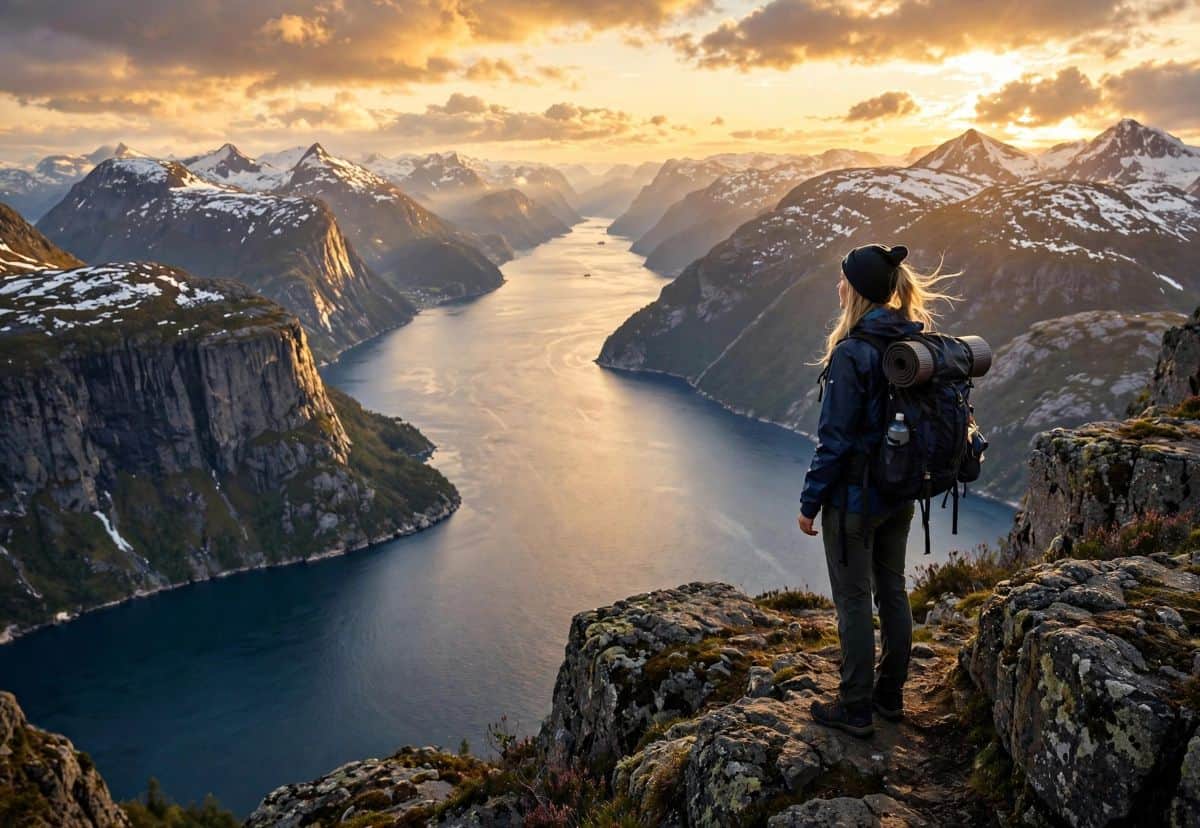
Image generated with Ai
It’s exciting to have everyone’s eyes land on you as you arrive at Oslo Central with just your backpack as you walk through packed train stations. Traveling to Norway on your own terms is even better as you gain independence from men who harass women. You’ll have safe streets, a fresh supply of air, and an ever waiting fjord. No worries here. There are, however, things to ponder about as a result of what you do vestigate to do. Meaning how Nazi Norway was, but mostly how every other woman is realizing how dangerous it can be. Most of the “challenges” will be Nature. It’s harsh and ever-changing. One peaceful fjord is ripe for exploration, but an Arctic storm can show up, and you can be stuck and trapped on a mountain edge. You will be more independent as you are forced to rely on yourself and it will change you and help you grow.
Is Norway Truly the Ultimate Safe Haven for Solo Female Travellers?
Female adventurers exploring Scandinavian territory experience remarkable peace of mind while traversing Nordic landscapes. Official security records paint a remarkably reassuring picture for independent female travellers visiting major urban centres like Oslo and Bergen. Statistics Norway shows property theft makes up over 34 per cent of offenses, whereas violent crime remains under five per cent. Women travelling alone report an almost total absence of street harassment, catcalling, or uncomfortable male attention, which stems directly from deep-rooted Scandinavian values of gender equality.
Despite these stellar safety baselines, urban travel is not entirely risk-free for careless visitors in capital hubs. Diplomatic advisories highlight key transit hubs, specifically Oslo Central Station, Karl Johans gate, and Bergen’s Bryggen waterfront, as prime targets for opportunistic pickpockets. Furthermore, while nightlife districts remain remarkably secure, health bodies urge solo visitors to monitor drinks in crowded bars.
Advertisement
Advertisement
How Does Norwegian Culture Balance Personal Freedom with Social Isolation in Oslo and Bergen?
Advertisement
Advertisement
Norwegian society functions under an egalitarian framework shaped heavily by cultural ideals like Janteloven, which emphasizes humility and respect for personal space. Female travellers enjoy immense individual autonomy because locals instinctively respect boundaries and rarely intrude upon strangers. While this mindset guarantees total freedom from unwanted interactions, it can occasionally feel like cold social isolation for solo tourists seeking casual conversation during long Nordic evenings.
On the regulatory side, Norway grants outdoorswomen incredible freedom through Allemannsretten, the statutory right to roam across uncultivated land. Solo hikers can pitch a tent for up to two nights in a single spot, provided they remain 150 metres away from inhabited houses. Complementing this legal right is the Norwegian Trekking Association, maintaining over 500 mountain cabins nationwide that offer safe, warm, and secure shelter across remote alpine regions.
What Are the Real Environmental and Wilderness Hazards Facing Solo Hikers in Trolltunga, Preikestolen, and Kjerag?
Advertisement
Advertisement
The greatest threat to solo female travellers in Norway comes from the natural environment rather than criminal activity. Iconic, world-famous hiking destinations like Trolltunga, Preikestolen, and Kjerag feature sheer, un-railed cliff edges where mist and ice create lethal slipping hazards. Search-and-rescue teams execute dozens of emergency missions each year because under-prepared tourists misjudge trail difficulty or underestimate rapid weather shifts.
Navigating backcountry mountain passes requires constant vigilance and specialized preparation before stepping onto unpredictable alpine tracks. Alpine areas carry high risks of avalanches and sudden landslides, particularly during seasonal snowmelts across mountain ranges. Official emergency agencies strongly advise checking local alerts for real-time avalanche warnings and using reliable weather services for precise meteorological updates. Additionally, certain rural geological regions contain unstable quick clay, which can trigger unexpected ground collapses following heavy torrential rainfall.
Advertisement
Advertisement
How Significant Is the Economic Impact of Growing Tourism on Norway’s Local Communities in Troms, Nordland, and Svalbard?
The surge in solo and international tourism has fundamentally reshaped Norway’s local economy, driving over 40.6 million overnight stays in recent commercial records. Foreign visitors accounted for 14.2 million of these overnight stays, providing crucial revenue to remote fjord communities like Troms, Nordland, and the Svalbard archipelago. This massive economic inflow supports small-scale hospitality operators, regional public transport networks, and wilderness conservation projects.
However, this tourism boom also creates notable financial and infrastructure pressures for both locals and single travellers. Solo female travellers face steep single supplement costs on private accommodation and vehicle rentals, as Norway remains one of Europe’s most expensive destinations. Moreover, high visitor concentrations at fragile sites like Geirangerfjord or Flåm strain local environmental resources, prompting national discussions around sustainable tourism management, visitor quotas, and regional infrastructure taxes.
What Strict Laws and Financial Regulations Must Every Solo Traveller Know Before Arriving in Norway?
Operating safely within Norway requires absolute compliance with national civil codes and financial rules. Norway is a virtually cashless society where debit and credit cards with Chip-and-PIN capability are mandatory for everyday purchases, ranging from rural ferry crossings to public restrooms. Attempting to use physical cash can leave travellers stranded in remote transit hubs without access to basic services.
Advertisement
Advertisement
Strict laws also govern traffic safety, drone usage, and alcohol consumption throughout the country. The legal Blood Alcohol Concentration limit for drivers is 0.02 per cent, and police enforce zero-tolerance checks with heavy fines or jail terms. Public alcohol consumption outside licensed venues is illegal, and high-proof beverages can only be bought at state-run Vinmonopolet outlets. Finally, drone pilots must register on flydrone, carry active liability insurance, stay below 120 metres, and maintain a strict 5-kilometre buffer from all airports.
How Does Norway’s Digital Infrastructure Eliminate Common Travel Friction for Independent Women?
Norway’s digital infrastructure removes the friction and security anxieties often associated with solo exploration. The country operates almost entirely without cash, as over 98 per cent of all domestic financial transactions take place electronically. Solo female travellers do not need to carry physical currency, manage exchange booths, or expose wallet contents in public transit hubs like Oslo Central Station. Instead, debit and credit cards featuring Chip-and-PIN authorization, alongside contactless digital wallets, are accepted at rural farm stands, mountain toll gates, and automated public restrooms across every county.
Public transportation logistics are streamlined through unified national software ecosystems. The Entur platform integrates schedules, ticketing, and live route updates across more than 50 regional bus, ferry, train, and tram networks into a single digital interface. Furthermore, mobile network coverage reaches 99.9 per cent of the populated landmass with robust 4G and 5G connectivity. Independent women hiking through remote valleys maintain instant access to digital offline maps, cloud translation applications, e-SIM data services, and direct emergency dispatch protocols without encountering communication dead zones.
What Severe Environmental and Biological Risks Face Solo Adventurers in Northern Norway and Arctic Svalbard?
Advertisement
Advertisement
Venturing into Northern Norway and the high-latitude Svalbard archipelago introduces severe wilderness hazards that outweigh human security concerns. Arctic daylight shifts dramatically throughout the year, cycling between 24 hours of continuous polar darkness from late November to mid-January and 24 hours of unceasing Midnight Sun during summer months. Prolonged darkness disrupts natural circadian rhythms, impairs trail navigation, and accelerates cold-weather exhaustion, while the summer sun tricks solo hikers into tackling long alpine routes late into the night without adequate energy reserves. Winter wind chills in interior regions like Finnmark drop well below -30°C (-22°F), requiring strict multi-layer thermal clothing systems to prevent frostbite and hypothermia.
In the archipelago of Svalbard, biological wildlife hazards demand strict adherence to statutory safety protocols. Norwegian law mandates that anyone travelling beyond the safe settlement perimeter of Longyearbyen must carry a high-powered rifle (minimum .30-06 caliber) or be accompanied by a certified, armed local guide due to a polar bear population exceeding 3,000 individuals across the region. Solo hikers cannot rely on standard deterrence methods like bear spray alone, making specialized polar safety training, distress flare guns, and satellite communication beacons essential equipment for extreme northern expeditions.
How Do Seasonal Tourism Swells and “Coolcation” Shifts Impact Fragile Infrastructure in Lofoten, Flåm, and Geiranger?
The international trend toward “coolcations” where travellers seek cooler northern destinations to escape extreme southern heatwaves has triggered massive visitor influxes across fragile Norwegian landscapes. National commercial accommodation data from Statistics Norway (SSB) confirms that annual visitor stays reached a historic milestone of 40.6 million guest nights, driven primarily by 14.2 million foreign overnight stays. While this influx benefits local economies, it creates significant operational friction for solo female travellers seeking peaceful nature experiences. Small communities like the Lofoten Islands, with a permanent residential population of around 24,500, host well over 1 million visitors annually, leading to severe trail erosion, parking shortages, and overwhelmed municipal waste systems.
To preserve world-heritage environments, Norwegian authorities have introduced strict environmental and maritime regulations. Electric zero-emission mandates now govern vessels navigating inside UNESCO-protected fjords like Geirangerfjord and Nærøyfjord, requiring cruise ships and local passenger ferries to run on 100 per cent electric or hydrogen propulsion systems. Solo travellers navigating popular hubs like Flåm or Geiranger face higher seasonal pricing, strict vehicle movement limitations, and the necessity of reserving regional transport passes months in advance to navigate these ecological protection zones responsibly.
Advertisement
Advertisement
What Are the Real Financial Breakdown Costs, Hidden Expenses, and Daily Budgeting Metrics for Solo Female Travellers?
Norway remains one of the world’s most expensive travel destinations, creating distinct financial hurdles for single travellers who cannot split lodging or transport expenses. A realistic daily mid-range budget for a solo traveller ranges between NOK 1,800 and NOK 2,800 (£135–£210 / $170–$260). Single supplement surcharges heavily impact private accommodation options, with standard hotel rooms costing between NOK 1,500 and NOK 3,200 per night, whereas a single bed in a shared hostel dorm averages NOK 450 to NOK 750 nightly.
Dining out represents another major expenditure, as a single casual restaurant main course averages NOK 250 to NOK 400. Independent travellers manage these costs by relying on local grocery chains like KIWI, REMA 1000, and Coop for self-catering supplies. Transportation expenses can also accumulate rapidly across long distances; however, utilizing multi-day regional transit passes such as the Oslo Pass or Ruter multi-day city tickets reduces urban transit spending by up to 40 per cent while granting included access to municipal museums and public ferries.
How Does Norway’s Search and Rescue Infrastructure Protect Remote Solo Hikers in Mountain Emergencies?
When emergency situations arise in the Norwegian backcountry, solo hikers are backed by a highly organized, state-funded Search and Rescue (SAR) network. Operational oversight is managed by the Joint Rescue Coordination Centre (Hovedredningssentralen or JRCC), which directs over 2,000 emergency operations annually. This official infrastructure operates in close coordination with more than 10,000 trained volunteers from the Norwegian Red Cross (Røde Kors Hjelpekorps) and Norwegian People’s Aid, who maintain mountain readiness centers near major trekking corridors year-round.
Advertisement
Advertisement
Unlike emergency response frameworks in many other alpine countries, state-managed search and rescue operations in Norway are provided entirely free of charge to individuals in life-threatening distress, financed directly through national contingency budgets. Medical evacuation helicopters and air ambulance fleets maintain rapid response times, averaging under 45 minutes to reach major mountain regions once emergency beacons or 112 distress calls are verified. This comprehensive safety system provides single hikers with a reliable emergency fallback when navigating remote terrain.
What Are the Practical and Social Realities for LGBTQ+ and Diverse Solo Female Travellers Across Norway?
Norway offers a highly inclusive social environment for diverse, minority, and LGBTQ+ solo female travellers, supported by progressive legal frameworks and low discrimination rates. The nation consistently ranks near the top of the Rainbow Europe Index and the International Women’s Safety Index. Comprehensive anti-discrimination laws protecting gender identity and sexual orientation have been established since 1981, with same-sex marriage legally recognized since 2009.
Hate crimes targeting foreign visitors remain extremely rare across Scandinavian countries. Major municipal police departments including Politiet units in Oslo, Bergen, Stavanger, and Trondheim maintain dedicated diversity, inclusion, and community integration teams. Solo women of all backgrounds can travel through urban centers and rural fjord villages without experiencing intrusive questioning or safety threats regarding their personal background, orientation, or identity.
How Can Independent Travellers Safely Navigate Iconic Rail Networks from Oslo to Bergen, Bodø, and Narvik?
Advertisement
Advertisement
Long-distance passenger trains provide a safe, environmentally sustainable, and scenic mode of transit for women travelling alone across Norway’s interior. The famous Bergensbanen line covers 471 kilometres between Oslo and Bergen, climbing across Northern Europe’s highest mountain plateau, the Hardangervidda, at 1,222 metres above sea level. Further north, the Nordland Line (Nordlandsbanen) extends 729 kilometres from historic Trondheim to Bodø, crossing directly into the Arctic Circle at latitude 66°33′ N.
National train operator VY maintains strict safety standards across its passenger fleet. Trains feature monitored luggage storage racks, dedicated quiet reflection zones, family compartments, and conductor call buttons in every carriage. Night train services offer lockable private sleeping compartments, providing solo female passengers with a secure, comfortable environment while traveling across vast wilderness distances overnight.
What Seasonal Health Practices and Wellness Rules Support Solo Women Navigating Light Cycles and Marine Saunas?
Maintaining personal health in Norway’s northern climate requires understanding seasonal environmental factors and local wellness traditions. During late spring and summer, high-latitude solar exposure is intensified across glacial regions; snowfields can reflect up to 85 per cent of solar UV radiation, making high-grade SPF 50+ sunscreen and polarising UV eye protection necessary even in cold ambient temperatures. Furthermore, over 70 per cent of summer tourists experience sleep disruption caused by 24-hour continuous daylight, making blackout sleep masks and set rest schedules essential for preventing travel fatigue.
Cold-water immersion and urban fjord saunas are popular health traditions across coastal cities like Oslo, Bergen, and Tromsø, but they require proper physical safety protocols. Fjord water temperatures remain between 4°C and 12°C year-round. Public wellness facilities recommend limiting initial sauna heat exposure to 10–15 minutes before attempting controlled cold-water immersion, ensuring solo swimmers avoid sudden cold-water shock while utilizing supervised harbor plunge zones.
Advertisement
Advertisement
The Final Verdict
It is an incredible experience to watch the mist dappling on dark waters of a Norwegian fjord. It is truly an amazing country that will give you the confidence to go on to other adventures. When traveling through Norway, you learn to appreciate the respect of the locals as you freely camp throughout the country, then take pride in being the first to reach the top of a country you have explored. Traveling throughout Norway and interacting with the country will humble you. You learn to appreciate the calm and participating atmosphere of Norway and understand the boundaries and nature of yourself. You learn to appreciate the new strength you found that you never knew you had. Before leaving Norway, travelers appreciate the calm, majestic nature of the impressive land.
Emergency Contacts & Services Directory
- Medical Emergency: 113 (National Health Service – Ambulance dispatch and urgent trauma care)
- Police Emergency: 112 (Politiet – Immediate violent threat or active crime response)
- Police Non-Emergency: 02800 (Politiet – Theft reporting, lost property, minor accidents)
- Fire & Rescue: 110 (Rescue Services – Structural fire, vehicle extraction, alpine search)
- Weather Tracking: yr.no (Official Norwegian Meteorological Institute app)
- Hazard Alerts: varsom.no (Avalanche, flood, and landslide forecast portal)
- Transit Planning: entur.no (Entur – Multi-modal national route and ticket planner)
Frequently Asked Questions
Is Norway safe for a woman travelling alone at night?
Advertisement
Advertisement
Yes, Norway is exceptionally safe at night, with exceptionally low rates of violent street crime. Well-lit city streets in Oslo, Bergen, and Tromsø allow women to walk comfortably. However, standard safety precautions should still be observed near late-night entertainment districts and major transit hubs.
Do I need cash when travelling solo across Norway?
No, physical cash is almost obsolete in Norway. Nearly all businesses, public transport networks, and rural mountain services require Chip-and-PIN credit or debit cards. Always inform your bank before travelling to ensure your cards function smoothly overseas.
What is the biggest mistake solo hikers make in the Norwegian fjords?
The most common mistake is underestimating how quickly mountain weather can change. Hikers often tackle long routes like Trolltunga without warm layers, proper rain gear, or emergency tracking tools. Always monitor local weather apps and inform someone of your route before setting off.
Advertisement
