
Israel Reopens Ben Gurion Airport Terminal 1 For Ramon Domestic Flights As International Departures Prepare To Return From 1 July And Aviation Recovery Moves Into A Critical Summer Phase

Updated
Published
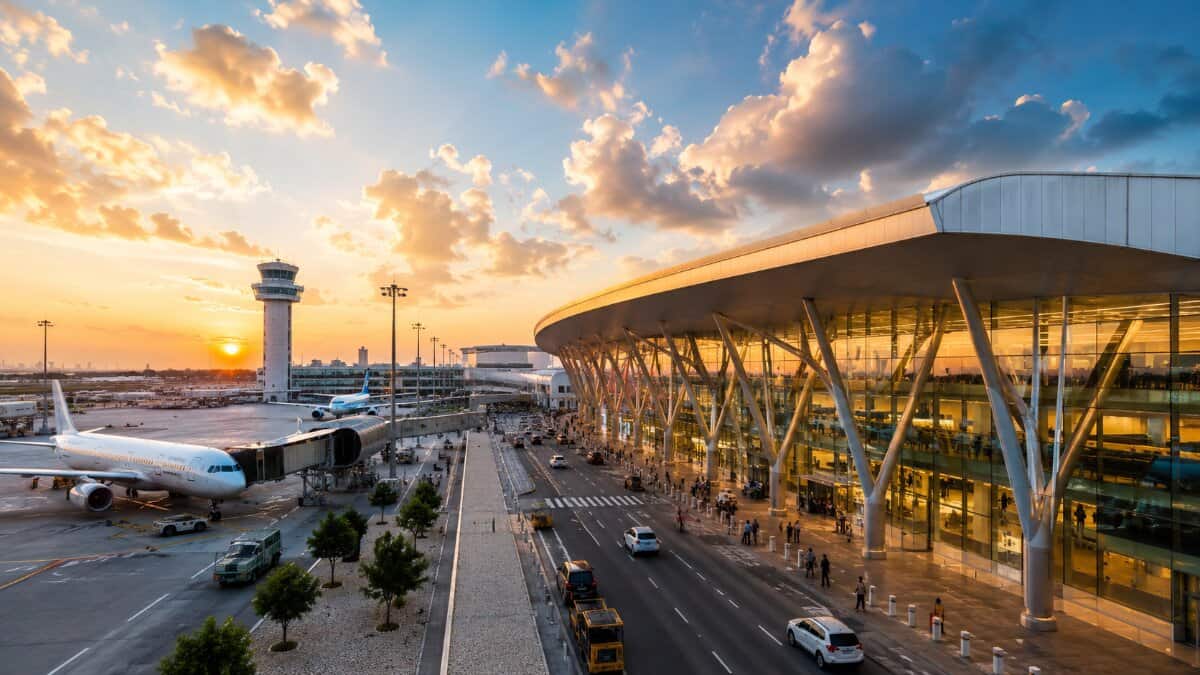
Israel has restored Ben Gurion Airport Terminal 1 to aviation activity for domestic flights linking Tel Aviv with Ramon Airport, the air gateway serving Eilat and the southern resorts. The reopening marks a phased operational reset after severe wartime disruption cut March traffic at Ben Gurion to 203,256 passengers and removed commercial domestic activity from the month. International departures from Terminal 1 are scheduled to resume on 1 July, while all international arrivals continue through Terminal 3. The change matters for airline schedules, tour packaging, airport transfers and southern Israel travel recovery.
Israel Aviation Recovery Enters A New Terminal Phase At Ben Gurion Airport
Israel’s aviation recovery has moved into a more structured phase as Ben Gurion Airport brings Terminal 1 back into use, beginning with domestic flights to and from Ramon Airport on Sunday, 28 June 2026. This is not a full system-wide domestic reopening across every possible internal route. The confirmed operational restart applies specifically to the Ben Gurion and Ramon domestic corridor.
That distinction is important for travel agents, destination management companies, hotel partners and airline distribution teams. Terminal 1 is returning through a phased model. First comes Ramon-linked domestic activity. Then, from 1 July 2026, Terminal 1 is scheduled to reopen for international flight operations, with departing passengers completing the full outbound process at Terminal 1.
The process includes security screening, check-in, passport control, duty free services and boarding. International arrivals, however, will continue to use Terminal 3. This creates a split-terminal operating environment that requires tighter passenger communication, clearer ticket documentation and stronger transfer planning.
Advertisement
Advertisement
Answer Capsule: What Has Changed For Israel Travellers
Israel has reopened Ben Gurion Airport Terminal 1 for domestic flights to and from Ramon Airport from 28 June 2026, restoring a key air link between the Tel Aviv aviation hub and the Eilat region. From 1 July 2026, Terminal 1 is also scheduled to resume international departures, while all international arrivals remain at Terminal 3. The reopening comes after sharp aviation disruption earlier in 2026, when March passenger traffic at Ben Gurion fell to 203,256 passengers and commercial domestic traffic was absent. The development supports summer scheduling, southern resort connectivity and tour operator confidence.
Terminal 1 Reopening Timeline And Passenger Flow
The immediate operational change affects Ramon domestic flights. Domestic arrivals from Ramon Airport now arrive at Terminal 1. This gives the Eilat and southern Israel market a clearer aviation pathway into Ben Gurion Airport after a disrupted period.
Advertisement
Advertisement
The next stage begins on 1 July 2026. From that date, Terminal 1 is scheduled to reopen for international flight operations. Departing international passengers using Terminal 1 will process their journey inside that terminal from security screening through boarding.
International arriving passengers will not follow the same pattern. They will continue to arrive at Terminal 3. This means one itinerary may involve different terminal logic depending on direction, airline, flight type and airport handling plan.
| Operational area | Confirmed arrangement | Travel trade impact |
|---|---|---|
| Domestic reopening date | 28 June 2026 | Immediate restart for Ben Gurion and Ramon passenger flows |
| Domestic route scope | Flights to and from Ramon Airport | Supports Eilat, Arava, Dead Sea and southern resort access |
| International reopening date | 1 July 2026 | Restores Terminal 1 as an outbound international processing point |
| International departures | Full departure process at Terminal 1 | Requires accurate terminal messaging before airport arrival |
| International arrivals | Continue at Terminal 3 | Transfers, meet-and-greet, coach parking and hotel pickup plans must avoid terminal confusion |
| Airline operations | Some airlines may use both Terminal 1 and Terminal 3 | Agents must verify terminal details per flight, not only per airline |
| Landside support | Parking, internal shuttle and licensed taxis available | Ground handlers and tour operators can rebuild airport service plans |
Why This Matters For Israel Tourism And Southern Resort Travel
The reopening has a direct tourism value because Ramon Airport is Israel’s southern aviation gateway. Ramon Airport sits around nineteen kilometres north of Eilat and serves domestic and international tourism to Eilat, the southern resorts, the Arava, Mitzpe Ramon and the Dead Sea.
That makes the Ben Gurion and Ramon route more than a domestic shuttle. It is an aviation bridge between Israel’s main international gateway and the country’s Red Sea leisure corridor. For travel sellers, the return of Terminal 1 activity improves the packaging potential for beach, desert, wellness, religious, adventure and family itineraries that combine Tel Aviv, Jerusalem, the Dead Sea and Eilat.
Ramon Airport also carries infrastructure depth. Its passenger terminal covers about 30,000 square metres and was designed to support around 1.8 million passengers a year. The airport has a runway of about 3,600 metres, parking positions for medium and wide-body jets, turbo-props and general aviation aircraft, and landside facilities for private vehicles, taxis, car rental companies, public transport and shuttle buses.
| Ramon Airport infrastructure point | Officially stated capacity or role | Strategic tourism meaning |
| Location | About 19 km north of Eilat | Enables access to Red Sea resorts without relying only on road transfers from central Israel |
| Regional role | Southern air gate of Israel | Supports Eilat, Arava, Mitzpe Ramon, Dead Sea and southern resort circuits |
| Terminal size | Around 30,000 square metres | Gives southern Israel a purpose-built passenger processing base |
| Annual passenger design capacity | Around 1.8 million passengers | Supports future scale if demand and airline confidence improve |
| Runway length | About 3,600 metres | Allows operations by most aircraft types |
| Ground access | Parking, taxis, car hire, public transport and shuttle buses | Enables tour operators to plan structured transfers and packaged itineraries |
Passenger Traffic Data Shows Why The Reopening Carries Market Weight
Ben Gurion Airport remains Israel’s main air gateway. IAA annual data for 2025 recorded 19,160,160 passengers on 140,736 international and domestic flights. This confirms the scale of the airport in Israel’s aviation economy and explains why a Terminal 1 restart carries significance beyond a local terminal adjustment.
Advertisement
Advertisement
The March 2026 traffic report shows how severe the disruption became. Passenger and aircraft traffic at Ben Gurion was significantly affected by Operation Lion’s Roar throughout March. During that month, only 203,256 passengers travelled on 2,773 international and domestic flights through Ben Gurion Airport. International passenger traffic reached 203,254 passengers, down 85.13 per cent against March 2025. International aircraft traffic totalled 2,720 flights, down 73.5 per cent year on year.
The same March report recorded no commercial domestic traffic during the month. That makes the 28 June reopening for Ramon domestic flights a measurable operational reversal, not simply a routine terminal update.
By May 2026, the airport had recovered substantial volume. IAA’s May report recorded 1,243,306 passengers on 9,614 international and domestic flights. Domestic flights accounted for 60,436 passengers in May. This indicates that the market had already begun to rebuild before the Terminal 1 restart, but the restoration of the dedicated terminal layer adds handling capacity and operational clarity for the summer travel period.
| Period | Ben Gurion passenger and flight indicator | What it shows |
| Full year 2025 | 19,160,160 passengers and 140,736 international and domestic flights | Ben Gurion’s structural importance to Israel’s aviation network |
| March 2026 | 203,256 total passengers on 2,773 flights | Severe wartime aviation disruption |
| March 2026 international traffic | 203,254 passengers, down 85.13 per cent year on year | Collapse in international passenger movement during the disruption month |
| March 2026 international aircraft traffic | 2,720 flights, down 73.5 per cent year on year | Major capacity reduction across airline schedules |
| March 2026 domestic activity | No commercial domestic traffic during the month | Explains why Ramon-linked domestic restart has operational importance |
| May 2026 | 1,243,306 passengers on 9,614 flights | Stronger recovery before Terminal 1 reopening |
| May 2026 domestic traffic | 60,436 domestic passengers | Domestic demand had returned before Terminal 1 fully re-entered use |
Terminal 1 Creates A Two-Terminal Planning Challenge For Airlines And Agencies
The reopening gives the market more capacity, but it also creates a more complex airport map. Some airlines may operate flights from both Terminal 1 and Terminal 3. That means agents cannot rely only on the airline name when advising passengers. They must check the individual flight terminal before issuing final travel instructions.
This is especially important for international visitors who combine different ticket types. A traveller may arrive internationally at Terminal 3, connect later to a Ramon domestic flight at Terminal 1, and then depart Israel internationally from Terminal 1 if the outbound flight operates there from 1 July. Each leg needs specific terminal verification.
Tour operators also need to update airport transfer manifests. Coaches, private transfers, VIP meet-and-greet teams, airport hotel shuttles and car rental handovers should all reflect the correct terminal. Inaccurate terminal planning may create missed pickups, unnecessary walking time, luggage delays and poor first impressions during a sensitive recovery phase.
Advertisement
Advertisement
Ground Transport And Access Details Add Another Operational Layer
The Terminal 1 reopening comes alongside important landside details at Ben Gurion. Passenger services linked to the reopening include long-term and short-term parking, a free internal shuttle operating according to the flight schedule, and licensed taxi services from both Terminal 1 and Terminal 3.
Separately, road access around the airport also needs attention. Route 40 road closures were scheduled overnight from 25 June through 28 June, between 23:00 and 05:00, because of Israel Railways construction work for the Shoham Airport station within the Eastern Railway Project. The affected road section runs between the El Al Junction and the Dor Alon and Ben Gurion Airport Junction. During the day, Route 40 remains open as usual.
This matters because the Terminal 1 reopening falls within the same date window as the final night of that roadwork period. Even if daytime access remains normal, night departures, early morning arrivals, staff transport, airport shuttles and private transfers need contingency routing.
Ben Gurion has also introduced a dedicated one-hour free waiting parking lot from 1 June 2026. The measure aims to reduce unsafe roadside waiting. Drivers who stop or wait on airport roads may face a NIS 500 fine. For travel operators, this adds a clear operational instruction for guides, chauffeurs and family pickup coordination.
International Travel Compliance Remains Part Of The Recovery Picture
The reopening of Terminal 1 does not remove border and entry compliance duties. International travellers still need to follow Israel’s visa and entry authorisation rules. Official Israeli consular guidance updated on 15 June 2026 states that travellers requiring a short-stay visa must provide supporting documents such as a valid travel document, proof of funds, accommodation details, return or onward tickets where required, and insurance covering the stay.
Visa-exempt international travellers also need to consider the Electronic Travel Authorisation system. The guidance states that visa-exempt travellers, including travellers from Britain, the United States and EU countries, must apply for an ETA at least seventy-two hours before travel.
Advertisement
Advertisement
For B2B sellers, this is a commercial issue as much as a compliance issue. Terminal reopening can restore confidence, but missed ETA checks can still damage the journey. Agents selling Israel packages should treat terminal verification and entry authorisation as twin pre-departure checks.
| Traveller process | What operators should verify | Why it matters |
| Domestic Ramon flights | Terminal 1 status and flight time | Prevents passengers arriving at the wrong terminal |
| International departures from 1 July | Whether the specific flight departs from Terminal 1 or Terminal 3 | Some airlines may use both terminals |
| International arrivals | Arrival handling at Terminal 3 | Ensures correct pickup and transfer planning |
| Visa status | Whether the traveller requires a visa | Reduces boarding and entry disruption |
| ETA requirement | Whether visa-exempt travellers applied at least 72 hours before travel | Protects bookings from last-minute compliance failures |
| Airport access | Road closure windows, shuttle timing and parking rules | Improves passenger punctuality and service quality |
Economic And Route Implications For The Travel Industry
The Terminal 1 reopening offers three core benefits for the travel economy.
First, it improves aviation throughput at Ben Gurion Airport. Terminal 3 carried the burden during the disrupted period. Returning Terminal 1 to domestic and then international activity supports better passenger distribution and gives airlines more operating flexibility.
Second, it strengthens Ramon Airport’s role in tourism recovery. Eilat and southern Israel need dependable air access to compete in the regional leisure market. A restored Ben Gurion and Ramon domestic connection makes it easier for international visitors to add the Red Sea and desert regions to wider Israel itineraries.
Third, it improves travel trade confidence before the July international restart. Airlines, wholesalers, inbound operators and hotels require predictable airport handling before committing inventory, marketing spend and group allocations. Terminal 1’s phased reopening offers a clearer operating framework for the summer season.
MICE And Group Travel Outlook
The reopening also matters for meetings, incentives, conferences and exhibitions. Israel’s MICE recovery depends on reliable gateway performance, clear transfer routes and predictable domestic extensions. Groups arriving into Terminal 3 can use structured onward programmes to Eilat and southern resort areas through Ramon, provided terminal transfers and baggage handling are planned correctly.
Advertisement
Advertisement
The Dead Sea, Mitzpe Ramon and Eilat can benefit from itineraries that combine business events with wellness, desert landscapes and resort stays. However, the two-terminal model demands disciplined operational planning. Larger groups need terminal-specific signage, coach staging, contingency time and destination-side coordination.
For travel management companies, the key is not only whether flights operate. The key is whether the passenger journey feels controlled. Terminal 1’s reopening gives the sector a tool to rebuild that control.
Critical Takeaways For Travel Agents And Tour Operators
- Check every Ben Gurion flight terminal before issuing passenger documents because some airlines may operate from both Terminal 1 and Terminal 3.
- Treat the 28 June reopening as specific to domestic flights to and from Ramon Airport.
- Prepare for Terminal 1 international departures from 1 July, while keeping international arrivals planned for Terminal 3.
- Update airport transfer manifests, VIP pickup sheets, hotel shuttle instructions and coach dispatch plans.
- Build extra time into airport access plans where night roadworks or terminal transfers may affect passengers.
- Add Ramon Airport back into southern Israel itinerary planning for Eilat, the Arava, Mitzpe Ramon and the Dead Sea.
- Verify ETA and visa requirements before ticketing or final document release.
- Advise travellers to use official flight schedules before leaving for Ben Gurion Airport.
- Brief chauffeurs and guides on the one-hour free waiting parking lot and the NIS 500 roadside waiting risk.
- Package southern Israel extensions carefully, using the restored Ramon link as a recovery advantage rather than assuming friction-free operations.
Forward-Looking Summary: Israel’s Terminal 1 Restart Signals A Strategic Recovery Test
Israel’s reopening of Ben Gurion Airport Terminal 1 is a practical aviation milestone with wider travel industry meaning. It restores a dedicated domestic pathway to Ramon Airport, prepares the airport for renewed international departures from 1 July, and reduces pressure on Terminal 3 after months of abnormal operating conditions.
The development also tests how quickly confidence can return to a destination after major disruption. Airlines need stable handling. Tour operators need predictable ground logistics. Travellers need clear terminal information. Hotels in Eilat and southern Israel need dependable access. MICE organisers need assurance that arrivals, transfers and onward movement can operate without confusion.
If the phased reopening holds, Terminal 1 can become a key signal of Israel aviation recovery in summer 2026. It can help rebuild the bridge between international arrivals, domestic resort access and outbound low-cost or leisure departures. For the global travel market, the message is clear. Recovery is no longer only about reopening skies. It is about restoring the entire passenger chain from terminal assignment to entry compliance, ground access, regional connectivity and destination confidence.
Advertisement
