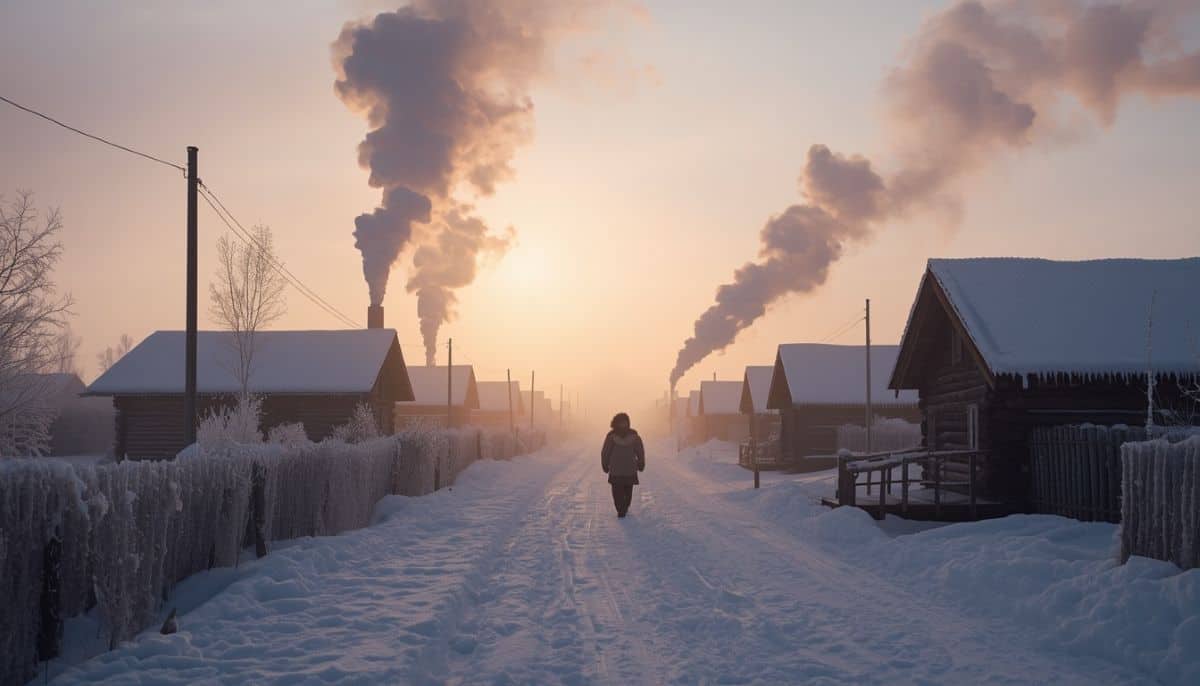
Image generated with Ai
Extreme conditions are no longer a deterrent for modern travellers in search of remote frontiers, and the management of fragile destinations is therefore a critical priority today. Located in the frozen wilderness of the Sakha Republic, Oymyakon has the dubious distinction of being the coldest permanently inhabited settlement on Earth. Winter temperatures can reach as low as minus seventy-one degrees Celsius. For the curious adventurers drawn to the extreme latitudes of Siberia, it’s important to understand how this remote community balances the influx of global tourism with the rigorous demands of environmental and cultural preservation. This unique heritage needs to be preserved for future generations through rigorous planning and sustainable local stewardship.
The remote nature of this corner of Yakutia has made it a quirky destination for intrepid explorers, documentary filmmakers and thrill-seeking vloggers. But under the pristine blankets of snow and glittering ice crystals lies a deeply fragile ecosystem and a tight-knit indigenous community that must constantly negotiate the boundary between global curiosity and local preservation. As the world takes notice, municipal authorities, cultural preservationists, and local families are busy redefining what responsible cold-weather tourism looks like in the twenty-first century.
Advertisement
The remote geography of the Sakha Republic has historically shielded its indigenous populations from mass commercialization. However, rising global interest in extreme tourism has necessitated proactive management frameworks by regional authorities and cultural preservation committees. According to official reports from the Ministry of Tourism of the Sakha Republic, visitor caps and regulated transit routes have been established to prevent ecological degradation of the fragile taiga landscape. Sustainable tourism initiatives are continuously evaluated to ensure that economic benefits flow directly to indigenous families rather than outside operators, thereby safeguarding local livelihoods.
The preservation of ancestral traditions forms the cornerstone of Oymyakon’s tourism strategy. Indigenous Yakut communities actively participate in cultural curation, ensuring that authentic folklore, traditional cuisine, and sacred winter rituals are shared respectfully rather than commodified for mass entertainment. Elders lead workshops on traditional survival skills, ice-fishing techniques, and reindeer husbandry, providing visitors with immersive educational experiences. This educational approach fosters deep cross-cultural appreciation while deterring superficial tourism that might otherwise disrupt daily village life.
Advertisement
Furthermore, economic sustainability in Oymyakon relies on shifting traveller expectations away from extractive tourism toward regenerative practices. Visitors are encouraged to engage with local homestays rather than corporate lodging, ensuring that tourist expenditures directly support household heating, food security, and community infrastructure. Cultural preservation is treated not as a static museum exhibit but as a living, breathing way of life that adapts dynamically to the modern world without losing its historical roots.
Managing modern infrastructure in a region defined by continuous permafrost presents complex engineering and environmental challenges. Municipal authorities enforce strict building codes to prevent thermal degradation of the frozen soil, which can be caused by unmitigated vehicular traffic and heavy footfall around historical sites. Waste management protocols have been significantly tightened, with specialized recycling and disposal units implemented to handle the rising volume of non-biodegradable waste generated by expeditions and film crews.
The unique geological makeup of Oymyakon means that even minor disruptions to the surface vegetation can trigger widespread soil erosion and thawing, threatening the structural integrity of roads, homes, and utility lines. Consequently, tourism operators are legally required to adhere to designated transit corridors and restricted wilderness zones. Environmental monitoring teams deployed by regional conservation agencies conduct regular assessments of water quality, wildlife migration patterns, and snowpack stability to ensure that human footprints leave minimal lasting impact on the taiga.
The true resilience of Oymyakon is its people, who are the custodians of their environment and cultural narrative. Instead of giving the authority to outside tourism agencies, local councils have set the rules on how expeditions can operate within the village limits. This self-determination guarantees that sacred sites, old burial sites, and sensitive ecosystems are shielded from disrespectful behaviour or unlawful commercial exploitation.
Priority has also been given to training programmes for local young people as certified wilderness guides and cultural ambassadors. Oymyakon teaches the younger generation professional skills in ecotourism management, hospitality and wildlife safety, ensuring its economic future and keeping families in their ancestral homeland. These homegrown efforts ensure tourism remains a tool for empowerment, not a vector for cultural erosion, showing how even Earth’s most extreme environments can successfully balance human wonder with fierce ecological protection.
Advertisement
Advertisement
Advertisement











Wednesday, September 2, 2026

Tuesday, September 1, 2026

Wednesday, September 2, 2026
Wednesday, September 2, 2026

Tuesday, September 1, 2026

Tuesday, September 1, 2026

Wednesday, September 2, 2026

Wednesday, September 2, 2026



