Somudranil Sarkar
Somudranil Sarkar
Somudranil Sarkar
According to recent data, Travel Expands Beyond Crowded Tourist Hotspots redefines how we think about global travel by September 2026. Most governments in the Asia-Pacific region—including New Zealand and Australia—are already adopting regional dispersal strategies. New data shows that the global shift in consumer behavior is significant. Traditional urban destinations no longer draw travelers, and people are trading urban visits for nature-based experiences. Regional dispersal strategies shift economic activity to rural areas. Moreover, rural dispersal strategies preserve urban ecosystems. Remote and unspoiled nature has the ability to provide economically sustainable and culturally meaningful experiences to modern day travelers.
For decades, the global tourism industry has been heavily reliant on a concentrated model of travel, funnelling millions of international visitors into a handful of globally recognised gateway cities. While this approach rapidly grew the tourism sector’s overall GDP contribution, it ultimately created significant strain on urban infrastructure, housing markets, and local ecosystems. By the mid-2020s, the narrative began to shift dramatically. Recognising the systemic vulnerabilities of over-tourism in primary hubs, government authorities, national tourism boards, and environmental agencies began collaborating to implement comprehensive regional dispersal strategies. These overarching policy frameworks were designed explicitly to encourage both domestic and international visitors to look beyond the glittering skylines of capital cities and venture out into the vast, untouched, and historically significant hinterlands.
Advertisement
This profound geographical shift is not merely a marketing exercise; it is an absolute economic necessity. As Travel Expands Beyond Crowded Tourist Hotspots, rural townships that previously relied entirely on fluctuating agricultural markets or traditional manufacturing are now experiencing a sustainable renaissance. By incentivising travel to peripheral zones, governments are simultaneously alleviating the intense pressure on metropolitan housing and transport networks while injecting vital capital directly into regional economies. This approach champions the preservation of indigenous cultures, the protection of endemic wildlife, and the widespread establishment of eco-certified hospitality venues. Consequently, the modern traveller of 2026 is no longer solely seeking rapid consumption of iconic landmarks; instead, they are searching for deep, immersive, and educational experiences that leave a minimal environmental footprint and a maximum positive community impact.
The geopolitical and economic landscape of Oceanic travel has transformed remarkably over the past five years. Since the final removal of pandemic-era border restrictions in early 2022, consecutive governmental budgets in both Australia and New Zealand have heavily prioritised sustainable tourism infrastructure. Throughout 2025 and 2026, national statistics offices have released comprehensive datasets that unequivocally validate the success of these dispersal initiatives. We are currently witnessing a golden age of regional exploration, where comprehensive grant programs are empowering small, remote communities to build world-class, low-impact visitor facilities that rival anything found in major urban centres.
Advertisement
Advertisement
The empirical evidence supporting this regional renaissance is robust and officially verified. According to the Australian Bureau of Statistics (ABS), short-term visitor arrivals to Australia rose by 8 per cent over the 2025-26 financial year, reaching a formidable 9.1 million individuals. While this figure remains marginally below the pre-pandemic peak of 2018-19, the demographic composition and geographical spread of these visitors have fundamentally altered. Holidaying remains the undisputed primary motivation for travel, accounting for 45 per cent of all arrivals, but where these holidays are taking place is the critical metric. New Zealanders continue to cross the Tasman Sea in massive numbers, representing 1.4 million trips and serving as the largest single source market.
Australian Bureau of Statistics+ 1
Simultaneously, across the Tasman, Statistics New Zealand reported a similarly impressive trajectory. For the year ending June 2026, overseas visitor arrivals to New Zealand surged to 3.67 million, marking a robust 9 percent increase from the 3.38 million recorded in the previous June 2025 year. Most tellingly, independent market forecasts validate the financial weight of this shift. The New Zealand sustainable tourism market is officially projected to expand from USD 12.7 million in 2025 to an impressive USD 57.7 million by 2035, accelerating at a Compound Annual Growth Rate (CAGR) of 16.3 per cent. Within this rapidly expanding sector, eco-tourism dominates the landscape, holding a commanding 28.3 per cent market share as travellers increasingly demand verifiable sustainability credentials before booking their itineraries.
Stats NZ+ 2
Advertisement
Advertisement
As the structural framework of the travel industry evolves, specific regional enclaves across Australia are emerging as the standard-bearers for this new era of responsible exploration. From the jagged coastlines of South Australia to the tranquil lakes of Victoria, these destinations are proving that remote travel can be both luxurious and ecologically sound.
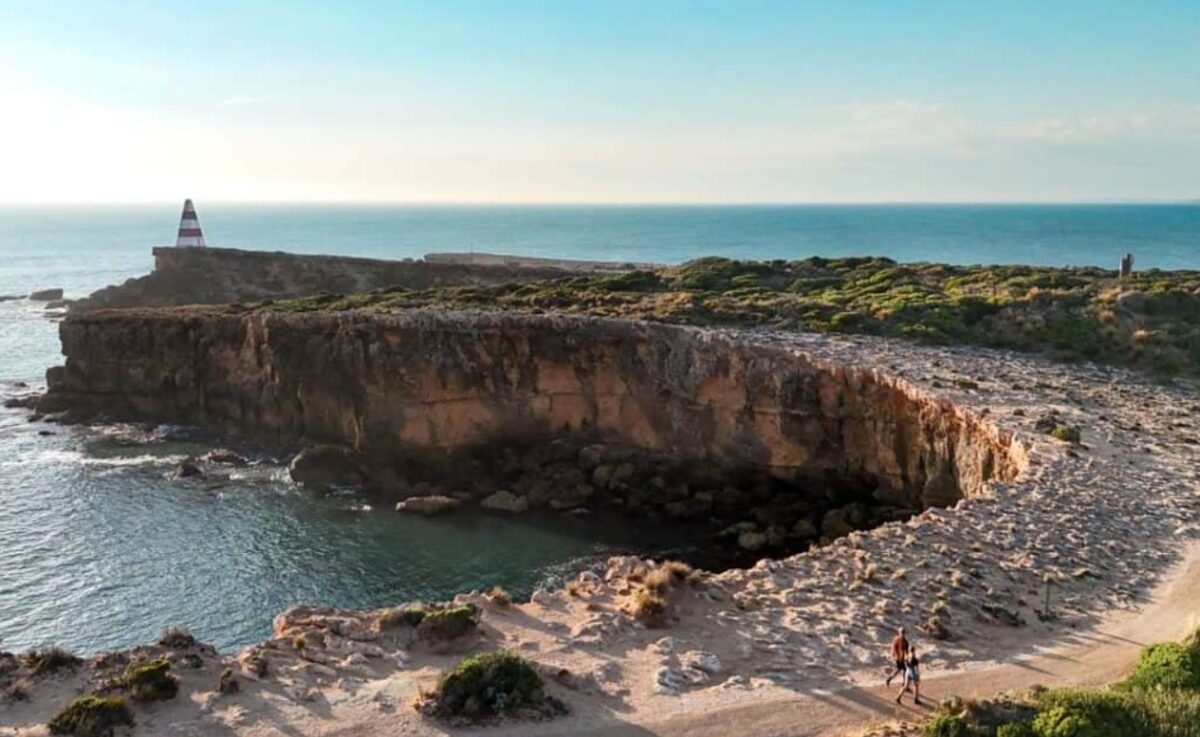
Nestled securely on the ruggedly beautiful Limestone Coast of South Australia, the historic township of Robe has transitioned from a sleepy fishing village into a premier destination for conscious travellers. Historically renowned as a critical 19th-century port, Robe’s meticulously preserved colonial architecture and sprawling, uncrowded beaches offer a stark, highly appealing contrast to the densely packed shores of the eastern seaboard.
The pristine coastline of Robe, South Australia. Source: Visit Limestone Coast, South Australia
Recent strategic investments by state tourism authorities have successfully highlighted Robe’s unique amalgamation of maritime history, premium local viticulture, and rugged coastal trekking. The local economy, once strictly bound to the seasonal fortunes of the Southern Rock Lobster industry, now boasts a highly diversified portfolio of boutique eco-lodges, farm-to-table dining establishments, and indigenous heritage tours. This transformation perfectly encapsulates why Travel Expands Beyond Crowded Tourist Hotspots; visitors are willing to drive several hours from the state capital of Adelaide to secure an environment where they can genuinely disconnect from urban freneticism and reconnect with natural rhythms.
Situated in the heart of regional Victoria, the picturesque township of Nagambie represents a masterclass in leveraging natural aquatic assets to drive sustainable tourism. Located less than two hours from Melbourne, Nagambie provides a vital pressure release valve for a city that regularly hosts millions of domestic and international visitors. Centred around the expansive Lake Nagambie, the region has rapidly developed a reputation as a world-class hub for non-motorised water sports, premium cool-climate wineries, and equine heritage.
Government-backed infrastructure upgrades throughout 2025 and 2026 have vastly improved regional rail connectivity and cycling trail networks, allowing visitors to explore the Goulburn Valley with a minimal carbon footprint. The local business community has enthusiastically embraced this influx, pivoting towards sustainable hospitality models that prioritise locally sourced produce and renewable energy utilisation. Nagambie stands as a testament to the fact that inland waterways, when managed with ecological sensitivity, can serve as powerful economic engines for regional municipalities that might otherwise be overlooked by traditional coastal-centric tourism campaigns.
For travellers seeking the profound spiritual and geological depth of the Australian outback without contributing to the overcrowding of Uluru, the Flinders Ranges in South Australia offer an unparalleled alternative. This ancient, deeply weathered mountain range is home to some of the oldest exposed geological formations on the planet, featuring dramatic gorges, rust-red peaks, and abundant native wildlife.
The ancient landscapes of the Flinders Ranges. Source: Wikipedia
Crucially, the development of tourism in the Flinders Ranges has been heavily guided by the traditional custodians of the land, the Adnyamathanha people. Authentic, Indigenous-led cultural tours have become the cornerstone of the region’s appeal, offering visitors verified, historically accurate insights into tens of thousands of years of human habitation. State and federal conservation grants have facilitated the establishment of luxury eco-tents and off-grid accommodations that immerse guests in the environment without permanently altering the fragile desert ecology. As global Travel Expands Beyond Crowded Tourist Hotspots, the Flinders Ranges demonstrate how remote arid zones can attract high-yield, low-impact demographics who value education and conservation above mere consumption.
Perhaps the most potent example of successful capacity management in global tourism is Lord Howe Island, situated in the Tasman Sea off the coast of New South Wales. This stunning, crescent-shaped volcanic remnant is globally celebrated as a UNESCO World Heritage site, boasting crystal-clear lagoons, the world’s southernmost coral reef, and towering basalt peaks.
Lord Howe Island limits visitors to 400 at a time. Source: Wikipedia
To fiercely protect its endemic biodiversity, the local administration enforces a strict, legally binding cap that restricts the number of tourists on the island to exactly 400 at any given time. This bold policy intervention completely eradicates the possibility of over-tourism, ensuring that the island’s delicate marine and terrestrial ecosystems remain entirely uncompromised. Consequently, Lord Howe Island operates as a high-value, exclusive destination where the scarcity of access inherently drives up the perceived and actual value of the visitor experience. This model of restrictive conservation is increasingly being studied by international tourism bodies as a blueprint for preserving highly vulnerable geographic assets in an era of surging global mobility.
Wikipedia
Across the Tasman, New Zealand has long been synonymous with breathtaking landscapes, but the national strategy has aggressively evolved from volume-based tourism to value-based, regenerative travel. Recognising that their primary economic export relies entirely on maintaining a pristine environment, New Zealand authorities have directed massive resources towards promoting their most isolated and rugged territories.
Stewart Island, or Rakiura in the indigenous Māori language, represents the ultimate frontier of New Zealand’s regional dispersal strategy. Situated at the extreme southern tip of the country, separated from the South Island by the frequently turbulent Foveaux Strait, Stewart Island is an untamed wilderness where over 85 per cent of the landmass is designated as a protected National Park.
Halfmoon Bay on remote Stewart Island, New Zealand. Source: Murihiku Southland
For decades, its extreme isolation kept it off mainstream itineraries. However, as Travel Expands Beyond Crowded Tourist Hotspots, Stewart Island has experienced a carefully managed surge in popularity. It is one of the few places on Earth where visitors have a realistic chance of observing the national icon, the Kiwi bird, foraging in its natural habitat during daylight hours. Furthermore, its designation as an International Dark Sky Sanctuary draws astrotourism enthusiasts from across the globe, eager to witness the Aurora Australis unobstructed by urban light pollution. The local community of just a few hundred permanent residents has effectively harnessed this interest, providing boutique, low-impact guiding services that directly fund ongoing predator eradication programmes essential for protecting native avian species.
Deep in the heart of the North Island’s Ruapehu District, surrounded by the dense, unforgiving terrain of the Whanganui National Park, lies Blue Duck Station. This expansive property represents a groundbreaking fusion of a working sheep and beef farm with world-class eco-tourism and aggressive environmental conservation. The station spans the banks of both the Whanganui and Retaruke Rivers, providing an expansive outdoor playground for conscious adventurers.
Blue Duck Station
Blue Duck Station pioneers working farm eco-tourism. Source: Ata Regenerative
Blue Duck Station’s core philosophy is deeply rooted in regenerative practices. The operation is fundamentally dedicated to conserving its endangered wildlife, actively increasing the health of native bushland and waterways, and meticulously preserving the vibrant, often turbulent history of the region. By offering rugged bush accommodation and highly unique rural activities, the station effectively educates domestic and international visitors about the plight of the endangered New Zealand Blue Duck (Whio) and the relentless efforts required to control introduced predatory pests. The integration of historical preservation—such as restoring remnants of early European farming attempts and highlighting the famous ‘Bridge to Nowhere’—adds profound cultural weight to the ecological mission. Blue Duck Station proves conclusively that agricultural enterprise and elite eco-tourism can operate symbiotically to save endangered ecosystems.
Blue Duck Station+ 1
The rugged, mountainous spine of New Zealand’s South Island has become the global epicentre for ultra-luxury, low-impact eco-lodges. These remarkable architectural achievements are deliberately situated in some of the most inaccessible alpine valleys and coastal fiords on the planet. Operating entirely off-grid, these remote South Island Eco-Lodges utilise advanced micro-hydro and solar arrays for power, alongside sophisticated closed-loop waste management systems that ensure zero contaminants enter the pristine surrounding environments.
By catering to a highly affluent demographic, these lodges generate massive economic yields from an incredibly small number of guests. This high-yield, low-volume model perfectly aligns with national government directives aimed at maximising the financial benefits of international tourism while mathematically minimising carbon emissions and physical wear-and-tear on public conservation lands. These lodges also serve as critical employment hubs for isolated regions, offering highly skilled careers in hospitality, environmental science, and outdoor guiding to local populations who might otherwise be forced to migrate to urban centres for work.
The verifiable shift towards regional and remote travel is not an accident of market forces; it is the direct result of coordinated, heavily funded policy interventions. As of August 2026, both the Australian and New Zealand governments have formalised extensive legislative frameworks designed to permanently embed sustainability into the core of their respective tourism sectors.
Recent government announcements have detailed hundreds of millions of dollars in targeted infrastructure grants specifically designated for regional municipalities. These funds are heavily restricted; they cannot be used to build massive, high-density resorts. Instead, they are strictly allocated for upgrading regional airport runways to accommodate more efficient, quieter aircraft, sealing remote access roads to improve safety without encouraging mass transit, and building sophisticated, high-capacity electric vehicle (EV) charging networks deep into rural territories.
Furthermore, policy implications have grown increasingly stringent regarding environmental compliance. Authorities are now frequently utilising legislative ecological caps—similar to the highly successful model pioneered by Lord Howe Island—across various sensitive national parks. By implementing dynamic digital permitting systems, park authorities can monitor and throttle visitor numbers in real-time, instantly closing access to specific trekking routes or coastal zones when environmental sensors indicate that carrying capacities have been breached. This uncompromising regulatory stance ensures that the natural assets driving the tourism boom remain intact for future decades.
The operational mechanics of the oceanic tourism industry have been forced into a state of rapid, progressive evolution. Major international airlines, traditional travel agencies, and digital booking platforms have had to fundamentally recalibrate their algorithms and marketing materials to align with this new reality. As Travel Expands Beyond Crowded Tourist Hotspots, the industry has witnessed a dramatic surge in the demand for specialised, niche operators who possess deep, hyper-local knowledge of remote territories.
The economic implications of this dispersal are staggering. When a tourist spends a week in a major capital city, a significant portion of their expenditure is absorbed by multinational hotel chains, global retail conglomerates, and foreign-owned transportation networks. However, when that same tourist spends a week in Robe or Stewart Island, the economic multiplier effect is profoundly local. Revenue flows directly into the cash registers of family-owned bakeries, independent boutique accommodations, local Indigenous tour guides, and regional agricultural producers.
This hyper-localised cash flow provides rural municipalities with the robust tax bases required to maintain local schools, medical clinics, and emergency services. It completely revitalises townships that were historically decimated by the centralisation of agricultural processing and manufacturing. Furthermore, it creates a powerful financial incentive for local populations to become active stewards of their surrounding environment; when the community’s primary income stream is intrinsically linked to the health of the local forest, reef, or river system, conservation becomes an unquestionable economic imperative rather than a mere ideological preference.
The broader societal impact of decentralised travel extends far beyond raw economic data. The physical dispersion of travellers actively fosters a more equitable distribution of cultural exchange. Visitors who venture off the beaten path are inherently forced to engage more deeply with local residents, breaking down the superficial transactional barriers that often characterise mass urban tourism.
For Indigenous communities in both Australia and New Zealand, the rise of remote tourism has provided a powerful, dignified platform for cultural reclamation and economic self-determination. By retaining absolute ownership and operational control over cultural tourism enterprises, First Nations peoples can accurately dictate how their ancient histories, spiritual beliefs, and ecological knowledge are shared with the wider world. This ensures that cultural narratives remain authentic and respectfully handled, while the financial proceeds directly fund community development, language preservation, and youth education programmes.
For the general public in these regional areas, the influx of conscious travellers has catalysed an improvement in baseline living standards. Upgraded regional infrastructure—originally justified by tourism revenues—equally benefits the permanent residents. Better roads, enhanced digital connectivity, and improved access to high-quality local dining are direct dividends of the remote travel boom, ultimately making rural living significantly more attractive and reversing decades of youth migration to the cities.
Looking ahead through the remainder of the decade, the trajectory is unmistakably clear. The verified reports from 2026 confidently project that the movement towards remote, highly sustainable travel will only accelerate. Technological advancements, particularly in off-grid renewable energy storage and low-impact architectural materials, will allow eco-lodges to operate in even more isolated, breathtaking locations without leaving a permanent footprint.
As global climate concerns continue to dominate public consciousness, the demand for verified, regenerative travel experiences will transition from a niche luxury to a baseline consumer expectation. Australia and New Zealand, by virtue of their unparalleled geographical isolation, immense natural wealth, and proactive governmental policies, are uniquely positioned to entirely dominate this highly lucrative, intellectually rewarding segment of the global market. Ultimately, as Travel Expands Beyond Crowded Tourist Hotspots, the travel industry is successfully proving that exploration does not have to equal exploitation, offering a highly optimistic blueprint for the future of global human movement.
Advertisement
Tags: eco-tourism 2026, New Zealand sustainability, regional travel Australia, Remote South Island Eco-Lodges, Travel Expands Beyond Crowded Tourist Hotspots
Advertisement
Advertisement













Monday, September 7, 2026

Monday, September 7, 2026

Monday, September 7, 2026

Sunday, September 6, 2026

Saturday, September 5, 2026
Monday, September 7, 2026

Monday, September 7, 2026