
Boston Aligns With Dallas Fort And Others As US Airports Introduce Advanced TSA 3D Scanners Transforming Carry On Security For Millions Of Travellers

Published
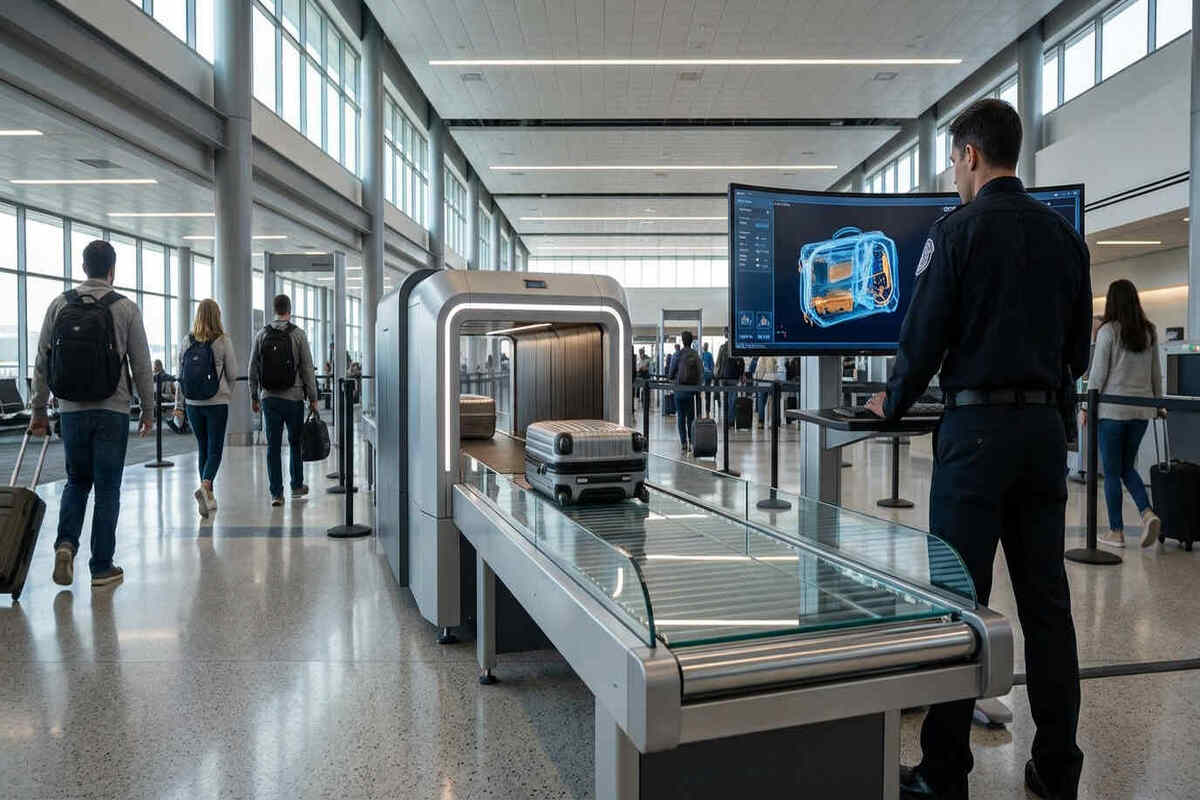
More US airports, including Boston and Dallas/Fort Worth and Others are transitioning their security checks to the TSA’s 3D scanning technology. The US TSA is advancing the use of Computed Tomography (CT) scanners at traditional airport security checkpoints, and in the process, changing how traveled goods are screened. The new security check scanners virtually X-ray the contents of a traveler’s bags. The technology creates 3D images of a bag’s contents, which security officers can read and interpret like an X-ray image. The TSA’s new security checks promote a contactless environment for bag screenings and reduce the number of manual bag searches.
The new technology is being introduced at major US aviation hubs, including Atlanta (ATL), Boston (BOS), Chicago (ORD), Dallas/Fort Worth (DFW), Los Angeles (LAX), New York (JFK), Newark (EWR), Washington Dulles (IAD), Phoenix (PHX), Detroit (DTW), Miami (MIA), Seattle (SEA), San Francisco (SFO), Philadelphia (PHL), Raleigh-Durham (RDU), Charlotte (CLT), Indianapolis (IND), and Las Vegas (LAS).
Advertisement
Advertisement
The latest scanners are designed to improve airport security operations while making the screening process smoother for millions of passengers travelling through busy US airports every year. However, the introduction of the new equipment also brings an important change for passengers carrying over sized cabin luggage.
New CT Technology Creates A Clearer View Of Carry On Bags
Traditional airport screening systems provide two-dimensional X-ray images of luggage contents, often requiring officers to conduct additional inspections when items appear unclear. The new CT scanners use advanced imaging technology to produce detailed three-dimensional views, allowing security teams to rotate and examine objects inside a bag from different angles.
Advertisement
Advertisement
This improved visibility helps officers identify items more efficiently without immediately opening luggage. Travellers may experience fewer delays because security personnel can receive a clearer understanding of what is inside a carry-on bag during the scanning process.
The technology is similar to the scanning systems used in medical imaging, where detailed internal views are created through multiple images. In airport security, the system helps provide a more complete picture of passenger belongings while maintaining strict safety procedures.
Advertisement
Advertisement
The upgraded scanners are expected to support faster passenger movement through security checkpoints, especially at some of the busiest airports in the United States where large numbers of domestic and international travellers pass through every day.
Over sized Carry On Bags May Face New Airport Challenges
While the new scanners offer improved security benefits, passengers may need to pay closer attention to their carry-on luggage size. Some of the advanced machines have smaller openings compared with older screening equipment, meaning larger bags may not pass through easily.
Airlines generally allow cabin bags measuring around 22 inches by 14 inches by 9 inches, although some travellers attempt to bring larger suitcases or heavily packed bags into aircraft cabins. Bags that meet standard airline size requirements are expected to fit through the new scanners, but over sized luggage could create problems at security checkpoints.
Passengers travelling through airports using the updated CT equipment may be required to check their luggage if their carry-on bags cannot move through the scanning system. This could result in unexpected delays, additional fees, or changes to travel plans.
Travellers are therefore encouraged to check airline baggage rules before arriving at the airport and avoid bringing over sized cabin luggage that may not meet both airline and security screening requirements.
Electronics Can Stay Inside Bags During Advanced Screening
One of the biggest advantages of the new CT scanners is that passengers may no longer need to remove certain electronic devices from their carry-on luggage during security checks.
Advertisement
Advertisement
Under older screening procedures, travellers were often required to take out laptops, tablets, and other large electronic items before placing bags on the conveyor belt. The advanced CT technology provides security officers with a clearer internal view, reducing the need for passengers to separate devices before screening.
This change can make security lines more convenient, particularly during busy travel periods when airports experience increased passenger volumes. Families, business travellers, and international visitors may benefit from a simpler preparation process before reaching security checkpoints.
Major US Airports Prepare For A New Screening Experience
The rollout of CT scanners across major airports represents a significant investment in modernising passenger security infrastructure. Airports such as Atlanta (ATL), Chicago (ORD), Dallas/Fort Worth (DFW), Los Angeles (LAX), New York (JFK), and Miami (MIA) handle millions of travellers annually and require advanced systems capable of managing high passenger demand.
Other important airports receiving the technology include Boston (BOS), Newark (EWR), Washington Dulles (IAD), Phoenix (PHX), Detroit (DTW), Seattle (SEA), San Francisco (SFO), Philadelphia (PHL), Raleigh-Durham (RDU), Charlotte (CLT), Indianapolis (IND), and Las Vegas (LAS).
The expansion of these scanners reflects a broader move towards smarter airport operations, where technology plays a greater role in improving security, efficiency, and passenger experience.
As airports continue upgrading their facilities, travellers will increasingly interact with automated and digital systems designed to make journeys more secure and convenient.
Advertisement
Advertisement
Travellers Advised To Prepare Before Reaching Airport Security
Although the new CT scanners are expected to improve the screening experience, passengers still need to prepare carefully before travelling. Checking baggage dimensions, following airline carry-on rules, and arriving with enough time for security procedures remain important steps for a smooth airport journey.
The introduction of advanced CT screening marks a major change in the way carry-on luggage is inspected in the United States. By combining stronger security technology with improved passenger processing, the new scanners aim to create a faster and more efficient airport experience.
For travellers using major US airports, understanding the new requirements will be essential as the technology becomes increasingly common across security checkpoints nationwide.
Advertisement
