

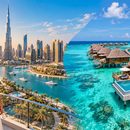
Image generated with Ai
Due to more direct flights from Melbourne to Malé and a greater presence of Australian tourists, Maldives Tourism is working to innovatively improve travel options. These options include vacations with the family, wellness retreats, diving, surfing, and community adventures, etc. They intend to implement a “pick-your-price” like system, where different accommodation levels and prices are brought into the system with strengthened flights to the Maldives while keeping the current visa and border policies.
This approach to Maldives Tourism seeks to broaden the types of clientele resorted to Maldives while sustaining the Maldives’s image of a romantically luxurious vacation destination. Australian tourists are heavily responsible for creating and sustaining a demand for Maldives tourism. It appears that all Australian tourists resorted to the Maldives, so clearly Australian tourists are up for high quality accommodation. Present advertisements are aiming to appeal to a wider audience including families and wellness, diving, surfing, and community adventure tourism. It is expected that the new options will create additional business without compromising the current resort accommodations.
Advertisement
This approach is more in line with what Maldives offers to its tourism clientele. At present, resorted guests have the choice of a registered guesthouse, a hotel, a tourist vessel or a resort. Registered guesthouses are accommodations on the islands that are inhabited, and tourist vessels are vessels that provide diving and cruising itineraries. These options also allow travelers to interact with the local island communities. The new advertising approach is going to attempt to show the Maldives with more travel options, moving away from the focus on couples looking for highly private and seclusive accommodations.
Official figures show that 20,126 Australians visited the Maldives between January and May 2026. This represented growth of 14.1% from the same period in 2025. Australia became the country’s tenth-largest source market during that period and supplied 2.2% of tourist arrivals. May produced even stronger growth. Australian arrivals increased by 24.2% compared with May 2025. These results explain the greater attention given to Australia during the July tourism campaign.
Advertisement
Advertisement
The market continued moving higher during the following weeks. By 12 July 2026, the Maldives had received 26,339 Australian tourists. Australia then represented 2.4% of tourist arrivals and ranked ninth among source markets. It had ranked eleventh during 2025, according to the official comparison. This improvement shows that Australia was gaining importance even before the three-city campaign finished. However, these remain partial-year figures. They cannot establish the final result for the whole of 2026.
The main official figures show both the scale of demand and the areas where further diversification may develop.Category Official figure or development Importance for tourism Australian arrivals 20,126 between January and May 2026 Shows established demand from Australia Annual growth 14.1% Confirms stronger arrivals than the same 2025 period May growth 24.2% Shows particularly rapid monthly growth Market share through May 2.2% Measures Australia’s contribution to total arrivals Market ranking through May Tenth Places Australia among the leading source markets Arrivals by 12 July 26,339 Provides a more recent official total Market share by 12 July 2.4% Shows a larger contribution during the later period Market ranking by 12 July Ninth Confirms an improvement from eleventh in 2025 Resort preference 77.2% Shows that resorts remain the leading choice Roadshow participation Eleven tourism businesses Indicates broad industry involvement
The table shows two connected trends. Australian demand is increasing, while resorts continue to receive most Australian visitors. The broader tourism strategy must therefore maintain premium island holidays while building awareness of guesthouses, hotels and liveaboards. Official information says demand for these alternatives is increasing. However, it does not provide separate Australian arrival totals for each accommodation category.
The first direct Melbourne–Malé air service began on 19 May 2026. It created the first direct aviation link between Australia and the Maldives. The seasonal operation runs once weekly in each direction using a wide-body aircraft. Flights leave Melbourne for Malé on Tuesdays. Return flights depart Malé for Melbourne on Sundays. Before this service began, travellers normally used connections through Asian or Middle Eastern aviation hubs.
Advertisement
Advertisement
The direct operation removes one international connection from eligible journeys. This can shorten the overall trip and reduce the complexity of travelling between Melbourne and Malé. Arrival times in Malé were also planned to support connections with domestic services. This matters because many visitors require another transfer after reaching the main international airport. Depending on the island, that journey may involve a seaplane, domestic aircraft or speedboat. Travellers must still confirm these transfers with their accommodation provider.
The service gives Australian travellers another booking option, but it has practical limitations.
These points show why the route matters without overstating its capacity. It provides a simpler journey for passengers whose dates match the weekly schedule. It does not remove every connecting option or make all Maldivian islands directly accessible from Australia. Nevertheless, it gives Maldives Tourism a significant new tool for developing the Australian market.
A tourism roadshow took place in Perth, Melbourne and Sydney from 20 to 23 July 2026. The programme opened in Perth on 20 July, continued in Melbourne on 22 July and ended in Sydney on 23 July. It connected Maldivian tourism suppliers with Australian travel advisers, wholesalers, media representatives and other industry participants. Eleven tourism businesses joined the programme. Activities included destination presentations, business meetings, networking sessions and product information.
The campaign placed greater attention on family holidays, wellness experiences, diving, surfing, adventure and local culture. This wider approach gives travel advisers more options when designing Maldives itineraries. Families may need suitable accommodation, safe transfers and activities for different age groups. Divers may require access to liveaboards and specific marine locations. Wellness travellers may compare retreat programmes, while culturally interested visitors may prefer registered accommodation on inhabited islands. The roadshow helped explain these differences to Australian travel sellers.
Broader promotion may also influence the distribution of visitors. Resorts currently receive most Australian guests, but greater awareness could support guesthouses, hotels and tourist vessels. This may direct a larger share of tourism activity towards inhabited islands and smaller service providers. However, official evidence does not yet measure any resulting change in Australian visitor spending. It also does not quantify how much money reaches local communities.
The campaign therefore represents a market-development effort rather than a confirmed economic transformation. Trade meetings, advertising, familiarisation visits and digital promotion can improve destination knowledge. They may also help travel advisers sell more varied itineraries. Yet future arrival and accommodation figures will determine whether interest produces a measurable shift. Current data only confirms rising arrivals, strong resort demand and growing attention towards alternative tourism products.
The tourism campaign and direct flight introduced no new visa, passport or border arrangement. Australian holidaymakers continue to receive tourist visas on arrival, subject to immigration clearance. They do not need advance tourist visa approval. However, visa availability does not guarantee admission. Immigration officers determine whether each passenger meets the entry conditions after arrival.
Travellers need a machine-readable passport with at least one month’s validity. Each child or minor must hold a separate passport. Visitors also need a confirmed return or onward ticket and prepaid accommodation at a registered facility. They must have enough money for their stay and meet the entry rules of any onward destination. Every foreign arrival must complete the free electronic Traveller Declaration through the official immigration system.
Australian travellers should prepare the following before departure:
The one-month passport rule represents the Maldivian minimum. Another country on the itinerary may demand longer passport validity. Travellers should therefore check every transit and onward destination separately. They should also use the official declaration system because submission remains free. No new entry concession accompanies the Melbourne route or the Australian tourism campaign.
The following phase will concentrate on the ongoing promotion of the market and the results of the seasonal direct service. There are plans for more collaborative initiatives, co promotions, targeted advertising, familiarisation trips and influencer work. These activities will expand the perception of the Maldives beyond a honeymoon destination. Travel sellers will likely receive new product briefs on family, wellness, diving, adventure and community tourism.
Future published statistics will show if Australia maintains the ninth overseas market position and if guesthouses, hotels and liveaboards will capture more of the Australian market. Based on the current 77.2% ratio, the strength of resorts will continue to be the most likely outcome, but the final annual figure is not available yet. Full year data will help to understand if the July campaign and the direct service resulted in significant growth.
The direct service is one of many options available to transfer people between Melbourne and Malé. Passengers not able to travel on the seasonal direct service, will continue to rely on indirect services. Those who opt to travel on the direct service will need to arrange onward island transfers.
Maldives tourism is staking its priority on better Australia access and a more diverse Maldives destination message. While the Maldives will continue to support luxury resorts, more focus and resources will be provided for families, wellness tourists, divers, surfers, and cultural travelers. The focus for the Maldives is on the growth of tourism and improved access through air transport. There are no plans for a new visa system, passport control, or special border arrangements.
Advertisement
Tags: australian tourists, island tourism, Maldives entry rules, Maldives family holidays, Maldives Travel
Advertisement
Advertisement













Friday, September 4, 2026
Friday, September 4, 2026

Friday, September 4, 2026

Friday, September 4, 2026

Thursday, September 3, 2026

Wednesday, September 2, 2026
Friday, September 4, 2026
Friday, September 4, 2026


