
Türkiye Moves Alongside Georgia and Other Nations as Destination Travel Costs and Entry Rules Shape Trips

Published
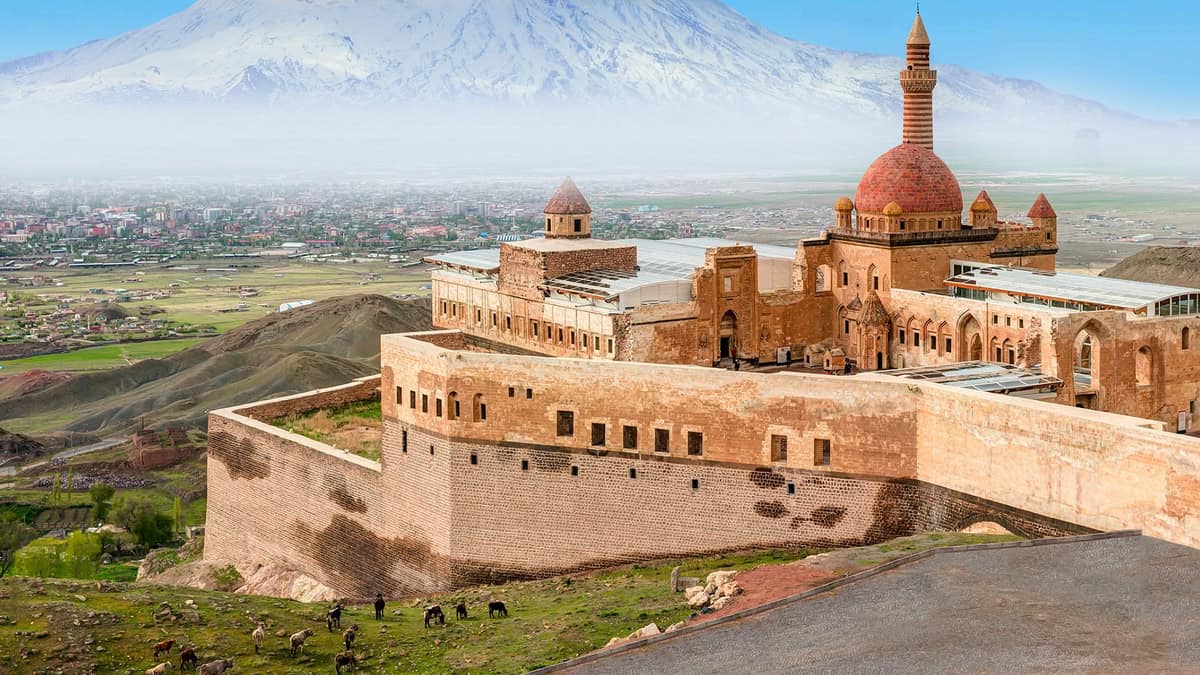
Türkiye, Georgia, Albania, Montenegro and North Macedonia are competing in the wider market for European visitors seeking alternative destinations, cultural experiences and potentially affordable holidays. Official tourism statistics published during 2026 reveal growing opportunities, particularly in Georgia’s international tourism receipts, Albania’s accommodation demand and North Macedonia’s airport connectivity. However, their competitiveness depends on more than accommodation prices. Secondary transport costs, separate national entry requirements and the ability of local communities to benefit from visitor expenditure are emerging as essential considerations for travellers, destination managers and international tour operators.
Five Tourism Markets Face a New Test of Value, Accessibility and Regional Economic Growth
A comparison of the five destinations reveals different tourism strengths rather than a single coordinated initiative. Türkiye already operates one of the world’s largest tourism economies, while its four competitors offer distinct combinations of mountain landscapes, heritage attractions and coastal experiences.
Advertisement
Advertisement
The latest available statistics also show that tourism growth is uneven. Some markets have reported rising receipts and passenger volumes, while Türkiye recorded weaker visitor numbers during the second quarter of 2026.
| Country | Latest verified official indicator | Implication for tourism |
|---|---|---|
| Türkiye | Tourism revenue reached USD 15.87 billion in April–June 2026, down 2.6% year on year | Greater importance of higher-value tourism and regional diversification |
| Georgia | 4,404,872 international tourist visits in January–September 2026, up 2.3% | Continued demand for experiences beyond major cities |
| Albania | Non-resident visitors using accommodation establishments rose 10.7% in August 2026 | Growing demand creates opportunities for smaller hospitality businesses |
| Montenegro | Coastal resorts accounted for 92.6% of overnight stays in 2025 | Strong case for developing inland and mountain tourism |
| North Macedonia | Skopje and Ohrid airports handled 3,331,685 passengers in January–September 2026, up 29% | Expanded aviation access could support international tourism |
These figures come from Turkish Statistical Institute, Georgian National Tourism Administration, Albania’s INSTAT, Montenegro’s MONSTAT and TAV Macedonia.
Advertisement
Advertisement
The indicators cover different periods and statistical populations. Airport passengers, accommodated tourists and international visits must not be treated as interchangeable measurements.
Türkiye’s Lesser-Visited Regions Offer a Different Competitive Advantage
Türkiye’s established tourism position distinguishes it from the other four countries. According to the Turkish Statistical Institute, the country recorded approximately 63.9 million departing visitors and USD 65.23 billion in tourism income during 2025.
Advertisement
Advertisement
However, its tourism opportunities extend well beyond Istanbul, Antalya and the established coastal resorts.
Eastern Anatolia offers opportunities for heritage tourism, cultural exploration and rail-based journeys. Kars, for example, connects historic attractions with the wider eastern railway network.
According to Türkiye’s state railway operator, the Touristic Eastern Express links Ankara with Kars through a journey designed around regional attractions.
The challenge is converting interest in these experiences into longer stays and higher spending across smaller destinations.
Rail reservations, connecting flights, onward transfers and seasonal services can increase the total holiday cost. Türkiye’s competitive advantage therefore depends on combining extensive transport infrastructure with accessible regional tourism products.
Georgia’s Tourism Revenue Growth Strengthens Its Appeal to European Visitors
Georgia provides some of the clearest recent evidence of growing European-market expenditure.
Advertisement
Advertisement
According to the Georgian National Tourism Administration’s 20 October 2026 release, international travel revenue reached approximately USD 3.8 billion during January–September 2026, increasing 4.4% year on year.
Revenue associated with EU countries and the United Kingdom reached USD 665.4 million, representing growth of 29.1%.
These figures indicate stronger spending from important European source markets, although they do not establish how much revenue remains in rural communities.
Georgia’s mountain destinations offer considerable diversification potential. Svaneti, Mestia and Ushguli attract interest through heritage, trekking and alpine landscapes.
However, according to Georgia’s official tourism portal, travelling from Kutaisi to Mestia generally requires approximately four to five hours by road.
Additional transport expenses and weather-related accessibility risks can influence package pricing. Georgia’s competitive position consequently depends on reliable regional mobility as much as its natural attractions.
Advertisement
Advertisement
Albania’s Heritage Towns Demonstrate How Tourism Can Support Smaller Businesses
Albania presents a particularly valuable example of tourism development outside traditional mass-market destinations.
Its visitor economy combines the Adriatic and Ionian coasts with historic towns, mountain communities and cultural attractions.
Official accommodation statistics for August 2026 recorded a 10.7% increase in non-resident guests compared with August 2025.
The more significant long-term development concerns local entrepreneurship.
According to the World Bank’s August 2025 assessment of southern Albania, tourism-related businesses in areas supported by the Integrated Urban and Tourism Development Project more than doubled after implementation began in 2019.
Investments have supported heritage restoration and improvements to public spaces, access routes and visitor facilities in destinations including Berat and Gjirokastër.
Advertisement
Advertisement
These projects demonstrate how tourism infrastructure can encourage private investment and employment.
Nevertheless, growth in business registrations does not automatically establish the proportion of visitor expenditure retained locally. That requires additional information about ownership, procurement and employment.
Montenegro Confronts the Challenge of Coastal Tourism Concentration
Montenegro has a distinctive tourism imbalance.
According to MONSTAT, the country recorded 2,728,564 tourist arrivals and 15,367,166 overnight stays in 2025.
Seaside resorts accounted for 92.6% of overnight stays, compared with just 2.8% in mountain resorts.
This concentration creates an opportunity for destinations such as Žabljak, Durmitor and the northern mountain regions.
Advertisement
Advertisement
The Montenegrin Government has already recognised the importance of diversification.
Its June 2026 draft tourism and hospitality legislation identified regional development, destination resilience, community quality of life and protection of cultural heritage as policy priorities.
The proposed measures are not evidence that visitor spending has already shifted inland.
However, they establish a clear policy direction. Better inland access, quality accommodation and stronger local supplier networks could help distribute tourism activity more widely.
North Macedonia’s Aviation Expansion Opens New Opportunities for Regional Tourism
North Macedonia offers a different growth model, supported by improving air connectivity.
According to the State Statistical Office, the country recorded 244,513 tourists and 934,042 overnight stays in August 2026.
Advertisement
Advertisement
Foreign tourists represented 53.6% of arrivals that month.
Meanwhile, airport operator TAV Macedonia reported a 29% increase in combined passenger traffic at Skopje and Ohrid airports during January–September 2026.
The 2026 summer network introduced connections involving Milan, Vienna, Wrocław and Katowice from Ohrid, alongside additional services from Skopje.
Improved access could strengthen the appeal of Lake Ohrid, cultural destinations, mountain areas and smaller communities.
Significantly, Türkiye also contributes to North Macedonia’s inbound demand. Official statistics recorded 45,747 tourist arrivals from Türkiye in August 2026.
The relationship illustrates how the five markets can function as both tourism competitors and potential sources of visitors for one another.
Advertisement
Advertisement
Hidden Transport Costs Could Determine the Real Affordability of Alternative Destinations
Lower accommodation prices do not necessarily create a cheaper holiday.
European travellers must consider airport transfers, domestic connections, public transport availability, luggage charges and journey duration.
The difference becomes particularly important when the intended destination lies far from an international airport.
| Country | Secondary destination example | Additional journey consideration |
|---|---|---|
| Türkiye | Kars and Eastern Anatolia | Domestic flights or railway journeys, followed by local transfers |
| Georgia | Mestia and Svaneti | Extended mountain-road journeys or weather-dependent domestic flights |
| Albania | Berat and Gjirokastër | Airport transfers followed by intercity road transport |
| Montenegro | Žabljak and Durmitor | Inland transport from Podgorica or Tivat, with possible vehicle-hire costs |
| North Macedonia | Ohrid and mountain communities | Airport transfers, onward road connections and seasonal service availability |
Albania provides a useful example of publicly documented transport expenses.
According to Tirana International Airport, its scheduled airport-to-city bus service costs ALL 400, while the airport connection to the South and North Bus Terminal costs ALL 300.
These are individual transfer fares, not the complete cost of reaching regional destinations.
Advertisement
Advertisement
For travel companies, the appropriate comparison is therefore a door-to-door itinerary that includes transport, accommodation, luggage, transfers and any unavoidable overnight stop. Published fares and timetables should be reconfirmed before sale.
Separate Visa and Border Requirements Create Important Planning Differences
Although these five countries are outside the Schengen Area, they maintain separate immigration systems.
Visa exemptions depend on nationality, document type and other eligibility conditions.
| Country | Official entry consideration | Operational significance |
|---|---|---|
| Türkiye | Many European ordinary-passport holders qualify for visa-free short stays, generally within a 90-day-in-180-day framework | Check nationality-specific exemptions and passport requirements |
| Georgia | Eligible nationalities may enter visa-free, but tourists generally require qualifying health and accident insurance from 1 January 2026 | Verify insurance coverage of at least GEL 30,000 |
| Albania | Short stays commonly operate within a 90-day-in-180-day limit, subject to visa eligibility | Check exemptions and qualifying visa or residence-permit conditions |
| Montenegro | EU citizens may generally stay visa-free for 30 days using an ID card or 90 days using a passport | Document selection can affect permitted duration |
| North Macedonia | EU and Schengen-country nationals can enter visa-free with valid national identity cards | Other nationalities and residence-permit holders face different rules |
These requirements are documented by the respective foreign ministries and government immigration authorities.
Georgia’s official consular information confirms that qualifying insurance must cover the entire visit.
Travellers should also distinguish these national requirements from EU border systems. The European Commission confirms that the Schengen Entry/Exit System became fully operational in April 2026. It does not replace the separate immigration rules of these five destinations.
Advertisement
Advertisement
Can Tourism Growth Deliver More Revenue to Host Communities?
The most important economic question concerns where visitor spending eventually goes.
National tourism receipts measure economic activity associated with international travel. They do not independently reveal how much expenditure benefits smaller communities.
A destination might generate strong accommodation revenue while purchasing a significant proportion of its supplies from outside the region.
Similarly, externally operated transport services and accommodation platforms can receive part of the value associated with a holiday.
Albania’s heritage tourism experience provides evidence of growing local businesses. Montenegro’s diversification policies indicate the desire to expand economic opportunities geographically. Georgia’s increasing European-market revenue demonstrates external demand.
However, none of these measures alone proves a particular local retention rate.
Advertisement
Advertisement
Independent Analysis: The Last-Mile and Local-Value Test
A more useful assessment would measure two connected outcomes: the additional cost of reaching a secondary destination and the value generated within that destination.
For travellers, a relatively inexpensive hotel may become less attractive when reaching it requires expensive private transport or an additional night’s accommodation.
For communities, visitor numbers may increase without proportional improvements in household income if accommodation operators rely heavily on imported goods, external booking intermediaries or suppliers based elsewhere.
These effects can also reinforce one another. A weak transport network encourages packaged transfers, while limited local business capacity makes it harder for residents to capture additional visitor spending.
Destination managers therefore need measurements beyond arrival totals. These include visitor expenditure by municipality, locally owned accommodation capacity, tourism employment, local procurement, average stay length and seasonal occupancy.
Travel companies can contribute through direct contracts with local guides, family-run accommodation providers and regional transport operators.
Advertisement
Advertisement
The strongest destinations will not necessarily be those offering the lowest headline prices. They may be those that combine predictable total costs, dependable transport and demonstrable community benefits.
This represents a practical framework for assessing tourism competitiveness, rather than a claim that any of the five countries already leads on local revenue retention.
Rural Tourism, MICE Development and Infrastructure Investment Could Reshape Competition
Montenegro offers a relevant example of how destination policy is expanding beyond traditional leisure tourism.
In May 2026, the government approved a tourism incentive programme worth EUR 1.35 million across seven support measures.
According to the Government of Montenegro, the measures include rural tourism improvement, MICE tourism development, sustainable destination innovation, tour-operator partnerships and organised air-arrival promotion.
This creates opportunities to extend tourism activity beyond peak summer holidays.
Advertisement
Advertisement
Meetings, incentives, conferences and exhibitions can generate additional demand for accommodation, catering, local transport and event services. However, their economic impact depends on where events occur and which suppliers receive contracts.
Comparable regional planning across these destinations would benefit from stronger coordination between airports, accommodation businesses, municipalities and tourism authorities.
Critical Operational Takeaways for Travel Agents and Tour Operators
- Calculate full journey costs: Include every transfer, luggage charge, domestic connection and additional overnight stay before marketing a destination as affordable.
- Verify entry eligibility: Check each traveller’s nationality, passport type, visa status and permitted length of stay.
- Review insurance requirements: Ensure Georgia-bound tourists carry compliant cover for their entire visit.
- Manage seasonal access risks: Allow realistic journey times and alternatives for mountain routes affected by weather or service changes.
- Strengthen local procurement: Prioritise verified regional accommodation, guides, transport companies and suppliers where commercially appropriate.
- Measure destination performance: Assess visitor expenditure, length of stay, local employment and operating margins alongside booking volumes.
The Long-Term Outlook for Europe’s Alternative Tourism Destinations
The future competitiveness of Türkiye, Georgia, Albania, Montenegro and North Macedonia will depend on their ability to convert destination appeal into reliable travel experiences and sustainable local economic activity.
Expanding airport networks and rising tourism demand provide important opportunities. Yet improved accessibility must extend beyond international gateways.
For international travel companies, the most promising opportunities may lie in carefully designed regional itineraries that balance affordability, convenience and community participation.
Ultimately, successful destination diversification will require stronger infrastructure, transparent travel costs and better evidence that visitor expenditure reaches the places travellers come to experience.
Advertisement
Advertisement
FAQs
1. Why are these five countries being compared as tourism destinations?
They compete within overlapping international travel markets and offer alternatives to established European tourism hotspots. Their products include cultural tourism, coastal holidays, mountain experiences and smaller heritage destinations.
2. Are these countries cheaper than Western European destinations?
They may offer competitive accommodation and service prices, but affordability varies significantly. Travellers should compare complete holiday costs, including flights, transfers, inland transport and insurance.
3. Do European tourists need visas for all five countries?
Not necessarily. Many European nationalities qualify for visa-free travel, but the conditions and permitted stay lengths differ. Requirements should always be checked against the destination’s official immigration rules.
4. Does increasing tourism revenue mean local communities are benefiting?
Not automatically. Rising receipts indicate tourism-related economic activity, but local benefits depend on business ownership, employment, purchasing arrangements and the geographical distribution of spending.
5. Which developments should travel businesses monitor after October 2026?
Key indicators include additional air routes, changes to visa and insurance rules, regional infrastructure improvements, tourism investment programmes and new evidence concerning local tourism expenditure and employment.
Advertisement
