
Jordan Surges Ahead of Namibia, Chile and Oman with Wadi Rum Leading the World’s Best Golden Hour Destinations in 2026

Published
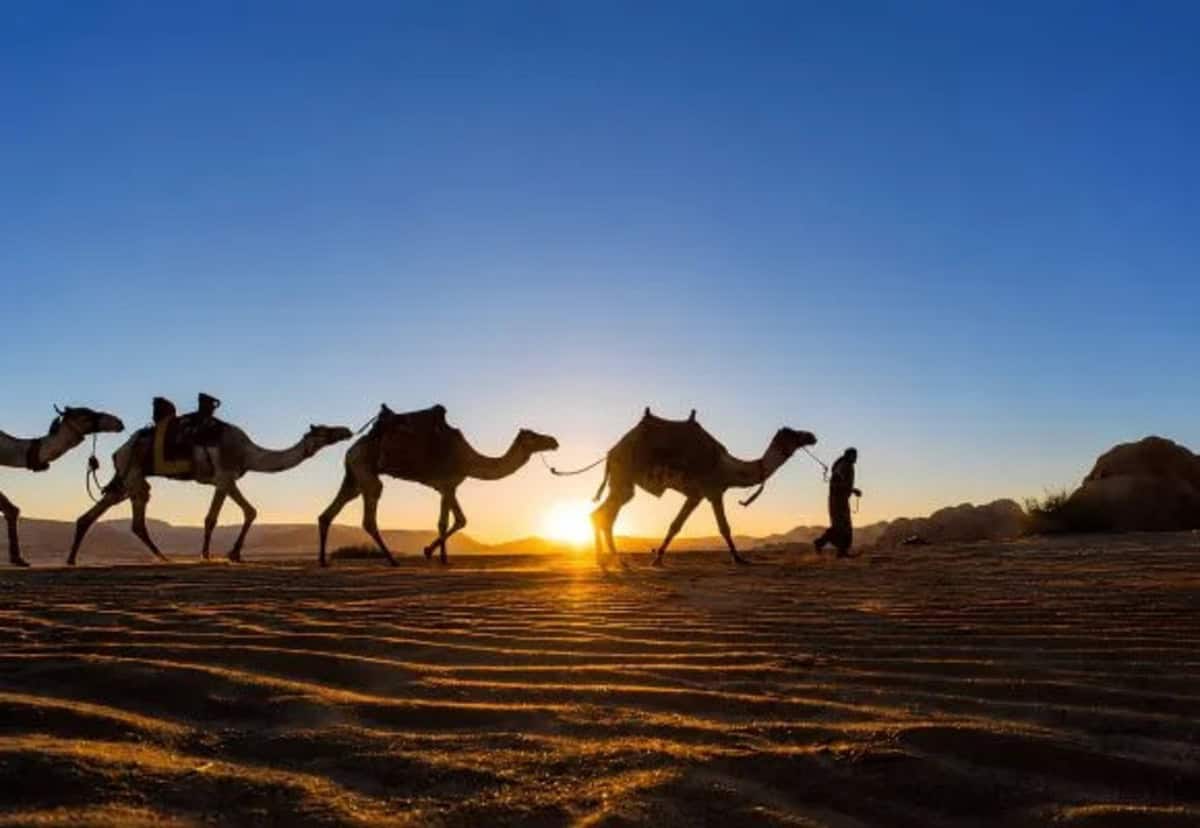
British travel company Kuoni has ranked Wadi Rum in Jordan as the world’s best golden hour destination for 2026, placing it ahead of Namibia’s Sossusvlei and Damaraland, Chile’s Atacama Desert, Oman’s Wahiba Sands and several famous European landscapes. The research, updated on 30 September 2026, assessed 165 destinations worldwide using five years of historical weather data and six environmental measures to identify locations with favourable sunset conditions. Wadi Rum secured the highest score of 95.92 out of 100, while Namibia captured three places among the world’s top six and Greece emerged as Europe’s leading country with four entries in the global top 20. The findings provide new insights for travellers, photographers and tourism businesses seeking natural experiences shaped by clear skies, dramatic scenery and changing evening light.
The global ranking highlights how desert landscapes are emerging as some of the strongest locations for sunset-focused travel. From Jordan’s towering sandstone mountains to Namibia’s enormous dunes, the highest-scoring destinations share favourable weather patterns, relatively low levels of artificial light and expansive views. However, the research also reveals that deserts are not the only environments capable of producing memorable golden hour experiences. Botswana’s waterways, Australia’s ancient rock formations, America’s valleys and Greece’s Mediterranean coastlines all secure prominent positions.
Advertisement
Advertisement
Jordan Takes the Global Crown as Wadi Rum Delivers Exceptional Golden Hour Conditions
Jordan’s Wadi Rum takes first place with an impressive 95.92 points out of 100, making it the highest-ranked destination in Kuoni’s international study. Located in southern Jordan, the protected desert landscape is famous for its enormous sandstone mountains, red dunes, narrow valleys and natural rock formations. Its remote setting provides a striking environment for watching sunlight move across the desert.
According to the research, Wadi Rum experiences average cloud cover of just 15.3% and a rainfall measurement of only 0.1 millimetres within the study’s weather dataset. Wind speeds are recorded at approximately 20.1 kilometres per hour. These conditions contribute to relatively clear views of the evening sky and allow low-angle sunlight to illuminate the surrounding sandstone. The destination’s cultural and natural importance extends beyond its atmospheric conditions. Wadi Rum became a UNESCO World Heritage Site in 2011, with the protected area covering approximately 74,200 hectares.
Advertisement
Advertisement
Its landscape contains archaeological remains, rock inscriptions and evidence of human activity extending back thousands of years. Bedouin cultural traditions also form an important part of the visitor experience. Travellers can experience the changing colours of the rocks during the evening before exploring the desert’s dark skies after sunset. The combination of scenery, heritage and overnight experiences gives Jordan opportunities to promote Wadi Rum within longer cultural and adventure itineraries.
Namibia Emerges as Africa’s Golden Hour Powerhouse with Three Destinations in the Global Top Six
Namibia establishes one of the strongest national performances in the 2026 ranking, securing second, third and sixth positions worldwide. Sossusvlei ranks second with 94.93 points, while Damaraland follows in third place with 91.83. Etosha National Park completes the country’s leading representation, ranking sixth with 88.45 points. The results reflect Namibia’s diverse natural landscapes, ranging from towering sand dunes to rocky mountains and extensive wildlife habitats. Sossusvlei, located within the Namib Desert, is particularly notable for its immense red dunes and striking white clay pans.
Advertisement
Advertisement
The study records average cloud cover of just 14.8%, the lowest among the locations assessed. Its golden hour period lasts approximately 27.9 minutes, providing a relatively short but visually distinctive photography window. The contrast between the red dunes, pale ground and dark ancient trees of nearby Deadvlei creates an unusual landscape as the sunlight weakens. Sossusvlei’s dunes can exceed 300 metres in height, offering elevated viewing opportunities across the desert. Visitors must nevertheless observe park access restrictions and gate operating times when planning excursions.
Namibia’s third-place destination, Damaraland, offers a different experience. Its landscapes contain rugged mountain formations, broad valleys and internationally significant rock engravings. The region records average cloud cover of approximately 20.6%, alongside a golden hour duration of around 26.9 minutes. Etosha National Park, meanwhile, combines wide horizons and expansive salt-pan scenery with wildlife-viewing opportunities. These different landscapes demonstrate Namibia’s potential to combine golden hour photography with adventure tourism, geological attractions and safari experiences.
Chile’s Atacama Desert and Oman’s Wahiba Sands Strengthen the Global Appeal of Desert Tourism
Chile and Oman occupy fourth and fifth positions, continuing the dominance of dry landscapes in the upper section of the global ranking. The Atacama Desert in Chile scores 91.23 points, securing fourth place internationally. Known for its extremely dry climate, the Atacama contains vast salt flats, unusual rock formations, high-altitude landscapes and remarkable desert scenery. The region’s clear conditions also support its established reputation for astronomical observation.
Oman’s Wahiba Sands, also known as Sharqiya Sands, ranks fifth with 89.89 points. The desert is characterised by sweeping dunes, extensive sandy landscapes and relatively limited artificial illumination away from settlements. As the sun moves towards the horizon, the sand can display different shades of orange, gold and red, creating striking conditions for landscape photography. For Oman’s tourism businesses, this strengthens the potential appeal of guided desert excursions, overnight camps and outdoor experiences. Although the ranking identifies favourable environmental conditions, local weather can vary. Dust storms, haze and seasonal changes may still affect visibility in both destinations.
Botswana, Zimbabwe and Zambia Bring Wildlife, Rivers and Waterfalls into the Golden Hour Spotlight
The research demonstrates that outstanding sunset settings extend beyond arid landscapes. Botswana’s Okavango Delta ranks seventh with 88.37 points, while the Chobe River secures thirteenth position with 86.88 points. The Okavango Delta is internationally recognised for its wetlands, waterways and wildlife habitats. Its water channels can reflect the warm colours of the evening sky, creating a different visual experience from the dunes and rock formations of the highest-ranked desert locations. The Chobe River provides another setting for combining natural light with wildlife observation. Evening excursions may offer opportunities to photograph animals against riverbanks and changing skies, depending on conditions.
Zimbabwe’s Victoria Falls ranks eleventh globally with 87.06 points. Here, the interaction between sunlight, water spray and the surrounding landscape can create unusual lighting effects. Mist may produce rainbows when the angle of sunlight is suitable. Across the border, Livingstone in Zambia takes eighteenth position with 85.48 points. Together, the Zimbabwean and Zambian entries highlight the wider tourism value of the Zambezi region.
Advertisement
Advertisement
Greece Leads Europe as Rhodes, Cape Sounion and Navagio Beach Secure Four Global Positions
Greece records four destinations in the world’s top 20, giving it the strongest representation of any European country. The Lindos Acropolis on Rhodes ranks tenth globally with 87.97 points, making it Greece’s highest-scoring location. Situated approximately 116 metres above sea level, the historic hilltop site overlooks the surrounding Aegean coastline. The elevated setting provides broad views across the landscape, while the combination of ancient architecture, cliffs and Mediterranean scenery creates a distinctive setting for photography.
The study records average cloud cover of 27.1% for Lindos, helping explain its strong position in the European ranking. Rhodes Town follows in seventeenth place with 85.58 points. Its historic streets, coastal setting and landmark architecture offer opportunities to experience the changing evening light within an established cultural tourism destination. Cape Sounion, near Athens, ranks nineteenth with 85.47 points. The coastal headland is known for the ancient Temple of Poseidon, situated above the Aegean Sea. Its location makes it an established destination for scenic visits and sunset photography.
Greece’s final entry is Navagio Shipwreck Beach on Zakynthos, which takes twentieth position with 84.79 points. The beach is surrounded by towering limestone cliffs and is widely recognised for its dramatic coastal scenery. However, its inclusion in a scenic ranking does not establish that visitors can access the beach. Current safety restrictions and official access arrangements must be checked separately.
Australia and the United States Challenge Desert Leaders with Ancient Rocks and Dramatic Valleys
Australia places two destinations in the global top 20, led by Uluru-Kata Tjuta National Park with 88.22 points. The protected landscape in Australia’s Northern Territory is internationally recognised for its enormous sandstone formations and cultural importance to the Anangu traditional owners. Uluru’s surface can appear to change colour throughout the day, particularly as direct sunlight weakens during the evening.
Australia’s second entry, the Flinders Ranges in South Australia, ranks fourteenth with 86.70 points. The region’s mountain formations, rocky ridges and broad valleys provide distinctive views under low-angle sunlight. The United States also secures two places in the ranking. California’s San Joaquin Valley receives 88.22 points, sharing the same score as Uluru-Kata Tjuta National Park.
Its broad agricultural landscape and expansive views create opportunities for sunset photography, although haze, dust and air quality can influence conditions. Sedona in Arizona follows in fifteenth position with 86.27 points. The destination is widely recognised for its red sandstone formations, scenic viewpoints and outdoor recreation opportunities. Warm evening sunlight can emphasise the colours of its rock formations, supporting the destination’s appeal among photographers and nature-focused visitors.
Advertisement
Advertisement
World’s Top 20 Golden Hour Destinations in 2026: Complete Global Ranking Revealed
Kuoni’s index uses a 100-point scoring system to compare atmospheric and environmental conditions across 165 international locations.
| Rank | Destination | Country | Golden Hour Score |
|---|---|---|---|
| 1 | Wadi Rum | Jordan | 95.92 |
| 2 | Sossusvlei | Namibia | 94.93 |
| 3 | Damaraland | Namibia | 91.83 |
| 4 | Atacama Desert | Chile | 91.23 |
| 5 | Wahiba Sands | Oman | 89.89 |
| 6 | Etosha National Park | Namibia | 88.45 |
| 7 | Okavango Delta | Botswana | 88.37 |
| 8 | San Joaquin Valley, California | United States | 88.22 |
| 9 | Uluru-Kata Tjuta National Park | Australia | 88.22 |
| 10 | Lindos Acropolis, Rhodes | Greece | 87.97 |
| 11 | Victoria Falls | Zimbabwe | 87.06 |
| 12 | Ras Al Khaimah | United Arab Emirates | 86.96 |
| 13 | Chobe River | Botswana | 86.88 |
| 14 | Flinders Ranges, South Australia | Australia | 86.70 |
| 15 | Sedona, Arizona | United States | 86.27 |
| 16 | Paphos City Centre | Cyprus | 86.23 |
| 17 | Rhodes Town | Greece | 85.58 |
| 18 | Livingstone | Zambia | 85.48 |
| 19 | Cape Sounion, Athens | Greece | 85.47 |
| 20 | Navagio Shipwreck Beach, Zakynthos | Greece | 84.79 |
Source: Kuoni Golden Hour Index, updated 30 September 2026. Scores reproduce the primary study rather than the preliminary figures originally supplied. San Joaquin Valley and Uluru-Kata Tjuta share an identical score. The rankings reveal several important geographical patterns. Africa accounts for seven of the top 20 destinations, including three locations in Namibia and two in Botswana. Greece leads Europe with four entries, while Jordan, Oman and the United Arab Emirates give the Middle East three positions. Australia and the United States each secure two entries, demonstrating that favourable golden hour conditions occur across several landscape types.
Six Scientific Factors Reveal Why Some Destinations Deliver Better Golden Hour Experiences
Unlike rankings determined by public votes or social media popularity, Kuoni’s research uses historical environmental measurements.
The study evaluates six factors, assigning different weights according to their influence on golden hour conditions.
| Environmental Factor | Weight | Importance for Travellers |
|---|---|---|
| Cloud cover | 35% | Influences how much direct sunlight reaches the landscape |
| Light pollution | 20% | Measures artificial light affecting natural sky conditions |
| Average rainfall | 15% | Indicates the likelihood of wet or cloudy conditions |
| Artificial brightness | 15% | Measures the brightness of human-made lighting |
| Wind speed | 8% | Can affect outdoor comfort and airborne dust |
| Average sunset duration | 7% | Helps assess the available viewing and photography period |
The framework draws on five years of historical weather data alongside astronomical and artificial-light information. Cloud cover carries the greatest weight because extensive cloud layers can block direct sunlight. Rainfall also contributes to the assessment because frequently wet conditions may reduce the chances of clear sunset views.
However, the study does not mean that completely cloudless skies always produce the most colourful sunsets. Small amounts of cloud can reflect sunlight and create additional colour across the sky. Similarly, low light pollution is especially beneficial for observing the transition from sunset into twilight and darkness, rather than directly determining how colourful the sunset itself will appear. The index therefore measures a combination of favourable conditions, not a guaranteed level of beauty on any particular evening.
Advertisement
Advertisement
The Science Behind Golden Hour Explains Why Sunsets Turn Gold, Orange and Deep Red
Golden hour occurs when the sun is low above the horizon, producing softer light and longer shadows than at midday. The colours result largely from the way sunlight travels through the Earth’s atmosphere. When the sun is high overhead, its light passes through a comparatively shorter section of the atmosphere. Near the horizon, sunlight follows a longer atmospheric path.
This process is known as Rayleigh scattering. The US National Weather Service identifies atmospheric scattering as the principal explanation for the warm colours commonly observed at sunrise and sunset. Dust, moisture and clouds can change the appearance of the light. Fine airborne particles sometimes intensify red or orange tones, but heavy dust, smoke or pollution may also obscure the view. The effect depends on particle concentration, atmospheric conditions and the position of the sun. This helps explain why desert destinations often provide striking evening scenery without suggesting that every desert sunset will be equally vivid.
Golden Hour Duration and Cloud Cover Can Change the Experience for Travellers and Photographers
The duration of golden hour varies according to geographical location, season and the angle at which the sun moves towards the horizon. Near equatorial regions, the sun generally crosses the horizon at a steeper angle, creating a shorter period of low-angle light. At higher latitudes, the sun may follow a shallower path, extending the available viewing period.
However, this relationship also changes throughout the year. The distinction matters for photography-focused tourism because travellers may have only a limited period to capture particular lighting conditions. Sossusvlei’s approximately 27.9-minute golden hour window illustrates the importance of reaching a suitable viewpoint in advance.
Damaraland’s period of around 26.9 minutes presents similar planning considerations. Weather also influences the outcome. Thick clouds may conceal the sun, while scattered high clouds can catch warm light and produce dramatic colours. For visitors, historical averages provide useful planning information, but short-term forecasts and local conditions remain essential when choosing an excursion.
Global Tourism Businesses Gain New Opportunities Through Sunset Photography and Nature-Based Experiences
The ranking offers tourism businesses an additional way to present destinations through experiences rather than landmarks alone. For desert tourism operators, golden hour can become part of guided excursions, cultural activities and overnight stays. In Jordan, sunset experiences can complement Wadi Rum’s established heritage and adventure tourism attractions.
Advertisement
Advertisement
Namibia’s varied landscapes provide opportunities for carefully timed photography programmes covering dunes, mountains and wildlife habitats. Botswana’s waterways can support nature-focused itineraries that incorporate evening landscape observation alongside traditional safari activities. In Greece, cultural tourism providers may combine historical sightseeing with scenic viewpoints, subject to attraction opening hours and local access rules.
For hotels and destination marketing organisations, sunset experiences can also support promotional storytelling and itinerary design. However, the ranking is not a measure of visitor demand, tourism revenue or booking growth. Its commercial relevance lies in identifying environmental characteristics that may strengthen the appeal of particular experiences. Operators must still assess accessibility, conservation requirements, visitor safety and practical market demand.
Responsible Tourism Becomes Essential as Famous Sunset Locations Attract International Attention
Recognition in international travel rankings can create additional interest in protected landscapes and cultural heritage sites. However, many leading golden hour destinations contain fragile environments. Wadi Rum’s UNESCO designation reflects both its natural features and its cultural significance. UNESCO has also identified visitor pressure, vehicle tracks and tourism infrastructure as considerations for protecting the area.
Namibia’s Namib Sand Sea faces similar challenges associated with maintaining the environmental integrity of extensive dune landscapes. Tourism operators working in these environments must respect designated routes, access restrictions and conservation requirements. Responsible planning also applies to wildlife destinations, where visitor activities should avoid disturbing animals during sensitive periods. The strongest long-term tourism outcomes depend on balancing visitor experiences with the protection of the natural and cultural resources that make these destinations distinctive.
Jordan’s Victory and Namibia’s Strong Performance Signal a Wider Opportunity for Experience-Led Tourism
The 2026 golden hour ranking places Jordan at the top of a global comparison covering 165 destinations, while Namibia establishes a commanding presence among the highest-scoring landscapes. Chile and Oman demonstrate the international appeal of desert scenery, while Botswana, Zimbabwe and Zambia show how rivers, wetlands and waterfalls can create distinctive evening experiences.
Greece’s four entries strengthen its position within Europe’s scenic and cultural tourism market. Australia and the United States further demonstrate that golden hour travel extends across deserts, mountain formations, valleys and protected landscapes. They also illustrate the importance of combining environmental evidence with local knowledge, access information and responsible visitor management.
Advertisement
Advertisement
As tourism businesses develop more specialised outdoor and photographic experiences, the world’s highest-ranking golden hour destinations offer varied settings for travellers seeking to explore landscapes during one of the most visually distinctive periods of the day. The central finding remains clear: Wadi Rum leads Kuoni’s 2026 Golden Hour Index, while Namibia, Greece and other destinations demonstrate the remarkable geographical diversity of the world’s sunset experiences.
Advertisement
