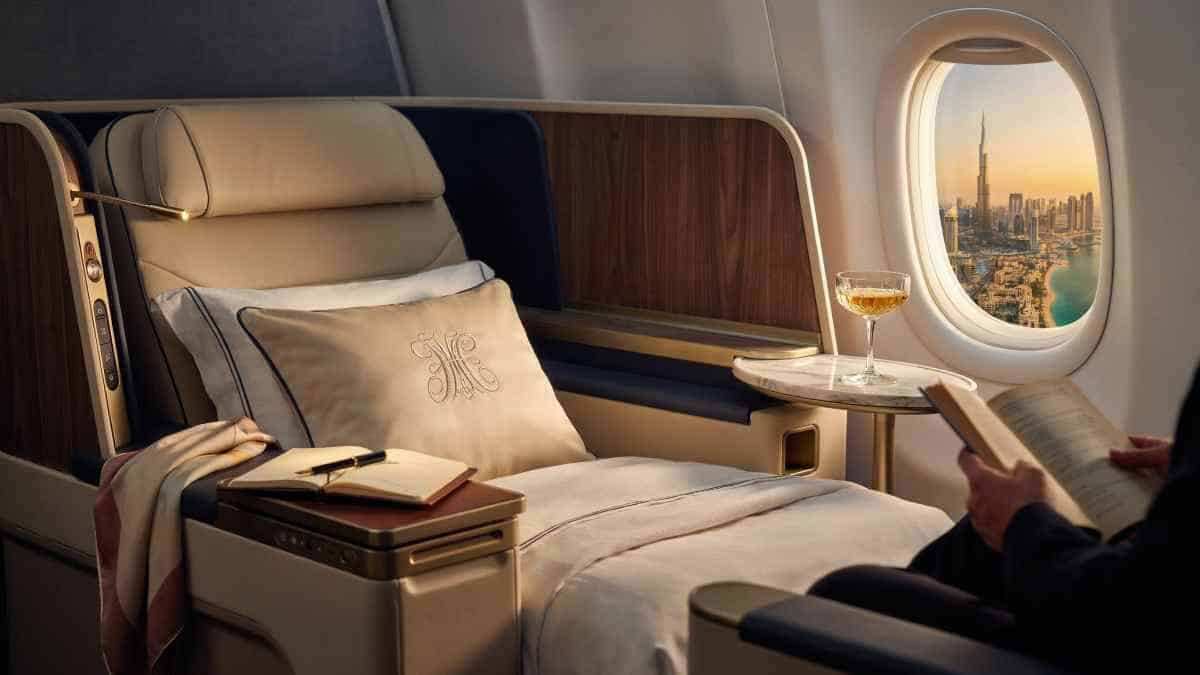
Image generated with Ai
Think premium air travel is reserved for a handful of wealthy globetrotters? Think again. The Middle East is rapidly cementing its reputation as one of the world’s leading luxury aviation markets, with 9.5% of all airline passengers now travelling in first or business class, giving the region the second-highest global share of premium travellers. It is a remarkable milestone that reflects changing travel habits, expanding tourism, and the growing influence of Gulf airlines on international aviation.
So, what is making travellers increasingly swap economy seats for lie-flat beds, airport lounges and personalised onboard experiences?
The Middle East has long been recognised as a global aviation crossroads, linking Europe, Asia, Africa and Oceania through world-class airports and long-haul carriers.
Now, fresh industry figures show that premium travel is becoming one of the defining characteristics of the region’s aviation sector. With nearly one in ten passengers choosing first or business class, the Middle East has established itself as one of the strongest premium aviation markets worldwide.
Advertisement
Advertisement
The trend reflects demand from business executives, leisure travellers, high-net-worth individuals and premium holidaymakers who increasingly value comfort, privacy and convenience during long-haul journeys.
Premium travel growth is closely linked to the success of the Middle East’s largest aviation hubs.
Dubai International Airport, Abu Dhabi’s Zayed International Airport and Hamad International Airport in Doha continue serving millions of international passengers every year, offering seamless global connections across hundreds of destinations.
These airports have invested heavily in premium lounges, fast-track immigration, luxury retail, wellness facilities and exclusive passenger services that enhance the overall travel experience.
Advertisement
Advertisement
As tourism continues expanding across the Gulf, these airports remain central to attracting both leisure and corporate travellers seeking premium journeys.
The Middle East’s premium travel success is closely associated with the region’s internationally recognised airlines.
Emirates continues offering one of the world’s largest first-class and business-class networks, supported by private suites, onboard lounges and chauffeur services in selected destinations.
Etihad Airways has strengthened its premium offering with redesigned cabins, personalised service and expanded international routes.
Qatar Airways remains recognised for its premium cabins, including its award-winning business-class product operating across an extensive global network.
These airlines continue investing in upgraded cabin interiors, onboard dining, digital services and customer experience to remain competitive in the premium travel market.
The increase in premium passengers is not solely driven by business travel.
Luxury tourism across the Middle East has expanded significantly, with travellers increasingly choosing premium air travel as part of their overall holiday experience.
Destinations including Dubai, Abu Dhabi, AlUla, Muscat, Doha and the Red Sea continue attracting visitors seeking luxury resorts, cultural experiences, wellness retreats and exclusive hospitality.
As international tourism rebounds, premium air travel is becoming an integral part of the luxury tourism ecosystem across the region.
Nearest Airport
Rail Connectivity
Major Attractions
Where to Stay
Luxury accommodation is concentrated in Downtown Dubai, Palm Jumeirah, Business Bay, Dubai Marina and Jumeirah Beach.
Shopping
Grocery Stores
Nearest Airport
Major Attractions
Several factors continue to support premium travel demand across the Middle East.
Growing international business activity, expanding luxury tourism, improved airline connectivity and rising disposable incomes are encouraging more travellers to invest in enhanced travel experiences.
Long-haul journeys connecting Europe with Asia and Australia also make premium cabins particularly attractive, especially for passengers seeking greater comfort on extended flights.
At the same time, airlines continue introducing flexible fares, upgraded loyalty programmes and enhanced airport experiences to attract repeat premium customers.
Its strong international aviation network, luxury tourism sector and globally recognised airlines encourage greater demand for premium cabins.
Emirates, Etihad Airways and Qatar Airways remain the region’s leading premium carriers.
No. Luxury holidaymakers, families and high-net-worth travellers increasingly choose premium cabins for leisure trips as well.
The Middle East’s position as the world’s second-largest premium travel market reflects more than strong airline performance—it highlights the region’s growing influence in global tourism and international aviation. With nearly one in ten passengers choosing first or business class, supported by world-leading airlines, premium airports and expanding luxury destinations, the region continues to strengthen its reputation as a global hub for high-end travel. As tourism demand evolves, premium aviation is expected to remain one of the Middle East’s defining competitive advantages.
Advertisement
Advertisement
Advertisement












Wednesday, September 2, 2026

Wednesday, September 2, 2026
Wednesday, September 2, 2026

Wednesday, September 2, 2026

Wednesday, September 2, 2026
Tuesday, September 1, 2026

Wednesday, September 2, 2026
Wednesday, September 2, 2026