
Denmark Walks Along With UK And More In Tightening Security As Unannounced Airport Audits Trigger Massive Queues and Missed Flights

Published
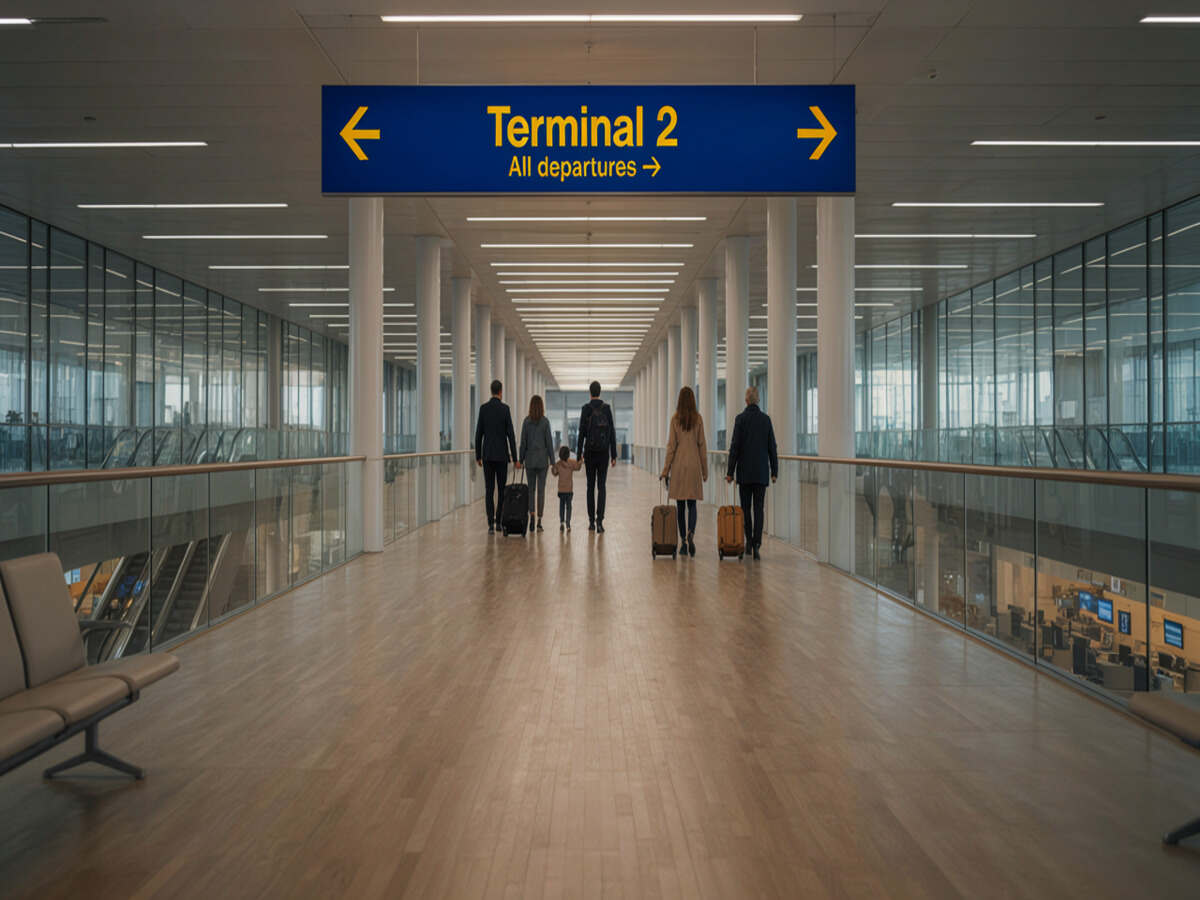
The surprise audits in Denmark result in lengthy queues alongside the UK, marking yet another seismic change in the air transportation industry across the globe. Surprise inspections, equipment recalibration, and compliance requirements are being witnessed in most international transport centers. What was initially a simple process of inspection in civil aviation has evolved to become operational bottlenecks in the industry.
Denmark has officially joined a growing list of nations—including the United Kingdom, Germany, Thailand, and the United States—that are prioritizing absolute security compliance over terminal speed. While these heightened measures are crucial for protecting national airspace and critical infrastructure, the immediate operational fallout has exposed the fragile balance between high-tech airport efficiency and rigid safety protocols.
Advertisement
Advertisement
The Spark: Unannounced Audits and the Copenhagen Bottleneck
The sudden escalation at Copenhagen Airport (CPH) underscores how rapidly regulatory intervention can disrupt global transport. Following a surprise inspection by the Danish Civil Aviation and Railway Authority (Trafikstyrelsen), inspectors identified specific procedural discrepancies in hand-luggage screening protocols.
To restore total alignment with national and European safety standards, authorities issued an immediate directive requiring security personnel to perform high-frequency secondary physical checks on carry-on bags.
Advertisement
Advertisement
The Bottle-Neck Effect: How Screening Delays Trigger Terminal Congestion
| Stage | Operational Process | Bottleneck Effect | Leads To |
|---|---|---|---|
| 1 | Automated X-Ray Screening | Passenger belongings undergo automated security checks. | Increased pull-aside inspections |
| 2 | High-Frequency Pull-Aside Directive | More bags are diverted for additional screening. | Slower baggage processing |
| 3 | Conveyor Belt Backlog | Baggage accumulates as inspection capacity becomes constrained. | Congestion around screening areas |
| 4 | Metro Platform Queues | Passenger movement slows as congestion spreads towards metro access points. | Growing queues and overcrowding |
| 5 | Terminal Spillover | Queues extend beyond designated waiting areas. | Wider terminal congestion and passenger disruption |
Because Copenhagen’s security architecture relies on high-speed automated conveyor belts, pulling a significantly higher percentage of bags for manual inspection created a instant domino effect. Automated lanes backed up, screening lines slowed to a crawl, and queues spilled past terminal entrances, stretching as far back as the airport’s metro station platform.
Country-by-Country Breakdown: The Global Security Surge
Denmark’s move is not an isolated event. Around the globe, civil aviation authorities are implementing sudden, mandatory screening updates that mirror this shift toward zero-tolerance compliance.
Advertisement
Advertisement
Denmark (Copenhagen Airport – CPH)
- The Mandate: Immediate enforcement of secondary physical baggage checks following a Trafikstyrelsen audit failure.
- The Mechanism: Security screeners must manually inspect, swab, and verify a substantially higher proportion of carry-on items, regardless of automated X-ray clears.
- Operational Impact: Suspension of Fast-Track lanes, emergency off-duty staff recalls, and queues extending onto public transit platforms.
United Kingdom (London Heathrow, Gatwick, Manchester)
- The Mandate: The sudden reversal and enforcement of the 100ml liquid restriction on next-generation 3D CT scanners.
- The Mechanism: After deploying Next-Generation Security Checkpoint (NGSC) scanners designed to eliminate liquid removal rules, regulatory testing revealed technical detection inconsistencies with large fluid containers. The Department for Transport reinstated strict liquid limits overnight.
- Operational Impact: Widespread passenger confusion, extreme secondary screening rates for forgotten liquids, and terminal-wide congestion during peak morning departure banks.
Germany (Frankfurt FRA, Munich MUC)
- The Mandate: Federal Aviation Office (LBA) spot-audits triggering protocol resets across major hub airports.
- The Mechanism: When covert security audits highlight screening variances or software calibration drift, German regulations require an immediate transition to maximum-intensity physical screenings until systems are re-certified.
- Operational Impact: Flight delay cascades across Star Alliance networks and missed short-haul connections across Europe.
Thailand (Bangkok Suvarnabhumi – BKK, Phuket – HKT)
- The Mandate: Compliance realignments under International Civil Aviation Organization (ICAO) Annex 17 security guidelines.
- The Mechanism: Thai aviation authorities mandated elevated physical inspection rates for both checked and carry-on luggage across international gateways, reducing reliance on automated threat-detection algorithms.
- Operational Impact: Extended check-in buffer requirements and severe terminal congestion during high-season tourist rushes.
United States (Atlanta ATL, New York JFK, Los Angeles LAX)
- The Mandate: Transportation Security Administration (TSA) threat-driven operational recalibrations and undercover audits.
- The Mechanism: Random, unannounced red-team audits regularly force specific checkpoint lanes into mandatory manual bag-dumps, physical pat-downs, and explosive trace detection (ETD) swabbing.
- Operational Impact: Checkpoint wait times doubling without warning, causing significant missed domestic and international connections.
Global Security Tightening Matrix
| Country | Primary Trigger | Key Operational Cause | Direct Passenger Impact |
| Denmark | Civil Aviation Audit (Trafikstyrelsen) | High-frequency secondary manual bag inspections | Metro-platform queue spillovers; missed flights |
| United Kingdom | Regulatory CT-Scanner Re-evaluation | Abrupt reinstatement of 100ml liquid cap | Secondary screening spikes; terminal delays |
| Germany | Federal Audit Compliance (LBA) | Strict protocol resets upon audit variances | Network-wide connection misses; gate delays |
| Thailand | ICAO Annex 17 Realignment | Elevated manual physical baggage verification | Extended pre-flight wait times at major hubs |
| United States | TSA Red-Team Covert Testing | Targeted checkpoint bag-dumps and ETD swabbing | Unpredictable checkpoint surge queues |
The Human Cost: Major Challenges Facing Modern Travelers
While regulators view these audits as non-negotiable safety imperatives, the practical realities on the ground present severe operational challenges for travelers, airlines, and airport operators alike.
Traveller Challenges: Four Critical Disruption Risks
| No. | Key Challenge | Impact on Travellers | Potential Consequences |
|---|---|---|---|
| 01 | Financial Pressure | Unexpected rebooking fees, additional accommodation expenses and uncovered overnight stays. | Higher travel costs and financial uncertainty. |
| 02 | Missed Connections | Tight European transfer windows leave passengers vulnerable to cascading flight disruptions. | Missed onward flights, itinerary breakdowns and prolonged delays. |
| 03 | Airport Overcrowding | Congested terminals, overstretched facilities and limited passenger-handling capacity. | Extended queues, passenger discomfort and potential safety concerns. |
| 04 | Communication Gaps | Sudden, unannounced audits and limited real-time updates create information shortages. | Passenger confusion, delayed decisions and difficulty arranging alternatives. |
✦ Extreme Time Delays & Queue Spillover
Standard 45-minute security processing windows have collapsed. Passengers are routinely standing in line for two to three hours before even reaching the metal detectors. When queue lines spill outside climate-controlled terminals onto railway platforms or curbside drop-off zones, travelers are exposed to weather elements and severe overcrowding.
✦ Cascading Missed Connections
Modern air travel relies on tight hub-and-spoke scheduling. A 90-minute security delay at an origin airport like Copenhagen or Frankfurt guarantees missed feeder connections at downline hubs. Airlines operating on tight turnarounds are frequently forced to push back aircraft doors without hundreds of ticketed passengers, leaving bags stranded in transit systems.
✦ Financial and Rebooking Fallout
Because security delays stem from government regulatory mandates rather than airline mechanical faults or weather events, standard consumer protection compensation rules (such as EU261) often do not cover overnight hotel stays or missed ground transport. Travelers face out-of-pocket costs to rebook non-refundable tickets and accommodations.
✦ Reduced Accessibility and Health Risks
Multi-hour static queues present immense physical barriers for elderly travelers, families with young children, and passengers with mobility limitations or chronic health conditions. Fast-Track lanes and special assistance corridors are frequently closed or absorbed into general queues during crisis management operations, leaving vulnerable passengers without adequate support.
✦ Communication Gaps
Because regulatory security audits are conducted without advance notice to prevent operational manipulation, airport operators and airlines receive zero lead time. Consequently, passenger advisory alerts are dispatched reactively, leaving thousands of travelers unaware of the turmoil until they physically arrive at the airport.
Advertisement
Advertisement
Navigating the Crisis: Strategic Survival Rules for Travelers
To survive the current era of unannounced aviation audits and sudden security recalibrations, travelers must abandon legacy habits and adopt proactive airport strategies.
The 4-Step Airport Survival Protocol
| Step | Survival Strategy | Essential Action | Traveller Benefit |
|---|---|---|---|
| 01 | Arrive 3–4 Hours Early | Allow extra time for check-in, security screening and potential airport congestion. | Reduces the risk of missing your flight. |
| 02 | Eliminate Restricted Liquids | Remove prohibited liquids and ensure permitted containers comply with airport security rules. | Helps prevent security delays and confiscations. |
| 03 | Pack Modular | Organise luggage into separate, easily accessible compartments for electronics, documents and essentials. | Makes security checks faster and more convenient. |
| 04 | Track Live Desk Alerts | Monitor official airline notifications, airport screens and live gate or check-in updates. | Helps travellers respond quickly to operational changes. |
- Adopt the 3-to-4 Hour Buffer: Ignore standard two-hour departure recommendations. Arrive at least three hours early for regional flights and four hours early for long-haul international departures during ongoing audit windows.
- Pre-Emptive Luggage Simplification: Eliminate all liquids, gels, and complex electronics from carry-on luggage whenever possible. Check these items into hold luggage to reduce the probability of your bag being flagged for secondary physical screening.
- Modular Packing Discipline: If traveling with electronics or camera gear, pack them in clear, easily accessible pouches. Presenting items cleanly on security trays minimizes manual intervention time by screeners.
- Monitor Live Transit Feeds: Check real-time social media channels, local airport authority updates, and public transport alerts before leaving for the airport to identify queue backups extending into metro or rail stations.
- Secure Comprehensive Travel Insurance: Ensure your travel insurance policy explicitly includes provisions for missed departures resulting from extraordinary airport security delays or government-mandated terminal closures.
Looking Ahead: The Long-Term Vision
The immediate friction caused by Denmark, the UK, and international partners tightening their security protocols represents a painful but necessary transition phase in global aviation safety.
Denmark, together with the UK, raises its airport security level following surprise audits that result in huge line-ups in airport terminals and missed flights all over the world.
With the calibration of the automatic baggage belts, the adaptation of the screening software, the hiring of more certified security officers, and the integration of modern 3D CT scanners, the efficiency of the processes will gradually come to normal. But until then, one should always be ready to adapt to this world of uncompromising security measures.
Advertisement
