
United Kingdom Joins Forces With Vietnam And More As Luxury Rail Network Expands Global Travel Access

Published
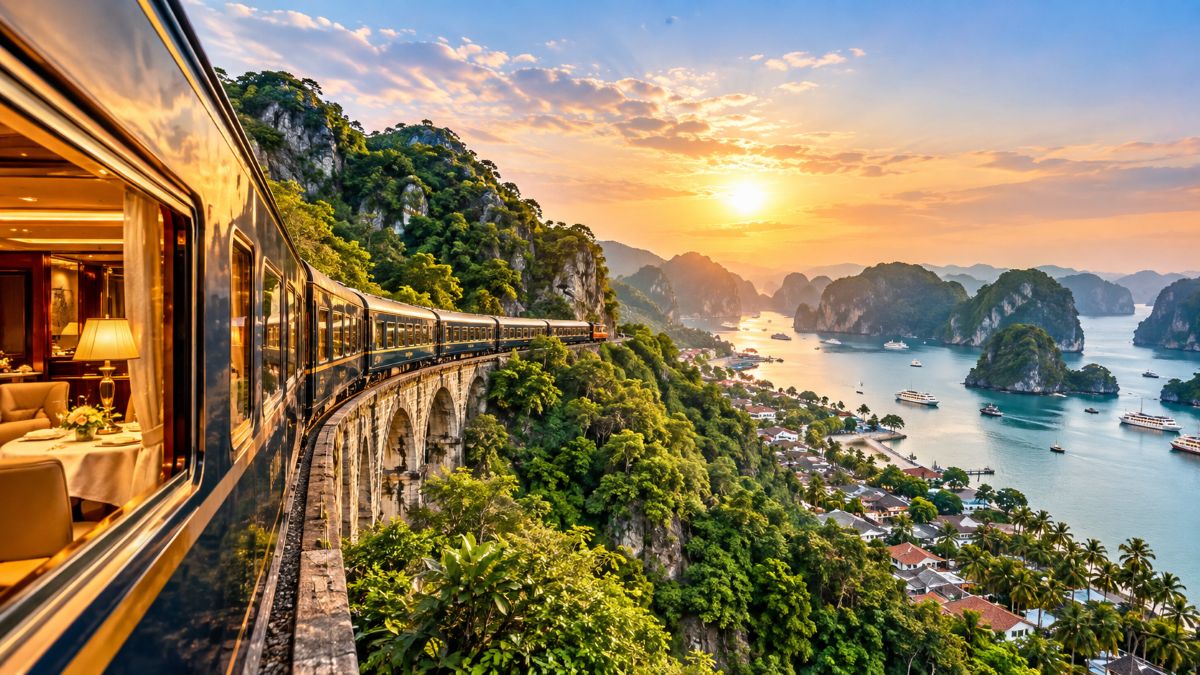
Image generated with Ai
Luxury rail travel is entering a more connected phase as a new trade-focused platform brings five specialist operators and 13 individual trains into one professional network. The initiative, launched on 14 July 2026, is designed to simplify how travel advisers research, compare and arrange high-end rail journeys for clients seeking distinctive experiences across multiple continents. By consolidating product information and enquiry support, the platform seeks to address a longstanding challenge in luxury rail sales, where different operators maintain separate cabin categories, itineraries, booking conditions and commercial arrangements.
The development has significance beyond the travel trade because luxury trains increasingly form part of the wider premium tourism economy. Rail journeys can combine accommodation, dining, sightseeing and slow travel within a single itinerary, offering an alternative to conventional fly-and-stay holidays. The current network connects experiences across Europe, Africa, Asia, Central Asia and South America, with journeys ranging from short excursions to multi-week expeditions. For travellers planning honeymoons, anniversaries, milestone celebrations, family holidays or private group trips, the expanded trade access could make specialist rail products easier to discover and incorporate into broader international itineraries.
Advertisement
Advertisement
Five Operators Create A Broader Luxury Rail Portfolio
The network currently brings together five operators with markedly different geographical footprints and travel styles. The collection includes established luxury rail brands as well as specialist and private-charter products, giving advisers access to a broader range of experiences through a single trade-oriented system.
| Operator | Trains In The Network | Principal Regions |
|---|---|---|
| Belmond | 7 | United Kingdom, Europe, Southeast Asia, Peru |
| Golden Eagle Luxury Trains | 3 | Europe, China, Central Asia, Caucasus |
| Rovos Rail | 1 | Southern, East and Central Africa |
| The Chairman’s Train | 1 | United Kingdom |
| SJourney by Golden Eagle | 1 | Vietnam |
The portfolio includes well-known journeys such as the Venice Simplon-Orient-Express, Royal Scotsman, Eastern & Oriental Express and Andean Explorer. Other products extend towards Central Asia, Africa and Vietnam, creating a geographically diverse selection for advisers handling clients with different interests, budgets and travel objectives.
Advertisement
Advertisement
The range also demonstrates how luxury rail has developed beyond the traditional image of a grand European train journey. Contemporary itineraries can involve wildlife, cultural exploration, historic cities, scenic landscapes and extended overland adventures, making rail an important component of experiential tourism.
Advertisement
Advertisement
From European Classics To Vietnam And Africa
The geographical diversity of the network is one of its most significant features. European luxury rail remains an important part of the offering, with journeys connecting the United Kingdom and continental destinations through heritage-inspired experiences. These products appeal to travellers interested in historic rail travel, elegant interiors, fine dining and landscapes viewed at a slower pace.
Southeast Asia introduces another dimension. The Eastern & Oriental Express connects luxury rail with the cultural and natural attractions of the region, while SJourney by Golden Eagle places Vietnam at the centre of a developing luxury rail proposition. The Vietnamese product combines rail travel with the country’s cultural heritage and landscapes, creating opportunities for travellers who want their transport experience to become part of the holiday itself.
Africa provides a different proposition through Rovos Rail. Its journeys are closely associated with expansive landscapes and multi-country exploration, demonstrating how luxury rail can complement safari and destination-based travel. Meanwhile, Golden Eagle’s portfolio extends towards Central Asia and the Caucasus, providing access to historically significant routes and destinations that are increasingly relevant to experiential and cultural tourism.
Advertisement
Advertisement
Why The Platform Matters To Travel Advisers
Luxury rail products can be difficult to sell without specialist knowledge. Each operator may have different cabin configurations, inclusions, seasonal schedules, cancellation policies, boarding arrangements and commission structures. For an adviser unfamiliar with rail travel, researching an appropriate product can therefore take considerable time.
The new platform is intended to reduce that complexity by creating one point of access to multiple operators. Product information, route details and guidance on matching journeys with client requirements are brought together, while concierge-style support is intended to assist before and after bookings.
Advertisement
Advertisement
This structure is particularly relevant to travel agencies that already sell luxury holidays but do not maintain a dedicated rail specialist. It can also support experienced rail advisers looking to broaden their portfolio without establishing separate working relationships for every product.
The commercial model is another important component. The platform states that bookings are commission-protected and that agencies do not pay subscription or platform fees. Access is available to verified agencies and recognised travel businesses operating through established commercial and financial accreditation arrangements.
Luxury Rail Meets High-Value Experiential Travel
Luxury rail is closely connected with the wider growth of experiential travel. Unlike a conventional transport journey, an overnight luxury train can combine accommodation, hospitality, dining and sightseeing within the same experience.
This creates a strong fit with several premium travel occasions. Couples may use luxury trains for anniversaries and honeymoons, while families can consider them for milestone celebrations or multigenerational journeys. Private groups, alumni organisations and corporate incentive programmes can also use rail travel as a distinctive setting for shared experiences.
Private charter options broaden the potential market further. The Chairman’s Train, for example, is positioned around full-train private use rather than individual scheduled seats. This makes the product relevant to groups seeking exclusivity, corporate hospitality or event-based travel.
Advertisement
Advertisement
Luxury Rail Market Growth Signals Stronger Premium Travel Demand
- Luxury train travel has evolved from a functional form of transport into an experiential journey centred on comfort, exclusivity and cultural immersion.
- This transformation reflects broader changes in luxury tourism, where travellers increasingly value mindfulness, sustainability and narrative-driven experiences.
- Luxury trains provide a form of slow tourism, combining scenic landscapes, cultural heritage and high-end amenities.
- The journey itself has become an important part of the travel experience, rather than simply serving as transportation between destinations.
- Iconic luxury trains such as the Venice Simplon-Orient-Express in Europe and the Maharajas’ Express in India demonstrate the continuing appeal of premium rail travel.
- The revival of historic luxury trains represents a reimagining of traditional luxury for contemporary travellers.
- New and revitalised luxury rail concepts, including Orient Express La Dolce Vita, Japan’s Train Suite Seven Stars in Kyushu, and Australia’s The Ghan, demonstrate the international resurgence of luxury rail.
- Luxury train experiences commonly combine nostalgic design, fine dining and personalised service.
- These features position luxury trains as immersive, heritage-based alternatives within the wider mobile luxury tourism sector.
- Luxury rail closely aligns with the principles of slow tourism, particularly through cultural engagement, environmental awareness and unhurried travel.
- Luxury train journeys can encourage travellers to disconnect from the fast pace of modern life and reconnect with authenticity, nostalgia and place.
- From an environmental perspective, luxury rail is presented in the research as a lower-carbon alternative to air and cruise travel, supporting wider decarbonisation objectives.
- Luxury train itineraries can travel through areas outside major mass-tourism hubs, potentially helping to disperse visitor flows.
- By reaching less-visited communities and landscapes, luxury rail can encourage greater engagement with local places and cultural environments.
- Overall, the research presents the revival of luxury trains as part of a broader movement towards culturally embedded, immersive and experience-focused tourism.
Source: Patel, H., Harkison, T. and Manfreda, A. (2026), Journal of Hospitality and Tourism Insights, Vol. 9, No. 11, pp. 120–136.
The growing variety of occasions also indicates that luxury rail is no longer confined to a narrow enthusiast market. Instead, it can operate as a premium travel format that supports celebration, discovery, social interaction and destination immersion.
Journey Lengths Range From Day Trips To Grand Expeditions
The network covers a wide spectrum of journey durations, another factor that could influence how advisers incorporate rail into holiday planning.
| Journey Type | Example Format | Travel Opportunity |
|---|---|---|
| Short rail experience | Single-day excursion | Adds a luxury experience to a wider holiday |
| Multi-day journey | Regional rail itinerary | Combines destinations with onboard hospitality |
| Extended expedition | Multi-week itinerary | Creates a substantial rail-led holiday |
| Private charter | Full-train booking | Supports groups, events and corporate travel |
Short journeys can work as additions to city breaks or longer holidays, while extended itineraries can become the central component of an international trip. Golden Eagle’s Grand Silk Road itinerary, for example, illustrates the scale possible within luxury rail, with journeys extending over several weeks.
Advertisement
Advertisement
This flexibility gives advisers greater scope to construct tailor-made holidays rather than treating luxury trains as standalone products.

Image generated with Ai
Luxury Rail Could Strengthen Slow Travel Demand
The expansion also reflects wider interest in slower forms of tourism. Rail allows travellers to move between destinations while remaining immersed in the landscape rather than treating transportation simply as time spent between airports.
For destinations, this can create opportunities to connect multiple attractions within a single itinerary. A train journey can link cultural sites, countryside, historic cities and remote landscapes while reducing the need for repeated hotel changes.
Luxury rail therefore sits at the intersection of premium hospitality and slow travel. Its appeal comes not only from accommodation standards but also from the journey itself becoming a meaningful part of the holiday.
New Routes Could Broaden The Market Further
The current network is not necessarily the final structure. Additional operators and routes are expected to be added as commercial agreements are completed. The source material also identifies potential future developments involving new trains and market entrants in countries including China, France, Uzbekistan and Saudi Arabia.If such expansion proceeds, travel advisers could gain access to an increasingly diverse collection of rail experiences. That would further increase the importance of clear product information and specialist guidance, particularly as new routes introduce unfamiliar destinations, operational structures and itinerary formats.
Advertisement
Advertisement
For travellers, a larger luxury rail ecosystem could mean more possibilities for designing journeys around specific interests rather than selecting from a small group of established European products.
Luxury Train Travel Statistics Highlight A Growing Global Market
| Key Statistic | Current Figure | Context |
|---|---|---|
| Global Luxury Train Travel Market, 2025 | US$3.8 Billion | The size of the global luxury rail sector highlights the expanding commercial opportunity for operators and travel advisers. |
| Projected Market Size, 2034 | US$7.2 Billion | The market is projected to nearly double by 2034, reflecting continued interest in premium and experience-led rail travel. |
| Projected Market CAGR, 2026–2034 | 7.4% | The forecast growth rate indicates sustained expansion across the luxury train travel sector. |
| Europe’s Revenue Share, 2025 | 38.6% | Europe remained the largest regional market, underlining the importance of European luxury rail products within the global sector. |
| Asia Pacific Revenue Share, 2025 | 27.4% | Asia Pacific represented the second-largest regional market, supporting the importance of luxury rail across Asian destinations. |
| Asia Pacific Projected CAGR | 9.1% | The region is projected to record the fastest growth through 2034, adding significance to luxury rail products in markets across Asia. |
| Long-Distance Journey Share, 2025 | 42.3% | Long-distance journeys accounted for the largest share among the journey-type segments, demonstrating continued demand for extended rail experiences. |
| Themed Journey Share, 2025 | 24.9% | The segment reflects demand for specialised experiences built around gastronomy, wildlife, culture and other interests. |
| Custom Tour Share, 2025 | 12.1% | Bespoke journeys represent a distinct part of the market, particularly relevant to private and high-value travel. |
| Onboard Accommodation Share, 2025 | 35.2% | Onboard accommodation was the largest service segment, highlighting the importance of premium cabins and suites to luxury rail products. |
| Online Booking Share, 2025 | 38.4% | Online channels represented the largest booking route, showing the growing role of digital distribution in luxury rail sales. |
| Travel Agency Booking Share, 2025 | 32.7% | Travel agencies retained a substantial share of bookings, directly reinforcing the relevance of specialist trade platforms for advisers. |
| Individual Traveller Share, 2025 | 46.3% | Individual travellers represented the largest end-user segment, including couples, solo travellers and affluent leisure passengers. |
| Corporate Traveller Share, 2025 | 17.4% | Corporate demand accounted for a notable portion of the market, including incentive travel, executive retreats and private events. |
| Baby Boomer Share, 2025 | 44.8% | Baby Boomers represented the largest demographic segment in the cited market analysis. |
| Millennial Share, 2025 | 19.7% | Millennials accounted for nearly one-fifth of market revenue, demonstrating participation from younger luxury travellers. |
| Sustainability Influence | 68% | The cited 2025 survey found that sustainability credentials influenced the booking decisions of 68% of luxury travel consumers. |
| Rail CO₂ Advantage | 80–90% Lower | The cited research estimates that rail produces 80–90% less CO₂ per passenger-kilometre than comparable long-haul flights. |
Source-dataintelo
A Changing Role For Travel Advisers
The development underlines the continuing role of professional travel advisers in complex luxury travel. Digital booking tools can provide information, but high-value journeys often involve multiple components, special requests, availability considerations and detailed client preferences.
A trade-focused luxury rail platform can therefore function as a research and support layer rather than simply another booking channel. Advisers remain responsible for understanding the traveller’s priorities and selecting an itinerary that fits the occasion, while consolidated product information can make that process more efficient.
The approach also provides operators with access to a wider professional audience without requiring every agency to become a dedicated rail specialist.
Advertisement
Advertisement
Luxury Rail Expansion And Competitive Pressure On Long-Distance Buses
- Rising demand for premium travel experiences is reshaping long-distance mobility, with comfort, reliability, exclusivity and personalised service becoming increasingly important to travellers.
- Modern Coast Express responded to changing passenger expectations by transforming conventional bus travel into a more premium experience through reclining seats, air conditioning, greater legroom and improved suspension.
- Luxury-style onboard amenities became a competitive tool, with Wi-Fi, entertainment screens, USB charging and complimentary snacks helping Modern Coast appeal to passengers seeking greater comfort.
- The premium bus model demonstrated that travellers were willing to pay for enhanced experiences, particularly middle-class and business passengers seeking an alternative to both basic coaches and expensive air travel.
- Luxury rail introduces a different premium proposition, making the journey itself part of the travel experience through high-end accommodation, dining, personalised service, scenic routes and cultural immersion.
- This creates potential competitive pressure on conventional long-distance coaches, particularly among travellers who increasingly prioritise experience and comfort alongside transportation.
- Bus operators face structural disadvantages in some markets, including poor road conditions, long journeys, night travel, breakdown risks, maintenance challenges and scheduling uncertainties.
- Luxury trains can potentially differentiate themselves from buses through a more controlled travel environment, where onboard services and the journey experience are central to the product.
- Modern Coast’s investment in more than 200 luxury coaches illustrates the scale of competition for premium-conscious passengers within East Africa’s long-distance transport market.
- The expansion of luxury rail could intensify competition for affluent and experience-driven travellers, especially on routes where rail can combine transportation with sightseeing, hospitality and cultural experiences.
- Technology had already become essential to bus competitiveness, with online booking, mobile payments, GPS tracking, telematics and real-time departure information improving convenience and operational control.
- Luxury rail similarly competes through experience-led differentiation, shifting the focus from simply reaching a destination towards making the journey itself a premium tourism product.
- Modern Coast’s premium positioning shows that comfort alone was already insufficient as a long-term differentiator, as operators must continuously improve reliability, service quality and the overall passenger experience.
- The comparison highlights a broader transformation in long-distance travel, where traditional transport providers increasingly compete not only on fares and schedules but also on comfort, convenience, service and experiential value.
- Luxury rail should therefore be viewed as an emerging source of competitive pressure rather than a proven direct cause of bus-sector decline, because the supplied Modern Coast case does not establish a causal relationship between rail expansion and reduced bus demand.
Luxury Trains Become More Accessible To Global Travel Planning
The creation of a multi-operator luxury rail network marks another step in the professionalisation of premium rail tourism. By connecting 13 trains across Europe, Africa, Asia, Central Asia and South America, the platform brings together products that traditionally required separate research and commercial relationships.
For the travel industry, its significance lies in simplifying access to a specialised category. For travellers, the broader portfolio creates more opportunities to incorporate luxury rail into celebrations, cultural journeys, family holidays, corporate programmes and extended international adventures.
As new operators and destinations enter the market, luxury rail is positioned to become an increasingly varied part of global experiential travel. The combination of distinctive landscapes, onboard hospitality and destination-focused itineraries gives the sector a proposition that extends beyond transportation and towards the journey itself.
Conclusion
The expansion of Luxury Train Hub marks a significant step towards a more connected and accessible luxury rail market, bringing five specialist operators and 13 individual trains into a single trade-focused platform spanning Europe, Africa, Asia, Central Asia and South America. By simplifying access to itineraries, route information, cabin options, availability, inclusions and booking support, the platform can help travel advisers present luxury rail as a more practical option for clients seeking distinctive long-distance experiences. The breadth of journeys, from single-day excursions to multi-week expeditions, also demonstrates the growing diversity of premium rail tourism and its potential to serve different occasions, including honeymoons, anniversaries, milestone celebrations, multigenerational holidays and private group travel.
The development also reflects a wider transformation in luxury tourism, where travellers increasingly value the journey itself alongside the destination. Luxury trains combine scenic discovery, cultural immersion, hospitality, dining and comfort within a single travel experience, creating a distinctive alternative to conventional transport-led itineraries. At the same time, the Modern Coast Express case illustrates how long-distance bus operators have historically responded to changing expectations through premium coaches, technology, onboard amenities and improved convenience. However, the available evidence does not establish that luxury rail expansion directly caused a decline in bus travel. Instead, the emerging landscape points to greater competition for travellers who prioritise comfort, reliability and memorable experiences. As luxury rail networks continue to broaden their global reach, the sector could play an increasingly important role in shaping the future of premium, experience-led and potentially more sustainable long-distance tourism.
Advertisement
Advertisement
FAQs
1. What is Luxury Train Hub?
Luxury Train Hub is a trade-focused platform designed to help travel advisers access and sell luxury rail journeys from multiple operators.
2. When did the platform launch?
The platform launched on 14 July 2026.
3. How many luxury rail operators are currently included?
The current network includes five luxury rail operators.
4. How many trains are represented?
The network currently represents 13 individual trains.
5. Which regions are covered by the network?
The portfolio covers Europe, Africa, Asia, Central Asia and South America.
Advertisement
Advertisement
6. Which luxury rail operator has the largest number of trains in the network?
Belmond currently has seven trains represented in the network.
7. Does the portfolio include luxury rail in Vietnam?
Yes. SJourney by Golden Eagle is included and provides a luxury rail experience focused on Vietnam.
8. Can travel advisers use the platform for private groups?
Yes. The platform is designed to support private group travel, corporate programmes and certain full-train charter opportunities.
9. Are bookings through the platform commissionable?
The platform states that bookings are commission-protected for participating travel agencies.
10. Could more luxury trains be added in the future?
Yes. Further operators and routes are expected to be added as commercial agreements are completed.
Advertisement
