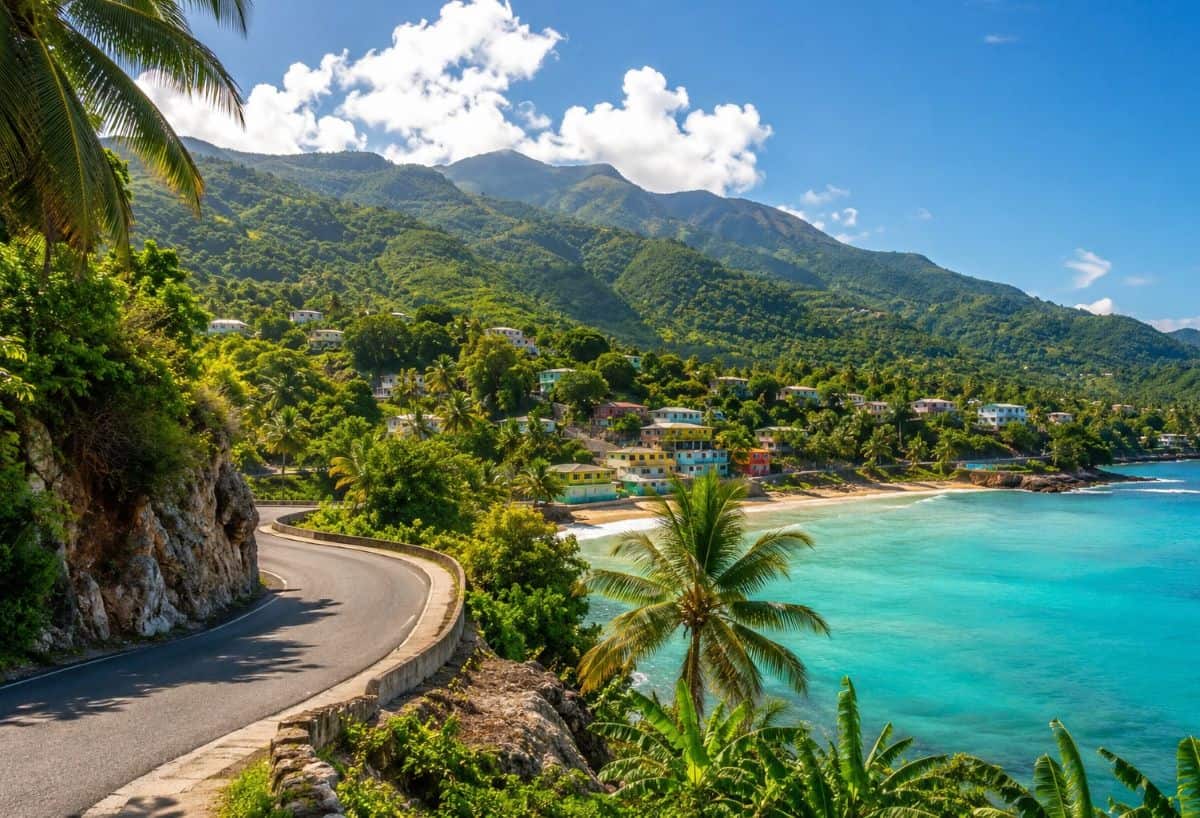
Image generated with Ai
There is a special kind of beauty in Hispaniola. It attracts the adventurous person. It has beautiful sun-bathed beaches and rich culture in Port au Prince and Cap Haïtien. Many have told stories of traveling along the coast for an unbelievable price. Sadly, what was a dream of raw nature access in the Caribbean, has turned into a nightmare for some. Behind these bargain costs, there is a country lacking infrastructure and is unsafe for travel. It is hard to be a traveler, but it is also the truth that crossing these lines will never be done for the thrill of exploring, but for the crime that it would be. The Caribbean that we used to enjoy for a dollar is gone. Traveling is not easy now. To experience even the tiniest bit of what was once here, you either have to travel with money or organize a lot of your travel to see how much this will really cost.
Uncovering Haiti Budget Travel Secrets: How To See The World With Less Money In Port-au-Prince And Beyond
Advertisement
Is independent exploration truly dead in the Caribbean, or are there hidden Haiti budget travel secrets waiting to be discovered? Across the global travel community, backpacking enthusiasts constantly search for low-cost methods to experience historic destinations. However, an analytical review of official security metrics reveals a dramatic contradiction between idealised budget hacks and operational reality. While travellers imagine navigating vibrant markets in Port-au-Prince, official government advisories explicitly prohibit low-cost movement due to extreme gang violence, violent crime, civil unrest, and severe infrastructure collapse. Consequently, independent budget travel in Haiti cannot exist safely under current conditions.
Navigating Haiti requires massive financial investment rather than frugal ingenuity. Traditional budget techniques—such as taking public transit, staying in unvetted hostels, eating street food, or walking independently—expose individuals to extreme danger, including kidnapping, robbery, and waterborne disease outbreaks like cholera. Therefore, understanding how to navigate international travel safely demands an honest evaluation of these regulatory warnings. This comprehensive analysis contrasts traditional budget strategies with strict government mandates from the U.S. Department of State, the Government of Canada, and the U.S. Federal Aviation Administration (FAA).
Advertisement
Advertisement
What Do Official Security Directives State Regarding Travel In Port-au-Prince And Cap-Haïtien?
Global security agencies unanimously issue severe warnings against all independent tourism across the entire territory of Haiti. The U.S. Department of State maintains a strict Level 4: Do Not Travel advisory, citing pervasive gang violence, violent crime, active kidnapping networks, civil unrest, and inadequate healthcare systems. Operating under these severely hazardous conditions makes traditional budget holidays completely unfeasible for independent backpackers seeking affordable Caribbean experiences.
Similarly, the Government of Canada explicitly urges citizens to Avoid All Travel due to unpredictable civil instability and active states of emergency across major metropolitan hubs like Port-au-Prince. Furthermore, the U.S. Federal Aviation Administration maintains severe commercial flight restrictions into Toussaint Louverture International Airport. Because low-cost budget air carriers do not operate under these high-risk conditions, cheap flight routes remain non-existent.
Why Are Traditional Budget Strategies Unviable Across Port-au-Prince, Delmas, And Cité Soleil?
Riding local tap-taps or public buses across Port-au-Prince or Cap-Haïtien presents severe physical danger to incoming travellers. Government travel reports confirm these vehicles frequently pass through gang-controlled checkpoints, exposing passengers to armed robbery, carjacking, and active crossfire. Official diplomatic protocols strictly forbid government personnel from using any form of public transit within the nation.
Budget guesthouses rarely possess private perimeter security, continuous electricity, or reliable clean water systems necessary for safe habitation. Government warnings emphasize that standard accommodations offer zero operational emergency support during sudden civil unrest or security breaches. Purchasing unpasteurised street food or unsealed drinks in local markets carries intense health hazards, including severe gastrointestinal illness. Health authorities mandate consuming bottled water exclusively from certified, sealed manufacturers due to endemic cholera risks across urban communities. Exploring urban districts like Delmas or Cité Soleil on foot makes visitors immediate targets for armed gangs operating in the capital. Official security guidelines explicitly instruct individuals to refrain from displaying wealth or walking unescorted through urban zones.
What High-Capital Logistics Are Mandatory For Secure Travel In Port-au-Prince?
If travel is required for humanitarian or diplomatic missions, it demands substantial capital rather than a low-budget approach. Travellers must secure pre-arranged private transport using vetted local drivers or specialized armored vehicles coordinated through verified diplomatic or non-governmental organization logistics networks. Because local emergency medical facilities in Port-au-Prince are severely compromised, purchasing comprehensive international medical evacuation insurance remains an absolute requirement for all personnel entering the region.
Furthermore, mandatory entry protocols require paying a tourist fee upon arrival alongside completing the official digital entry documentation prior to landing. Navigating the capital without high-grade logistical clearance endangers both visitors and local support staff.
How Does The Decline Of Independent Tourism Impact Local Economies In Jacmel And Cap-Haïtien?
The loss of low-cost independent travellers drastically impacts local communities in historical destinations such as Jacmel and Cap-Haïtien. When severe safety advisories curtail casual tourism, local artisans, independent tour guides, and small family-run eateries face immediate financial strain. Consequently, informal economic ecosystems lose essential foreign currency inflows, exacerbating poverty and destabilizing community support structures.
Without baseline tourism revenue, local infrastructure deteriorates further, creating a cycle that prevents safe, affordable travel from returning. Thus, budget travel limitations affect not only the visitor’s safety, but also the broader socio-economic stability of local host communities.
Border Closures And Cross-Border Transit Logistics Across Hispaniola
The land and maritime border between Haiti and the Dominican Republic remains tightly monitored and heavily restricted, eliminating traditional low-cost land crossings between Santo Domingo and Port-au-Prince. Historically, budget backpackers utilised inexpensive cross-border buses along Route Nationale 2 to reach major destinations like Cap-Haïtien or Jacmel. Strict diplomatic restrictions, ongoing border wall construction in northern Dajabón, and heavy military deployments have completely blocked overland transit routes for casual travelers. Travelers attempting independent land transit face immediate refusal or detention by Dominican border control authorities.
Reaching Haiti from neighboring Caribbean territories now requires pre-arranged air travel into Cap-Haïtien or Port-au-Prince, driving overall logistical costs upward. Commercial aviation constraints and high security premiums mean low-cost regional airlines do not operate standard cheap schedules into the country. Frugal overland itineraries across the island of Hispaniola are functionally impossible. Independent travellers must secure expensive flight arrangements, completely defeating any low-cost travel strategy.
Supply Chain Instability And Exorbitant Daily Infrastructure Costs
Persistent supply chain failures across the Ouest Department and Artibonite Department make independent budget travel impossible. Municipal grid electricity is virtually non-existent in urban centres like Port-au-Prince, forcing accommodations to rely entirely on private diesel generators. High fuel costs drive basic hotel rates up significantly, meaning budget hostels cannot offer cheap overnight stays.
Access to clean drinking water and fresh food is similarly constrained across major metropolitan zones. Severe market shortages mean bottled water and safe, uncontaminated food command premium prices on the private market. Basic necessities require substantial daily cash expenditure, transforming routine living into a costly operational burden.
Healthcare System Collapse And Specialized Insurance Requirements
The public healthcare system in Haiti is severely compromised, leaving medical facilities short on basic supplies, power, and qualified personnel. Emergency medical treatment in cities such as Jacmel or Cap-Haïtien is practically unavailable for serious injuries, and private clinics require immediate, significant cash guarantees before providing care. Common health hazards like cholera and malaria present serious risks to unassisted visitors.
Standard low-cost travel insurance policies routinely exclude coverage for areas under Level 4 travel advisories. Visitors entering Port-au-Prince must purchase high-tier international medical evacuation policies that cover specialized air-lifts to international facilities. These mandatory insurance premiums add thousands of dollars to an itinerary, removing any possibility of a low-cost trip.
Neighborhood Checkpoints And Autonomous Defense Group Risks
Navigating urban centers like Delmas, Cité Soleil, and Martissant presents severe safety risks due to non-state armed groups and local vigilante watch units. Unannounced checkpoints and makeshift barricades operate along key arterial roads, including Route Nationale 1. Independent travellers walking or using local public transport face extreme scrutiny, harassment, or physical violence.
Community watch groups in high-risk zones frequently misidentify independent outsiders as hostile entities, escalating encounters rapidly. Frugal travel tactics like walking between urban neighborhoods or taking unvetted local taxis are strictly unsafe. Secure movement across these sectors requires pre-arranged, vetted private transport with local escorts.
Consular Restrictions And Limited Diplomatic Support Infrastructure
Foreign diplomatic missions in Haiti, including the UK Foreign, Commonwealth & Development Office (FCDO) and Global Affairs Canada, operate under severe operational constraints. Official advisories explicitly state that consular staff cannot provide standard emergency assistance or boots-on-the-ground rescue services within Port-au-Prince or outlying regions. Consular support for British nationals is primarily handled remotely from diplomatic missions in the Dominican Republic.
If an independent traveller encounters severe peril, legal trouble, or medical emergencies, local embassy intervention is unavailable. Travelers cannot rely on traditional state support mechanisms during a crisis. Fending for oneself in these high-risk environments demands extensive private security logistics rather than low-cost self-guided solutions.
The Sad Reality of the Free Souls of Hispaniola
Free spirited travelers look forward to visiting nations full of spirit and art, only to find out Haiti is nearly non existent to them. Beyond the sanitized resort walls and country clubs of the Caribbean, Haiti has soulful gifts left in Jacmel and Cap-Haïtien that you can’t buy. Unfortunately the spirit of a nation does not prevent a traveler from the unchecked violence, and Port-au-Prince has built an invisible wall around Haiti with deteriorating health and border closures. Many will believe that romanticism will save them, but that comes with armed escorts, and expensive insurance. It is the tragic reality that you cannot legally walk the legendary streets until things change and peace is restored, and in the meantime, it is not a matter of logistics to travel against severe warnings of the world’s authorities, but a matter of surviving an changing and dangerous world.
Advertisement
Tags: caribbean, haiti, travel budgets, Travel News
Advertisement
Advertisement












Wednesday, September 2, 2026

Tuesday, September 1, 2026
Wednesday, September 2, 2026
Wednesday, September 2, 2026

Tuesday, September 1, 2026
Tuesday, September 1, 2026

Wednesday, September 2, 2026

Wednesday, September 2, 2026