
Thai Airways CEO Chai Eamsiri Urges Thailand to Develop New Man‑Made Attractions to Complement Its Natural Beauty and Strengthen Tourism

Published
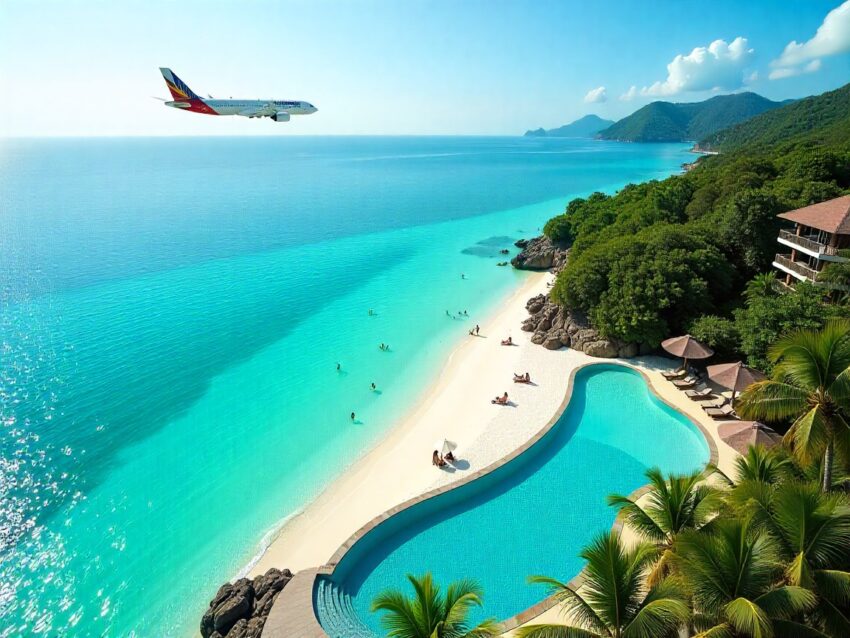 Image generated with Ai
“Thai Airways CEO Chai Eamsiri urges Thailand to develop new man‑made attractions to complement its natural beauty and strengthen tourism” — in a candid interview, Chai reinforced that the kingdom must broaden its appeal beyond iconic beaches and historical temples by investing in fresh infrastructure and creative destinations. He highlighted the sharp decline in Chinese visitors as a wake‑up call, even as arrivals from India, Europe and Australia continue climbing, and suggested that without new selling points and upgraded facilities, Thailand’s long‑term competitiveness will suffer.
Reimagining Thailand: Beyond Beaches and Temples
When Thai Airways International (THAI) Chief Executive Chai Eamsiri calls for rethinking tourism in Thailand, the message is clear: the kingdom can no longer rely solely on lush landscapes, golden sands and ancient temples. In an exclusive interview, Chai emphasised that “we can’t depend on existing tourist spots only,” and urged the industry to build fresh, “man-made attractions” and infrastructure that will draw visitors for decades. (nationthailand)
That push aligns with a broader strategy by the Tourism Authority of Thailand (TAT) titled “The New Thailand,” officially launched in mid-2025, which shifts the focus from volume to value, from natural beauty alone to immersive, experience-led travel. (TAT Newsroom)
For the traveller, the message is exciting: Thailand is evolving. Expect fresh nodes of interest, new themed resorts, innovative entertainment hubs, and seamless air-connectivity via THAI. Hotels and airlines are simultaneously aligning to meet this new chapter.
Advertisement
Advertisement
How Travel Gets Upgraded: Airlines, Hotels & New Attractions
At the centre of this transformation sits Thai Airways. With its hub at Bangkok’s Suvarnabhumi Airport (BKK) and a network that spans Europe, Asia and Australia, the carrier is both a facilitator and a symbol of Thailand’s tourism ambitions. (Wikipedia)
Chai underlined the linkage between aviation and hospitality: “If we have both quality and quantity of tourists … that will be the best outcome for Thailand.” (nationthailand) On the ground, Thailand’s hotels and resorts are evolving too — shifting from mass-market packages toward high-value experiences that align with the “value over volume” strategy.
For example, international hotel brands are now leveraging Thailand not only as a beach escape but also as a base for art-immersive stays, cultural-design resorts and themed entertainment complexes. Compounded by the government’s initiative to redirect tourism beyond the classic hotspots, travellers will find themselves exploring fresh corners of the country.
In short: a visitor arriving on Thai Airways may still land in Bangkok, Phuket or Chiang Mai, but the next stop could be a high-tech museum in Isan, a wellness-entertainment resort in the north or a new integrated resort near Chon Buri. Thailand’s tourism story is broadening.
Flight Details & Connectivity: Getting There with Thai Airways
Travelling to Thailand is easier than ever thanks to Thai Airways’ extensive route network. From India, for instance, recent schedules list direct services from New Delhi to Bangkok in approximately 4 hours. (KAYAK)
From Europe, flights such as TG 924 (Bangkok → Frankfurt) take about 10 h 50 m, and TG 934 (Bangkok → Milan) around 12 h 35 m. (KAYAK)
Flying from India? Business class fares often start around USD 1,200 round-trip, economy from USD 550, depending on season. (Indicative only; confirm real-time fares.)
Airport hubs:
Advertisement
Advertisement
- Bangkok Suvarnabhumi (BKK) – primary international gateway
- Phuket (HKT) – major tourist entry for resorts
- Chiang Mai (CNX) – northern access hub
Hotels near hubs are already gearing up for higher-value travellers: expect upgraded rooms, personalised services and elevated standards of hospitality.
Travel tip: book flights at least 60 days in advance for holiday periods (December–March) when peak season fares often rise 20-30%.
What’s New For Tourists: Man-Made Attractions to Explore
With Chai’s call for “new selling points and infrastructure” in mind, one of the newest entries is the Khao Yai Art Forest in Nakhon Ratchasima province. Opened in February 2025, the 161-acre open‐air art museum blends contemporary installations into the forest landscape. (Wikipedia)
Another example: the TAT strategy launched in July 2025 explicitly promotes the shift to experience-led tourism, stating Thailand will move “through our ‘Stay Focus’ approach… emphasise quality, balance and long-term growth.” (TAT Newsroom)
Why this matters: beyond the beach, you can now stay in a resort designed around immersive art and design, connect with local creative communities, visit pop-up cultural events and enjoy high-end resort amenities. Hospitality groups are responding: expect themed villas, digital-detox wellness retreats, and luxury urban-residences near new entertainment nodes.
Travel tip: include at least one “new attraction” in your itinerary — it might be less crowded, more cutting-edge and increasingly stylish.
Traditional Destinations Reinvented & Less-Visited Gems
Even the classic beach resorts are evolving. Phuket is seeing renovation in resorts, wellness clinics and upscale marinas. Chiang Mai’s hospitality sector is emphasising design-led lodges and slow-travel experiences.
Meanwhile, Thailand is turning attention to lesser-visited provinces: domestic flight promos allow tourists to arrive in regional hubs at lower cost, stay in boutique hotels, participate in local culture and return via another hub. This diversification benefits airlines (new point-to-point services) and hotels (less competition, higher exclusivity).
Travel tip: Explore a three-leg trip — e.g., fly Bangkok → Chiang Rai (2 h), stay in a boutique eco-resort, then Chiang Rai → Phuket (via BKK) for the beach finale. Book regional flights in advance as they can sell out fast during peak holiday blocks.
Advertisement
Advertisement
Why This Shift Matters: For the Airline, Tourism & Hospitality Sector
For Thai Airways, the renewed focus on tourism revitalisation is meaningful: increased connectivity to more regions translates into higher occupancy on long-haul flights and full cabins on regional routes. With Thailand targeting up to 45-60 million arrivals by 2030–35, airlines stand to gain significantly. (Bangkok Post)
For the tourism sector, the change means a smarter growth model: slower but higher-spend travellers, diverse source markets, and attractions beyond the usual. Thailand faced a 7.14 % drop in tourist arrivals from Jan to Aug 2025 compared with the same period in 2024. (Trading Economics)
For hospitality, the benefit is premiumisation: hotels can command higher rates for value-led stays, resorts can stretch their season, and guest experiences can become more curated. As Thailand competes in a region where rivals are targeting double-digit growth, reinvention is essential. (Travel Weekly Asia)
For you as a traveller, this means more choices, better infrastructure and interesting new stays. Instead of only choosing the 5-star beach resort, you might combine a design-hotel in a regenerated city district, a premium art-resort in the countryside and a classic seaside retreat.
Sample Itinerary: Experience the “New Thailand”
Day 1–3: Bangkok Arrival
Fly THAI into BKK. Stay at a luxury hotel near Sukhumvit or the riverside. Visit a rooftop sky-restaurant, take a cooking class and rest up.
Day 4–6: Khao Yai & the Art Scene
Catch a short flight or drive (approx. 2.5 h) to Khao Yai. Stay at a boutique resort near the Khao Yai Art Forest. Enjoy installation art, vineyard tours and nature walks.
Day 7–9: Phuket or Krabi for Beach Finale
Fly from Khao Yai/Bangkok to HKT. Enjoy the beach, wellness spa, marina resort and late-evening culture-fusion dining. Depart from Phuket or fly back through BKK.
This itinerary gives you a taste of flights, design-led stays and new-attraction-led travel across Thailand.
Advertisement
Advertisement
Travel Tips for the Smart Visitor
- Best time to travel: The high season runs from November to March. Booking flights and hotels 2–3 months in advance gives better rates.
- Digital arrival card: Thailand is moving toward digital entry-card management; fill in your details before arrival to speed up immigration.
- Check for promo flights: THAI often runs regional specials; sign up for alerts.
- Explore beyond the hub: Consider staying in newer destinations (Isan, north-east Thailand) where hotel rates are lower and experiences fresh.
- Be value-savvy: New resorts may have introductory offers as they open; you may enjoy luxury at discounted rates.
- Pack for flexibility: Transit via Bangkok may require a short stay; ensure visa/entry readiness.
- High-spend vs high-volume: Since Thailand is moving toward higher-value tourism, expect more curated experiences, higher average room rates and more premium add-ons — factor this into your budget.
- Flights to know: THAI’s direct services to India (Mumbai, New Delhi), Europe (Frankfurt, Milan) and Australia (Sydney) make Thailand even more accessible. (KAYAK)
- Ask hotels about their “new-attraction” add-ons: Many are bundling art-tours, cultural-experiences or access to new infrastructure as part of their stay package.
“Thai Airways CEO Chai Eamsiri urges Thailand to develop new man‑made attractions to complement its natural beauty and strengthen tourism.” He emphasizes the need for innovative infrastructure and diversified offerings to ensure Thailand’s long-term competitiveness in a changing global tourism landscape.
Looking Ahead: What This Means for the Future
As Thailand aims for 45–60 million international visitors by 2030–35, the core differentiator will not just be natural beauty but how it pairs with modern infrastructure, entertainment, wellness and culture. Hotels and airlines that adapt will reap the rewards. For tourists, the transformation means more variety, elevated service and novel destinations.
In the coming years you might fly THAI into Bangkok, transit to a purpose-built resort that hosts live festivals, stay in an art-immersive compound in the countryside and depart via a boutique coastal city with fewer crowds. That is the future of Thai tourism: built, curated and ready for a new generation of explorers.
So pack your bags, book your flight, and prepare not just for another beach holiday — but for the Thailand that’s redefining itself in real time. Because when Thai Airways and Thailand’s hospitality industry say “change,” it’s your invitation to be part of the journey.
Advertisement
