
Madhya Pradesh Unveils Burhanpur as India’s Hidden Heritage Treasure with Mughal Engineering Marvels, Royal Forts, Sacred Shrines and the Untold Story Behind the Taj Mahal: What You Need to Know

Published
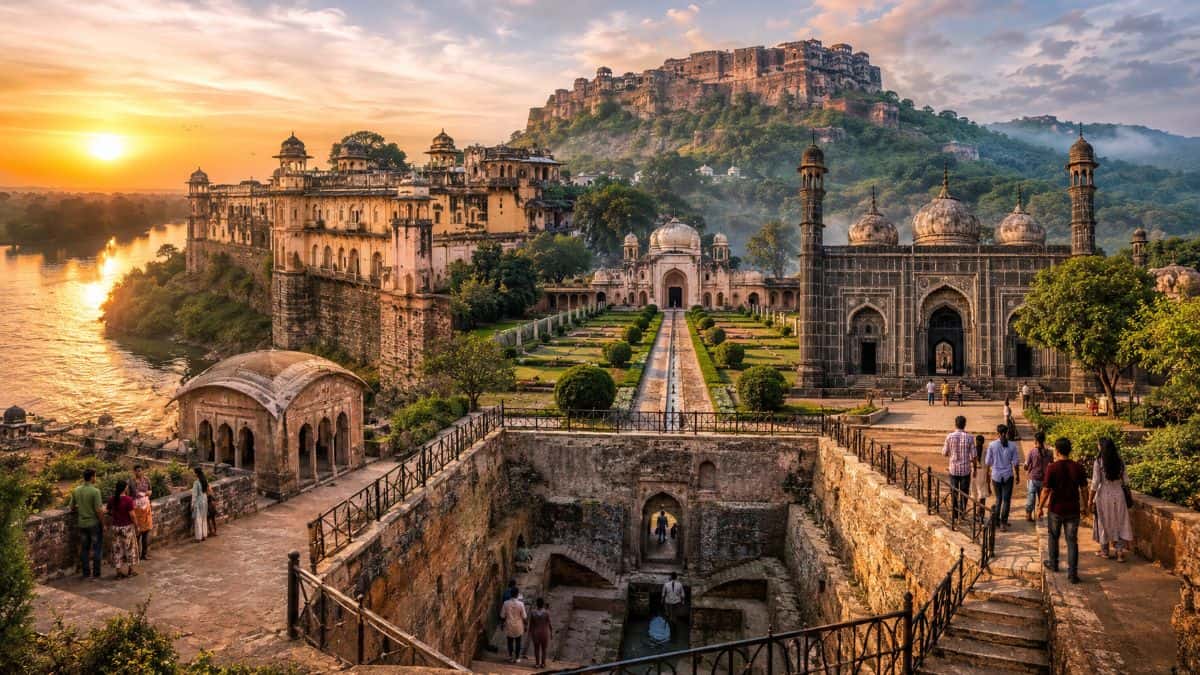
Hidden along the northern banks of the Tapti River in southwestern Madhya Pradesh, Burhanpur is one of India’s most remarkable historic cities. Although many travellers recognise its connection with Mumtaz Mahal, whose remains rested here before being moved to Agra for the construction of the Taj Mahal, the city’s story extends far beyond this famous episode. Burhanpur offers an extraordinary combination of medieval architecture, advanced engineering, royal history, religious harmony and living cultural traditions.
Recognised by the Madhya Pradesh Tourism Board as one of the state’s leading heritage destinations, Burhanpur preserves monuments that reflect the influence of the Faruqi Sultanate, the Mughal Empire, the Marathas and later colonial administration. From magnificent forts and royal gardens to centuries-old mosques and innovative hydraulic systems, the city presents visitors with a unique opportunity to explore several layers of Indian history within a relatively compact area.
Advertisement
Advertisement
For travellers seeking destinations beyond India’s well-known tourist circuit, Burhanpur offers an authentic journey into one of central India’s most significant yet often overlooked heritage landscapes.
A Strategic City That Shaped the History of Central India
Burhanpur occupied a vital geographical position between northern India and the Deccan Plateau for centuries. Founded in the late fifteenth century by the Faruqi Sultanate, the city soon became the kingdom’s capital before later serving as one of the Mughal Empire’s most important military and administrative centres during campaigns in southern India.
Advertisement
Advertisement
Its location along important trade routes transformed Burhanpur into a thriving commercial centre where merchants, soldiers, scholars and artisans from different regions exchanged goods, ideas and cultural traditions.
According to the Madhya Pradesh Tourism Board, the city flourished under Mughal patronage, particularly during the reigns of Emperor Akbar, Jahangir and Shah Jahan. Royal patronage resulted in the construction of palaces, gardens, mosques, reservoirs and sophisticated civic infrastructure that continue to define Burhanpur’s historic character today.
Advertisement
Advertisement
Khooni Bhandara Showcases Extraordinary Mughal Engineering
Among Burhanpur’s most remarkable attractions is not a palace or royal tomb but an underground water supply system that demonstrates the remarkable engineering knowledge of the seventeenth century.
Known as Khooni Bhandara, or Kundi Bhandara, the hydraulic network was commissioned in 1615 CE during the governorship of Abdul Rahim Khan-i-Khana, one of Emperor Jahangir’s most distinguished nobles. Inspired by the ancient Persian qanat system, engineers developed an underground network capable of transporting groundwater from the Satpura foothills into Burhanpur entirely through gravity.
According to the Directorate of Archaeology, Archives and Museums, Government of Madhya Pradesh, the original system consisted of 103 vertical shafts, locally known as kundis, connected through an underground tunnel extending nearly 3.9 kilometres. Without relying on pumps or mechanical equipment, water flowed naturally into reservoirs before being distributed through terracotta pipelines to royal residences, mosques, gardens and neighbourhoods across the city.
The name “Khooni,” meaning “bloody,” originates from the reddish colour produced by naturally occurring iron oxide in the surrounding soil rather than any historical conflict.
Although parts of the network collapsed during the twentieth century, several sections remain operational and continue supplying water to parts of Burhanpur today.
The engineering achievement has earned international recognition through its inclusion on UNESCO’s Tentative List of World Heritage Sites, highlighting its outstanding technological and historical significance.
Advertisement
Advertisement
Visitors can descend into selected sections through specially constructed access points, providing a rare opportunity to witness one of India’s most sophisticated pre-modern water management systems.
Shahi Qila Reflects the Grandeur of the Mughal Court
Standing proudly along the banks of the Tapti River, Shahi Qila remains one of Burhanpur’s most significant historical landmarks.
Constructed as the administrative headquarters of the Mughal governors, the palace complex became closely associated with Emperor Shah Jahan during his military campaigns in the Deccan. It was here, according to historical records, that Mumtaz Mahal died in 1631 while giving birth to their fourteenth child.
The fort displays an elegant combination of Persian, Central Asian and Indian architectural influences.
One of its finest surviving features is the beautifully decorated royal hammam, where intricate floral ornamentation and geometric designs continue to demonstrate the artistic sophistication of Mughal craftsmen.
The palace also preserves painted ceilings believed to have been commissioned during Shah Jahan’s reign, reflecting the refined aesthetic traditions that later influenced the architecture of the Taj Mahal.
Advertisement
Advertisement
Today, visitors can explore the fort while enjoying panoramic views overlooking the Tapti River and the surrounding historic city.
Ahukhana Preserves the First Resting Place of Mumtaz Mahal
Across the Tapti River lies Ahukhana, one of Burhanpur’s most historically significant sites.
Developed as a royal Mughal pleasure garden and hunting retreat, Ahukhana was designed according to the classic Persian charbagh concept, where water channels divided the gardens into symmetrical sections symbolising paradise.
The site occupies a unique place in Indian history because Mumtaz Mahal was temporarily buried here following her death in Burhanpur, before Shah Jahan ordered her remains to be transferred to Agra for the construction of the Taj Mahal.
Historical records also associate Ahukhana with Emperor Aurangzeb, who stayed at the complex while travelling between northern India and the Deccan.
Although much of the original garden has disappeared over time, surviving structures continue to provide valuable insight into Mughal landscape architecture and royal leisure traditions.
Advertisement
Advertisement
Shah Nawaz Khan’s Tomb Demonstrates Architectural Elegance
Another impressive monument within Burhanpur is the Tomb of Shah Nawaz Khan, located along the banks of the Utavali River.
Constructed by Abdul Rahim Khan-i-Khana in memory of his son Iraj, the monument showcases elegant stone craftsmanship using locally available dark basalt known as Sangekhara.
Its beautifully proportioned façade, detailed carvings and distinctive corner minarets have led many visitors to compare its appearance with the Taj Mahal, earning it the popular nickname “Black Taj.”
Despite the comparison, the monument possesses its own unique architectural identity and predates the Taj Mahal, representing an important phase in the evolution of Mughal funerary architecture.
Jama Masjid Reflects the Legacy of the Faruqi Sultanate
Burhanpur’s architectural landscape is not limited to Mughal monuments. One of the city’s oldest and most significant religious landmarks is the Jama Masjid, constructed during the rule of the Faruqi Sultanate in the late sixteenth century.
According to the Madhya Pradesh Tourism Board, the mosque was commissioned by Adil Shah Faruqi and continues to function as an active place of worship. Built using locally quarried black basalt, the structure differs markedly from the white marble and red sandstone architecture commonly associated with later Mughal monuments.
Advertisement
Advertisement
Its spacious courtyard, elegant arches and finely proportioned prayer hall demonstrate the distinctive architectural style that flourished in the Deccan before Mughal influence became dominant. The mosque remains an important centre of faith while also serving as a reminder of Burhanpur’s role as the capital of the Faruqi kingdom.
For visitors interested in medieval architecture, the Jama Masjid offers an opportunity to appreciate a style that is both historically significant and visually unique within central India.
Asirgarh Fort Stands Guard Over the Gateway to the Deccan
Approximately 25 kilometres north of Burhanpur, the imposing Asirgarh Fort rises dramatically above the Satpura Hills. Standing at an elevation of around 701 metres above sea level, the fort has long been known as the “Key to the Deccan” because it commands the strategic mountain pass linking northern India with the Deccan Plateau.
Protected by the Archaeological Survey of India (ASI), Asirgarh has witnessed centuries of political change. It passed through the control of the Ahir rulers, the Faruqi Sultanate, the Mughal Empire following Emperor Akbar’s conquest in 1601, the Marathas and eventually the British.
Spread across nearly 60 acres, the fort complex contains numerous historical structures representing different periods of occupation. Visitors can explore ancient gateways, defensive walls, reservoirs, a mosque, the Gupteshwar Mahadev Temple and the remains of military buildings that illustrate the fort’s long strategic importance.
The panoramic views across the Satpura ranges and the surrounding valleys make Asirgarh one of the most rewarding heritage excursions in Madhya Pradesh.
Advertisement
Advertisement
Dargah-e-Hakimi Highlights Burhanpur’s Living Religious Heritage
Burhanpur is also home to one of the most important pilgrimage sites for the Dawoodi Bohra community.
The elegant Dargah-e-Hakimi honours Syedi Abdulqadir Hakimuddin, one of the community’s most revered spiritual leaders. Constructed in gleaming white marble and surrounded by beautifully maintained gardens, the complex welcomes thousands of pilgrims from India and overseas throughout the year.
The shrine represents Burhanpur’s enduring religious diversity and demonstrates how the city’s historic monuments continue to serve vibrant spiritual communities rather than existing solely as archaeological sites.
Its peaceful surroundings, impressive architecture and carefully preserved gardens make it both a significant pilgrimage destination and an important cultural attraction.
A City Where Diverse Faiths and Traditions Meet
One of Burhanpur’s greatest strengths is the remarkable diversity of its cultural heritage.
Historical records indicate that Guru Nanak Dev Ji, the founder of Sikhism, visited Burhanpur during his travels across the Indian subcontinent. Later, Guru Gobind Singh Ji also visited the city, adding an important chapter to Burhanpur’s Sikh heritage.
Advertisement
Advertisement
Alongside Islamic monuments, Hindu temples, Sikh heritage sites and Dawoodi Bohra religious landmarks, Burhanpur presents a unique example of centuries of cultural coexistence.
This diversity is reflected not only in the city’s monuments but also in its traditions, festivals and living communities, making Burhanpur a destination where history continues to shape everyday life.
Burhanpur Emerges as One of Madhya Pradesh’s Hidden Heritage Gems
The Madhya Pradesh Tourism Board has increasingly promoted lesser-known heritage destinations to encourage visitors to explore beyond the state’s more familiar attractions such as Khajuraho, Sanchi and Gwalior.
Burhanpur fits perfectly within this strategy. Its concentration of monuments, engineering achievements, gardens, religious landmarks and archaeological sites provides visitors with a rich heritage experience while avoiding the heavy crowds found at many of India’s more famous destinations.
Its location along the Tapti River also adds scenic appeal, while improved road and rail connectivity makes the city increasingly accessible for domestic and international travellers exploring central India.
For architecture enthusiasts, historians, photographers, pilgrims and cultural travellers, Burhanpur offers an exceptional opportunity to discover one of India’s most fascinating historic cities.
Advertisement
Advertisement
A Journey Beyond the Story of the Taj Mahal
Although Burhanpur will always be associated with Mumtaz Mahal and the origins of the Taj Mahal’s story, reducing the city to that single historical event overlooks its extraordinary significance.
Its Persian-inspired hydraulic engineering, magnificent Mughal palaces, Faruqi architecture, strategic hill forts, sacred shrines and multicultural heritage collectively tell a far richer story.
Visitors exploring Burhanpur quickly discover that every monument reveals another chapter in the history of central India—from royal courts and military campaigns to spiritual traditions and remarkable engineering innovation.
Conclusion
Burhanpur stands as one of India’s most compelling yet underappreciated heritage destinations. Officially recognised by the Madhya Pradesh Tourism Board, protected by the Archaeological Survey of India, and represented on UNESCO’s Tentative List through the remarkable Khooni Bhandara, the city preserves an exceptional collection of monuments spanning several centuries.
Whether descending into one of the world’s most sophisticated historic underground water systems, walking through the halls of Shahi Qila where Mumtaz Mahal spent her final days, admiring the elegance of Faruqi architecture, exploring the mighty Asirgarh Fort or experiencing the living traditions of Burhanpur’s diverse communities, visitors encounter a destination that extends far beyond conventional historical tourism.
As Madhya Pradesh continues to strengthen its cultural tourism portfolio, Burhanpur deserves recognition not merely as a footnote in the story of the Taj Mahal, but as a remarkable heritage city where engineering, architecture, religion and history converge to create one of India’s richest travel experiences.
Advertisement
