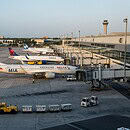

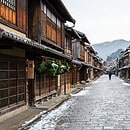
Image generated with Ai
Japan’s first foliage outlook for 2026 places important maple and ginkgo peaks between November August and December. Higher temperatures in August may slow the beginning of fall in some areas further north and in the east. Forecasts include a majority of the cities, more than 700 lookout spots, and almost 3000 mountains. Tokyo, Kyoto, Osaka, Sapporo and Nagano are some of the more important areas. The immediate impact concerns itinerary timing rather than border or transport policy. Travellers seeking Autumn Colours should compare maple and ginkgo dates, consider elevation and check the revised forecast expected in early October before completing local bookings.
The following table focuses on five established autumn destinations. Each city offers different landscapes, from urban avenues and historic gardens to mountain scenery. The two tree types can peak on different dates, so travellers should choose their timing carefully.
| Destination | Maple peak | Ginkgo peak | 2026 outlook |
|---|---|---|---|
| Sapporo | 7 November | 6 November | Maple peak ten days later than normal |
| Tokyo | 29 November | 26 November | Both dates remain near normal |
| Nagano | 21 November | 14 November | Maple peak nine days later than normal |
| Kyoto | 11 December | 27 November | Both dates remain near normal |
| Osaka | 4 December | 24 November | Both dates remain near normal |
These dates predict when most leaves on an observed tree could have changed colour. They do not guarantee that every park, garden or mountain will peak simultaneously. Temperature, rainfall, sunshine, wind, elevation and individual tree conditions can move the visible season. The table should guide planning, but travellers should not treat it as a fixed appointment with the Autumn Colours.
Tokyo offers one of the most convenient opportunities to see red maple and yellow ginkgo foliage during the same trip. The city’s predicted dates are separated by only three days. Ginkgo is expected to peak on 26 November, while maple should reach its best around 29 November. Both dates fall within the normal forecast range.
Advertisement
Advertisement
Key points for Tokyo visitors:
This narrow gap gives visitors a reasonable chance of seeing both golden and red foliage during one late-November stay. It does not guarantee identical conditions across the capital. Travellers should check individual gardens before visiting because local temperatures and tree varieties can affect each location. Tokyo’s Autumn Colours outlook supports late-November planning without requiring widespread changes to existing seasonal itineraries.
Kyoto has the latest maple date among the five selected destinations. Ginkgo is forecast to peak on 27 November, followed by maple on 11 December. That creates a fourteen-day difference between the two displays. The maple date is six days after its normal reference, but it remains within the normal forecast classification.
Key points for Kyoto visitors:
Advertisement
Advertisement
Visitors should choose their dates according to the trees they most want to see. A late-November journey may be better for golden ginkgo, while early or mid-December may favour red maple foliage. Conditions can vary between central streets, temple grounds, gardens and surrounding hills. Kyoto’s Autumn Colours season may therefore support more than one viewing period instead of one city-wide peak.
Osaka’s two predicted peaks are separated by ten days. Ginkgo is expected on 24 November, while maple should reach its best around 4 December. Both forecasts remain near normal, although the maple date is three days later than its historical reference.
Key points for Osaka visitors:
The timing places Osaka between Tokyo’s late-November window and Kyoto’s later maple season. This could help travellers build a multi-city route through central and western Japan. However, the forecast does not confirm railway crowding, higher room prices or restricted attraction access. Visitors should verify transport and accommodation conditions separately rather than assume that seasonal timing will cause operational disruption.
Sapporo has the most significant maple delay in the five-city comparison. Its maple foliage is forecast to peak on 7 November, ten days later than the normal date of 28 October. Ginkgo is expected one day earlier, on 6 November, and remains within the normal category.
Key points for Sapporo visitors:
The one-day gap may allow visitors to see both tree types during a short stay. Yet the delayed maple forecast creates a risk for travellers holding late-October bookings. Nearby elevated areas may still change earlier than city parks because higher locations are colder. Sapporo’s Autumn Colours prediction therefore deserves careful monitoring when the October update becomes available.
Nagano’s maple peak is forecast for 21 November, nine days later than normal. Ginkgo is expected on 14 November, four days after its reference date but still within the normal category. The seven-day gap gives visitors two different viewing periods.
Key points for Nagano visitors:
Nagano requires more local planning than a simple city break. Mountain temperatures can differ sharply from those in lower urban areas. A destination at higher elevation may have advanced foliage while city trees remain partly green. The city forecast is valuable, but it should be combined with information for the exact mountain, valley or park included in the itinerary.
The full outlook extends beyond the five destinations highlighted above. Aomori’s maple peak is forecast for 13 November and ginkgo for 6 November. Sendai follows with maple on 25 November and ginkgo on 29 November. Both cities remain within normal ranges.
Kanazawa has one of the widest separations between tree types. Ginkgo is forecast for 10 November, while maple is not expected until 30 November. Nagoya should see ginkgo around 17 November and maple on 2 December. Hiroshima’s predictions are 20 November for ginkgo and 28 November for maple.
Farther south, Fukuoka’s ginkgo display is expected on 27 November. That is seven days later than normal. Its maple peak is forecast for 7 December but remains within the normal category. Kagoshima also has a 27 November ginkgo date, while maple could peak on 10 December. The Kagoshima maple prediction is five days earlier than its historical reference.
These regional differences reinforce the value of route-based planning. Japan’s foliage usually progresses from colder northern areas towards warmer southern destinations. It also moves from mountains into lower city parks. A traveller who misses the display in one area may find stronger conditions elsewhere.
The principal reason for the later outlook is the expectation of warmer autumn temperatures. Leaves develop their red and yellow shades as the air becomes colder. When warm conditions continue, that biological change can take longer.
The prediction method uses the relationship between temperature and leaf development. It mainly monitors Iroha maple for red foliage and ginkgo for yellow foliage. Different maple varieties are used in Hokkaido because the Iroha variety does not grow well there.
Mountain estimates also account for temperature changes at different elevations. Higher ground generally becomes colder before lower areas. Consequently, mountains may display seasonal foliage before nearby gardens, parks and streets.
Weather remains a major limitation. Heavy rain can damage leaves, while strong wind may remove them soon after they change. Sunshine and local tree health can also influence colour quality. The first forecast therefore provides a planning range rather than a guaranteed result.
Japan recorded 3,442,100 visitor arrivals in July 2026. This represented a 0.1% increase over July 2025 and marked the highest July total recorded. Seventeen source markets also achieved July records.
However, the wider figures show a more varied position. Japan received 24,527,200 arrivals between January and July 2026. That total was 1.7% below the corresponding period of 2025. The figures indicate significant international travel volumes, but not continuous growth across every month or market.
Visitor arrivals should not be confused with leisure tourists. The official measurement includes some transit passengers, cruise arrivals, expatriates, family members and international students. It excludes permanent residents whose main home is in Japan and excludes crew members.
The figures provide useful context but cannot prove that foliage sites will become overcrowded. No official evidence currently shows that the forecast has changed hotel occupancy, visitor spending, transport capacity or room prices.
Travellers do not need to cancel journeys because of the forecast. Those travelling mainly to see Autumn Colours should keep some flexibility and check the expected October revision. They should also compare city dates with mountain conditions.
Practical actions include:
No border-policy change is connected to the foliage announcement. Visa requirements continue to depend on nationality, residence, passport type and travel purpose. Eligible applicants may use the electronic visa system for a single-entry tourism stay of up to 90 days, although shorter periods apply to some groups.
Only ordinary passport holders can apply through the online system. Electronic visa holders must display the live online issuance notice at the airport. Screenshots, downloaded files and printed copies are not accepted. Visa-exempt visitors must continue to meet the passport conditions attached to their nationality.
No. They are predictions based mainly on temperature and established leaf-development patterns. Rain, wind, sunshine, elevation and local conditions can change the timing.
Sapporo has the largest delay among the five highlighted cities. Its maple peak is forecast ten days later than normal.
The current forecast points to 26 November for ginkgo and 29 November for maple. Late November offers the strongest combined window.
Yes, according to the first forecast. Kyoto’s maple peak is predicted for 11 December, while ginkgo may peak on 27 November.
No transport changes have been announced because of the foliage outlook. Travellers must check schedules and ticket conditions independently.
No. The seasonal prediction creates no new visa, passport or border requirement.
The next foliage forecast is expected in early October. It may revise dates using newer temperature information and updated local conditions.
Japan’s first 2026 forecast points to mainly normal or later foliage peaks, with Sapporo and Nagano facing the clearest maple delays. Tokyo should peak in late November, while Kyoto and Osaka extend the viewing calendar into December. These predictions help travellers plan routes, yet weather and elevation may still change local conditions. Official statistics show a substantial inbound market, but no evidence confirms booking, pricing or transport disruption from the announcement. Existing visa and passport rules remain unchanged. Travellers seeking Autumn Colours should retain flexible arrangements, compare mountain and city conditions, and follow the official October update before finalising itineraries.
Advertisement
Advertisement
Advertisement













Monday, September 7, 2026

Monday, September 7, 2026
Monday, September 7, 2026

Sunday, September 6, 2026
Saturday, September 5, 2026
Monday, September 7, 2026
Monday, September 7, 2026