
Italy Transforms Via Francigena in Salento With a Powerful New Vision for Accessible Tourism

Published
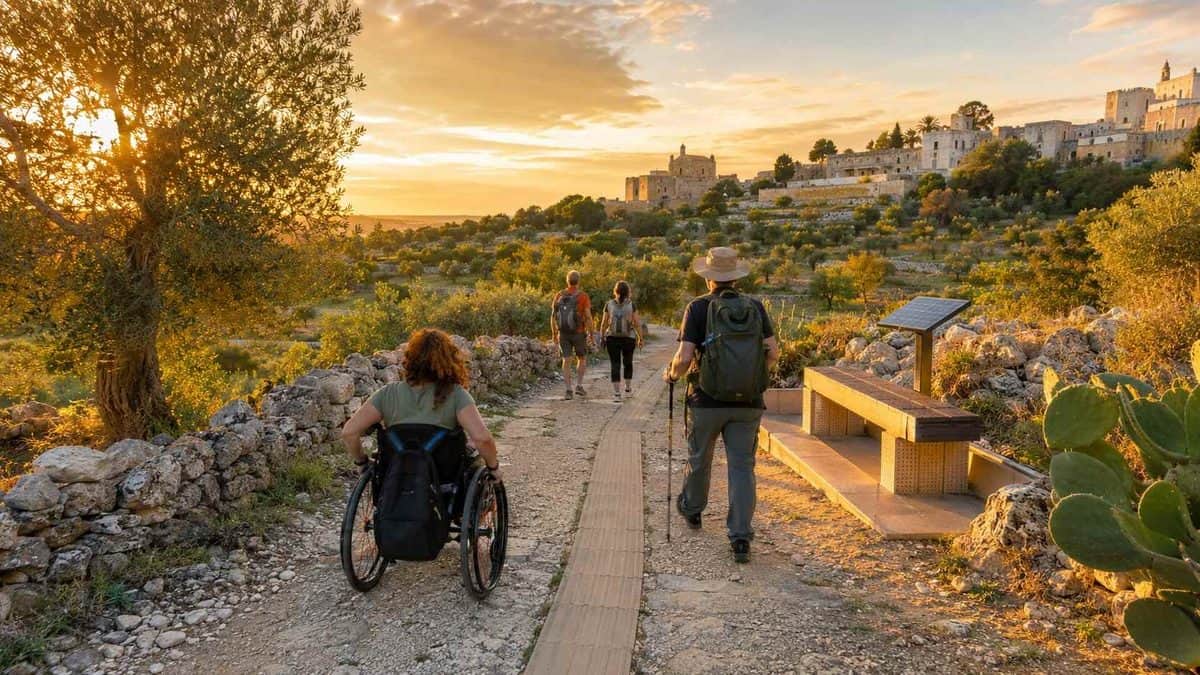
The Italian government is building the southern branch of the Via Francigena in Salento for travelers with disabilities and special needs. The Ministry of Tourism reported the project on August 28, 2026. The project is government funded. Construction is along five parts of the path that extend between Lecce and Santa Maria di Leuca.This project includes maintaining the route, digitization, accessibility mapping, provision of rest areas, and an improved visitor information system. This project is very important because Salento will be able to provide tourism opportunities to more people. This will also help the slow tourism initiatives and enhance business activities of the local people of Salento. Italy will also be successful in supporting the Via Francigena route in its quest for gaining UNESCO status.
Italy Places Accessibility at the Heart of the Via Francigena
Italy has taken a significant step towards making historic walking routes more inclusive. Its latest project focuses on the southern stretch of the Via Francigena, one of Europe’s most important cultural and religious routes.
Advertisement
Advertisement
The initiative is called “For a Via Francigena del Sud Accessible to All”. It is funded by the Italian Tourism Ministry and is approaching completion, according to the official government announcement.
The work covers five stages between Lecce and Santa Maria di Leuca. It directly involves Poggiardo, Cannole, Giuggianello, Giurdignano, Martano, Palmariggi and Tricase, while other communities along the route are also expected to benefit.
Advertisement
Advertisement
The Municipality of Poggiardo leads the project. It is working with the European Association of the Via Francigena Ways and Mollare Mai, an organisation involved in accessibility and inclusion.
This structure connects national funding with municipal knowledge and specialist support. It also gives local communities a direct role in shaping the visitor experience.
Advertisement
Advertisement
What the Latest Project Will Change
The project treats accessibility as more than the removal of physical barriers. It considers different needs that can affect how a person plans, understands and completes a journey.
These include:
Advertisement
Advertisement
- Motor disabilities
- Sensory disabilities
- Cognitive disabilities
- Age-related access requirements
- Temporary injuries or health conditions
- Food-related needs
- The need for reliable rest and safety facilities
Officials have identified several practical measures. These include mapping difficult points, georeferencing the route and recording nearby services, attractions and facilities.
Maintenance work forms another part of the programme. This matters because loose surfaces, steep sections, damaged paths and missing visitor information can make a route difficult even when it is technically open.
The project will also use augmented reality and virtual reality. These tools are intended to help more people experience heritage connected with the route, including places that may remain physically difficult to enter.
Planned rest facilities include first-aid kits and smart benches powered by solar panels. Tactile QR codes will provide another way for travellers to obtain information.
Advertisement
Advertisement
| Project measure | Confirmed purpose | Potential traveller benefit |
|---|---|---|
| Mapping of difficult points | Identify access barriers | Better preparation before travelling |
| Route georeferencing | Record the path, services and attractions | Clearer digital navigation |
| Maintenance work | Improve selected route conditions | Safer and more comfortable movement |
| Augmented and virtual reality | Expand access to cultural heritage | Alternative experiences where physical access is limited |
| First-aid points | Strengthen basic route safety | Faster access to emergency supplies |
| Solar-powered smart benches | Improve resting facilities | More comfortable stops during the journey |
| Tactile QR codes | Make information more inclusive | Better access for travellers with visual needs |
The ministry has not said that every section will become barrier-free. Travellers should therefore avoid assuming that the entire route will suit every wheelchair, mobility aid or individual access requirement.
The strength of the plan lies in providing clearer information alongside physical and digital improvements. Reliable information allows travellers to decide whether a particular stage matches their needs.
Why the Via Francigena Matters to Italy
The Via Francigena developed from historic routes used by pilgrims, merchants, clergy and other travellers moving between northern Europe and Rome. Its cultural importance extends across modern national borders.
The Italian route continues south from Rome towards Puglia. In this broader historical geography, ports in southern Italy connected travellers with onward journeys across the Mediterranean.
Salento gives the route a striking southern ending. The peninsula lies between the Adriatic and Ionian seas, with Santa Maria di Leuca positioned close to Italy’s south-eastern edge.
The route passes through landscapes shaped by olive cultivation, rural settlements, churches, historic centres and local food traditions. It gives travellers an alternative to high-speed, city-based tourism.
Advertisement
Advertisement
Walking routes can spread visitor activity across several communities. A traveller may eat in one town, sleep in another, buy supplies elsewhere and use transport services at different points.
That pattern can support small accommodation providers, cafés, restaurants, guides, shops and local transport operators. It can also encourage longer stays because visitors move through the territory in stages.
The Project Builds on Earlier Accessibility Work
The Salento initiative does not stand alone. It follows the Via Francigena accessibility handbook and continues work associated with “Via Francigena For All” and “HIKE4ALL”.
Italy has also developed a broader policy framework around inclusive tourism. Its Tourism Accessibility Fund was created through the 2021 Budget Law to support services for people with disabilities and diversify the national tourism offer.
The Italian Tourism Ministry’s accessibility fund received €6 million annually for 2022, 2023 and 2024. That produced a combined allocation of €18 million across the three years.
The fund supports services connected with recognised accessibility certifications. Eligible categories include hotels, non-hotel accommodation, thermal establishments, seaside facilities and selected sports facilities serving tourism demand.
Advertisement
Advertisement
The standards listed by the ministry include UNI ISO 21902:2022, which concerns accessible tourism for all. The programme also refers to standards covering accessibility in the built environment and services provided by tourism businesses.
This wider approach is important. An accessible trail alone cannot create a fully accessible holiday.
A traveller may also need step-free accommodation, suitable bathrooms, accessible transfers, trained staff, clear dietary information and dependable medical support. The complete tourism chain must work together.
From Physical Access to Visitor Confidence
Accessibility is partly a question of infrastructure. It is also a question of certainty.
Travellers need specific information before leaving home. General claims such as “accessible” can be unhelpful when they do not explain surface conditions, gradients, steps, doorway widths or toilet facilities.
The Salento project’s mapping and georeferencing work could address this information gap. It can help visitors compare stages and select experiences that match their requirements.
Advertisement
Advertisement
Operators also benefit from clearer information. Tour companies can create more suitable itineraries when they understand the exact conditions along each section.
Hotels can prepare for walkers arriving with mobility equipment or additional luggage. Transport providers can identify where accessible transfers are needed.
Puglia’s Tourism Growth Raises the Importance of Inclusion
The project arrives during a period of strong tourism growth in Puglia. That makes accessibility increasingly relevant to the region’s destination management.
Provisional Istat/SPOT data processed by the Pugliapromozione Tourism Observatory recorded more than 6.7 million arrivals and 22.7 million overnight stays in 2025. The figures covered 92% of the region’s accommodation capacity when published.
According to the Puglia regional government, arrivals increased by approximately 13% compared with 2024. Overnight stays rose by around 10%.
| Puglia tourism indicator | 2025 result | Annual change | Official context |
|---|---|---|---|
| Visitor arrivals | More than 6.7 million | About 13% higher | Provisional Istat/SPOT data |
| Overnight stays | More than 22.7 million | About 10% higher | Processed by Pugliapromozione |
| Accommodation coverage | 92% | Not applicable | Share represented when data were released |
The figures show rising demand, but they do not measure the economic effect of the Via Francigena project. They provide the wider regional context in which the accessibility work is being completed.
Advertisement
Advertisement
Puglia welcomed approximately 5.9 million arrivals and more than 20.7 million overnight stays in 2024. Arrivals increased by 10.6% that year, while nights rose by 9.7%.
Two consecutive years of growth strengthen the case for better visitor management. They also increase the value of products that move tourists beyond the busiest coastal sites.
Slow tourism in Puglia can support a more geographically distributed visitor economy. It can direct spending towards inland communities and smaller historic centres.
Accessible routes may further broaden that demand. Families, older travellers and people recovering from temporary injuries can also benefit from better resting points and more precise route information.
International Tourism Is Becoming More Important to Puglia
Puglia’s 2025 performance was supported by rising international demand. Regional data reported that foreign arrivals increased by 25.1%, while international overnight stays grew by 22.6%.
Domestic demand also expanded. Italian arrivals rose by 5%, and domestic overnight stays increased by 4%.
Advertisement
Advertisement
This mix matters for the Via Francigena. The route carries an international identity and connects Italian destinations with a wider European cultural network.
International visitors may need route information in several languages. They may also require clearer explanations of local transport, emergency contacts, accommodation standards and medical access.
Digital mapping and interactive content can help address these needs. However, the August announcement does not specify which languages will be available.
Tour operators should wait for final operational information before advertising a particular stage as fully accessible. Accurate descriptions will protect travellers and strengthen trust in the new offer.
Accessible Tourism Can Strengthen Salento’s Local Economy
The official announcement does not publish a projected revenue figure or employment target for the project. Any precise estimate of future jobs or visitor spending would therefore be unsupported.
The likely commercial channels are nevertheless clear. Walking and pilgrimage journeys create demand for services at repeated points along a route.
Advertisement
Advertisement
Local opportunities may include:
- Accessible guest rooms
- Luggage transfers between stages
- Adapted ground transport
- Guided cultural visits
- Equipment hire
- Food and refreshment stops
- Repair and support services
- Accessible countryside experiences
- Digital route products
- Travel planning assistance
Small businesses need dependable demand to invest in accessibility. Government-backed route improvements can help by creating a clearer product around which services can develop.
The September business programme may accelerate this process. National and international buyers are due to visit Poggiardo from 23 to 25 September 2026 as part of BTM Interazioni.
The programme includes a familiarisation trip and business-to-business meetings with local operators. A national conference on accessible tourism along walking routes is scheduled for 25 September at the Palazzo della Cultura.
These events can introduce the route to tour organisers. They can also help local businesses understand what buyers require before including Salento in an accessible itinerary.
What the Development Means for Hotels
Hotels and smaller accommodation providers may become important links in the route’s accessibility chain. Travellers completing several stages need consistent standards, not a single adapted property.
Advertisement
Advertisement
Properties should provide detailed information about entrances, lifts, bathrooms, room layouts and assistance arrangements. Photographs and measurements can be more useful than a broad accessibility label.
Accommodation providers may also need flexible meal options. The project explicitly recognises food-related requirements as part of its wider understanding of access.
Luggage transfer partnerships could create further value. Some travellers may be able to complete a stage independently but may not be able to carry bags over long distances.
What Tour Operators Need to Consider
Tour operators can use the route to develop specialist cultural and slow-travel products. They should first verify the final condition of every advertised stage.
An inclusive itinerary may require:
- A pre-trip access assessment
- Adapted vehicles where necessary
- Suitable accommodation at each stop
- Trained guides
- Emergency procedures
- Flexible walking distances
- Rest and hydration plans
- Clear food-allergy arrangements
- Equipment storage and charging options
Not every visitor will need the same support. Operators should therefore avoid treating disabled travellers as a single market with identical requirements.
Advertisement
Advertisement
Personalised information is central to a credible product. It also reduces the risk of a traveller encountering an unexpected barrier after beginning a stage.
Effects on Airlines, Airports and Ground Transport
The accessibility project does not announce new flights, airport facilities or aviation policies. No direct airline capacity increase can be attributed to it.
Air access remains relevant because international visitors normally reach Salento through airports serving Puglia. The final section of the journey then depends on rail, bus, private transfer or hired vehicle connections.
For accessible tourism, the transfer between an airport and the walking route is as important as the route itself. Poor coordination can undo the benefits of well-designed trail facilities.
Tour planners should check assistance arrangements directly with airlines, airports and ground transport providers. They should also confirm how mobility aids will be handled at every stage.
The same principle applies to railway stations and local buses. A route cannot be described as seamlessly accessible unless the wider transport chain has been verified.
Advertisement
Advertisement
Digital Technology Will Support the Physical Route
Augmented reality and virtual reality are prominent elements of the project. They can add value where historic buildings, archaeological remains or natural features remain difficult to reach.
Virtual content can provide views, interpretation and historical context without requiring every traveller to enter a physically restricted space. It can also help visitors preview conditions before making a decision.
Tactile QR codes introduce another layer of access. Their usefulness will depend on placement, mobile compatibility, connectivity and the accessibility of the linked content.
Digital information should work with screen readers and offer clear navigation. Audio description, captions and simple-language explanations could serve different visitor needs, although the ministry has not yet confirmed the final content specifications.
Solar-powered smart benches may provide information or charging functions alongside seating. The official announcement confirms the planned benches but does not list their complete technical features.
Safety Becomes Part of the Tourism Product
Walking routes present different risks from conventional city breaks. Heat, uneven terrain, long distances and limited shade can affect travellers.
Advertisement
Advertisement
First-aid kits at rest points can improve basic preparedness. They are not a replacement for professional medical support or personal travel planning.
Visitors should check weather conditions and carry suitable water, medication and protection from the sun. Individual access needs may require additional planning during warmer months.
Clear georeferencing may help emergency teams and travellers identify their location. It can also show where services and safe stopping points are available.
The announcement does not yet provide a public completion map or a detailed accessibility rating for each stage. Travellers should use final official route information when it becomes available.
The UNESCO Process Adds International Importance
The project forms part of Italy’s strategy supporting the candidacy of the Italian Via Francigena for UNESCO World Heritage status. The ministry says the evaluation is in progress, with an outcome expected in October 2026.
A candidacy does not guarantee inscription. The route should not be described as a UNESCO World Heritage Site unless UNESCO formally approves it.
Advertisement
Advertisement
The accessibility work still carries value regardless of the decision. It connects heritage protection with practical visitor access and local development.
The Via Francigena’s international profile could rise if the candidacy succeeds. That would place additional importance on managing visitors responsibly and sharing tourism benefits across communities.
Accessibility can support that goal by ensuring heritage is not presented only to travellers who can manage demanding terrain without assistance.
No New Visa Reform Forms Part of the Announcement
The project does not introduce a visa, border or entry-policy change. International visitors remain subject to the existing rules applying to Italy and the Schengen Area.
A walking-route booking does not provide permission to enter Italy. Travellers should check official requirements based on nationality, residence status and planned length of stay.
Tour operators should keep route access information separate from immigration advice. This prevents a tourism product from creating confusion about entry rights.
Advertisement
Advertisement
The same caution applies to insurance. The government announcement does not create a special insurance scheme for Via Francigena visitors.
What Travellers Should Know Before Visiting
The project is in its completion phase. Visitors should not assume that every planned feature is already operating across all five stages.
Before travelling, visitors should:
- Check the final accessibility map
- Confirm route surfaces and gradients
- Ask about toilets and rest points
- Verify accessible accommodation in advance
- Confirm local transport arrangements
- Review emergency contact information
- Check food and medication needs
- Ask whether digital tools are operational
- Confirm equipment charging arrangements
- Monitor local weather conditions
Travellers should describe their requirements clearly when booking. Terms such as limited mobility can cover many different needs.
A person using a powered wheelchair may require different information from someone who walks with a stick. A traveller with a visual impairment may need different support from someone with a cognitive disability.
Future Outlook Is Tied to Confirmed Official Steps
The immediate official timetable centres on September and October 2026. The buyer trip, B2B programme and accessibility conference will take place in Poggiardo from 23 to 25 September.
Advertisement
Advertisement
The result of the Via Francigena’s UNESCO evaluation is expected in October, according to the Tourism Ministry. That remains an anticipated decision rather than a confirmed designation.
The ministry presents the Salento development as a potential national model for accessible walking routes. Any expansion elsewhere will require separate official approval, funding and implementation.
The project may also help businesses understand that accessibility is part of destination quality. It concerns transport, accommodation, information, food, safety and cultural participation.
Its long-term performance should be measured through verified indicators. These could include visitor use, satisfaction, barrier removal, business participation and the availability of genuinely accessible services.
Frequently Asked Questions
Is the entire Via Francigena in Salento now wheelchair accessible?
No official source has stated that every section is completely barrier-free or suitable for every wheelchair. The project covers five stages and includes mapping, maintenance, rest facilities and digital tools. Travellers should check the final stage-level accessibility information before booking.
Which places are included in the accessibility project?
The route runs between Lecce and Santa Maria di Leuca. Specific work involves Poggiardo, Cannole, Giuggianello, Giurdignano, Martano, Palmariggi and Tricase, with expected benefits for other communities crossed by the route.
Advertisement
Advertisement
When will travellers receive more information about the accessible route?
The project was described as being in its completion phase on 28 August 2026. A familiarisation trip, B2B meetings and a national accessible-tourism conference are scheduled in Poggiardo from 23 to 25 September. Travellers should monitor official channels for final maps and operating details.
Conclusion
The Via Francigena project in Italy includes accessible tourism and maps the barriers, routes and digital interpretation with safer rest spots. This project allows for the easier planning and more comfortable travel along historic trails. This project also uses accessible tourism to connect the tourism industry in Salento with Puglia’s growing economy. Italy’s economic support for slow travel is also addressed. Access will be limited until reliable accommodation and transport services beyond the trail are provided. Travelers should ensure that the work has been completed before booking. Travel operators should also be honest in their descriptions. This approach will ensure that travelers are not put at risk, strengthen faith in a community, and turn access into a community’s destination.
Advertisement
