
Singapore Revives Sengkang Railway Service Early as Punggol Travel Benefits from 41 Two-Car LRVs by 2030

Published
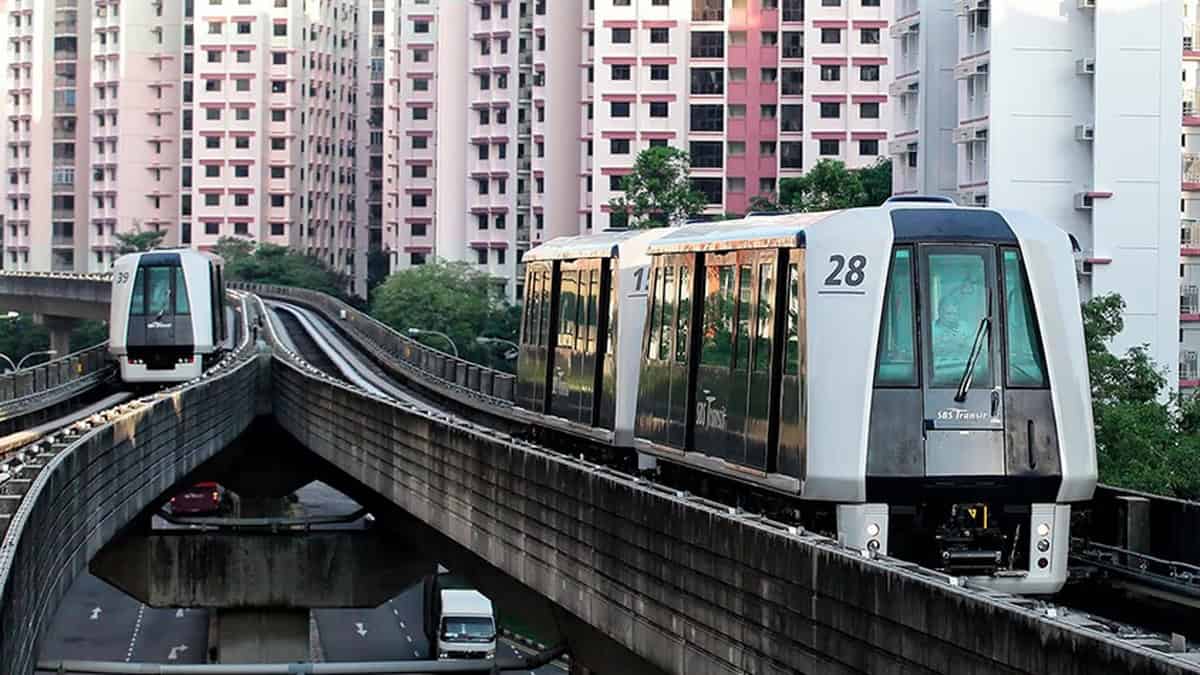
Singapore has restored full train operations on the Sengkang West LRT Inner Loop from the start of passenger service on 4 October, bringing the railway back two weeks before its previously scheduled 18 October reopening. The immediate traveller benefit is not simply another train service returning. Regular rail operation through SW1 Cheng Lim replaces the temporary operating arrangement that had been required since 19 April, while weekday peak shuttle buses have ended. The completed works also connect new depot reception infrastructure to the existing Sengkang-Punggol LRT mainline, preparing the shared network for substantially greater two-car train capacity.
Singapore Restores the Missing Sengkang West Railway Direction Earlier Than Planned
The most important change for travellers on 4 October is operational simplicity.
Advertisement
Advertisement
According to Singapore’s Land Transport Authority, full Sengkang West Inner Loop services resume through SW1 Cheng Lim from Sengkang LRT station. That direction had been temporarily closed from 19 April 2026 because major track, depot-interface and signalling works could not be completed while normal Inner Loop operations continued.
The original reopening date was 18 October 2026. Returning passenger trains on 4 October therefore removes 14 days from the published disruption period.
Advertisement
Advertisement
The rest of the Sengkang-Punggol LRT system was not shut throughout the works. During the adjustment, passengers could use the Sengkang West Outer Loop via SW8 Renjong, normal bus routes and special peak-period shuttle buses.
Those dedicated shuttle arrangements have now ended. Sengkang West Shuttle Bus Services A and B ceased after the evening peak on 2 October ahead of the return of regular Inner Loop trains.
Advertisement
Advertisement
| Operational element | Temporary arrangement | Position from 4 October 2026 | Traveller significance |
|---|---|---|---|
| Sengkang West Inner Loop | Closed from 19 April | Regular trains restored | Rail travel through the Cheng Lim direction returns |
| Sengkang West Outer Loop | Continued via SW8 Renjong | Continues operating | Both West Loop directions are again available |
| Peak shuttle buses | Services A and B supported affected journeys | Ceased after 2 October evening peak | Travellers should no longer plan around the temporary shuttle arrangement |
| Original reopening | 18 October 2026 | Brought forward to 4 October | Fourteen disruption days removed |
| Sengkang interchange | LRT connection retained through modified operations | Normal Inner Loop connectivity restored | Simplifies transfers involving Sengkang MRT and local transport |
The Bigger Railway Story Is the Removal of a Temporary Operating Layer
The significance of today’s reopening can easily be understated if it is treated only as a timetable change.
For nearly five and a half months, the Sengkang West railway had to operate around a major infrastructure intervention. The Inner Loop direction through Cheng Lim was unavailable, the Outer Loop carried the remaining rail movement, and dedicated buses were introduced during weekday peaks.
LTA had scheduled those buses from 6am to 10am and 5.30pm to 9.30pm, with intervals of roughly three to five minutes. The Outer Loop was also operated entirely with two-car LRVs during the adjustment to maximise available capacity.
Today’s change therefore removes an additional operational layer rather than merely adding a service to a timetable.
That distinction matters to travel planners. A journey that depended on understanding temporary loop directions, replacement options or peak shuttle arrangements can again be planned around the normal LRT structure.
LTA has not published a specific journey-time saving for the reopening. It would therefore be inaccurate to claim a fixed number of minutes saved. The measurable benefit is the restoration of the regular Inner Loop railway and the withdrawal of temporary buses.
Advertisement
Advertisement
Sengkang Depot Expansion Makes the Reopening an Infrastructure Milestone
The engineering behind today’s development explains why the closure lasted months.
The Sengkang-Punggol LRT depot is being expanded from 3.5 hectares to 11.1 hectares. That adds 7.6 hectares and makes the enlarged facility approximately 3.17 times its former area.
The work includes modifications to existing tracks, new reception-track connections between the expanded depot and the operational LRT mainline, plus signalling installation and testing. The broader depot project remains scheduled for completion in 2027.
Passenger trains are therefore returning before the entire depot programme is finished. What has been completed is the critical work required to allow normal Inner Loop passenger operation to restart safely.
| Infrastructure component | Official position | Why it matters |
|---|---|---|
| Existing depot area | 3.5 hectares | Baseline facility supporting the current system |
| Expanded depot area | 11.1 hectares | Provides space for a larger LRT fleet |
| Net increase | 7.6 hectares | Substantial enlargement of operating and maintenance capacity |
| Reception tracks | New tracks connected to existing mainline | Supports movement between depot and passenger railway |
| Signalling | Installation and testing undertaken during closure | Required for safe integration of modified infrastructure |
| Overall depot completion | 2027 | Capacity programme continues after today’s passenger-service restoration |
The railway implication is important. Fleet growth cannot be separated from stabling, maintenance, track access, power and signalling capacity. Buying additional trains without expanding the infrastructure behind them would not deliver the same operational benefit.
Forty-One Two-Car LRVs Change the Long-Term Sengkang-Punggol Capacity Baseline
Today’s reopening also arrives alongside a significant revision to the long-term fleet plan.
Advertisement
Advertisement
LTA will procure eight additional third-generation two-car LRVs, taking the Sengkang-Punggol LRT fleet to 41 two-car vehicles by 2030.
This comes on top of the existing renewal programme involving 25 new third-generation two-car LRVs. Those trains are progressively replacing the first-generation fleet of 25 one-car and eight two-car LRVs, while eight second-generation two-car LRVs remain in service.
The earlier programme would ultimately have produced a fleet of 33 two-car LRVs. Adding another eight raises that future trainset count by about 24.2 per cent compared with the 33-unit baseline.
That calculation does not mean passenger throughput automatically rises by 24.2 per cent. Capacity depends on deployment, service frequency, operating patterns and demand. It does, however, show the scale by which the planned two-car fleet has been expanded.
According to a Singapore Ministry of Transport written parliamentary reply, new LRVs can operate across all Sengkang-Punggol loops. By the end of February 2026, three new vehicles had been deployed to Sengkang and four to Punggol. Future deployment is to be determined by crowding levels and operational requirements.
| Fleet milestone | Scale | Timeline |
|---|---|---|
| Earlier fleet configuration cited by LTA | 25 one-car plus 16 two-car LRVs | 2026 baseline |
| New third-generation renewal order | 25 two-car LRVs | Progressive deployment |
| Previously planned eventual fleet | 33 two-car LRVs | By end-2028 under earlier programme |
| Additional procurement announced | 8 two-car LRVs | Latest expansion |
| Revised network fleet | 41 two-car LRVs | By 2030 |
| Increase above 33-unit plan | 8 trainsets or about 24.2% | Long-term capacity expansion |
The newer vehicles also contain passenger and maintenance improvements including ergonomic seating, LED lighting, clearer passenger-information displays, improved air-conditioning, more visible door-closing indicators, onboard diagnostic technology and inter-car evacuation access.
Advertisement
Advertisement
Punggol Matters Because the Fleet and Depot Work as One Shared Railway System
The service reopening itself is specifically a Sengkang West Inner Loop development. It does not represent a new Punggol timetable beginning on 4 October.
Punggol nevertheless belongs directly in the railway story because the depot and LRV fleet serve the combined Sengkang-Punggol LRT network.
This distinction is particularly important for accurate travel reporting.
The Ministry of Transport has confirmed that the new two-car LRVs can be deployed across the network’s loops. That means infrastructure completed at Sengkang supports an operating fleet whose capacity benefits are allocated according to network requirements, including Punggol.
Punggol also has an increasingly important business-travel dimension.
LTA’s Punggol Coast station development connected the North East Line directly with the Punggol Digital District. Official planning figures associated with that station identified more than 28,000 employees and 12,000 students across the JTC Business Park and Singapore Institute of Technology campus.
Advertisement
Advertisement
JTC identifies both Punggol Coast MRT and Teck Lee LRT as public-transport access points for the district.
For corporate travel managers, visiting professionals and ground operators, that makes northeast rail capacity more relevant than a purely residential reading of the LRT network would suggest.
Recent Ridership Data Adds an Important Layer to the Capacity Story
Long-term capacity investment should also be separated from short-term ridership movements.
SBS Transit reported average daily Sengkang-Punggol LRT ridership of approximately 157,000 passenger trips in 2025. For the first half of 2026, average daily ridership was 151,000, 3.6 per cent lower than the corresponding 2025 period.
The official October infrastructure announcement nevertheless identifies growing travel demand in Sengkang and Punggol as the reason additional fleet capacity is required.
Those two facts are not necessarily contradictory. Railway investment decisions operate across multi-year horizons, while six-month or annual ridership figures capture shorter periods. The new depot will remain in service well beyond the present traffic cycle, while the 41-unit fleet target extends to 2030.
Advertisement
Advertisement
That difference between short-term patronage and long-term infrastructure planning is one of the more important elements of the story for transport-industry readers.
Northeast Singapore Is Building a Larger Rail Connectivity Framework
The Sengkang-Punggol LRT expansion also sits inside a wider railway programme.
According to LTA, the planned Cross Island Line Punggol Extension will run for about 7.3 kilometres and provide a direct connection between eastern areas including Pasir Ris and Tampines North and northeast areas including Punggol and Sengkang. The extension is scheduled for completion in 2032.
The Cross Island Line is intended to create alternative travel routes and redistribute passenger loads across Singapore’s rail system.
Separately, LTA has begun studying a possible future Seletar Line, with the initial corridor under examination including Sengkang West and Serangoon North and possible connections with the Cross Island and Circle lines.
Today’s LRT reopening should therefore be seen as one layer of a longer northeast mobility transformation.
Advertisement
Advertisement
The immediate action is modest in geographical scale. One LRT loop direction is returning. But the infrastructure underneath it is being redesigned for more vehicles, stronger depot capability and eventual interaction with a denser regional rail network.
Why the 4 October Change Matters to Travel Agents and Ground Operators
This is not an airport express, intercity railway or tourism sightseeing line. Its relevance to the travel industry is different.
The Sengkang-Punggol LRT functions as a feeder system connecting neighbourhoods and emerging business districts with larger MRT and bus networks.
For travellers with accommodation, meetings, educational visits, corporate appointments or family stays in northeast Singapore, last-mile reliability can determine whether an itinerary works smoothly.
Sengkang LRT links into Sengkang MRT station on the North East Line and the adjoining bus interchange. Punggol’s LRT and MRT connections increasingly serve the wider Punggol area and the Digital District.
That is the commercial travel significance of the reopening: fewer temporary instructions must now be built into ground itineraries involving Sengkang West, while the underlying railway is simultaneously being equipped for substantially more two-car operations.
Advertisement
Advertisement
Critical Operational Takeaways for Travel Agents and Tour Operators
- Remove the temporary Sengkang West Inner Loop closure from itineraries dated 4 October 2026 onward, subject to any new real-time LTA operating notice.
- Do not direct customers to Sengkang West Shuttle Bus Services A or B for the former closure arrangement; those dedicated peak services ended after 2 October.
- Distinguish the Inner Loop via SW1 Cheng Lim from the Outer Loop via SW8 Renjong when preparing local ground instructions.
- Do not advertise a fixed journey-time saving because LTA has not published one for the reopening.
- Treat the 41 two-car LRV target as a 2030 fleet programme, not as capacity already available today.
- Remember that the enlarged depot is still under construction and remains targeted for completion in 2027.
- For business travellers heading to Punggol Digital District, check both Punggol Coast MRT and Teck Lee LRT options against the exact building destination.
- Use LTA journey-planning information and operator updates close to departure when managing high-value transfers or tightly timed corporate itineraries.
Singapore’s Northeast Rail Strategy Now Moves Beyond the Closure
The 4 October reopening marks the end of one disruption but not the end of the Sengkang-Punggol railway transformation.
The immediate traveller benefit is clear. The Sengkang West Inner Loop is operating again earlier than planned, temporary peak shuttle arrangements have finished and the regular Cheng Lim direction has returned.
The strategic consequence is larger.
New reception tracks, signalling integration and the tripled depot footprint are creating the physical base for more two-car LRVs. The fleet target has moved beyond the previously envisaged 33 vehicles towards 41 two-car LRVs by 2030. Punggol’s growing business and education district is simultaneously becoming more closely tied into Singapore’s rail system, while the Cross Island Line Punggol Extension is planned to add another major east-to-northeast connection in 2032.
For international travel markets, the lesson is not that one suburban LRT reopening will transform inbound tourism. It is that Singapore continues to build the less visible layer that supports visitor mobility: dependable local feeders, stronger interchange capacity, larger fleets and multiple onward rail options.
For travel companies selling Singapore beyond the traditional downtown circuit, that network depth will increasingly matter.
Advertisement
