
Ireland Is Now Overtaking EU Nations In Tourism Growth As More Foreign Stays Unlock New And Better Prospects

Published
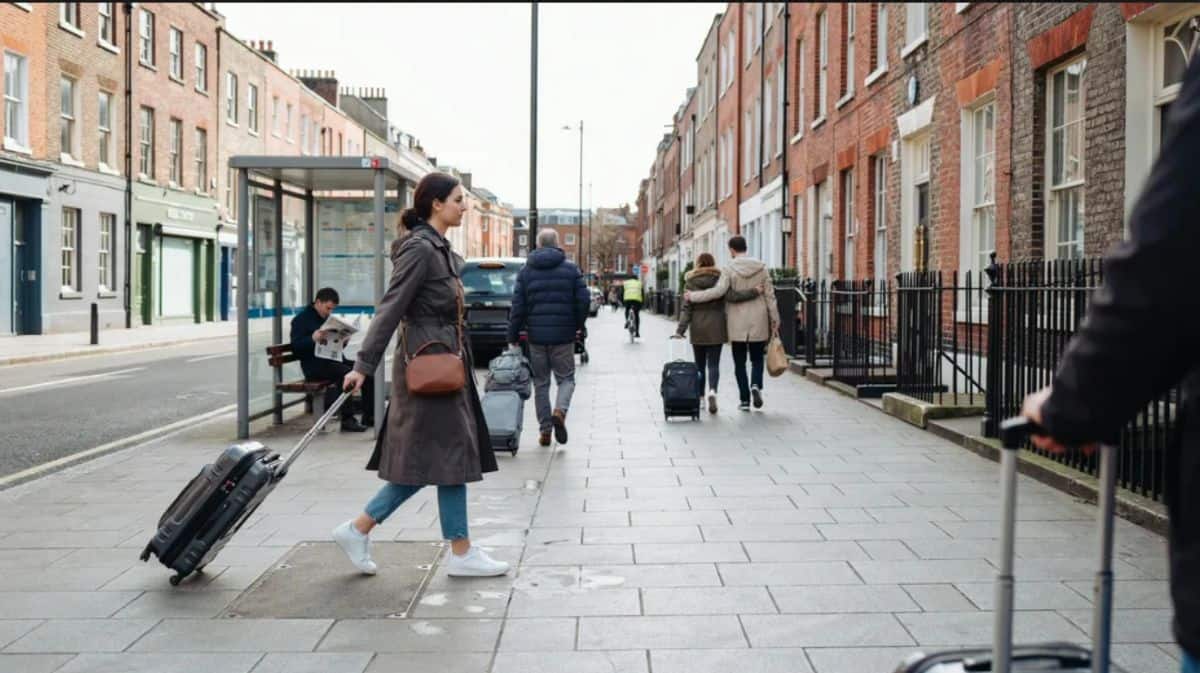
Ireland recorded the European Union’s strongest Tourism Growth during the first quarter of 2026, overtaking Malta and Denmark as accommodation nights increased by 35.3%. Malta grew by 11.1%, while Denmark advanced by 9.3%. International guest nights in Ireland climbed 42.3%, showing that overseas demand played a major role. Ireland remained the EU leader across the first half, although its cumulative rate moderated to 14.6%. The comparison matters to travellers, hotels and tour operators because it shows where accommodation demand is accelerating. However, the figures announce no visa or passport change and do not prove that prices or bookings increased everywhere.
Ireland’s Lead Changes Across Three Reporting Periods
The comparison below separates the first quarter, second quarter and complete first half. This distinction prevents Denmark’s first-quarter position from being incorrectly applied to the six-month ranking.
| Country | First Quarter 2026 | Second Quarter 2026 | First Half 2026 | Comparative Position |
|---|---|---|---|---|
| Ireland | Up 35.3% | Up 5.7% | Up 14.6% | First in Q1 and first across the complete first half |
| Malta | Up 11.1% | Up 9.0% | Up 9.9% | Second in Q1 and second across the first half |
| Denmark | Up 9.3% | Not listed among the four fastest-growing Q2 markets | Not listed among the three first-half leaders | Third in Q1 only |
| Slovakia | Not listed among the three Q1 leaders | Not listed among the four fastest-growing Q2 markets | Up 5.9% | Third across the complete first half |
| Lithuania | Overall Q1 rate not listed among the three leaders | Up 9.8% | Not listed among the three first-half leaders | Recorded the EU’s strongest Q2 increase |
| EU total | Up 3.4% | Up 1.2% | Up 1.7% | Positive growth continued at a moderate rate |
Ireland clearly overtook Malta and Denmark during the first quarter. It also remained ahead of Malta and Slovakia after the second quarter entered the calculation. However, Lithuania moved into first place for the second quarter alone, while Ireland’s quarterly increase slowed considerably.
The table also shows why reporting periods must never be mixed. Denmark belongs in a Q1 comparison, while Slovakia belongs in the first-half ranking. Ireland led both periods, but its margin over other destinations narrowed after March.
Advertisement
Advertisement
How Ireland’s Tourism Growth Moved Ahead of Malta and Denmark
Ireland’s 35.3% first-quarter increase was more than three times Malta’s 11.1% rise. It was also nearly four times Denmark’s 9.3% expansion. The difference between Ireland and Malta reached 24.2 percentage points, while Ireland exceeded Denmark by 26 percentage points. These comparisons explain how Ireland moved so decisively into first place. They measure the speed of change from each country’s own 2025 level, not the absolute size of their accommodation markets.
Ireland did not necessarily register more total nights than Malta or Denmark because of this percentage lead. A growth rate shows how quickly a market changed from its earlier base. It does not show which country had the largest accommodation industry. The official first-quarter dataset recorded 471.1 million nights across the EU, up 3.4%. Ireland’s rate was therefore more than ten times the EU average, making its acceleration exceptional within the common measurement.
Advertisement
Advertisement
International demand provides the strongest verified explanation for the Irish result. Nights generated by foreign visitors in Ireland rose 42.3% during the first quarter. This increase was larger than the country’s overall 35.3% rate, showing that overseas stays expanded especially quickly. However, the available evidence does not establish that foreign demand was the only factor. Domestic nights, comparison effects and the timing of travel could also influence the total, but no single official cause has been identified.
Ireland’s national inbound figures support the direction of the European results. Around 510,100 foreign visitors completed trips to Ireland in March 2026, up 16% from March 2025. They spent 3.2 million nights in the country, an annual increase of 14%. March expenditure excluding fares reached €372 million, also 14% higher than one year earlier. Great Britain supplied 40% of visitors, Continental Europe contributed 35%, North America represented 21% and other regions accounted for 3%.
Stronger Air Access Supported Ireland’s International Performance
Scheduled air capacity created an important supporting condition. First-quarter seats to the Republic of Ireland were expected to stand 15% above the corresponding 2025 period. Capacity serving Dublin was expected to increase by 16%, subject to international conditions. This was relevant because almost 90% of Ireland’s overseas tourists travel by air. A larger supply of seats gives international travellers more opportunities to reach the country and can support demand for hotels, guesthouses and short-stay accommodation.
However, aviation capacity should not be presented as the proven cause of the entire increase. Scheduled seats represent available supply, not confirmed passengers or occupied rooms. The official data do not measure how many additional seats were sold or which travellers used registered accommodation. Air access, overseas demand and accommodation performance moved in the same positive direction, but correlation does not prove that one factor created the complete result.
International demand remained important during the second quarter. Foreign guest nights in Ireland rose 18.5% between April and June, the strongest increase in the EU. Lithuania followed at 11.9%, while Malta recorded 10.3%. Across the bloc, international nights increased 1.8%, while domestic nights advanced only 0.6%. Foreign visitors generated three out of every four additional EU accommodation nights during that quarter.
Ireland’s overall Q2 rate was lower at 5.7%, despite the 18.5% rise in international nights. This indicates that other parts of the market did not increase at the same pace. The official summary does not provide a complete causal explanation for that difference. It would therefore be inaccurate to claim that domestic demand produced a specific decline without using the underlying country-level figures.
Advertisement
Advertisement
Malta Holds Steady as Denmark Leaves the Leading Group
Malta delivered a more consistent pattern than Ireland. Its accommodation nights grew by 11.1% in the first quarter and 9% in the second. The complete first-half increase stood at 9.9%. Ireland achieved a much stronger opening quarter but slowed sharply between April and June. Malta’s steadier quarterly rates reduced Ireland’s lead across the six-month period, although they did not remove it.
Malta also remained exceptionally dependent on overseas travel. Foreign guests created 95.2% of its accommodation nights during the first half, the highest proportion in the EU. This means more than 95 of every 100 registered nights came from people living outside Malta. Such a large international share makes air connectivity and overseas travel conditions particularly important to the country’s accommodation economy.
Denmark’s 9.3% increase gave it third place during the first quarter. It did not appear among the four fastest-growing countries during Q2 or the three first-half leaders. This does not mean Danish accommodation necessarily declined. It means other countries recorded faster increases once the reporting period moved beyond March. Denmark should therefore appear only when describing the initial quarterly ranking.
Slovakia entered the leading group across the complete first half, recording growth of 5.9%. Its position illustrates how cumulative rankings can change as additional months are added. Lithuania provides another example. It led the second quarter with growth of 9.8%, ahead of Malta, Ireland and Poland, but did not enter the three-country first-half leading group.
Tourism Growth Continues but Ireland’s Pace Moderates
EU establishments registered 849.8 million nights during the second quarter, up 1.2% annually. International guests produced 425.4 million nights, while domestic visitors generated 424.4 million. Hotels and similar accommodation represented 61.6% of the market and increased by 0.9%. Holiday and other short-stay properties accounted for 24.1% and grew by 2.8%. Camping represented 14.4% and remained broadly unchanged.
When both quarters were combined, EU establishments recorded 1.321 billion nights. This was 21.8 million more than during the first half of 2025 and the highest result recorded for the opening six months of a year. Foreign guests produced 645.4 million nights, up 2.5%, while domestic travellers generated 675.7 million, an increase of 0.9%.
Advertisement
Advertisement
International guests consequently supplied nearly three times the growth rate of domestic travellers. They represented 48.9% of all first-half accommodation nights. Malta had the largest foreign share, followed by Cyprus at 92.6% and Luxembourg at 87.7%. Germany recorded 18.5%, Poland 19.8% and Romania 23%, demonstrating major differences in the structure of national markets.
Eighteen of the 27 EU countries recorded first-half increases, while nine experienced declines. Cyprus registered the steepest reduction at 7.7%, mainly because international guest nights fell 8.2%. Romania recorded the second-largest overall decline at 6.7%. The European result was therefore positive but uneven, with Ireland, Malta and Slovakia moving faster than the bloc while several destinations contracted.
Ireland’s first-half Tourism Growth rate of 14.6% remained the highest in the EU. However, the detailed European metadata flag the Irish first-half accommodation result as unreliable. This statistical qualification must accompany any strong comparison. It does not mean the figure should automatically be discarded, but it does mean readers should treat the precise rate carefully and monitor later revisions.
What the Results Mean for Travellers and the Industry
Stronger accommodation demand can benefit hotels, guesthouses, short-stay properties, attractions, local transport and businesses serving visitors. Tour operators may find opportunities to build Irish regional itineraries, longer trips and programmes outside the busiest months. However, the dataset does not prove that every operator gained revenue, that national room prices rose or that availability became restricted. Those outcomes depend on location, season, capacity, costs and visitor behaviour.
National data provide additional evidence of economic activity. Approximately 3.2 million foreign residents completed overnight visits to Ireland from January through June, up 15% from 2.8 million one year earlier. The level remained 0.2% below the comparable 2024 figure. June brought 670,300 foreign visitors, up 2% annually. Their expenditure reached €697 million, excluding fares, representing an 8% increase.
June also showed why tourism measures must be interpreted separately. Visitors spent 5.1 million nights in Ireland, down 1% from June 2025, while spending increased. Their average stay shortened from 7.9 to 7.6 nights. Higher expenditure can coexist with fewer nights because spending also reflects prices, visitor mix, travel purpose and purchasing patterns.
Advertisement
Advertisement
The Tourism Growth statistics introduce no visa, passport or border-policy change. Ireland remains outside the Schengen passport-free area, and entry requirements continue to depend on nationality, residence, itinerary and travel purpose. Visitors should use official immigration guidance, confirm transport schedules and reserve accommodation early for popular dates. No official evidence currently supports cancelling or changing an Irish trip because of the accommodation results.
A national short-term letting register is scheduled to open on 1 December 2026. Operators must register by 31 December and display their registration numbers on listings or advertisements. They will also need to confirm that they can legally provide short-term accommodation, including compliance with relevant planning requirements. The system could improve transparency, although its effect on prices and supply remains unknown.
Ireland’s Accommodation Lead Now Faces Its Next Test
Ireland’s Tourism Growth placed the country ahead of Malta and Denmark in the first quarter and above Malta and Slovakia across the first half. Overseas demand provides the strongest verified explanation, supported by international accommodation nights and a larger pool of air seats. However, official evidence does not identify one cause, and the European dataset flags Ireland’s first-half figures as unreliable. Travellers face no new entry requirement because of these results. Attention now shifts to statistical revisions, second-half demand and accommodation regulation. Those developments will show whether Ireland can preserve its lead while managing capacity, value and regional distribution effectively.
Advertisement
