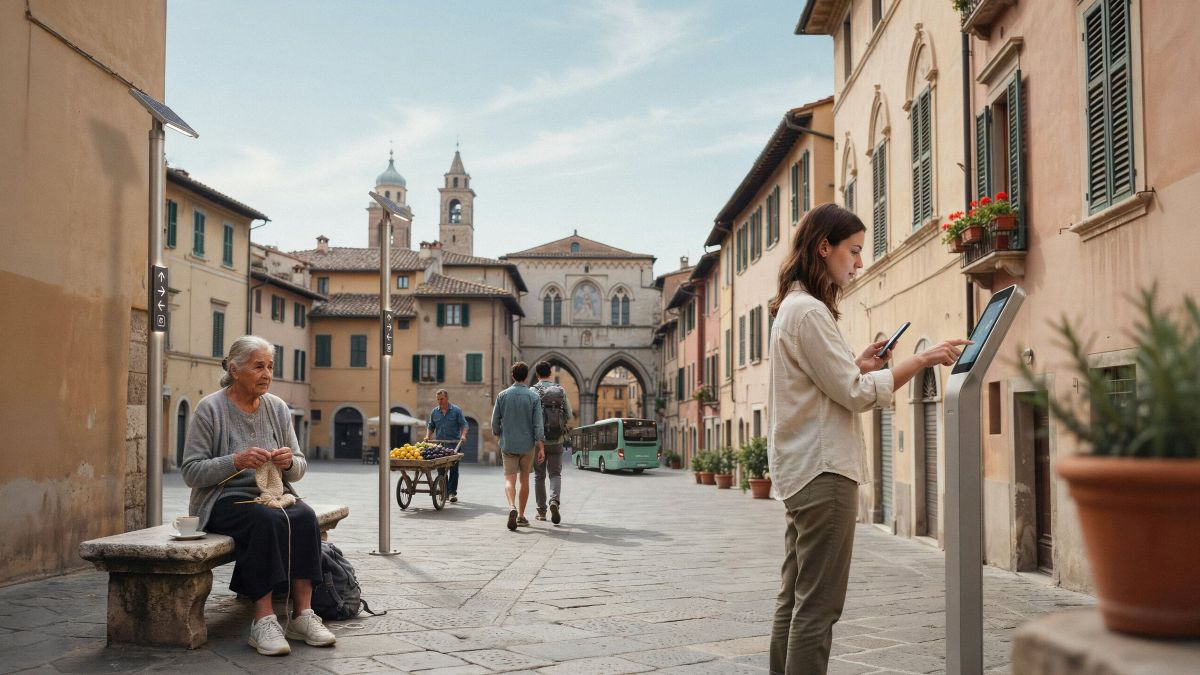
Image generated with Ai
The Italy Travel 2026 era is about to embark on a new journey as smarter tourism trends are ensuring a brighter future for American tourists in Europe. The emerging trends are indicating how Italy is making efforts to strike a balance between the increasing number of tourists and protecting destinations. Through tourism advancement, smart approaches are playing an effective role in ensuring a better experience along with the preservation of cultural heritages. In addition, the emerging trends reflect that Italy Travel is committed to welcoming visitors from around the world.
The idea that Europe is refusing American tourists has grown because of several changes happening at the same time.
Advertisement
Many European destinations are introducing new rules. Some cities are limiting overcrowding. Some historic locations are controlling visitor numbers. The European Union is also preparing new digital border systems.
These developments have caused concern among some travellers.
Advertisement
However, these measures are not aimed at Americans.
They apply to broader groups of international visitors. The goal is to improve security, protect destinations and create a smoother travel experience.
The European Union’s new border systems are designed to modernise travel. They do not remove access for American tourists.
US citizens can still travel to Europe for short visits under existing visa-free arrangements. The future changes will simply add more digital procedures before travel.
Advertisement
Advertisement
The difference is important.
A travel restriction means a country does not want visitors.
A tourism management system means a country wants visitors but wants to manage growth better.
Europe is following the second approach.
Spain has become one of the biggest examples in Europe’s tourism debate.
The country attracts millions of international visitors every year. Destinations such as Barcelona, Mallorca, Tenerife and other popular regions have achieved global popularity.
But success has created challenges.
Large crowds can put pressure on local communities. Housing costs can increase. Public transport can become crowded. Natural areas can suffer from heavy visitor numbers.
Because of these issues, Spain has introduced tourism management measures in some destinations.
These actions have sometimes been misunderstood.
Some travellers believe Spain wants fewer foreign visitors. But this is not correct.
Spain continues to welcome American tourists. US travellers remain an important market for Spanish hotels, airlines, restaurants and cultural attractions.
The country is not questioning who visits. It is focusing on how tourism happens.
Spain wants visitors to explore more regions. It wants travellers to discover smaller towns, rural areas and cultural destinations beyond famous hotspots.
The future of Spanish tourism is not about closing doors. It is about opening more destinations and creating a better experience.
Italy faces a similar situation.
The country is home to some of the world’s most famous attractions. Venice, Rome, Florence and other historic cities attract travellers from every corner of the globe.
Tourism supports millions of jobs in Italy. It helps local businesses and strengthens cultural industries.
But famous destinations also face pressure.
Historic streets, monuments and public spaces can become overcrowded during busy periods. Local authorities must protect these places for future generations.
Italy has introduced visitor management strategies in some locations. These include measures designed to control crowds and protect cultural heritage.
These policies are not aimed at American tourists.
US travellers continue to visit Italy in large numbers. American visitors remain a key part of the country’s international tourism market.
Italy’s message is simple. The country welcomes global travellers, but it must protect the places that attract them.
The challenge is not reducing tourism. The challenge is improving tourism.
Greece is another country where tourism growth has created new challenges.
The country’s islands are famous worldwide. Santorini, Mykonos and other destinations attract visitors seeking beautiful landscapes, history and unique experiences.
American tourists are among the important international markets for Greece.
However, some popular islands experience heavy pressure during peak travel periods.
Large visitor numbers can affect local services, infrastructure and natural resources.
Greek authorities have explored ways to manage tourism growth. These efforts include improving infrastructure and creating better systems for handling visitor flows.
But Greece has not introduced policies against American travellers.
The country continues to depend on international tourism. Visitors support hotels, restaurants, transport services and local communities.
The goal is not to reduce international interest.
The goal is to make tourism stronger and more sustainable.
Greece wants travellers to enjoy its destinations while ensuring these places remain attractive for future generations.
The Netherlands has also faced questions about tourism management.
Amsterdam is one of Europe’s most visited cities. Its historic canals, museums and cultural attractions attract millions of visitors.
However, rapid tourism growth has created challenges for local residents.
The city has worked on measures to manage overcrowding and protect the quality of life for people who live there.
These policies have sometimes been described as restrictions against tourists.
That interpretation is incorrect.
The Netherlands has not introduced any policy that prevents American travellers from visiting.
The issue is not nationality.
The issue is managing large visitor numbers in limited urban spaces.
The Netherlands wants tourism to continue, but it wants a better balance between visitors and residents.
This reflects a wider European trend.
Destinations are moving away from uncontrolled mass tourism and towards planned tourism growth.
France continues to be one of the world’s leading tourism destinations.
Paris, the French Riviera, Provence and many other regions attract visitors throughout the year.
Some travellers have become concerned about stronger border procedures and security measures.
However, these changes do not represent a rejection of American visitors.
France is following wider European efforts to improve border management and security.
The country remains open to US tourists.
American travellers continue to enjoy access to France under existing travel rules.
The introduction of modern systems does not mean Europe is becoming closed.
It means Europe is adapting to a changing global travel environment.
One of the biggest changes affecting American travellers is Europe’s move towards digital border systems.
The European Union is introducing new technology to improve border management.
The Entry/Exit System (EES) will create electronic records for non-European visitors entering and leaving the Schengen Area.
The system will record traveller information and biometric details. Its purpose is to improve security and monitor travel periods more effectively.
This change may feel new for American travellers.
However, it is not designed to stop tourism.
It is part of a global trend. Many countries are using digital systems to manage international travel.
Modern borders are becoming more technology-driven.
The future traveller experience will include more online processes and digital verification.
Another major change is the European Travel Information and Authorisation System, known as ETIAS.
ETIAS will apply to visa-exempt travellers, including US citizens, visiting participating European countries.
The system requires travellers to complete an online application before their journey.
It is not a traditional visa.
It does not mean Americans need to go through a long visa process to visit Europe.
Instead, it creates an additional security check before arrival.
The European Union has explained that ETIAS is designed to strengthen security while keeping travel simple for eligible visitors.
For American travellers, the key change is preparation.
Visitors will need to understand the new process before travelling.
But Europe remains accessible.
The idea that Europe is rejecting Americans does not match official policies.
The confusion comes from mixing different issues together.
Tourism restrictions are often confused with tourist bans.
Digital border systems are often confused with travel closures.
Overtourism measures are often misunderstood as anti-tourist policies.
The reality is more balanced.
European countries still compete for international visitors. Tourism creates jobs, supports businesses and strengthens cultural exchange.
American travellers remain highly valued.
The changes happening across Europe are about improving tourism quality, not reducing international connections.
Europe is moving towards a new tourism model.
For many years, destinations focused mainly on attracting more visitors.
Now, many governments are asking a new question:
How can tourism grow without damaging communities?
This question is shaping the future of European travel.
The new model focuses on:
This does not mean fewer opportunities for travellers.
It means a different travel experience.
Visitors may see more digital checks, better crowd management and stronger protection of important destinations.
For American tourists, Europe will remain an attractive destination.
The continent is simply becoming more organised.
American travellers visiting Europe should prepare for a more digital and structured journey.
Travellers should:
These steps will help create a smoother experience.
The future of travel is changing everywhere.
Europe is not an exception.
Italy Travel 2026 as Smart Tourism Evolutions Create a Better Future for American Visitors Throughout Europe, as Europe Redefines Its Visitor Experience. New tourism trends show that Europe stays open to visitors but is developing smarter strategies. Besides, nations preserve culture, nature, and communities but do not reject guests from all around the world. Thus, American visitors may still travel to Europe, but this will happen in a more digitalized and organized way. The changes make it possible to develop a responsible future of tourism. The new tourism reality indicates that Europe stays welcoming while developing a better model for the future with a great global impact.
Advertisement
Tags: American travellers Europe, digital travel Europe, Europe travel 2026, European travel rules, Future of Tourism
Advertisement
Advertisement












Wednesday, September 2, 2026
Wednesday, September 2, 2026

Wednesday, September 2, 2026

Wednesday, September 2, 2026

Wednesday, September 2, 2026

Tuesday, September 1, 2026

Wednesday, September 2, 2026

Wednesday, September 2, 2026



