
Germany Aligns With Ukraine And More Finalises Kyiv Defence Journey During Critical Energy Crisis

Published
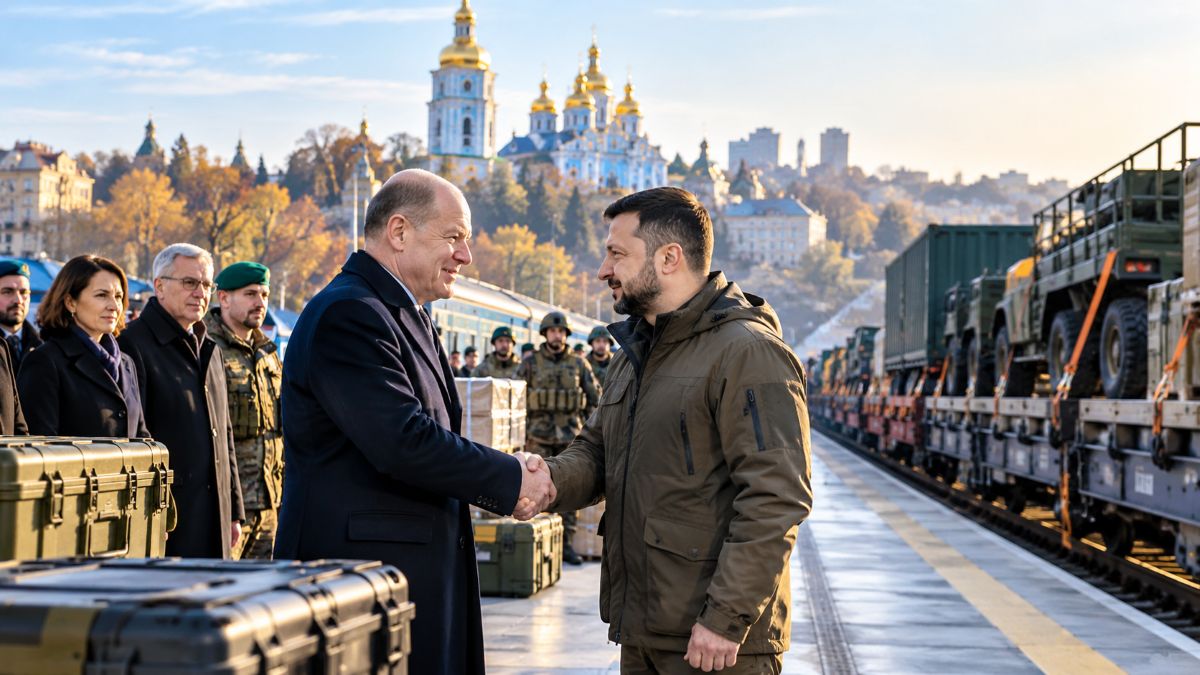
Image generated with Ai
The diplomatic arrival of German Chancellor Friedrich Merz at Kyiv railway station on Sunday marks an extraordinary chapter in modern European overland passage. Travelling into a territory enduring frequent aerial bombardment presents formidable logistical demands, requiring international delegations to rely entirely on fortified rail networks rather than commercial aviation. This critical transit across the continent demonstrates how governmental missions adapt to closed skies, where passenger air travel remains entirely suspended across Ukrainian airspace. The bilateral mission reinforces security collaboration while offering an authoritative template for assessing overland mobility during high-intensity conflict zones, highlighting both vulnerability and resilience along eastern European frontier lines.
Beyond statecraft, the German delegation’s transit illustrates the realities facing essential personnel, foreign correspondents, and specialised technical workers traversing the country. With civilian airports non-operational, railway journeys beginning at western border transfer points in Poland serve as the sole lifeline connecting the capital to central Europe. This overland artery functions under rigorous logistical precautions, maintaining strict scheduling despite severe strikes targeting national power generation. The arrival of European industry leaders alongside senior ministers emphasises the necessity of keeping ground transportation routes protected, operational, and resilient amidst evolving geopolitical confrontation.
Overland Transit Protocols Across Eastern European Transport Corridors
Entering the Ukrainian interior requires thorough preparation, detailed route coordination, and close monitoring of regional security assessments before crossing border posts. Professional observers and humanitarian teams must coordinate with state railway authorities, navigating international hub transfers through Przemyśl or Chełm before embarking on the long rail journey eastward. These sleeper trains operate under darkened conditions during night travel, demanding heightened awareness and complete adherence to onboard safety instructions. Travellers journeying through the region face dynamic border checks, where customs processes reflect wartime governance and thorough documentation standards.
Understanding transport vulnerability remains crucial for evaluating transit viability across central Ukrainian hubs. Ongoing attacks on traction substations frequently challenge rail continuity, requiring diesel locomotives to serve as indispensable substitutes when overhead electrical lines suffer interruptions. Journey planners must account for extended travel buffers, limited amenities at transit stations, and sudden schedule alterations caused by national air alert networks. Navigating these constraints requires reliance on authoritative local announcements, official transport mobile platforms, and verified ground operational intelligence.
Advertisement
Advertisement
Energy Sector Resilience and Civil Infrastructure Protection
The physical safety of transport networks in Ukraine remains inextricably bound to the endurance of its electrical generation facilities. German government officials confirmed a substantial package containing three hundred and fifty million euros specifically allocated for urgent energy repairs. Russian strikes have heavily damaged transformer sites, municipal thermal networks, and municipal substations, generating an urgent requirement for mobile generator assets and rapid replacement hardware. Without stable power grids, maintaining passenger rail operations and water distribution in metropolitan centres becomes exceedingly challenging as winter conditions approach.
Restoring domestic energy infrastructure supports civil survivability while securing essential mobility corridors across major urban districts. The introduction of industrial assistance from German engineering enterprises aims to safeguard power distribution networks against recurrent missile and drone strikes. Collaborative technical missions focus on decentralising generation capacity, installing protective enclosures around vulnerable turbines, and expediting component delivery through verified overland shipping lanes. Ensuring continuous grid integrity directly preserves emergency transport services, civic heating operations, and municipal communications across vulnerable metropolitan areas.
Advertisement
Advertisement
Comparative Overview of Wartime Logistics and Support Commitments
| Operational Focus Area | Strategic Objectives | Bilateral Contributions | Ground Impact On Travel |
|---|---|---|---|
| Overland Rail Network | Secure passenger and freight transit corridors | Technical grid repair funding and locomotive maintenance parts | Ensures continued ground connectivity to western borders |
| Energy Grid Rehabilitation | Rebuild thermal plants, transformer sites, and power lines | €350 million allocated for critical infrastructure restoration | Stabilises heating, station lighting, and electrified rail routes |
| Air Defence Integration | Mitigate high-speed drone and missile saturation threats | Interceptor drone production and long-range protective assets | Reduces aerial disruption over civilian hubs and railway tracks |
| Industrial Collaboration | Establish joint technology and manufacturing ventures | Technology transfer between Quantum Systems and WIY Drones | Enhances local protective response against infrastructure strikes |
Industrial Partnerships and Advanced Defence Integration
The high-level mission to Kyiv finalised critical production agreements designed to counteract modern unmanned aerial threats targeting public infrastructure. Industrial collaboration featuring specialised technology firms like Quantum Systems and WIY Drones represents a major structural shift toward domestic interceptor manufacturing. By co-producing high-speed anti-jet interceptor systems, regional forces can establish protective bubbles shielding critical rail junctions, power stations, and residential sectors. This industrial alignment reduces dependence on distant supply chains, permitting faster deployment of defensive countermeasures around essential logistical nodes.
Developing integrated defensive coverage over major urban areas directly influences civil travel security and local stability. As hostile forces escalate the employment of jet-powered attack drones, local defensive umbrella systems ensure that transit hubs maintain basic functionality. Technology transfers and joint manufacturing facilities established under bilateral treaties allow immediate operational testing, feedback, and modification within active operational theatres. These developments indicate an evolving paradigm where industrial production aligns directly with domestic mobility protection and critical asset survival.
Advertisement
Advertisement
Navigating Wartime Advisories and Regional Security Guidance
International governmental departments continue issuing strict travel warnings advising citizens and international organisations against all transit within Ukraine. Diplomatic advisories highlight the severe risk associated with indiscriminate projectile impacts on urban residential areas and transport infrastructure. Those operating under exceptional professional exemptions must maintain continuous contact with security personnel, secure access to fortified underground shelters, and monitor alert applications. Maintaining comprehensive evacuation strategies and private emergency medical provisions remains mandatory for any authorised party conducting work across the region.
The presence of international delegations highlights the necessity of structured crisis protocols during cross-border assignments. Diplomatic movements require extensive security perimeters, air surveillance monitoring, and secure telecommunication redundancies capable of operating during power blackouts. Understanding local curfews, movement limitations, and regional civil defence instructions ensures that essential visitors minimise danger while executing authorised tasks. Comprehensive situational awareness, disciplined operational conduct, and strict adherence to local emergency instructions remain the cornerstones of navigating high-risk operational environments safely.
Frequently Asked Question
What transport methods are available for travelling into Kyiv? Direct commercial passenger flights remain entirely grounded throughout the country. Authorised travellers must use international rail links crossing from eastern Polish border transit stations, which run daily services directly to Kyiv Central Station.
Why is rail transportation prioritised over road travel for diplomatic delegations? Overland rail travel offers high reliability, predictable journey schedules, and heavy transport capacity while bypassing road checkpoints, severe fuel constraints, and unpredictable road conditions across long transit corridors.
Advertisement
Advertisement
How does electrical grid damage affect daily travel conditions in Ukraine? Power disruptions cause delays along electrified railway tracks, necessitate the use of diesel backup locomotives, interrupt station amenities, and affect urban tram, trolleybus, and metro schedules during major repair periods.
What specific financial assistance was announced during the German visit to Kyiv? The German government announced one billion euros dedicated to direct military assistance and an additional three hundred and fifty million euros earmarked specifically for critical energy grid restoration.
What precautions must authorised visitors take regarding regional air alerts? Visitors must install national civil protection alert applications, memorise the locations of nearest underground metro stations or concrete shelters, and immediately take cover whenever aerial threat sirens sound.
How do German industrial agreements impact civil infrastructure protection? Joint manufacturing initiatives produce specialized interceptor drones designed to neutralise hostile unmanned aircraft before they reach energy generation plants, railway junctions, and urban residential targets.
Which borders serve as the primary entry points for international journeys? The western land border with Poland remains the primary international crossing point, featuring regular rail links departing through Przemyśl and Chełm directly toward western and central Ukrainian cities.
Is travel permitted for regular leisure tourism across Ukraine at this time? Foreign ministries worldwide maintain strict travel warnings advising against all civilian tourism and non-essential visits due to severe armed conflict, active air strikes, and strained emergency services.
Advertisement
Advertisement
How do international visitors navigate local curfews in metropolitan areas? Visitors must remain inside designated accommodations during nightly curfew hours, carrying government-issued identification, official movement accreditations, and verified hotel booking details when moving prior to curfew commencement.
What documentation is required for authorised personnel entering through land border posts? Authorised travellers must hold valid international passports, proof of accredited professional purpose, comprehensive conflict-zone medical insurance coverage, and official documentation issued by host authorities facilitating border processing.
Advertisement
