
Atlanta Surges Past Boston, Chicago, Dallas and Several Others as Biometric Airport Screening in the United States Unlocks Frictionless Travel

Published
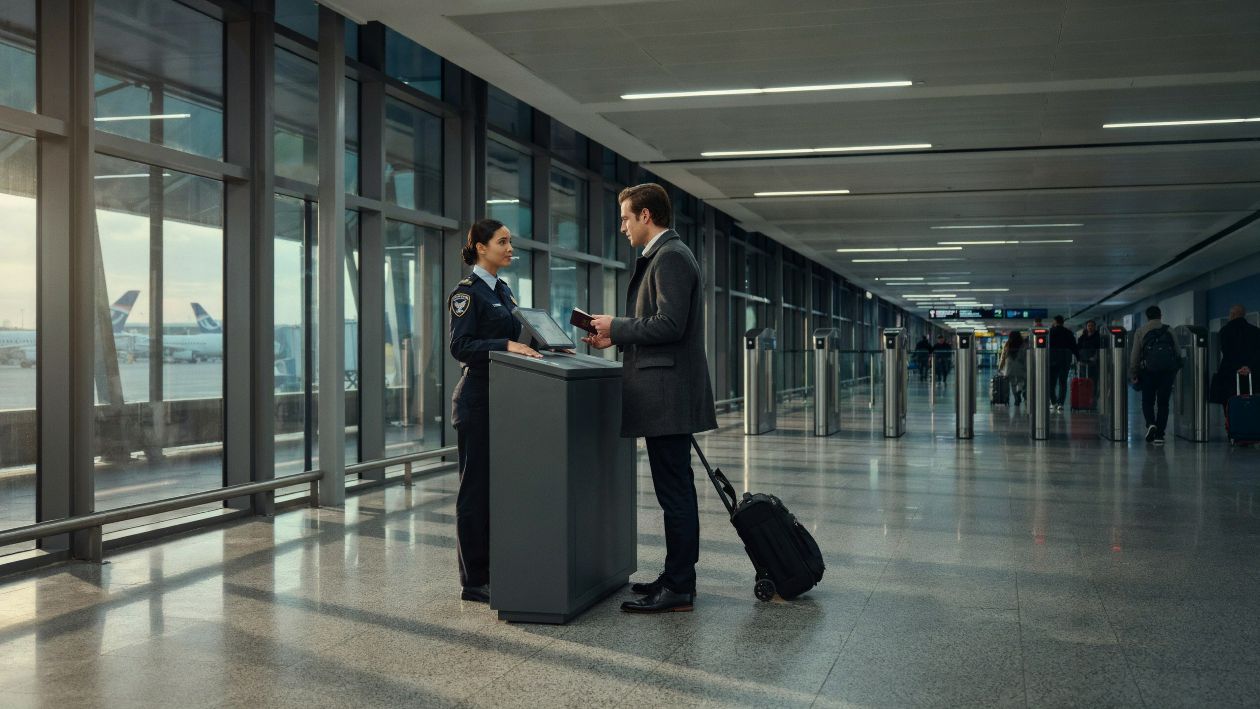
Biometric airport screening in the United States now reshapes Atlanta, Boston, Chicago, Dallas, Denver and several others. Traditional boarding queues are vanishing across major hubs. Digital cameras and automated scanners are rapidly replacing manual passport inspections. Federal authorities argue this transition strengthens checkpoint security.
Biometric screening is the automated electronic verification of passenger identity using unique physiological traits such as facial geometry. Modern air travel has entered an era of frictionless transit. The long queues snaking through departure halls are silently evaporating. Where passengers once clutched paper folders and boarding passes, optical sensors now scan faces in seconds.
For the contemporary international traveller, the airport experience is fundamentally unrecognisable. Terminals once defined by physical barriers are transforming into open transit corridors. Digital identification pods now greet passengers at curbside bag drops. Automated security lanes guide flyers swiftly toward departures lounges.
This silent revolution is driven by sovereign transport authorities. The Transportation Security Administration leads this domestic checkpoint overhaul. U.S. Customs and Border Protection manages international arrivals and departures. Together, they have deployed facial recognition cameras across hundreds of terminals.
Advertisement
Advertisement
Official documents reveal an ambitious federal timetable for nationwide installation. The Homeland Security infrastructure is undergoing its most profound structural redesign since 2001. Paper documentation is becoming obsolete for air travel. Discerning travellers face a sophisticated digital security apparatus.
The Disappearing Queue Across American Gateways
Modern airport security now prioritises seamless movement through automated digital identification checkpoints. Stepping into Atlanta Hartsfield-Jackson or Boston Logan today feels strikingly different from previous decades. The familiar security bottleneck is quietly dissolving. Travellers no longer pause to search for driving licences or mobile barcodes.
Advertisement
Advertisement
Instead, passengers approach automated camera pods at a steady walking pace. A brief lens flash confirms identity within two seconds. The physical barrier glides open without human intervention. Security officers observe digital validation consoles rather than inspecting watermarked credentials.
This transformation extends across the entire airport passenger journey. Automated bag drops accept luggage through facial identification. Concourse entry barriers scan travellers as they proceed toward security lanes. Even aircraft boarding gates now utilise high-speed optical verification cameras.
Aviation industry analysts describe this shift as the frictionless terminal experience. Airlines promote touchless boarding as the ultimate luxury for premium flyers. Frequent business travellers actively select flight routes based on touchless availability. The airport queue is being engineered out of existence.
Yet, this effortless transit conceals a vast sovereign digital framework. Every smooth terminal transit relies on continuous algorithmic matching. Federal databases interact with commercial airline systems in real time. Convenience and pervasive biometric tracking have become inextricably linked.
Understanding Touchless Identity Infrastructure
TSA PreCheck Touchless ID checkpoints allow enrolled travellers to clear security without presenting physical identification or boarding passes. This operational model relies on voluntary participant enrolment. Travellers must hold an active TSA PreCheck membership. They must also register an eligible airline digital profile.
Major carriers currently participating include Delta Air Lines, United Airlines, American Airlines, Alaska Airlines, and Southwest Airlines. Eligible passengers can also utilise verified digital wallet passes, including Google Wallet configured with a valid passport. Travellers opt into the service through their airline mobile applications before arriving at the airport terminal.
Advertisement
Advertisement
The underlying technology links directly with federal identity records. When a passenger stands before the checkpoint camera, the system captures a real-time live image. This photograph is transmitted to the Traveler Verification Service back-end database managed by federal border authorities.
The software compares the live facial capture against pre-existing credential photos stored within sovereign government records. Verification occurs within seconds. Once matched, the automated podium confirms the traveller’s identity and security status. The passenger proceeds directly to physical screening without pausing to display physical papers.
Federal regulations maintain strict requirements regarding physical documentation. Every traveller using touchless lanes must carry a valid physical credential. This document must comply with federal REAL ID standards. Checkpoint officers retain statutory authority to request physical identification at any moment. Passengers cannot abandon physical identity cards entirely.
Credential Authentication Technology Explained
Credential Authentication Technology CAT-2 scanners perform direct one-to-one automated facial matching against physical or digital identity credentials. These second-generation units represent the core hardware modernisation across domestic American checkpoints. Unlike broad surveillance networks, standard CAT-2 scanners execute precise one-to-one verification.
The scanner operates directly at the security officer podium. The traveller presents a physical credential, such as a driving licence or passport. Alternatively, passengers may present an approved state-issued mobile Driver’s Licence on a smartphone.
The CAT-2 unit captures a live facial image of the traveller. It simultaneously extracts the digital photograph embedded within the presented document. The internal algorithm compares both images to confirm a match. This closed verification process does not search external law enforcement databases.
Advertisement
Advertisement
The system also connects directly to the federal Secure Flight database. This live integration instantly verifies flight reservation records. It confirms whether the passenger holds standard screening or expedited PreCheck clearance. Officers no longer need to inspect physical or digital boarding passes. The machine completes identity and reservation verification simultaneously.
The deployment of CAT-2 units improves detection of fraudulent identity documents. Algorithmic verification reduces human inspection error at high-volume checkpoints. Transport security officials have prioritised this hardware to eliminate manual document handling entirely.
| Feature | TSA PreCheck Touchless ID | Standard CAT-2 Scanner |
| Verification Match Type | 1:n gallery match via TVS database | 1:1 facial comparison against presented ID |
| Document Required at Scan | None required if opted in | Physical ID or mobile Driver’s Licence |
| Boarding Pass Requirement | Validated automatically via Secure Flight | Validated automatically via Secure Flight |
| User Eligibility | Enrolled PreCheck travellers on select carriers | All passengers at equipped podiums |
| Hardware Deployment | Dedicated touchless checkpoint lanes | Standard and PreCheck security podiums |
Public Infrastructure Versus Commercial Lanes
Commercial checkpoint services operate through separate airport authority contracts rather than direct federal security screening frameworks. A common source of passenger confusion centres on the distinction between sovereign federal systems and private commercial offerings. The most prominent private service operating at American terminals is CLEAR.
CLEAR is a publicly traded commercial corporation, not a government agency. The Department of Homeland Security certifies CLEAR under the Support Anti-Terrorism by Fostering Effective Technologies Act. This designation formally classifies its identity platform as a Qualified Anti-Terrorism Technology.
CLEAR also serves as an authorised private enrolment provider for the official TSA PreCheck programme. However, its operational footprint within airport terminals functions through proprietary agreements. The company negotiates commercial leases with local airport authorities rather than federal agencies.
At the terminal, CLEAR operates independent biometric kiosks equipped with iris and facial recognition sensors. Members approach these proprietary pods to verify their identity. A commercial employee, termed an ambassador, then escorts the verified customer directly to the physical screening lanes.
Advertisement
Advertisement
This process bypasses the standard queue where officers inspect identification documents. Crucially, CLEAR members must still undergo standard physical baggage and body screening conducted by federal officers. The private service merely expedites document queue navigation. It does not replace sovereign federal security screening standards.
Frequent flyers often weigh the commercial subscription cost against government touchless lanes. With TSA PreCheck Touchless ID expanding rapidly, the commercial advantage of private kiosks faces growing competition. Many premium travellers find sovereign touchless lanes equally swift.
International Border Protocols and Exit Checks
The CBP biometric entry exit system verifies international passenger identities using cloud-based matching galleries generated from flight manifests. U.S. Customs and Border Protection operates this architecture under explicit statutory mandates enacted by the United States Congress.
Federal legislation requires the collection of biometric exit data for foreign nationals departing American territory. To fulfill this statutory requirement, border officials developed the Simplified Arrival programme. This system operates across commercial air ports of entry and departure gates.
The technical backbone of this programme is the Traveler Verification Service. When an international flight prepares for boarding, the system builds a temporary photo gallery. This gallery compiles existing passport, visa, and border entry images of booked passengers.
At the departure gate, passengers pause before a biometric camera integrated into the boarding portal. The camera captures a live facial photograph and evaluates it against the manifest gallery. This process constitutes a one-to-few comparison.
Advertisement
Advertisement
When the system matches the traveller, the gate opens, and the airline manifest updates automatically. The automated confirmation records the foreign national’s departure in federal immigration archives. This digital record prevents visa overstay discrepancies without requiring manual passport stamping.
For overseas travellers connecting through American gateways, the process eliminates lengthy customs queues. Arriving international flyers clear border controls through biometric kiosks in seconds. The traditional paper declaration card has become a historical relic.
Data Retention and Privacy Safeguards
Federal privacy frameworks dictate strict retention limits and immediate deletion schedules for passenger biometric records. The expansion of facial recognition has prompted intense scrutiny from privacy advocates and civil liberty organisations. In response, the Department of Homeland Security Privacy Office has published binding Privacy Impact Assessments.
These regulatory documents establish clear operational boundaries for federal agencies handling sensitive biometric information. For standard CAT-2 checkpoint operations, the data policy is absolute. The scanner purges captured live photos immediately after completing the one-to-one verification check.
No facial images or biometric templates from standard CAT-2 scans remain on the machine. The hardware does not store passenger data locally or transmit images to central surveillance archives. Federal privacy audits require continuous monitoring to verify local hardware compliance.
Operational protocols differ slightly for experimental and touchless screening trials. Under the TSA PreCheck Touchless ID framework, live checkpoint images are stored temporarily for audit purposes. Federal rules mandate that these matching records must be permanently purged within 24 hours of flight departure.
Advertisement
Advertisement
The retention protocols governing international border checkpoints reflect separate statutory rules. When international commercial flights depart, images of foreign nationals are retained in federal immigration databases. These records track legal visa compliance across American border crossings.
| System Mechanism | Target Population | Primary Data Source | Image Retention Period |
| TSA PreCheck Touchless ID | Enrolled domestic flyers | Passport or airline gallery | Purged within 24 hours |
| TSA Standard CAT-2 | General domestic passengers | Physical ID presented at scan | Deleted immediately after match |
| CBP Simplified Arrival (Exit) | Departing foreign nationals | Visa and entry databases | Stored in immigration records |
| CBP Simplified Arrival (US Citizen) | Departing American citizens | Passport archival gallery | Purged within 12 hours |
Statutory Opt Out Rights for Passengers
Domestic passengers hold the legal right to decline biometric capture without losing their position in line or facing penalties. Official Department of Homeland Security policy confirms that facial recognition at domestic security checkpoints remains entirely voluntary.
A traveller approaching a CAT-2 camera or Touchless ID lane may decline the photograph. The passenger simply informs the security officer that they wish to opt out. The officer must then conduct a standard manual inspection of the passenger’s physical credentials.
Federal directives explicitly forbid officers from penalising or delaying passengers who exercise their right to opt out. Travellers maintain their position within the physical queue. The manual inspection must proceed without operational hostility or administrative hindrance.
The legal framework governing international departures establishes different parameters based on nationality. Foreign nationals departing the United States are subject to statutory biometric exit collection under federal immigration law. They do not possess a general right to decline biometric capture at departure gates.
Conversely, American citizens departing on international flights retain the right to request alternative manual inspection. When approaching a biometric boarding gate, a U.S. citizen may present their physical passport to the airline agent. Airline staff must verify the passport manually against the passenger manifest.
Advertisement
Advertisement
Service journalism principles recommend that privacy conscious flyers carry physical documentation at all times. Opting out requires clear, polite verbal communication with checkpoint staff. Knowing your statutory rights ensures smooth transit through any American terminal.
Oversight Audits Reveal Systemic Limitations
Government accountability reviews have uncovered algorithmic disparities and communication gaps across operational federal screening lanes. The Government Accountability Office has conducted rigorous investigations into federal biometric aviation programmes. Key audits, including reports GAO-20-568 and GAO-24-106293, highlight persistent technical and administrative weaknesses.
A primary concern raised by federal auditors involves demographic parity within facial recognition algorithms. National Institute of Standards and Technology evaluations demonstrate laboratory matching accuracy exceeding 99 percent under ideal circumstances. However, real-world airport environments introduce significant confounding variables.
Operational checkpoints experience fluctuating ambient lighting, camera height mismatches, and rapid passenger movement. Government audits documented measurable variations in false match rates across specific demographic cohorts. Algorithmic performance can vary based on race, gender, and age.
Auditors warned that algorithmic inaccuracies risk subjecting certain demographic groups to disproportionate manual scrutiny. The Government Accountability Office instructed Homeland Security officials to continuously evaluate algorithmic bias in live deployment environments.
Federal audits also uncovered significant deficiencies in public notification and checkpoint signage. Field inspections revealed that airport signage frequently failed to inform travellers of their opt-out rights clearly. In response, oversight bodies mandated comprehensive updates to checkpoint notices across all participating domestic airports.
Advertisement
Advertisement
For the international traveller, these findings underscore the importance of vigilant document preparation. Passengers belonging to vulnerable demographic categories should anticipate occasional technical false rejections. Carrying original paper credentials prevents missed flights when algorithms fail.
Deconstructing the Eleven Billion Dollar Figure
The reported market valuation represents commercial financial forecasting rather than verified government expenditure or official state data. Commercial travel publications and aviation trade reports frequently cite an 11 billion dollar valuation for frictionless airport travel. However, official government documentation provides essential context regarding this commercial figure.
Federal agencies, including the TSA, CBP, DHS, and Federal Aviation Administration, do not publish or endorse market valuations. Sovereign government bodies do not track private commercial sector capitalisation estimates. The figure originates entirely from private market research firms, including Frost & Sullivan, MarketsandMarkets, and Grand View Research.
These private market analyses aggregate disparate commercial sectors to generate global valuation totals. Their projections encompass global spending across multiple industrial categories:
- Automated border control gates and e-Gates installed at international hubs.
- Commercial biometric boarding turnstiles purchased directly by private airlines.
- Self-service biometric baggage drops deployed across departure concourses.
- Proprietary identity verification software and passenger flow analytics tools.
Federal public capital expenditure remains separate from these private equity projections. Sovereign airport modernisation receives funding through statutory federal grants, including the Airport Improvement Program. Significant funding also flows through the federal Bipartisan Infrastructure Law.
These public infrastructure funds support terminal modifications, physical security lanes, and electrical infrastructure. However, official records do not track or validate private commercial market valuations. Transport analysts must distinguish between public safety investments and commercial market projections.
Advertisement
Advertisement
Nationwide Directory of Touchless Checkpoints
Federal deployment records catalog dozens of commercial airports currently supporting active touchless identity verification lanes. The Transportation Security Administration maintains operational Touchless ID lanes across 65 domestic airports. These facilities operate in collaboration with major commercial carriers and verified digital identity systems.
The following official directory outlines all 65 participating commercial airports organised by geographical region:
| Geographic Region | Commercial Airport Name | Airport Code |
| Northeast | Boston Logan International Airport | BOS |
| Northeast | New York John F. Kennedy International Airport | JFK |
| Northeast | New York LaGuardia Airport | LGA |
| Northeast | Newark Liberty International Airport | EWR |
| Northeast | Philadelphia International Airport | PHL |
| Northeast | Pittsburgh International Airport | PIT |
| Northeast | Buffalo Niagara International Airport | BUF |
| Northeast | Rhode Island T. F. Green International Airport | PVD |
| Northeast | Bradley International Airport | BDL |
| Northeast | Westchester County Airport | HPN |
| South / Southeast | Hartsfield-Jackson Atlanta International Airport | ATL |
| South / Southeast | Charlotte Douglas International Airport | CLT |
| South / Southeast | Dallas/Fort Worth International Airport | DFW |
| South / Southeast | Dallas Love Field | DAL |
| South / Southeast | George Bush Intercontinental Airport | IAH |
| South / Southeast | William P. Hobby Airport | HOU |
| South / Southeast | Miami International Airport | MIA |
| South / Southeast | Orlando International Airport | MCO |
| South / Southeast | Tampa International Airport | TPA |
| South / Southeast | Fort Lauderdale-Hollywood International Airport | FLL |
| South / Southeast | Palm Beach International Airport | PBI |
| South / Southeast | Nashville International Airport | BNA |
| South / Southeast | Louis Armstrong New Orleans International Airport | MSY |
| South / Southeast | Raleigh-Durham International Airport | RDU |
| South / Southeast | Austin-Bergstrom International Airport | AUS |
| South / Southeast | San Antonio International Airport | SAT |
| South / Southeast | Jacksonville International Airport | JAX |
| South / Southeast | Birmingham-Shuttlesworth International Airport | BHM |
| South / Southeast | Charleston International Airport | CHS |
| South / Southeast | Luis Muñoz Marín International Airport | SJU |
| Midwest | Chicago O’Hare International Airport | ORD |
| Midwest | Chicago Midway International Airport | MDW |
| Midwest | Detroit Metropolitan Wayne County Airport | DTW |
| Midwest | Minneapolis-Saint Paul International Airport | MSP |
| Midwest | Denver International Airport | DEN |
| Midwest | Indianapolis International Airport | IND |
| Midwest | Kansas City International Airport | MCI |
| Midwest | St. Louis Lambert International Airport | STL |
| Midwest | Cincinnati/Northern Kentucky International Airport | CVG |
| Midwest | Cleveland Hopkins International Airport | CLE |
| Midwest | John Glenn Columbus International Airport | CMH |
| Midwest | Milwaukee Mitchell International Airport | MKE |
| Midwest | Tulsa International Airport | TUL |
| Midwest | Will Rogers World Airport | OKC |
| West / Pacific | Los Angeles International Airport | LAX |
| West / Pacific | San Francisco International Airport | SFO |
| West / Pacific | Seattle-Tacoma International Airport | SEA |
| West / Pacific | Phoenix Sky Harbor International Airport | PHX |
| West / Pacific | Salt Lake City International Airport | SLC |
| West / Pacific | Harry Reid International Airport | LAS |
| West / Pacific | San Diego International Airport | SAN |
| West / Pacific | San Jose Mineta International Airport | SJC |
| West / Pacific | Sacramento International Airport | SMF |
| West / Pacific | John Wayne Airport | SNA |
| West / Pacific | Long Beach Airport | LGB |
| West / Pacific | Oakland International Airport | OAK |
| West / Pacific | Portland International Airport | PDX |
| West / Pacific | Boise Airport | BOI |
| West / Pacific | Albuquerque International Sunport | ABQ |
| West / Pacific | Palm Springs International Airport | PSP |
| West / Pacific | Daniel K. Inouye International Airport | HNL |
| West / Pacific | Ted Stevens Anchorage International Airport | ANC |
Federal aviation authorities have also installed dedicated touchless baggage drop kiosks at ten primary airline hub facilities. These advanced installations operate at ten primary hubs. Facilities include Atlanta, Boston, Washington National, Detroit, New York JFK, Los Angeles, LaGuardia, Minneapolis, Seattle, and Salt Lake City.
The Scope of Nationwide Terminal Expansion
Biometric scanning units now operate across hundreds of domestic security lanes and international boarding terminals. Beyond the 65 dedicated Touchless ID airports, federal agencies have deployed automated identity verification equipment on an extraordinary scale.
The Transportation Security Administration has installed second-generation CAT-2 scanners across more than 200 commercial airports nationwide. These units operate at high-volume Category X hubs and regional Category I transit centres. They process passengers across standard security queues and expedited PreCheck lanes alike.
Federal international border infrastructure reflects an even more comprehensive technical deployment. Customs records confirm that Simplified Arrival facial recognition operates across all international commercial American airports. This mandate covers more than 238 official air ports of entry.
Advertisement
Advertisement
Furthermore, biometric exit technology operates at commercial departure gates across 44 major international transit hubs. Key exit hubs include Atlanta, Baltimore, Boston, Chicago O’Hare, Dallas, Denver, and Detroit. Other locations include Newark, Fort Lauderdale, Washington Dulles, Houston, and New York JFK. Additional hubs include Los Angeles, Miami, Minneapolis, San Diego, Seattle, and San Francisco.
The federal biometric perimeter also extends beyond territorial American borders. CBP deploys biometric facial comparison systems across all 14 overseas Preclearance stations. Participating Irish stations include Dublin and Shannon. Canadian locations include Toronto Pearson, Montréal-Trudeau, Vancouver, and Calgary. Caribbean sites include Nassau in the Bahamas and Aruba.
Travellers clearing Preclearance undergo American border inspections before boarding flights bound for the United States. This international architecture ensures standard identity verification across transatlantic and regional air corridors.
Operational Consequences for International Travellers
Automated biometric processing fundamentally alters border enforcement, passenger rights, and airline commercial obligations. The systematic integration of facial recognition creates profound legal and operational impacts across the global travel industry.
For foreign visitors, automated biometric exit records transform immigration compliance. The digital tracking network records departures instantly within central federal databases. Foreign nationals who overstay authorised visa limits are identified automatically.
Automated overstay records generate immediate immigration liabilities. Travellers face automated visa revocations and long-term travel bans without administrative discretion. Border agencies can track overstays with precision that manual departure stamps never permitted.
Advertisement
Advertisement
The operational shift also generates complex questions regarding passenger rights and carrier liabilities. When biometric hardware suffers technical failures, significant airport transit bottlenecks quickly emerge. Checkpoint delays risk causing missed flight connections across high-volume transit hubs.
Under established statutory frameworks, passenger protections vary significantly by jurisdiction. In the United Kingdom and European Union, regulations such as UK261 and EU261 impose strict carrier duties of care. If automated boarding gate failures cause denied boarding, airlines face potential statutory compensation obligations.
Conversely, domestic American travel lacks equivalent statutory compensation rules for security checkpoint delays. When terminal bottlenecks cause missed departures, airlines generally limit obligations to rebooking passengers on subsequent available flights. Duty of care frameworks do not routinely provide hotel accommodation for checkpoint disruptions.
Frictionless travel corridors also influence regional economic patterns. Transatlantic corporate routes depend heavily on predictable airport transit times. As biometric screening expedites passenger throughput, business travellers increasingly prioritise terminals equipped with verified touchless infrastructure.
Strategic Outlook for Modern Aviation Gateways
The permanent deployment of facial recognition establishes a new standard for international passenger logistics. Aviation security has shifted definitively from physical credential inspection toward automated biometric verification. Federal agencies view this transition as essential to manage surging global passenger volumes.
Official documentation confirms that biometric identity verification will continue expanding across commercial airports. The technology offers demonstrable gains in processing speed and fraudulent credential detection. Yet, these operational benefits coexist with ongoing debates regarding surveillance scope, algorithmic equity, and data privacy safeguards.
Advertisement
Advertisement
Oversight agencies will maintain scrutiny over demographic performance disparities and signage transparency. Meanwhile, commercial carriers will accelerate digital identity partnerships to capture operational efficiencies. Travellers must navigate this dual landscape of convenience and regulatory complexity.
Biometric airport screening in the United States represents the future of global aviation border management. As paper boarding passes disappear, physical credentials yield to digital facial geometry. This silent technological revolution fundamentally redefines the relationship between sovereign border authorities, commercial airlines, and the modern international traveller.
Advertisement
