
Portugal Aligns With Italy, Spain and Greece in Global Luxury Travel Reset as Hotels Redefine What It Means to Travel Well Through Experience-Led Hospitality

Updated
Published
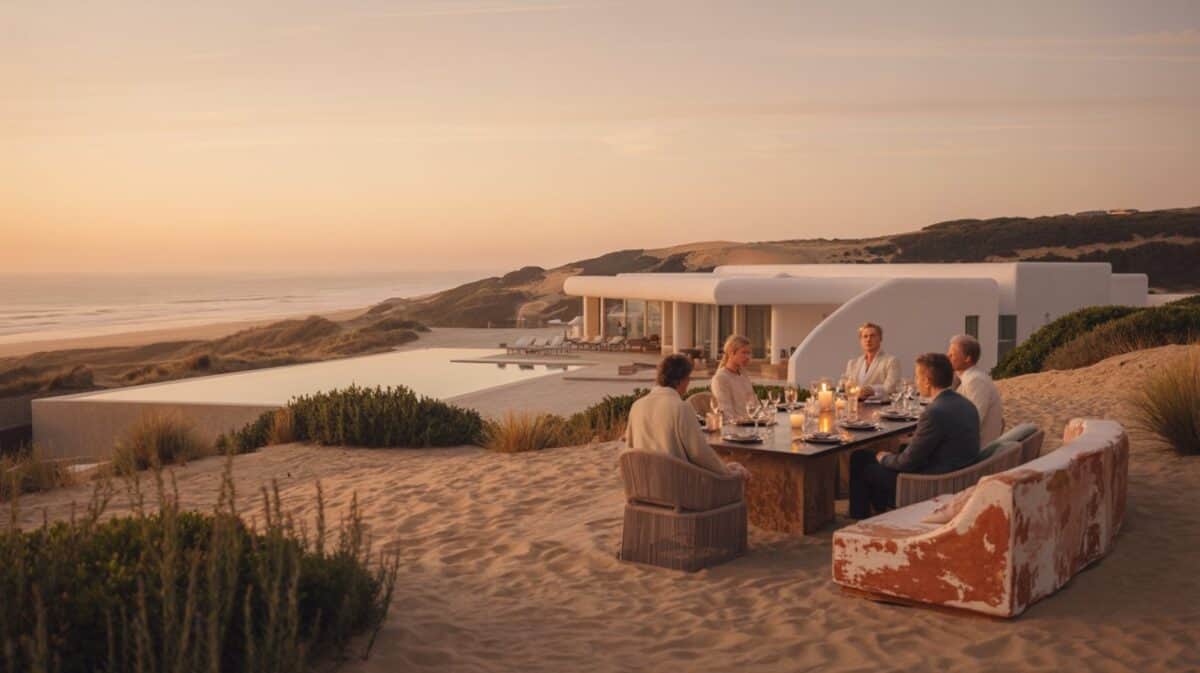
The Portugal luxury hotel sector is undergoing a notable transformation, aligning itself with broader changes across the Mediterranean hospitality landscape. Rather than relying solely on traditional markers of exclusivity such as scale, formality, or ultra-premium amenities, Portugal’s high-end hotels are increasingly focused on experience-led hospitality rooted in place, culture, and emotional engagement.
This evolution places Portugal alongside established luxury tourism markets such as Italy, Spain, and Greece, all of which are currently reshaping how travellers define premium experiences in Europe. The shift reflects a wider global luxury travel reset, where the value of a stay is increasingly measured by authenticity, design integration, sustainability, and meaningful connection to destination identity.
Advertisement
Advertisement
Across Lisbon, Comporta, the Algarve, the Douro Valley and Madeira, luxury properties are repositioning themselves as cultural gateways rather than isolated hospitality assets.
The rise of experience-led hospitality in Portugal
The central theme emerging from Portugal’s luxury hospitality sector is a transition toward experience-led travel design. This approach moves beyond conventional luxury service models and focuses instead on curated emotional and sensory engagement.
Advertisement
Advertisement
Cultural integration becomes a defining feature
Luxury hotels across Portugal are increasingly embedding local culture into their guest experience frameworks. This includes:
- Integration of Portuguese artisanship in interior design
- Culinary programming rooted in regional gastronomy
- Architecture that reflects local coastal and rural environments
- Guest experiences built around heritage, landscape and community interaction
These elements are positioning Portugal as a leader in the evolving European boutique luxury hospitality market, where storytelling and cultural immersion are becoming as important as comfort and exclusivity.
Advertisement
Advertisement
Lisbon, Comporta and Algarve lead Portugal’s luxury transformation
Portugal’s luxury tourism growth is not uniform; instead, it is concentrated across several high-performing destination clusters.
Lisbon: urban luxury meets cultural depth
The capital continues to strengthen its position in the European luxury city tourism segment, with hotels increasingly blending contemporary design, historic architecture, and curated cultural access. Lisbon’s appeal lies in its balance between cosmopolitan energy and deeply rooted heritage.
Comporta and Alentejo: the rise of discreet luxury
The Comporta and Alentejo regions have become symbols of Portugal’s evolving luxury identity. Known for minimalist architecture, coastal landscapes and low-density development, these areas are driving a new model of discreet luxury travel in Europe.
Algarve: reinvention beyond traditional beach tourism
The Algarve, long associated with resort tourism, is undergoing repositioning through high-end hospitality investments focused on wellness, privacy, and experiential coastal travel.
Italy, Spain and Greece drive parallel luxury transformation trends
Portugal’s evolution is part of a wider Mediterranean shift, where luxury tourism is being redefined across multiple destinations.
Italy: heritage-driven luxury refinement
Italy continues to lead in heritage luxury hospitality, with hotels integrating historic palazzos, regional cuisine, and artisanal craftsmanship into high-value travel experiences.
Advertisement
Advertisement
Spain: experiential coastal luxury expansion
Spain’s luxury hospitality sector is increasingly focused on experiential offerings, particularly along coastal regions and island destinations where sustainability and lifestyle-driven tourism are becoming central.
Greece: island-based luxury redefinition
Greece remains a dominant force in island luxury tourism, with a strong emphasis on wellness, privacy, and architectural harmony with natural landscapes.
Together, these markets form a connected Mediterranean ecosystem that is redefining global expectations of luxury travel.
The global luxury travel reset and its defining characteristics
The shift observed in Portugal and its European counterparts is part of a broader global luxury travel reset, where traditional definitions of high-end tourism are being replaced by more nuanced, experience-driven models.
From exclusivity to emotional value
Luxury travel is no longer defined solely by exclusivity or price point. Instead, it is increasingly shaped by:
- Emotional resonance with destination identity
- Depth of cultural engagement
- Sustainability and environmental responsibility
- Personalisation of guest experiences
- Architectural and design authenticity
This transition reflects a broader behavioural change among high-value travellers who are prioritising meaning over material display.
Advertisement
Advertisement
Sustainability becomes central to luxury hospitality strategy
Across Portugal and the wider Mediterranean, sustainability is becoming an operational foundation rather than a marketing layer.
Structural integration of sustainability practices
Luxury hotels are increasingly adopting:
- Energy-efficient and low-impact design systems
- Locally sourced food and supply chains
- Reduced-density development models
- Conservation-aligned tourism experiences
This aligns with the broader direction of the European sustainable tourism sector, where regulatory pressure and consumer expectations are converging.
Portugal, in particular, is emerging as a strong performer in aligning luxury development with environmental and cultural preservation.
Portugal’s positioning in the global luxury tourism economy
Portugal’s luxury hospitality sector is gaining traction in international markets due to its ability to combine affordability relative to other Western European destinations with high-quality experiential offerings.
Competitive advantage in the Mediterranean luxury market
Portugal’s positioning is strengthened by:
Advertisement
Advertisement
- Strong cultural identity and heritage preservation
- Expanding boutique hotel ecosystem
- Diverse geographic offering from cities to coastlines
- Growing international air connectivity
- Rising investment in experiential hospitality infrastructure
This makes Portugal a key participant in the evolving Mediterranean luxury tourism economy, where differentiation is increasingly based on authenticity and experience depth rather than scale alone.
Outlook for Portugal luxury hotels in 2026 and beyond
The trajectory of Portugal luxury hospitality growth suggests continued expansion, particularly in boutique and experiential segments. Investment activity remains strong across key regions, while international demand continues to support occupancy and pricing stability in high-end properties.
Key growth drivers ahead
- Expansion of boutique and design-led hotels
- Increased focus on wellness and slow travel experiences
- Strong demand from North American and European luxury travellers
- Continued development in Comporta, Alentejo and Douro Valley
- Integration of cultural programming into hospitality offerings
As a result, Portugal is expected to remain one of Europe’s most dynamic luxury tourism markets, not through scale dominance, but through experiential depth.
Conclusion: Portugal helps redefine modern luxury travel in Europe
The transformation underway in the Portugal luxury hotel sector reflects a deeper shift across Europe’s tourism landscape. By prioritising experience-led hospitality, cultural integration and sustainability, Portugal is aligning itself with Italy, Spain and Greece in reshaping what luxury travel means in 2026.
This is not a trend of aesthetic change alone, but a structural evolution in how destinations define value in tourism. Luxury is no longer just about where travellers stay, but about how deeply they connect with the places they visit.
Portugal’s growing role in this global reset positions it firmly within the next generation of European luxury tourism economies.
Advertisement
